
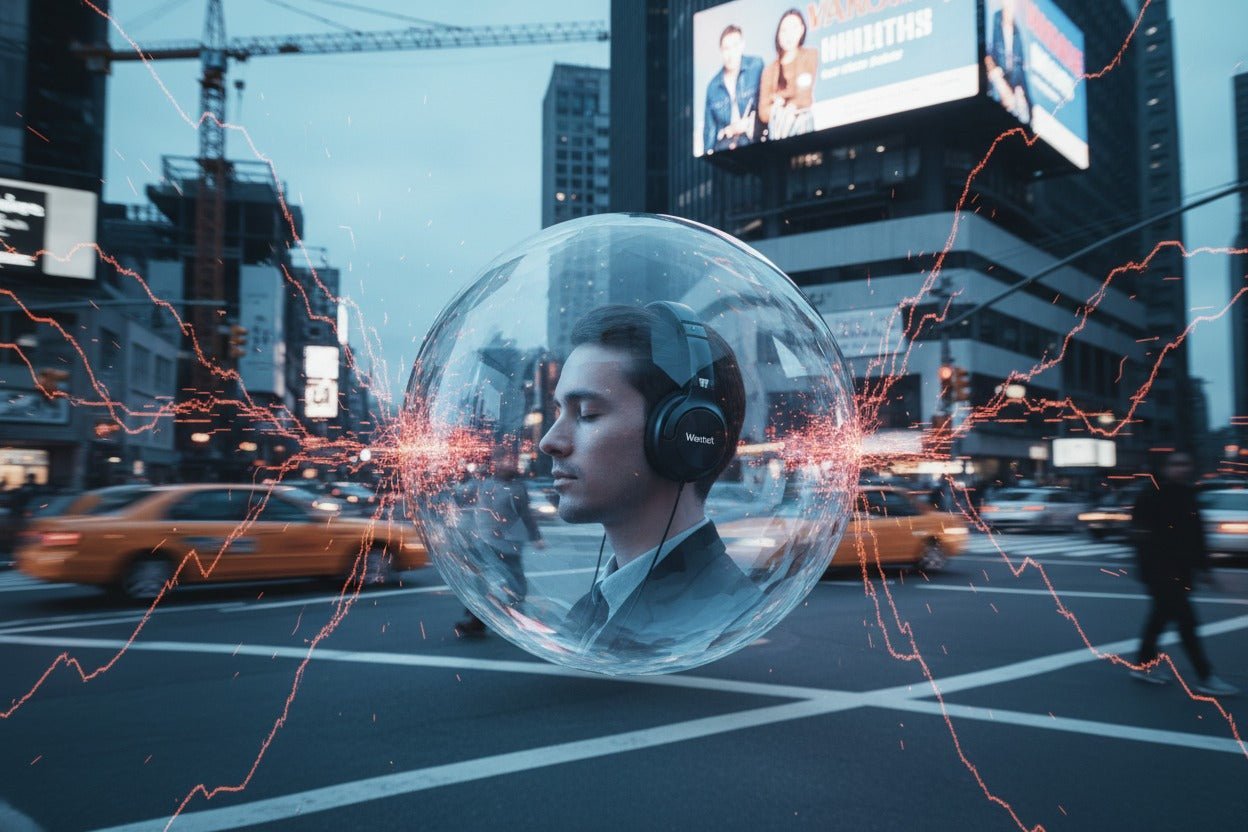
El mundo tiene un innegable problema de volumen. Es un asalto constante y de baja intensidad. El golpe percusivo de la construcción al final de la calle, el zumbido electrónico omnipresente de una docena de dispositivos, las conversaciones fragmentadas que se filtran a través de paredes delgadas: es una sinfonía de distracción. Esta cacofonía no es solo molesta. Erosiona nuestro enfoque, amplifica el estrés y roba la claridad de nuestros pensamientos y conversaciones. Durante años, simplemente lo soporté. Subía el volumen de mi música, una estrategia defectuosa que solo cambiaba un contaminante auditivo por otro. Luego, descubrí el silencio genuino. No el silencio vacío de un vacío, sino una tranquilidad curada y con propósito. Llegó en forma de unos auriculares con cancelación de ruido realmente excelentes. Esa primera experiencia no fue solo una mejora; fue una revelación. Se sintió como un superpoder. Hoy, ese poder es accesible, pero el camino para encontrar tu santuario de audio perfecto está lleno de opciones. Aclaremos el panorama.
Mi propio viaje comenzó con una compra impulsiva y barata para un vuelo nocturno. La publicidad prometía un oasis de tranquilidad. La realidad fue una sensación presurizada y submarina, con una calidad de audio que convertía mi lista de reproducción cuidadosamente seleccionada en una sopa turbia. El dolor de cabeza fue inmediato. Sin embargo, en esos momentos fugaces entre la distorsión, vislumbré el potencial. El rugido del motor disminuyó a un leve susurro. Era defectuoso, pero era una prueba de concepto. Ese par tosco me enseñó una lección vital: no toda la cancelación de ruido es igual. La tecnología ha evolucionado desde un truco novedoso hasta una herramienta sofisticada para la preservación cognitiva y el deleite auditivo. La búsqueda del mejor auricular con reducción de ruido es, fundamentalmente, una búsqueda de espacio personal en un paisaje sonoro superpoblado.
Deconstruyendo el silencio: la anatomía de la cancelación de ruido

Para tomar una decisión informada, primero debes comprender la mecánica del silencio. El término "cancelación de ruido" a menudo se usa como una declaración general, pero abarca dos tecnologías distintas y sinérgicas. Una es la fuerza bruta. La otra es la inteligencia.
El aislamiento pasivo del ruido es la fortaleza física. Esta es la barrera creada por los propios materiales de los auriculares. Piénsalo como acústica arquitectónica para tus oídos. Los diseños over-ear con almohadillas profundas y afelpadas de espuma viscoelástica crean un sello, una junta acústica que bloquea físicamente las ondas sonoras. Es notablemente efectivo contra intrusiones transitorias de alta frecuencia: el parloteo en una cafetería, el sonido de los platos, el sonido agudo de una notificación. Esta es la capa fundamental. Un sellado deficiente es un defecto crítico. Es como tener un sistema de seguridad de última generación pero dejar la puerta principal abierta de par en par. Por esta razón, el ajuste de cualquier candidato para los mejores auriculares over-ear con cancelación de ruido es innegociable. Debe ser íntimo sin ser opresivo.
La cancelación activa de ruido (ANC) es el fantasma digital en la máquina. Aquí es donde ocurre la magia. Pequeños micrófonos orientados hacia afuera actúan como centinelas, muestreando constantemente el ruido ambiental a tu alrededor. Un procesador integrado analiza este perfil sónico entrante en tiempo real. Luego, realiza un truco ingenioso de la física: genera una onda sonora inversa, un "anti-ruido", y la inyecta en tu flujo de audio. Este proceso, llamado interferencia destructiva, cancela efectivamente el sonido invasor antes de que llegue a tu tímpano. La ANC sobresale en la neutralización de zumbidos constantes de baja frecuencia: el zumbido agotador de la cabina de un avión, el estruendo de un tren, el ruido blanco implacable de un sistema de climatización. Es menos efectiva contra sonidos repentinos e irregulares, como el ladrido de un perro o el portazo de una puerta. Ahí es donde el sellado pasivo debe mantener la línea.
La magia, el verdadero sello distintivo del mejor auricular con reducción de ruido, reside en la unión perfecta de estas dos tecnologías. El aislamiento pasivo maneja los ataques agudos y de alta frecuencia. La ANC disuelve el asedio constante y de baja frecuencia. El resultado no es simplemente silencio, sino una sensación de quietud profunda, casi palpable. Es la diferencia entre cerrar una ventana y ser transportado a una habitación completamente diferente.
La liberación inalámbrica: cortando el cable sin compromiso
El debate entre cableado e inalámbrico alguna vez se desató con fervor audiófilo. Hoy en día, para la gran mayoría de los usuarios, el argumento está en gran parte resuelto. La libertad que ofrecen los modernos auriculares inalámbricos con cancelación de ruido es transformadora. Es una liberación táctil. No más tirar tu computadora portátil del escritorio porque el cable se enganchó en el cajón. No más pasar un cable incómodamente por debajo de tu camisa. Esta libertad también es psicológica. Puedes pasear durante una sesión de lluvia de ideas, buscar un café sin interrumpir tu podcast o guardar tu teléfono de forma segura en una bolsa durante un viaje concurrido. El cable ha desaparecido.
Los compromisos históricos (fidelidad de audio y latencia) se han reducido drásticamente. Códecs Bluetooth como aptX Adaptive y LDAC pueden transmitir audio con calidades que satisfacen a todos, excepto a los críticos más exigentes con oído de oro. La diferencia en el mundo real a menudo es inaudible cuando escuchas en el metro o caminas por un parque. La duración de la batería, que antes era una ansiedad persistente, ahora se extiende regularmente a las 30 o incluso 40 horas de reproducción continua. La comodidad es simplemente demasiado atractiva para ignorarla.
Sin embargo, una perspectiva matizada es clave. Para sesiones de escucha críticas y estacionarias en mi escritorio, donde analizo pistas de audio o me sumerjo en una sinfonía compleja, sigo optando por un par con cable de primera calidad. La conexión es absoluta, la latencia inexistente. Pero para el 95% de mi vida (viajar, trabajar en espacios compartidos, caminar, limpiar), el inalámbrico es el campeón inequívoco. La clave es elegir un modelo de auriculares inalámbricos con cancelación de ruido que admita códecs de alta calidad y ofrezca conectividad multipunto. La capacidad de estar conectado a mi computadora portátil y a mi teléfono simultáneamente, cambiando sin problemas la fuente de audio según lo que se esté reproduciendo, es un milagro moderno. Borra el torpe ritual de desconectar y volver a conectar.
La lista de verificación crítica: características más allá del bombo
A los departamentos de marketing les encanta salpicar afirmaciones grandilocuentes en las cajas de los productos. Tu trabajo es mirar más allá de los superlativos y examinar los detalles. Aquí tienes tu lista de verificación forense.
- Firma sónica: La capacidad ANC y el sonido placentero no son sinónimos. Algunos auriculares bombean una firma con graves intensos, perfecta para perderse en ritmos electrónicos o de hip-hop. Otros buscan una respuesta plana y neutra, muy apreciada por ingenieros de audio y productores de podcasts. Pregúntate: ¿cuál es mi contenido principal? Tu respuesta guiará la elección.
- Modos e inteligencia ANC: La cancelación estática es solo el comienzo. Busca una ANC adaptativa que se ajuste a tu entorno automáticamente. El modo de transparencia o conciencia es esencial: permite la entrada de sonido ambiental de forma segura para que puedas escuchar un anuncio de embarque o tener una conversación rápida. Algunos modelos ahora cuentan con tecnología de voz a chat; pausan tu música y activan la transparencia en el momento en que empiezas a hablar. Se siente futurista.
- El enigma de la calidad de las llamadas: Este es el talón de Aquiles de muchos auriculares diseñados principalmente para música. Para el profesional híbrido, la comunicación clara es primordial. Necesitas un auricular con una matriz de micrófonos con formación de haces dedicada y algoritmos avanzados que aíslen tu voz del ruido de fondo. El objetivo es sonar como si estuvieras en una habitación tranquila, incluso si estás parado al lado de una ruidosa máquina de espresso. La gratitud de tus colegas será palpable.
- El imperativo de la comodidad: La tecnología es inútil si no puedes usarla. Debes considerar la fuerza de sujeción, el material de las orejeras (espuma con memoria, cuero proteico, velour), la distribución del peso y la disipación del calor. Un auricular que se siente como una prensa después de una hora es una inversión fallida. La comodidad es una métrica profundamente personal; exige pruebas en el mundo real.
- Pragmatismo del ecosistema y la batería: Más allá del número principal de la batería, considera la velocidad de carga y funciones como la carga rápida. USB-C es imprescindible. Para los usuarios de Apple, la integración del chip H1/H2 en los AirPods es un potente candado del ecosistema. Para otros, Bluetooth multipunto es la función de productividad sin la que nunca querrás vivir.
Lo "mejor" es un pronombre personal: combinando auriculares con el hábitat
La búsqueda de lo "mejor" es una tarea inútil sin contexto. El auricular óptimo es un reflejo directo de tu entorno y tus rituales. Segmentemos el caos.
Para el profesional nómada: conquistadores de cabinas y desplazamientos
Tu dominio es el espacio transitorio. Aviones, trenes, metros, aeropuertos concurridos. Tus adversarios son de baja frecuencia, constantes y abrumadores.
- Prioridades fundamentales: Rendimiento ANC máximo, comodidad excepcional para vuelos de ocho horas, diseño plegable compacto y duradero, un estuche protector excelente y una duración de batería estelar.
- Los contendientes: Esta es la batalla estelar entre Sony y Bose. Los Sony WH-1000XM5 y los Bose QuietComfort Ultra Headphones son campeones perennes por una razón. Su ANC crea una burbuja de silencio casi surrealista. No subestimes los Apple AirPods Max para usuarios de iOS/Mac; su audio computacional y su cambio de dispositivo sin interrupciones son una potente ventaja ecosistémica, aunque su peso es una advertencia a tener en cuenta.
Para el trabajador híbrido: maestros del espacio de trabajo fluido
Bailas entre la oficina en casa, el centro de coworking y el campus corporativo. Necesitas silenciar el mundo y luego, en un instante, sonar nítido en una llamada de Microsoft Teams.
- Prioridades fundamentales: Un perfil equilibrado de ANC muy potente y la mejor calidad de llamada de su clase. Estética profesional y sobria. La comodidad durante todo el día no es negociable. Son herramientas, no solo accesorios.
- Los contendientes: Este nicho está explotando. La serie Jabra Evolve2 está diseñada para esto, con micrófonos de brazo fenomenales e incluso luces de ocupado opcionales. La serie Poly Voyager 4200 es otro caballo de batalla dedicado. Incluso los modelos premium centrados en la música de Bose y Sony han mejorado significativamente sus capacidades de llamada, lo que los convierte en opciones versátiles de doble amenaza.
Para el que busca la concentración en casa: creando un santuario doméstico
Tu campo de batalla es la esfera doméstica. Cortadoras de césped, el rugido del lavavajillas, niños jugando, el implacable proyecto de bricolaje del vecino. Tu necesidad es una cancelación consistente y sin fatiga durante largos períodos.
- Prioridades fundamentales: Máxima comodidad para sesiones maratonianas, ANC consistente y efectivo (pero no necesariamente el mejor de su clase), y una firma sonora placentera y envolvente tanto para el trabajo como para el ocio.
- Los contendientes: Aquí tienes una flexibilidad deliciosa. Los Sennheiser Momentum 4 Wireless ofrecen posiblemente la mejor calidad de sonido de su clase, combinada con una ANC muy competente. Los Bang & Olufsen Beoplay HX son una obra maestra de diseño y ajuste de audio matizado. Para los que buscan valor, los Anker Soundcore Space Q45 siguen asombrando. Ofrecen el 80% del rendimiento de modelos que cuestan el doble, un testimonio de lo democratizada que se ha vuelto esta tecnología.
Para el oyente exigente: el compromiso del audiófilo
Tu principal búsqueda sensorial es el nirvana sónico. Buscas detalle, escena sonora y resonancia emocional en tu música. La ANC es una conveniencia bienvenida, no el plato fuerte.
- Prioridades fundamentales: Fidelidad ante todo. La calidad del controlador, la afinación y el soporte de códec son sagrados. La ANC debe ser buena, pero no puede colorear ni degradar la señal de audio prístina.
- Los contendientes: Esta es la categoría de lujo. Los Focal Bathys son un producto emblemático: auriculares de alta fidelidad que también cuentan con excelente ANC y Bluetooth. Los Mark Levinson No. 5909 operan en un aire enrarecido similar (con un precio a la altura). Para estos usuarios, el auricular no es una utilidad; es un conducto para la experiencia artística.

Navegando el espectro de precios y el ajuste intangible
La inversión financiera abarca desde un impulso casual hasta una compra significativa. La ley de rendimientos decrecientes se aplica, pero la curva es significativa. El salto de un par de $100 a uno de $300 suele ser dramático. Experimentas una ANC, una calidad de construcción y un sonido muy superiores. El salto de $300 a $800 es más sutil, centrado en el lujo de los materiales, el prestigio de la marca y refinamientos mínimos en la afinación acústica.
Mi consejo inquebrantable es que te ancles a un presupuesto realista. Luego, si es humanamente posible, experimenta la lista corta en persona. Las especificaciones numéricas en una página no pueden transmitir cómo la diadema distribuye el peso en tu cuero cabelludo en particular. No pueden decirte si las almohadillas te calentarán las orejas con el tiempo. El par perfectamente revisado podría presionarte incómodamente las gafas. El que nunca has oído nombrar podría sentirse como si hubiera sido moldeado para ti.
En última instancia, el auricular con cancelación de ruido perfecto logra una especie de invisibilidad benevolente. Desaparece al borrar el desorden sónico de tu mundo. Desaparece al volverse tan cómodo que olvidas que lo llevas puesto. Desaparece en el tejido de tu día, un socio silencioso en la concentración, la creatividad y la calma. En una era de implacable entrada sensorial, esto no es meramente un gadget. Es un acto de autodefensa. Es una declaración de espacio personal. Es el mejor auricular con reducción de ruido para ti cuando finalmente encaja, o mejor dicho, cuando todos los clics, zumbidos y rugidos que te distraen a tu alrededor simplemente se desvanecen en la nada. Ahora, si me disculpas, los míos me llaman. La ópera semanal del camión de la basura acaba de comenzar su crescendo fuera de mi ventana, y tengo una cita con el silencio.
Preguntas frecuentes
¿Cuáles son los principales tipos de tecnología de cancelación de ruido?
¿Los auriculares con cancelación de ruido solo son útiles para viajar?
¿Qué debo buscar al elegir entre modelos de cancelación de ruido supraaurales y intraaurales?
¿Los auriculares con cancelación de ruido afectan la calidad del audio?
"Por qué los profesionales del audio eligen Wantek para la cancelación de ruido"
"Los trabajadores híbridos, los viajeros frecuentes y los profesionales que exigen concentración confían en la avanzada tecnología ANC de Wantek para crear su santuario sonoro. Con cancelación de ruido adaptativa, micrófonos con formación de haces para llamadas nítidas y 40+ horas de duración de la batería, Wantek ofrece las características que más importan. [Explora Wantek de grado profesional →] Envío gratuito + garantía extendida de 3 años en todos los modelos."
Leer más
📖 Los mejores auriculares para volar: cancelación de ruido y comodidad
📖 De 3,5 mm a conector de auriculares: la guía completa del adaptador
📖 Cómo usar auriculares Bluetooth con el televisor – Guía fácil
📖 Guía de auriculares verdes: las mejores opciones desde Beats hasta Sony Wireless
📖 ¿Qué es el Cyber Monday? Historia, fechas y mejores ofertas
📖 Cómo configurar el desvío de llamadas en iPhone (Verizon y más)
📖 Descubre los mejores auriculares con orejas de gato: la guía definitiva de inalámbricos y Bluetooth
📖 Los mejores auriculares con cancelación de ruido con cable 2025 – Opciones principales
📖 Los mejores auriculares con cancelación de ruido para viajes en avión: una reseña detallada
📖 Los mejores auriculares para gimnasio 2025 – Las mejores opciones inalámbricas y a prueba de sudor

