
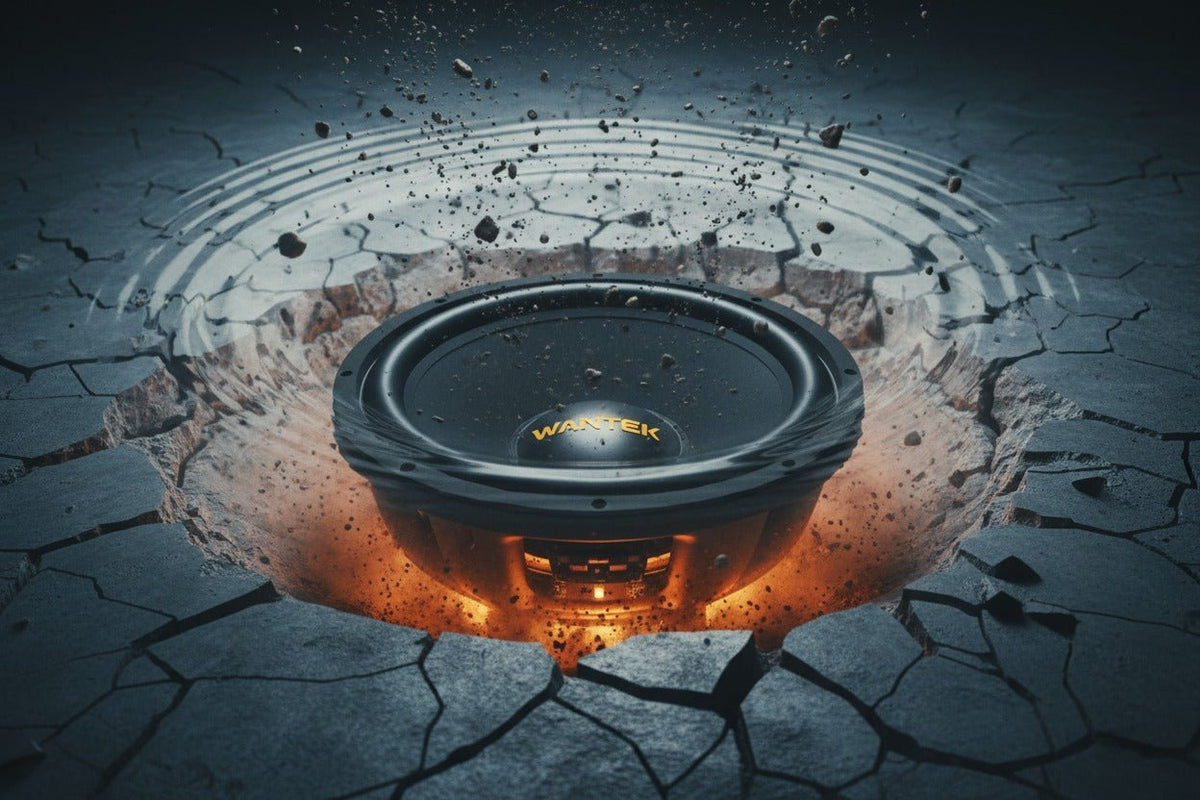
Mi búsqueda de graves siempre se ha sentido menos como un pasatiempo y más como un estudio geológico. No solo estoy escuchando. Estoy midiendo temblores. Estoy trazando frentes de presión. Durante años, perseguí esa forma de onda física perfecta, la que no solo llega a tus oídos sino que reconstituye tus órganos internos. Probé innumerables drivers, desde los educadamente potentes hasta los absurdamente sobredimensionados. Todos eran solo temblores. Entonces, me encontré con el terremoto. Conocí el Subwoofer Nuclear.
El nombre no es un marketing sutil. Es una etiqueta de advertencia. Ground Zero Audio no lo eligió a la ligera. Esta potencia alemana de empresa opera desde una filosofía simple y brutalista: construir el epicentro. Sus componentes no están diseñados para una música de fondo agradable. Están diseñados para la guerra acústica, para el momento en que la música empieza y el propio aire de tu coche se convierte en una entidad tangible y pulsante. El Subwoofer Nuclear es su máxima declaración, su arma insignia. Y dentro de esa línea, un modelo ha logrado una reputación legendaria, casi temible: el Ground Zero Nuclear 15. Esto no es una reseña en el sentido tradicional. Esto es un informe de campo desde las líneas del frente del sonido extremo.
La doctrina Ground Zero: ingeniería desde el epicentro
No se puede apreciar la bomba sin comprender el arsenal. La identidad de Ground Zero se forja en el fuego de las batallas SPL (nivel de presión sonora) de competición. Estos no son ingenieros que preguntan: "¿Sonará bien esto?". Preguntan: "¿Sobrevivirá esto?". Su proceso de diseño parece implicar someter los materiales a su punto de fallo absoluto, y luego construir algo el doble de fuerte. El apodo "Ground Zero" encapsula esto perfectamente. No les interesa la periferia del sonido. Quieren situarte en el punto de origen absoluto de la onda de choque, donde el rendimiento nace de la física pura e intransigente.
La serie Nuclear es el ápice de esta ideología. Existe en un espacio enrarecido más allá del audio de coche convencional. Hemos superado el ámbito del entretenimiento y nos hemos adentrado en el territorio de la fuerza mecánica aplicada. Cuando tienes un subwoofer Ground Zero Nuclear, no tienes un altavoz. Tienes un sistema de energía contenido. El peso por sí solo es un sermón. El diseño susurra poder latente. Esto está construido para el individuo cuyo maletero es un laboratorio, cuyo asiento trasero es un sacrificio, y cuyo objetivo es medir la salida no en "vatios RMS" sino en decibelios y espejos retrovisores desprendidos.

Una autopsia técnica: dentro del corazón atómico
Entonces, ¿qué transmuta un subwoofer en un Subwoofer Nuclear? Es un montaje meticuloso de componentes de servicio extremo, cada uno una obra maestra de la sobreingeniería. Diseccionemos la anatomía. Veamos qué hace funcionar, o más bien, retumbar a esta bestia.
-
La estructura del motor: el núcleo gravitacional. Aquí es donde comienza la magia, o el caos. Estamos hablando de un conjunto de imanes tan sustancial que podría servir como ancla de un barco. A menudo de triple pila, este colosal bloque de ferrita genera un campo magnético de intensidad asombrosa. Esto no es solo cuestión de fuerza; es cuestión de control. El motor está diseñado para la linealidad, asegurando que la bobina de voz se manipule con precisión de pistón en todo su recorrido. La distorsión es el enemigo, y esta fortaleza magnética existe para aniquilarla, incluso cuando el cono pide clemencia.
-
La bobina de voz: el horno. Si el motor es el corazón, la bobina de voz es el alma sobrecalentada. La potencia es teórica hasta que se encuentra con esta bobina. El Subwoofer Nuclear se burla de los tamaños típicos. Estamos en el reino de la bobina de voz de 4 pulgadas. Deja que esa dimensión se asimile. Es un gigante, enrollado en una base diseñada para el apocalipsis térmico. Su único trabajo es ingerir miles de vatios de corriente pura del amplificador y convertirlos en movimiento, todo mientras se encuentra en un pequeño hueco sin aire que se llena de calor. Esta bobina no se calienta; gestiona un infierno controlado. La diferencia entre esta y una bobina estándar es la diferencia entre un fósforo y un cortador de plasma.
-
Cono y Suspensión: La Arquitectura de la Excursión. El cono debe ser un objeto inamovible que se encuentra con una fuerza irresistible. A menudo encontrarás un compuesto sofisticado —pulpa, resinas, a veces fibra de carbono— reforzado estratégicamente para una rigidez total. No puede aletear, flexionarse o traicionar la señal. Pero el verdadero drama está en la suspensión. El borde es un espectáculo de flexibilidad ancho y de alto desplazamiento, una ondulación literal de goma o espuma tratada que permite cifras de excursión que parecen errores tipográficos. Detrás de él, la araña —un dispositivo de centrado tejido de múltiples capas— es el héroe anónimo. Es el resorte en esta enorme trampa, asegurando que el violento viaje de la bobina móvil dentro y fuera del espacio permanezca perfectamente alineado. Un tambaleo, un paso en falso, y la sinfonía se convierte en metal raspando.
-
La canasta: el chasis de titanio. Todo este caos controlado necesita una fortaleza. La canasta es esa fortaleza. Fundida o estampada en aluminio de alto peso, es un estudio de integridad estructural. Sus radios son gruesos, su brida de montaje es sustancial y su ventilación es intencionada. Esas ventanas alrededor del imán no son por estilo; son conductos de refrigeración para un sistema en crisis térmica. Esta canasta no es solo un soporte; es una base sólida, que asegura que cuando todo en el interior se mueve borroso, la estructura misma sigue siendo un punto de referencia inmutable.
El depredador ápice en detalle: el Ground Zero Nuclear 15
La filosofía se cristaliza en el formato de 15 pulgadas. El Ground Zero Nuclear 15 no es un producto que compras por capricho. Es una decisión que dicta una cascada de otras decisiones más caras. Es el centro de una atracción gravitatoria que doblará toda tu construcción, tu presupuesto y tu cordura hacia sus necesidades.
Potencia: El apetito insaciable
Calificar este subwoofer de "hambriento de potencia" es una subestimación profunda. Está obsesionado con la potencia. Sueña en amperios. Olvídate de tu amplificador boutique de 1000 vatios. Eso es un aperitivo. El Ground Zero Nuclear 15 funciona en el rango de 2500 a 4000 vatios RMS para uso diario, y aceptará de buen grado más para ráfagas en una pista SPL. Esta demanda transforma tu instalación. Tu amplificador es ahora una central eléctrica dedicada. Tu cableado es ahora cable de soldadura del tamaño de un maletero. Tu alternador debe ser una unidad de alta potencia, y tu banco de baterías podría parecerse a un pequeño centro de datos. La infraestructura eléctrica de soporte costará fácilmente dos o tres veces el precio del subwoofer en sí. Esto no es negociable. Alimentar insuficientemente a esta bestia es un acto de crueldad.
Recinto: La Catedral Resonante
Esta es la variable que hace o deshace. El Ground Zero Nuclear 15 es brutal y hermosamente honesto. No tiene piedad por una caja mal construida. Expondrá cada defecto, cada fuga de aire, cada refuerzo insuficiente con un coro de ruidos no deseados y una salida perdida. Exige una caja construida a propósito, casi siempre un diseño con puerto, sintonizada con la precisión de un reloj suizo. La caja debe ser una estructura monolítica. Estamos hablando de MDF de 1,5 pulgadas o de doble grosor para todo el deflector. Estamos hablando de refuerzos internos que sostendrían una estantería en una biblioteca. Estamos hablando de un revestimiento de resina de fibra de vidrio, sellos de silicona y el tipo de tornillos para madera que hacen gemir tu taladro. Este recinto no es una caja; es una cámara resonante, un instrumento en sí mismo que estás construyendo para asociarse con este driver atómico.
La experiencia de rendimiento: de pie en Ground Zero

Cuando por fin conectas todo correctamente —cuando la parte eléctrica es robusta, el amplificador es estable y la caja es un tanque— inicias el evento. Ya no estás reproduciendo música. Estás comandando una fuerza de la naturaleza. El bajo no se escucha; se experimenta como un fenómeno de cuerpo completo. Es una onda de presión que llena la cabina tan completamente que la sientes en tu esternón, tus senos paranasales, los empastes de tus dientes. Tiene textura y peso. Un bajo sintetizado no solo golpea; se despliega y se expande, consumiendo el espacio. Un bombo tiene un golpe táctil que sientes en tu espalda contra el asiento.
Hay una aterradora sensación de margen. Subes el volumen y responde con más. Y más. Y más. Sigues esperando que distorsione, que se queje, que alcance su límite. El subwoofer Ground Zero Nuclear solo pide otra carga de amplificador al fuego. El límite, al parecer, suele ser tu propio valor, o la integridad estructural de los paneles interiores de tu vehículo. Descubrirás ruidos que nunca supiste que existían. Tu matrícula sonará como una caja. Es impráctico. Es excesivo. Es, en una palabra, estimulante.
El público objetivo: un nicho dentro de un nicho
Cortemos la exageración. El Subwoofer Nuclear no es para todos. Es quizás para el uno por ciento del uno por ciento. Comprender esto es crucial.
Este subwoofer ES para:
- El competidor SPL para quien cada décima de decibelio es una batalla ganada.
- El bajista dedicado cuya principal medida de éxito es la distancia a la que su música puede ser sentida.
- El instalador técnico que ve la construcción de sistemas como una mezcla de ingeniería eléctrica y ebanistería.
- El entusiasta que aprecia el subwoofer como una escultura mecánica, una pieza de arte industrial que además desmantela la realidad.
Este subwoofer NO es para:
- El audiófilo que busca una respuesta de frecuencia plana y matizada para escuchar jazz de forma crítica. Esto es una placa tectónica, no un tweeter.
- Cualquier persona con limitaciones presupuestarias. El subwoofer es la cuota de entrada; el coste real es el reparto secundario.
- La persona que quiere una mejora sencilla y plug-and-play. Esto es un proyecto que se convierte en tu vida durante semanas.
- El oyente ocasional. Usar un Ground Zero Nuclear 15 para música de fondo es como usar un lanzacohetes para abrir la puerta principal. Efectivo, pero profundamente equivocado.
Impresiones finales: las secuelas y la adrenalina
Vivir con un sistema construido alrededor del Ground Zero Nuclear 15 es un estilo de vida único. Es una negociación constante entre el asombro y el absurdo. Transforma cada viaje en un evento potencial. Te vuelves agudamente consciente de tu entorno: la proximidad de otros coches, la construcción de pasos elevados, la paciencia de tus pasajeros. Es exigente, costoso y logísticamente desafiante. También es una de las experiencias más visceralmente gratificantes en todo el audio de consumo.
¿Es el "mejor" subwoofer? Si tu definición de "mejor" es la máxima conversión posible de energía eléctrica en fuerza acústica física pura e inalterada con una tolerancia casi sobrenatural al castigo, entonces la respuesta es un rotundo sí. El Ground Zero Nuclear 15 no solo cumple su promesa apocalíptica; la entrega con un encogimiento de hombros despreocupado.
Ofrece cero concesiones. Pide todo lo que tienes: tu dinero, tu habilidad técnica, el espacio de tu maletero, tu tranquilidad. A cambio, te da las llaves de tu propio zona cero personal. Te conviertes en la fuente de la onda expansiva. Controlas la presión. Para cierto tipo de persona —el entusiasta decidido, técnico, ligeramente desquiciado— ese trato es más que justo. Las consecuencias, como dicen, son espectaculares. Solo invierte en un adhesivo extra para tu espejo retrovisor. Lo vas a necesitar.
Preguntas frecuentes (FAQ)
¿Qué es exactamente un "Subwoofer Nuclear" y en qué se diferencia de un subwoofer normal?
¿Qué tipo de configuración o sistema se requiere para alimentar y usar correctamente un subwoofer de este calibre?
¿Es el Subwoofer Nuclear adecuado para uso en cine en casa o es solo para audio de coche?
¿Cuáles son las principales consideraciones antes de comprar un subwoofer tan potente?
Leer más
📖 Los mejores auriculares para volar: cancelación de ruido y comodidad
📖 De 3,5 mm a conector de auriculares: la guía completa del adaptador
📖 Cómo usar auriculares Bluetooth con el televisor – Guía fácil
📖 Guía de auriculares verdes: las mejores opciones de Beats a Sony Wireless
📖 ¿Qué es el Cyber Monday? Historia, fechas y mejores ofertas
📖 Cómo configurar el desvío de llamadas en iPhone (Verizon y más)
📖 Los mejores auriculares con cancelación de ruido con cable 2025 – Las mejores opciones
📖 Los mejores auriculares con cancelación de ruido para viajes en avión: una reseña exhaustiva

