
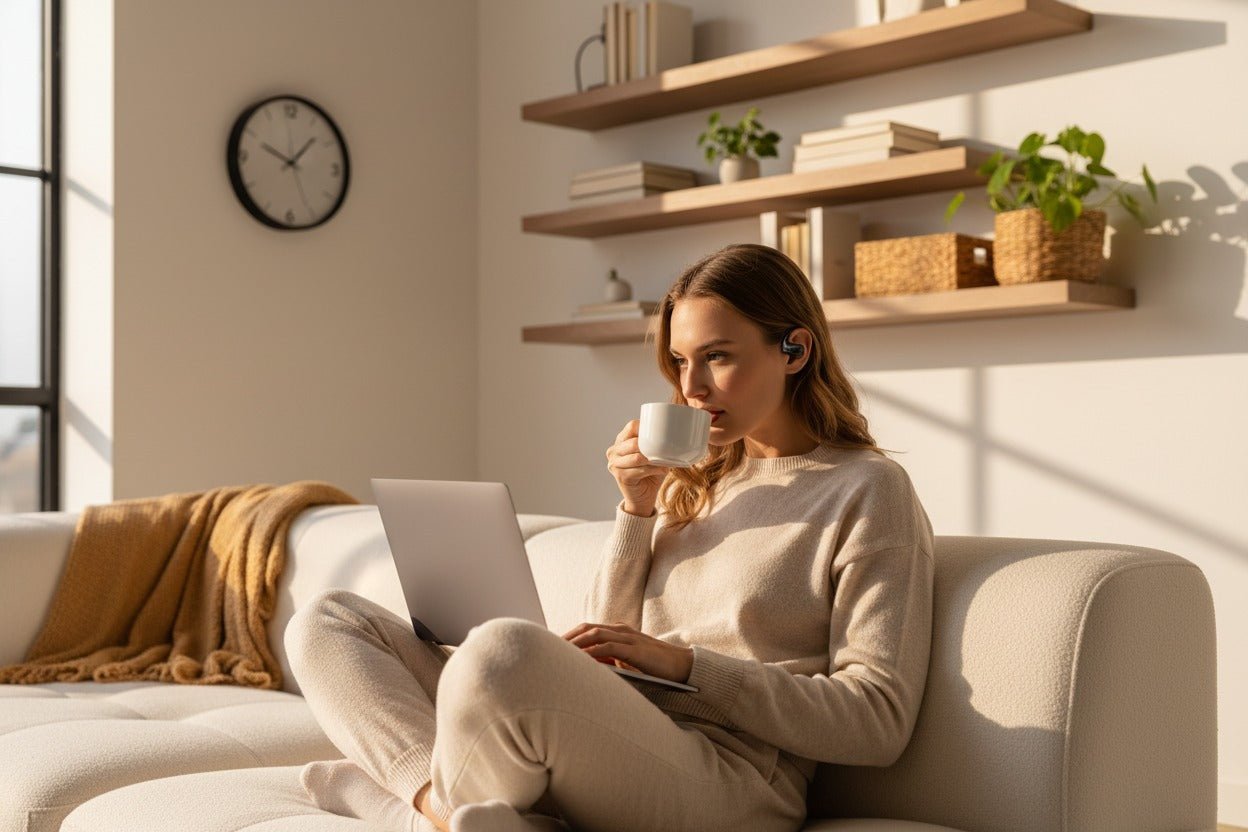
Seien wir brutal ehrlich. Das moderne Telefongespräch ist ein technologisches Relikt, das wir uns ungeschickt an den Kopf geschnallt haben. Wir haben die feuchte Abdichtung von Silikonspitzen, das körperlose „Kopf-im-Glas“-Gefühl und das hektische, gedämpfte Schreien ertragen, das wir von uns geben, wenn die Geräuschisolierung einsetzt. Sie kennen das Spiel. Sie machen einen Spaziergang, ein Ohrstöpsel steckt fest, und ein Müllwagen fährt vorbei. Der entscheidende Satz Ihres Chefs wird vom Dieselgebrüll zunichte gemacht. Sie bleiben mit einem höflichen „Entschuldigung, könnten Sie das wiederholen?“ und einer schwelenden Frustration zurück. Das war meine Normalität. Ich akzeptierte die Ohrmüdigkeit, die situationsbedingte Blindheit, den gesamten unbeholfenen Tanz als Preis für die kabellose Freiheit.
Dann habe ich aus einem einzigen, spezifischen Grund gewechselt: ein geplanter neunzigminütiger Kundenanruf. Ich griff nicht zu meinen üblichen In-Ear-Champions, sondern zu einem Paar Open-Ear-Kopfhörern. Das Erlebnis war nicht nur besser. Es war eine Offenbarung. Es fühlte sich weniger an, als würde ich ein Gerät benutzen, sondern mehr, als würde ich einfach ein Gespräch führen. Wenn Ihr Leben eine beträchtliche Menge an stimmlicher Kommunikation beinhaltet – sei es bei Arbeits-Zooms, Familien-Updates oder der Navigation durch automatisierte Kundendienst-Menüs – ist dies nicht nur eine weitere Audiorezension. Dies ist ein Plädoyer für eine grundlegende Verschiebung in Ihrem Werkzeugkasten. Die richtige Ausrüstung kann eine lästige Pflicht in etwas Nahtloses, ja sogar Angenehmes verwandeln. Wir sind auf der Suche nach den besten Open-Ear-Kopfhörern für Telefonate, und die Reise zeigt, warum diese Kategorie heimlich Fachleute und Podcast-Fans gleichermaßen begeistert.
Das Design dekonstruiert: Was sind Open-Ear-Kopfhörer wirklich?

Zuerst eine entscheidende Taxonomie. Wir müssen das Standard-Paradigma kabelloser Ohrhörer verwerfen. Das sind In-Ear-Monitore (IEMs) oder Ohrhörer. Ihre Hauptaufgabe ist die akustische Isolation. Sie erzeugen eine Schallabdichtung in Ihrem Gehörgang. Das ist fantastisch für immersives Musikhören und um ein weinendes Baby im Flugzeug auszublenden. Für die Kommunikation ist es jedoch eine fehlerhafte Grundlage.
Open-Ear-Kopfhörer basieren auf einer abweichenden Philosophie. Sie meiden explizit Ihren Gehörgang. Das Design ist äußerlich. Einige verwenden einen Haken, der über die Ohrmuschel gelegt wird. Andere verwenden eine sanfte Umhüllung, die direkt vor dem Gehörgang sitzt. Die Schallübertragung erfolgt über Miniaturlautsprecher, die zum Ohr gerichtet sind, aber nicht in dieses hinein. Alternativ übertragen Knochenleitungsmodelle den Schall durch Vibration Ihrer Wangenknochen. Das Grundprinzip bleibt: Ihre Ohren sind physisch „offen“. Umgebungsgeräusche dringen ungehindert ein. Sie hören Ihren Podcast, die Stimme Ihres Anrufers und die Welt um Sie herum in einem gleichzeitigen Audiostream.
Es scheint kontraintuitiv in unserer auf Geräuschunterdrückung fixierten Kultur. Warum sollte man weniger Isolation wollen? Die Antwort offenbart sich in dem Moment, in dem Sie anfangen zu sprechen. Das Erlebnis ist nicht durch einen Mangel definiert, sondern durch eine wiedergewonnene Natürlichkeit. Es fühlt sich weniger an, als würde man Kopfhörer tragen, sondern mehr, als würde man eine außergewöhnlich clevere, audioverbesserte Brille tragen. Ihr Raumgefühl bleibt intakt.
Die Anatomie eines schlechten Anrufs & Das Open-Ear-Antidot
Warum versagen herkömmliche Ohrhörer so oft bei der Sprachkommunikation? Die Probleme sind systembedingt, in ihrem Design verwurzelt.
- Der Okklusionseffekt: Dies ist der technische Begriff für das „Kopf-im-Glas“-Phänomen. Wenn Sie den Gehörgang abdichten, wird der durch Ihre Schädelknochen geleitete Schall Ihrer eigenen Stimme eingeschlossen. Er hallt. Er resoniert. Ihr Gehirn nimmt dies als gedämpft wahr, was Sie dazu veranlasst, lauter und mit einem unnatürlichen Ton zu sprechen. Für den Zuhörer klingt es, als würden Sie aus einem U-Boot anrufen.
- Situationsbedingte Taubheit: Dies ist ein Sicherheits- und Sozialrisiko. Abgedichtete Ohrhörer beim Gehen, Radfahren oder sogar bei der Arbeit in einem gemeinsamen Wohnbereich erzeugen eine gefährliche Blase. Sie verpassen akustische Hinweise – ein Autohupen, die Frage eines Kollegen, den Unfug eines Kleinkindes. Das ist entfremdend.
- Körperliche Ermüdung: Silikon- und Schaumstoffspitzen erzeugen Druck. Nach ein oder zwei Stunden einer Telefonkonferenz wird das Unbehagen zu einer Ablenkung. Juckende, verschwitzte, wunde Gehörgänge sind nicht förderlich für kreatives Brainstorming.
- Suboptimale Mikrofonplatzierung: Die Mikrofone in den Ohrhörern befinden sich oft am Gehäuse des Ohrhörers selbst, eingebettet in die Krümmung Ihrer Ohrmuschel. Sie nehmen interne Geräusche – Kieferbewegungen, Schlucken, Ohrenrascheln – mit alarmierender Klarheit auf. Windgeräusche sind ein katastrophales Ereignis.
Open-Ear-Kopfhörer beseitigen diese Probleme systematisch
Mit einem offenen Gehörgang projiziert sich Ihre Stimme natürlich. Sie sprechen mit normaler Lautstärke und Klangfarbe. Die Mikrofonarrays der besten offenen kabellosen Ohrhörer sind strategisch auf verlängerten Stielen oder Auslegern positioniert, wodurch sie näher an der Schallquelle sind: Ihrem Mund. Fortschrittliche Algorithmen sind für die Sprachaufnahme aus dieser spezifischen Richtung abgestimmt. Sie verwenden Beamforming-Technologie und Environmental Noise Cancellation (ENC), um Ihre Sprache vom Chaos hinter Ihnen zu isolieren. Die Designphilosophie ist elegant: störende Geräusche von vorne (Richtung Ihrer Stimme) filtern, während Umgebungsgeräusche von hinten zugelassen werden. Dies schafft ein Anruferlebnis, das für den Empfänger schockierend klar und für Sie selbst deutlich komfortabler ist. Es ist der Unterschied zwischen dem Sprechen durch ein Rohr und dem Unterhalten in einem ruhigen Raum.
Die definitive Checkliste: Merkmale der besten Open-Ear-Kopfhörer für Telefonate
Nicht jedes Open-Ear-Modell ist für Sprachklarheit gebaut. Einige priorisieren leichtes Musikhören. Um die wahren Champions für die Kommunikation zu finden, müssen Sie diese spezifischen Funktionen genau prüfen.
1. Das Mikrofon-Array & die Rauschverarbeitung: Nicht verhandelbar
Das ist der Kern der Sache. Machen Sie hier keine Kompromisse. Suchen Sie nach Modellen mit einem Multi-Mikrofon-System (drei oder mehr ist ideal), gepaart mit dedizierter Anrufgeräuschunterdrückung. Begriffe wie „Beamforming“, „ENC“, „KI-Rauschunterdrückung“ und „Anrufalgo“ sind Ihre Schlüsselwörter. Die besten Open-Ear-Kopfhörer für Telefonate nehmen nicht nur passiv auf; sie verarbeiten aktiv. Sie identifizieren die spektrale Signatur Ihrer Stimme und unterdrücken konkurrierende Frequenzen wie Tastaturklappern, Café-Geplapper oder aerodynamisches Windrauschen. Ich habe einmal während eines Spaziergangs mit meinem Hund an einem windigen Tag einen Anruf entgegengenommen und mich auf den unvermeidlichen Kommentar „Es klingt, als wären Sie in einem Windkanal“ eingestellt. Er kam nie. Die Person fragte, ob ich gerade in ein ruhiges Büro gegangen wäre. Das ist die Magie der ausgeklügelten Audioverarbeitung.
2. Akkulaufzeit: Planen Sie für den Marathon
Moderne Geschäftsanrufe sind Marathons, keine Sprints. Eine Produktsynchronisierung, ein Kundenworkshop, ein Familientreffen mit entfernten Verwandten – all das kann sich hinziehen. Ihre Ohrhörer müssen länger halten als Ihr Meeting. Suchen Sie nach einer Mindestlaufzeit von 7-8 Stunden ununterbrochener Gesprächszeit mit einer einzigen Ladung. Das Ladecase sollte mehrere volle Ladezyklen ermöglichen, damit Sie nie strandet. Es gibt eine besondere Art von professioneller Panik, die für Ihre Ohrhörer reserviert ist, wenn diese während einer wichtigen Verhandlung mitten im Satz den „Batterie schwach“-Ton von sich geben. Vermeiden Sie das.
3. Das Komfort- & Sicherheitsparadigma: Der Vergessbarkeitsfaktor
Dies ist subjektiv, aber entscheidend. Das ideale Open-Ear-Design sollte einen Zustand der „Vergessbarkeit“ erreichen. Sie müssen leicht sein und Materialien wie Titanlegierungen oder flexible Polymere für die Ohrbügel verwenden. Der Sitz sollte sicher genug für moderate Kopfbewegungen sein, aber ohne jeglichen Anpressdruck. Sie sollten sie einen ganzen achtstündigen Arbeitstag mit gelegentlichen Anrufen tragen können, ohne eine einzige bewusste Anpassung vornehmen zu müssen. Wenn Sie sich dabei ertappen, wie Sie daran herumzupfen oder sie neu einsetzen, haben sie den Test nicht bestanden. Das Ziel ist ein müheloses Tragen den ganzen Tag über.
4. Audioqualität für Sprache: Klarheit statt Bass
Wir müssen unsere Audiogerät-Erwartungen neu kalibrieren. Die Open-Ear-Physik opfert naturgemäß tiefe, resonante Bässe. Die tieffrequenten Wellen zerstreuen sich einfach ohne eine abgedichtete Kammer. Dies ist kein Nachteil für Anrufe; es ist eine irrelevante Metrik. Hier geht es bei der Audioqualität um Präzision in den mittleren und hohen Frequenzen. Sie müssen stimmliche Nuancen erkennen können – die subtile Pause vor einer schwierigen Antwort, die gehobene Betonung einer Frage, die klare Aussprache komplexer Begriffe. Die Lautsprechertreiber sollten auf Klarheit und Detail abgestimmt sein, nicht auf einen kinoreifen Bass. Die besten offenen kabellosen Ohrhörer für diese Aufgabe liefern Podcasts, Hörbücher und Anrufaudios mit erstaunlicher Verständlichkeit.
5. Konnektivität & Ökosystem-Fluidität: Der Vorteil des Wechslers
Unser digitales Leben ist ein Multi-Geräte-Teppich. Sie könnten einen Anruf auf Ihrem Laptop beginnen und dann zu Ihrem Telefon wechseln müssen, um einen Authentifizierungscode einzugeben. Multipoint-Bluetooth-Pairing ist unerlässlich. Es ermöglicht den Ohrhörern, gleichzeitig Verbindungen zu zwei Quellgeräten aufrechtzuerhalten und den Audiofokus intelligent zu wechseln. Bluetooth 5.2 oder 5.3 ist mittlerweile Standard und bietet eine verbesserte Reichweite und Stabilität, wodurch diese frustrierenden Audioausfälle reduziert werden, wenn sich Ihr Telefon in Ihrer Tasche befindet. Nahtlosigkeit ist der ultimative Luxus.
Praktische Anwendungen: Wo sie brillieren (und die eine eklatante Ausnahme)
Die Theorie ist gut, aber wo verbessert dieses Design wirklich das tägliche Leben? Die Anwendungsfälle sind überzeugend.
- Der hybride Heimarbeiter: Das ist der Idealfall. Sie können an einem Videoanruf teilnehmen, während Sie mechanisch eine Mahlzeit zubereiten, auf eine Paketlieferung warten oder ein schlafendes Kind überwachen. Die Barriere zwischen digitalem Anruf und physischer Umgebung löst sich auf. Sie sind in beiden Räumen präsent.
- Der aktive Pendler: Für Spaziergänger, Läufer und Radfahrer ist die situative Wahrnehmung von größter Bedeutung für die Sicherheit. Offene Ohrhörer ermöglichen es Ihnen, mit Podcasts oder Anrufen verbunden zu bleiben, während Sie sich der Verkehrsgeräusche, Fahrradklingeln und des Geplappers von Fußgängern voll bewusst sind. Es ist eine verantwortungsvolle Art, Audio zu integrieren.
- Der kollaborative Büroarbeiter: In offenen Büros oder aktivitätsbasierten Arbeitsumgebungen ist eine vollständige akustische Isolation oft unhöflich oder unpraktisch. Mit offenen Ohrhörern kann ein Kollege Ihre Aufmerksamkeit mit einer Welle oder einem sanften verbalen Hinweis erregen, ohne Sie zu erschrecken. Sie bleiben peripher verfügbar.
- Der Veteran langer Meetings: Die körperliche Entlastung ist spürbar. Keine wunden Gehörgänge mehr nach einem Spießrutenlauf von aufeinanderfolgenden virtuellen Meetings. Die Reduzierung dieser geringfügigen körperlichen Belastung verringert kumulativ die kognitive Ermüdung. Sie beenden den Tag weniger erschöpft.
- Der körperlich sensible Benutzer: Für Personen, die zu Ohrenentzündungen neigen, Beschwerden durch Silikonspitzen haben oder einfach das Gefühl des Verstopftseins nicht mögen, sind offene Designs eine Befreiung. Sie bieten eine kühle, atmungsaktive Alternative.
Das unausweichliche Caveat: Die wirklich laute Umgebung
Dies ist das einzige Szenario, in dem offene Kopfhörer an ihre Grenzen stoßen. Wenn Ihre Anrufumgebung ständig, überwältigend laut ist – denken Sie an eine Fabrikhalle, ein geschäftiges Flughafenvorfeld oder ein Live-Sportevent – übertönt das Umgebungsgeräusch sowohl die Mikrofone als auch Ihre eigene Fähigkeit, den Anrufer zu hören. Unter diesen extremen akustischen Bedingungen bleiben hochwertige Geräusch-unterdrückende In-Ear-Kopfhörer das richtige Werkzeug. Sie wurden entwickelt, um diese stille Blase zu schaffen. Offene Kopfhörer sind für die Integration konzipiert, nicht für die vollständige Isolation. Das richtige Werkzeug zu wählen, ist ein Zeichen von Audio-Weisheit.

Das Urteil: Ein Perspektivwechsel
Nach ausgiebigen Tests verschiedener Marken – von Knochenleitungspionieren wie Shokz über die neue Welle von Open-Air-Lautsprechern von Oladance bis hin zu Audio-Größen wie JBL – ist meine Schlussfolgerung eindeutig. Für die überwiegende Mehrheit meines kommunikativen Lebens ist die Open-Ear-Technologie nicht nur gleichwertig, sondern überlegen. Der größte Vorteil ist ein psychologisches Gefühl der Leichtigkeit. Es gibt kein Einsetzen-Ritual, keine Druckprüfung, kein Abdichtungs-Pop. Man setzt sie einfach auf. Sie werden zu einer subtilen Erweiterung der Wahrnehmung, nicht zu einer Barriere.
Wenn Sie Ihre Suche nach den besten Open-Ear-Kopfhörern für Telefonate beginnen, konzentrieren Sie sich. Ignorieren Sie das übertriebene Marketing über die „Konzertsaal-Klangbühne“ für Musik. Suchen Sie stattdessen in Nutzerbewertungen nach Formulierungen wie „Anrufqualität“, „Windgeräuschunterdrückung“ und „die Leute sagten, ich klang klar“. Suchen Sie auf Tech-Review-Kanälen nach direkten Mikrofon-Vergleichsvideos. Lassen Sie die Anrufleistung Ihr primärer Filter sein.
Der Markt entwickelt sich rasant. Was einst eine Nische für Sportler und sicherheitsbewusste Radfahrer war, ist heute eine Mainstream-Audiokategorie. Dieser Wettbewerb treibt Innovationen voran, verbessert Mikrofon-Algorithmen, Akku-Effizienz und Komfort. Wir erleben eine leise Revolution im Bereich des persönlichen Audios, die menschliche Verbindung und Umweltbewusstsein über immersive Flucht priorisiert.
Es erinnert mich an den Übergang von physischen Tastaturen zu Touchscreens bei Telefonen. Zunächst trauert man dem taktilen Feedback nach. Aber bald gewöhnt man sich an die fließende, anpassungsfähige Natur der neuen Benutzeroberfläche. Man erkennt, dass das alte Paradigma, obwohl vertraut, einschränkend war. Open-Ear-Kopfhörer für Anrufe stellen eine ähnliche, subtile Entwicklung dar. Sie sind ein Schritt hin zu einer Technologie, die unserem biologischen Bedürfnis entgegenkommt, im Gespräch zu sein – sowohl mit der Person am Telefon als auch mit der physischen Welt, in der wir leben. Sie mögen nicht die einzige Lösung für jedes Audiowunsch sein, aber für den uralten, fundamentalen Akt des Sprechens und Zuhörens? Sie sind, ganz einfach, ein besserer Weg. Vielleicht finden Sie sich sogar dabei wieder, sich für den nächsten langen Anruf freiwillig zu melden. Oder zumindest werden Sie den Klingelton nicht mehr fürchten.
Häufig gestellte Fragen
Was sind Open-Ear-Kopfhörer und wie unterscheiden sie sich von herkömmlichen Ohrhörern?
Warum sind Open-Ear-Kopfhörer besser für Telefonate als herkömmliche Ohrhörer?
Sind Open-Ear-Kopfhörer sicher beim Gehen oder in belebten Umgebungen?
Haben Open-Ear-Kopfhörer eine gute Klangqualität für Anrufe, wenn sie nicht im Ohr sitzen?
Endlich – Ohrhörer, die Sie klingen lassen, als wären Sie in einem ruhigen Büro (auch wenn Sie es nicht sind)
Hören Sie auf, sich für Hintergrundgeräusche zu entschuldigen. Wantek ist spezialisiert auf Open-Ear-Ohrhörer mit professioneller Anruftechnologie: Beamforming-Mikrofone, Umgebungsgeräuschunterdrückung und eine lange Akkulaufzeit für Marathon-Meetings. Ihre Kollegen hören Ihre Stimme, nicht den Verkehr. Ihre Ohren bleiben bequem, nicht ermüdet. Perfekt für Remote-Mitarbeiter, hybride Fachkräfte und alle, die keine Kompromisse bei der Anrufqualität eingehen wollen.
Entdecken Sie Wanteks Anruf-optimierte Ohrhörer • 30 Tage kristallklare Garantie

