
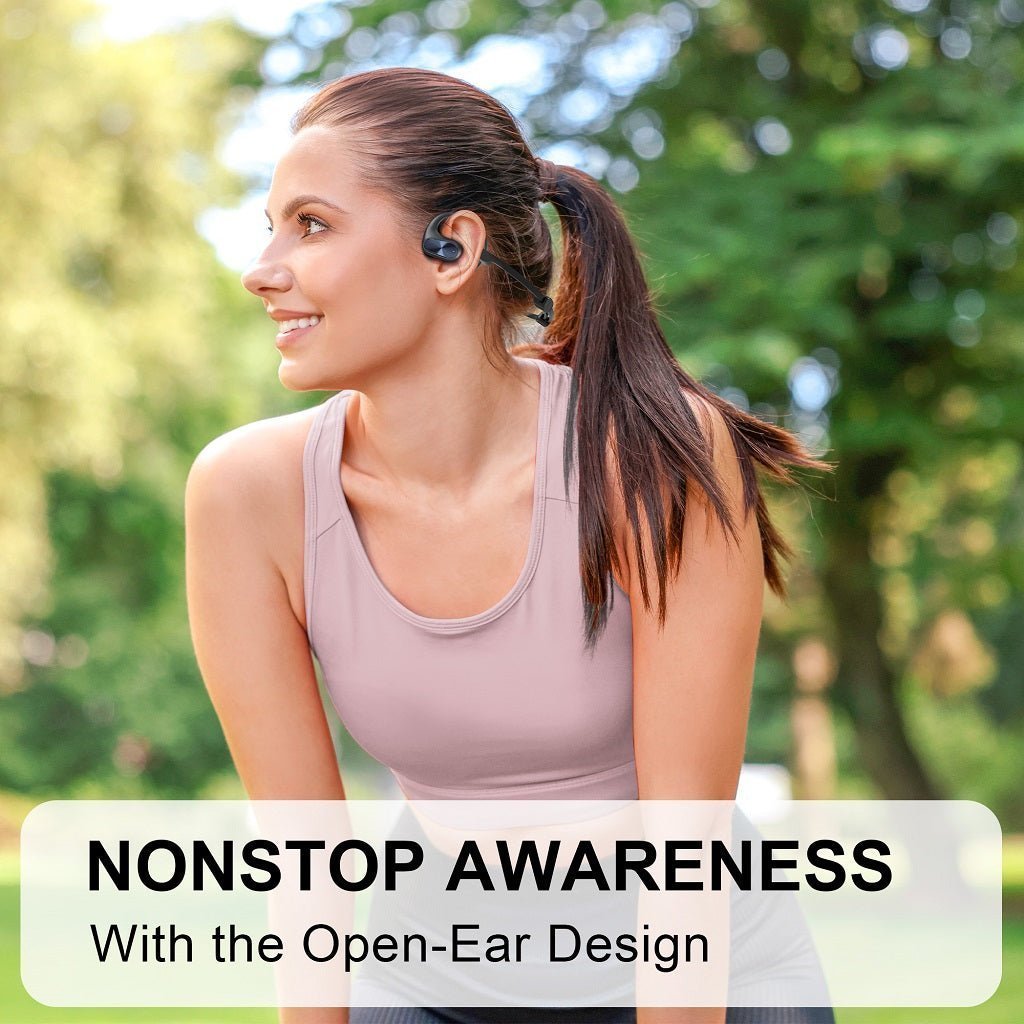
“Over-the-ear earbuds” usually means compact earbuds with a hook that loops over and behind the outer ear. You may also see “around-the-ear earbuds,” “ear-hook earbuds,” or “wraparound earbuds.” Check the actual design: some seal the ear canal, while others leave it open.

Quick answer: choose an ear-hook earbud when you want extra retention around the ear. Then decide whether you want a sealed in-ear tip or an open-ear speaker that leaves the canal unsealed. Clip-on and behind-the-head designs can solve a similar stability problem, but they fit differently.
What are over-the-ear earbuds called?
The clearest shopping term is usually ear-hook earbuds. You may also see around-the-ear earbuds, over-ear hook earbuds, wraparound earbuds, or sport earbuds with hooks. These names overlap, but you still need to check whether the speaker sits in or outside the ear canal.
Do not confuse the phrase with full-size over-ear headphones. Traditional over-ear headphones use large earcups and a headband; ear-hook earbuds use a small hook or support structure around each outer ear.
| Style | How it sits | What to check |
|---|---|---|
| Sealed ear-hook earbud | A hook wraps behind the outer ear while an ear tip sits in the ear canal. | Tip size, hook pressure, isolation, and whether the hook stays stable during movement. |
| Open-ear ear hook | A hook supports the device while a speaker rests near the ear canal without sealing it. | Speaker position, sound leakage, stability, and how much environmental sound you want to hear. |
| Open-ear clip | A clip grips part of the outer ear instead of looping over the top. | Clip pressure, ear shape, earrings, and whether glasses need the same space behind the ear. |
| Behind-the-head or bone-conduction band | A connected band supports both sides from behind the head. | Band position, hats or collars, activity, and whether you want the ear canal fully open. |
Choose the support style before comparing features
A hook can add another contact point, but it does not guarantee that every earbud will fit every ear. Ear shape, hook geometry, weight distribution, and the position of the speaker or ear tip all affect stability. If you prefer a clip instead, compare the Wantek OBT030 open-ear clip-on earbuds. They use a clip-on fit rather than a full wraparound hook.
If you wear glasses, check the space behind the ear instead of assuming the two products will fit together. Wantek’s ear-hook fit guide for earbuds and glasses explains the contact points that matter.
Open-ear and in-ear hooks solve different problems
An ear hook describes support, not whether the ear canal is open or sealed. A sport earbud can use a full hook and still place a silicone tip in the canal. An open-ear hook keeps the speaker outside the canal while using the outer ear for support.
If your main goal is to avoid anything sitting inside the ear canal, start with Wantek’s guide to headphones that do not go in your ear. It separates open-ear air-conduction, clip-on, bone-conduction, and open-fit designs.
For running and workouts, check more than the hook
Retention matters during repeated movement, but the hook is only one part of the decision. Check the manufacturer’s exact water-resistance claim, how the controls work with sweaty hands, whether the fit changes when you move, and whether you need to hear traffic, people, or gym instructions.
For model-by-model shopping, the wireless ear-hook headphone guide compares current hook-style options and separates sealed sport earbuds from open-ear designs.
Battery, controls, and calls still matter
Battery should match your longest normal session
Compare the earbud’s own rated listening time with your longest typical workout, commute, or work session. If the design uses a charging case, also check whether the case fits your routine rather than relying only on the larger total-battery figure. Battery runtime is not a safe listening limit: the World Health Organization’s safe-listening guidance explains why both volume and listening duration matter.
Controls should not disturb the fit
Buttons or touch controls are more useful when you can operate them without pushing the earbud out of position. The best control style depends on how you use the earbuds, including whether you wear gloves or frequently adjust them during exercise.
Microphone performance is a separate decision
A secure fit does not tell you how well a microphone will handle wind, traffic, or a noisy room. If calls are important, evaluate microphone placement and call features separately from the ear hook.
How to choose around-the-ear earbuds
- Decide whether you want an in-ear seal or an open ear canal.
- Choose the support style: full ear hook, open-ear hook, clip, or connected band.
- Check how the design shares space with glasses, hats, helmets, hair, or earrings.
- Match the water-resistance claim to the activity you actually do.
- Compare earbud battery, case battery, controls, and charging routine.
- Evaluate microphone needs separately if you plan to take calls.
Frequently asked questions
What are earbuds that go around your ear called?
They are usually called ear-hook earbuds. Some stores also use terms such as wraparound earbuds or over-ear hook earbuds, so check the actual wearing shape instead of relying on the name alone.
Are over-the-ear earbuds the same as over-ear headphones?
No. Ear-hook earbuds use a small support around the outer ear, while over-ear headphones normally use full-size earcups and a headband around the head.
Do ear-hook earbuds always go inside the ear canal?
No. Some use sealed in-ear tips, while open-ear models position a speaker outside the canal. The hook describes the support method, not the acoustic design.
Can you wear ear-hook earbuds with glasses?
Often, but comfort depends on the space behind your ear and the shapes of both the hook and glasses arm. Check them together rather than assuming compatibility.

