
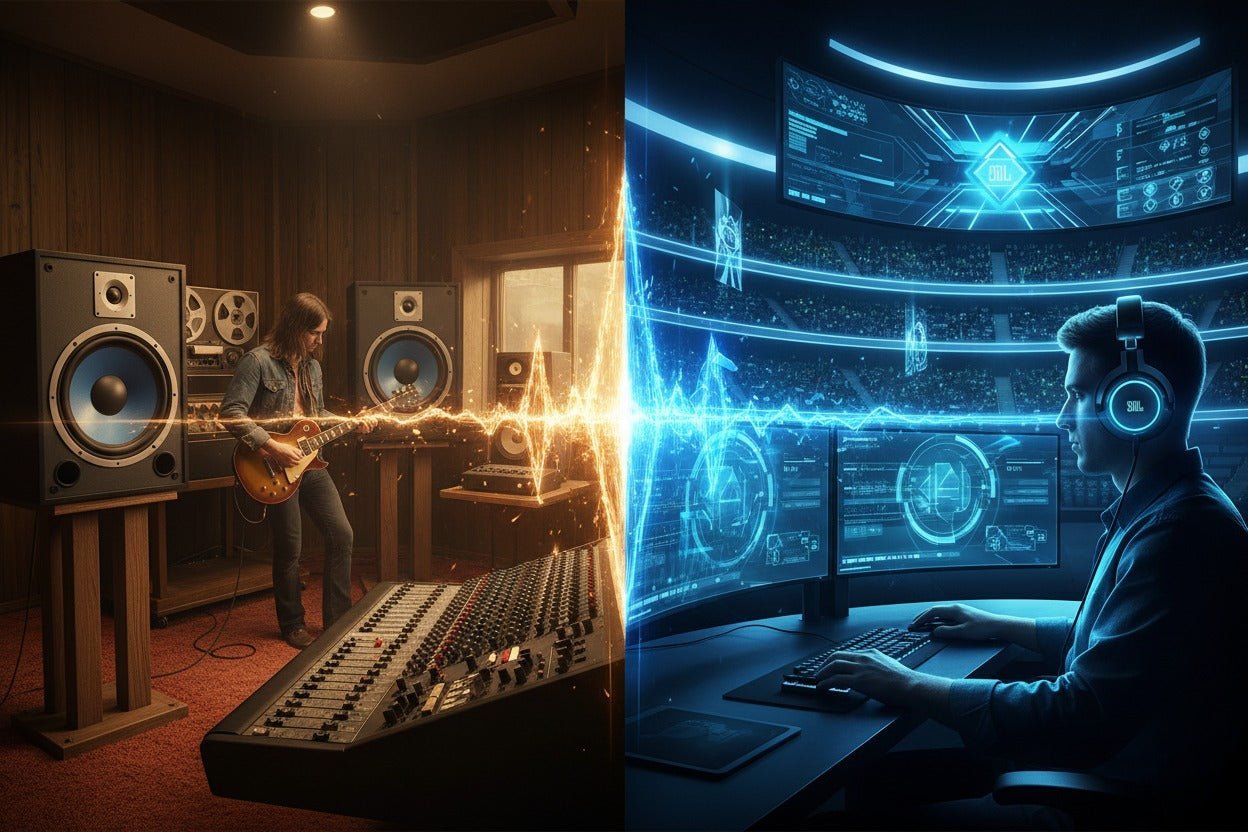
The audio landscape of competitive and immersive gaming is perpetually in flux. What we championed as revolutionary technology mere months ago can feel antiquated, even quaint, by the next hardware cycle. As we navigate 2026, the discourse has evolved. It is no longer a simplistic debate about “good sound.” The modern paradigm demands seamless ecosystem integration, personalized auditory environments, and gear that prioritizes performance over ostentatious, neon-lit theatrics. Enter JBL. This is a brand synonymous with audio purity, from studio monitors to festival-grade speakers. Their foray into gaming was initially met with curiosity. Could a legacy audio company truly compete in the hyper-saturated gaming headset arena? The answer, as I’ve discovered through relentless testing, is a resonant and definitive yes. They are not merely applying gamer aesthetics to existing drivers. They are engineering tactical audio tools. Today, I’m dissecting their lineup to identify which models truly warrant your investment. We will delve deep into the enduring value of the JBL Quantum 100, the strategic prowess of the JBL Quantum 400, and what their approach tells us about the state of play.
The JBL Philosophy: Where Studio Heritage Meets Digital Battlefields

My first professional microphone was a JBL. The expectation of clarity, of uncolored audio truth, was baked into my perception of the brand. When I first encountered a JBL gaming headset, I carried a skeptic’s burden. Gaming audio, particularly in the mainstream, has often pursued sensation over accuracy. Overwhelming bass. Sizzling treble. The mix is frequently tuned for immediate thrill, not strategic intelligence.
JBL subverts this entirely. Their secret weapon is a decades-deep reservoir of transducer technology and acoustic science. They approach a gaming headset not as a toy, but as a critical monitoring device. The goal is not to make explosions sound “cooler.” It is to ensure you can isolate the precise metallic click of a magazine being reloaded fifteen virtual meters away, behind a concrete wall, during a torrential in-game rainstorm. This distinction is everything. In 2026, with spatial audio APIs like Microsoft’s Sonic, Sony’s Tempest, and Dolby Atmos for Gaming being native to most platforms, accurate driver response is non-negotiable. You cannot effectively render a three-dimensional soundscape through a muddy, distorted speaker. JBL’s QuantumSOUND Signature is the foundation. It is a tuning philosophy borrowed from studio reference headphones: a flat, honest response that game engines and spatial software can build upon. This is the gamer’s audio sleeper hit. It’s the difference between hearing a threat and understanding its vector.
The 2026 Arsenal: A Ladder of Strategic Audio
JBL’s gaming portfolio is elegantly stratified. It functions as a clear ladder of ascension, where each rung represents a tangible infusion of features and refinement. There is no redundant model. Your choice hinges on a personal calculus: platform allegiance, environmental challenges, and your desired level of software control. This is not about “good, better, best.” It is about identifying the perfect tool for your specific auditory battlefield.
The Foundational Benchmark: JBL Quantum 100
Let us address the elephant in the room. The pursuit of high-fidelity gaming audio often carries a daunting financial barrier to entry. It is a realm of dizzying specifications and corresponding price tags. The JBL Quantum 100 stands in defiant opposition to this trend. It is a testament to the principle that core competency should not be a luxury. In my years reviewing peripherals, I have encountered few products that so consistently outperform their monetary valuation. This wired, 3.5mm jack headset is a perennial contender, a staple of “best budget” lists for a reason that transcends marketing.
I deployed a pair of Quantum 100 headsets during a community gaming workshop for teenagers. The hardware was a mix of aging laptops and consoles. The goal was accessibility. The result was revelatory. These young players, accustomed to the compressed audio of bundled earbuds or TV speakers, experienced directional sound for perhaps the first time. Their reactions were not about “better bass.” They were strategic: “I heard him running up the stairs!” or “The treasure chest was behind me!” That is the Quantum 100’s magic. It delivers the fundamental superpower of a proper JBL gaming headset—positional awareness—without any fiscal agony.
Its construction is pragmatic. The lightweight frame avoids cranial fatigue during marathon sessions. The memory foam ear cushions, while simple, provide a effective seal. The flip-to-mute boom microphone is a study in reliable, no-nonsense design. You will not find RGB lighting, active noise cancellation, or a dedicated software portal here. What you will find is the unadulterated essence of JBL’s audio philosophy. The drivers are clean and responsive. For PC gamers counting every dollar, console players seeking a universal plug-and-play solution, or veterans in need of an indestructible backup, the Quantum 100 is more than an option. It is a statement. It proves that exceptional game audio starts not at $150, but at a fraction of that price. It quietly asserts that you do not need to pay a premium to gain a critical advantage.
The Tactical Powerhouse: JBL Quantum 400
If the Quantum 100 is your essential infantry kit, the JBL Quantum 400 is specialized special forces gear. This model represents the inflection point where JBL’s gaming line transitions from offering pure value to delivering a comprehensive, feature-rich audio command center. The pivotal upgrade is the incorporation of genuine Active Noise Cancellation (ANC). Not passive isolation, which merely muffles the world, but intelligent, wave-form-cancelling technology. The significance of this in 2026 cannot be overstated. Our domestic environments are cacophonous. The hum of a gaming laptop’s cooling fans. The relentless drone of urban traffic. The distracting chatter from a nearby television. All of it constitutes auditory pollution that bleeds into your immersion and competitive focus.
My personal testing of the Quantum 400 coincided with a neighbor’s decision to take up the electric guitar. Poorly. The persistent, off-tempo strumming was a perfect stress test. Engaging the ANC was like stepping into a sealed audio chamber. The external world dissolved. In-game, within the tense corridors of Rainbow Six Siege, the effect was transformative. Subtle audio cues—the faint scrape of a drone moving, the almost inaudible placement of a trap—snapped into crystalline focus. I was not listening harder; I was listening cleaner. This is the competitive edge ANC provides. It allows you to perceive the game’s audio landscape at lower, safer volume levels, preserving your hearing while enhancing your performance.
The Quantum 400 also unlocks the full potential of the JBL QuantumENGINE software. This is where you graduate from passenger to pilot. The suite allows for profound customization:
- Parametric Equalizer: Craft bespoke sound profiles. Boost mid-range frequencies for vocal clarity in narrative RPGs. Sharpen the high-end for footstep detection in battle royales.
- Spatial Sound Calibration: Fine-tune the DTS Headphone:X 2.0 implementation. Adjust the width of the soundstage and the perceived height of audio objects.
- Mic Monitoring & RGB Control: Hear your own voice in the mix to avoid shouting, and personalize the subtle, single-zone headband lighting.
The JBL Quantum 400 is for the discerning gamer who operates in a noisy world. It is for the player who views audio settings not as a menu to ignore, but as a strategic toolkit to master. It bridges the gap between accessible pricing and high-end features, making it arguably the most compelling, well-rounded JBL gaming headset for the dedicated PC enthusiast. It doesn’t just play your game; it analyzes it.

The 2026 Context: What Defines a Top-Tier Gaming Headset Now?
Evaluating any piece of gaming hardware requires context. The benchmarks for excellence are not static. In 2026, a “top” headset must excel across a new matrix of demands that reflect how we actually play.
- Platform Agnosticism: The walls between ecosystems are crumbling. A serious headset must demonstrate fluency across PC, PlayStation, Xbox, and Nintendo Switch. It should offer seamless connectivity options for each, whether through universal analog connections, dedicated USB-C dongles, or multipoint Bluetooth. The ability to blend game audio from a console with Discord chat from a smartphone is not a party trick; it is a modern necessity for social gaming.
- The Comfort Imperative: Games are services, experiences designed for habitual, long-term engagement. A headset is an interface you wear. If it causes discomfort—through excessive clamping force, non-breathable materials, or weight distribution—it has failed its primary physical function. JBL’s designs often prioritize ergonomics over aggressive styling, a choice I find profoundly correct.
- The Microphone as Broadcast Tool: Every player is a potential content creator. A microphone must do more than transmit voice. It must reject background noise, maintain clarity under duress, and present a professional, intelligible tone to teammates and potential viewers alike. Noise-cancelling microphones with broadcast-style tuning are now standard expectations, not premium extras.
- Spatial Audio as a Native Language: The headset must have a strong, default spatial solution. While platform-level APIs are powerful, a built-in technology like DTS Headphone:X provides a consistent, customizable baseline that works everywhere, from legacy titles to the latest tech showcases.
A Narrative of Choice: Scenarios from the 2026 Grind
To understand the practical application, let’s visualize three distinct gamers in late 2026.
Alex, The Collegiate Strategist: Alex is a university student with a capable but not extravagant gaming laptop. Their dorm room is compact, their budget is tighter, and their gaming spans from competitive Valorant sessions to cooperative Baldur’s Gate 4 campaigns. For Alex, the JBL Quantum 100 is the unequivocal choice. It delivers the critical audio clarity needed for competitive play, ensures clean communication with teammates, and its low cost means a lost or damaged headset isn’t a financial crisis. It is the intelligent, foundational tool.
Sam, The Hybrid Commando: Sam works from a home office that doubles as a gaming den. Their environment features the constant low hum of computer fans, the occasional bark of a dog, and the distant sounds of family life. They play immersive single-player adventures, competitive FPS titles, and also use their headset for conference calls and music production. For Sam, the JBL Quantum 400 is a transformative device. The ANC creates a zone of focus for work and play. The software suite allows them to craft an audio profile for cinematic games, a separate one for pinpoint competitive audio, and a neutral profile for editing podcasts. It is the versatile, adaptive workhorse.
Jordan, The Wireless Streamer: Jordan’s setup is a multi-display, multi-device production studio. They stream regularly, requiring simultaneous management of game audio, chat applications, streaming software alerts, and background music. A tangled wire is a legitimate threat to their workflow. For Jordan, a flagship model like the JBL Quantum 910 Wireless (or its successor) is essential. The lossless 2.4GHz wireless connection guarantees audio fidelity and near-zero latency. The Bluetooth multipoint capability allows them to take a production call on their phone while game audio flows uninterrupted. The wireless freedom is not a convenience; it is the bedrock of a functional, professional content creation environment.
The Final Analysis: Priorities Over Prescriptions
What resonates most profoundly about JBL’s 2026 positioning is the coherence of their vision. There is no cynical, underperforming product placed solely to fill a price bracket. Each JBL gaming headset, from the humble Quantum 100 to the wireless flagships, is engineered around that core tenet of audio accuracy. The choice becomes beautifully clear, a matter of aligning features with your personal pain points.
The JBL Quantum 100 is a democratic masterpiece. It insists that high-quality gaming audio is a right, not a privilege. It is the most important product in their lineup because it builds the foundation of trust.
The JBL Quantum 400 is the strategic apex for the wired warrior. It solves real-world problems—ambient noise, audio customization—with elegant, effective technology. It is the definitive recommendation for the player who wants total control without venturing into the wireless premium.
In an industry often obsessed with spectacle, JBL’s approach is refreshingly grounded. They sell you not on fantasy, but on function. They provide not just a speaker for your games, but an analytical instrument for your virtual world. In the silent moment before a pivotal engagement, when the quality of your audio cue determines the outcome of a digital battle, that clarity is not just an advantage. It is the entire game. And in 2026, that game has never sounded more precise.
Frequently Asked Questions
Why are JBL gaming headsets a top choice for gamers in 2026?
What key features should I look for in the 2026 JBL gaming headset models?
Are the top JBL headsets for 2026 compatible with all gaming platforms?
How do the 2026 JBL gaming headsets handle microphone quality for team communication?
Read more
📖 Top Headphones for Flying – Noise Cancelling & Comfort
📖 3.5mm to Headphone Jack: The Complete Adapter Guide
📖 How to Use Bluetooth Headphones with TV – Easy Guide
📖 Green Headphones Guide: Top Picks from Beats to Sony Wireless
📖 What is Cyber Monday? History, Dates & Best Deals
📖 How to Set Up Call Forwarding on iPhone (Verizon & More)
📖 Discover the Best Cat Ear Headphones: Ultimate Wireless and Bluetooth
📖 Best Wired Noise Cancelling Headphones 2025 – Top Picks
📖 Best Noise Cancelling Earbuds for Airplane Travel: An In-Depth Review
📖 Best Gym Headphones 2025 – Top Wireless & Sweatproof Picks

