
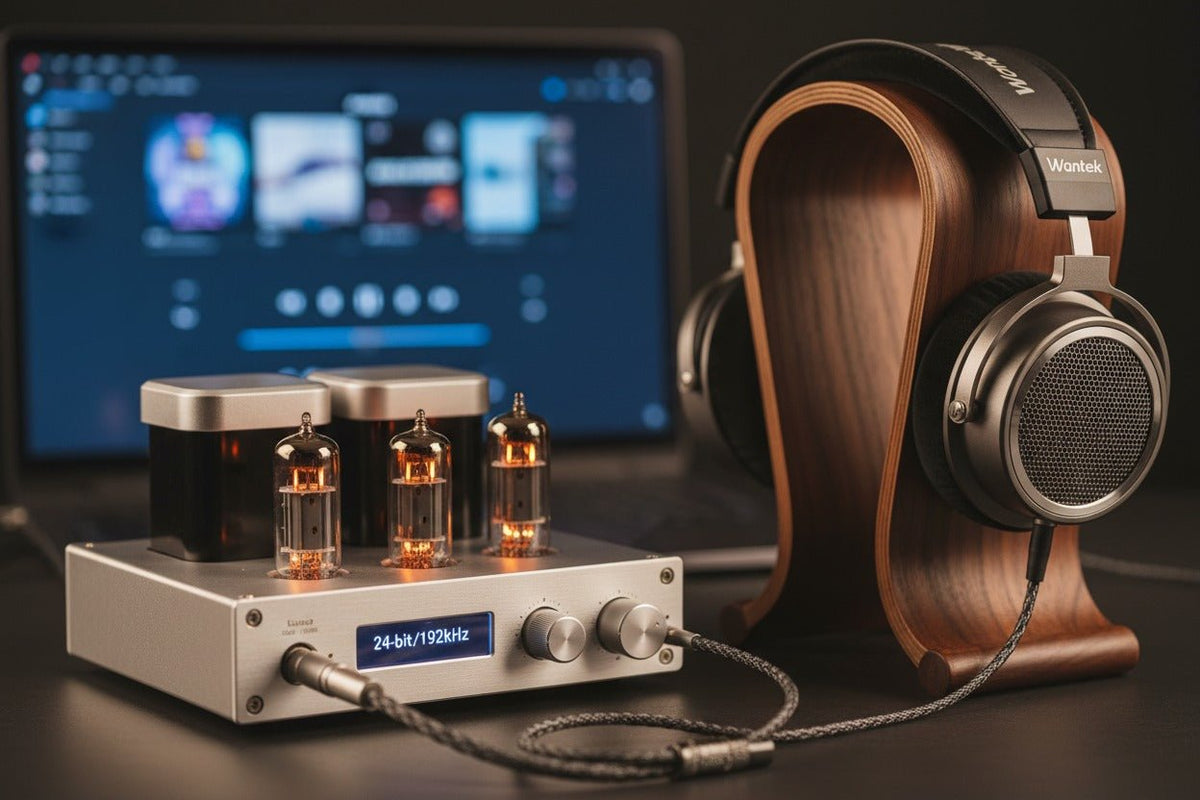
El audio sin pérdida (lossless) no requiere una categoría especial de «auriculares lossless». Requiere una fuente sin pérdida, una ruta de reproducción que preserve la señal y unos auriculares adecuados para su entorno de escucha y el hardware de su fuente. Para una reproducción sin pérdida predecible, una conexión por cable sigue siendo el camino más sencillo, pero los auriculares son solo una parte de la cadena.
Respuesta rápida: Para escuchar en habitaciones silenciosas, los Sennheiser HD 660S2, Audeze LCD-X, Focal Clear Mg, Beyerdynamic DT 1990 PRO MKII y Sony MDR-MV1 son cinco opciones actuales de diseño abierto con cable, con puntos fuertes distintos y especificaciones verificadas por el fabricante.
Importante: Esta es una lista basada en especificaciones y casos de uso, no una clasificación probada en laboratorio. Un DAC externo o un amplificador de auriculares solo son útiles cuando su fuente, conexión, formato o nivel de salida requerido así lo exijan.
Lo que realmente requiere el audio sin pérdida

Los formatos sin pérdida como FLAC y ALAC conservan los datos de audio necesarios para reconstruir la señal original tras la decodificación. La «alta resolución» (Hi-Res) es un concepto aparte: generalmente describe audio digital con una profundidad de bits o una frecuencia de muestreo superior a la calidad de CD de 16 bits/44,1 kHz.
La ruta completa es lo que importa. Una aplicación de streaming o un archivo local es decodificado por el dispositivo fuente, convertido de digital a analógico en algún punto de la cadena, amplificado y, finalmente, reproducido por los transductores de los auriculares. Los auriculares analógicos pasivos no decodifican archivos FLAC o ALAC por sí mismos, por lo que llamar «lossless» a unos auriculares pasivos es una forma abreviada de decir que pueden utilizarse en una cadena de reproducción sin pérdida.
La certificación Hi-Res Audio no es una clasificación de calidad de sonido
Los criterios de Hi-Res Audio de la Japan Audio Society definen los requisitos técnicos para los productos y rutas de señal elegibles. Cumplir con esos criterios no prueba que unos auriculares certificados suenen mejor que otros, y unos auriculares de gran calidad no se vuelven inadecuados para la escucha de audio sin pérdida simplemente por carecer de ese logotipo.
Conexión por cable, Bluetooth y USB: donde el audio sin pérdida puede perderse
El audio Bluetooth convencional suele añadir una etapa de códec entre la fuente y los auriculares. Apple afirma explícitamente que las conexiones Bluetooth no son sin pérdida, aunque también señala que los modelos actuales de AirPods Max con USB-C pueden reproducir audio sin pérdida a través de un cable USB-C. Esa distinción es importante: unos auriculares pueden ser inalámbricos para el uso diario y, aun así, admitir un modo digital por cable independiente.
Unos auriculares pasivos con clavija de 3,5 mm o 6,35 mm reciben una señal analógica después de que la conversión de digital a analógico haya ocurrido en el teléfono, ordenador, adaptador, interfaz, DAC o amplificador. El audio USB permanece digital durante más tiempo y se convierte más adelante en la cadena. Para una decisión más amplia sobre las conexiones, consulte la guía de Wantek sobre auriculares con cable frente a inalámbricos para escuchar música.
Regla práctica: No compre un DAC o amplificador externo solo porque unos auriculares se comercialicen para audiófilos. Primero confirme qué puede emitir su fuente, qué conector necesita y si los auriculares alcanzan su nivel de volumen preferido con nitidez.
Cómo se seleccionaron estos cinco auriculares
La lista mantiene el concepto de cinco modelos de la página original, pero ajusta el estándar de selección. Cada modelo debe tener una página del fabricante vigente, especificaciones verificables, un diseño abierto con cable adecuado para su uso en estudios o habitaciones silenciosas, y una razón clara para considerarlo. La lista no pretende basarse en pruebas prácticas ni en una clasificación de rendimiento absoluta del primero al quinto.

Cinco auriculares con cable para escucha de audio sin pérdida y de alta resolución
| Modelo | Especificaciones verificadas | Uso práctico |
|---|---|---|
| Sennheiser HD 660S2 | Dinámicos abiertos, 38 mm, 300 Ω, 104 dB SPL a 1 Vrms, 260 g | Escucha doméstica cuando se desea un diseño abierto de alta impedancia tradicional y se puede confirmar una salida de fuente adecuada. |
| Audeze LCD-X | Abiertos magnéticos planares, 106 mm, 20 Ω, 103 dB/1mW, 612 g | Uso en estudio o en el hogar cuando el diseño magnético planar es la prioridad y el peso de 612 g es aceptable. |
| Focal Clear Mg | Dinámicos abiertos, transductor de magnesio de 40 mm, 55 Ω, 450 g | Escucha doméstica premium con impedancia moderada y una ruta de señal con transductor dinámico convencional. |
| Beyerdynamic DT 1990 PRO MKII | Dinámicos abiertos, TESLA.45, 30 Ω, 376 g, 5 Hz–40 kHz | Mezcla, masterización y edición; el modelo MKII actual es más fácil de combinar con diversas fuentes que el anterior modelo de 250 Ω. |
| Sony MDR-MV1 | Monitor de estudio dinámico abierto, respuesta de 5 Hz–80 kHz según fabricante | Producción espacial y estéreo, o monitorización abierta ligera donde la flexibilidad de la fuente es importante. |
Sennheiser HD 660S2: Abiertos de alta impedancia tradicionales
Sennheiser especifica el HD 660S2 como unos auriculares dinámicos abiertos con un transductor de 38 mm, impedancia de 300 Ω, 104 dB SPL a 1 Vrms y un peso de 260 g. Incluye cables de 6,3 mm y 4,4 mm, además de un adaptador de 3,5 mm. Esa combinación lo convierte en una opción sencilla para la escucha doméstica, pero su impedancia de 300 Ω significa que la capacidad de la fuente merece más atención que con los modelos de menor impedancia mencionados a continuación.
La distinción importante es que 300 Ω no significa automáticamente «debe comprar un amplificador dedicado». La verdadera cuestión es si su fuente actual puede proporcionar suficiente voltaje limpio para el nivel de escucha que desea.
Audeze LCD-X: Magnéticos planares para estudio y uso doméstico
Los LCD-X utilizan transductores magnéticos planares de 106 mm y se especifican con 20 Ω, una sensibilidad de 103 dB/1mW y 612 g de peso. Audeze también publica un nivel de potencia recomendado superior a 250 mW. Esas cifras hacen que la combinación con la fuente no dependa solo de la impedancia, sino de la potencia disponible, el margen dinámico y la etapa de salida que planee utilizar.
Su mayor desventaja práctica es fácil de identificar sin inventar una clasificación de sonido: el peso. Con 612 g, son sustancialmente más pesados que los otros modelos aquí presentados, por lo que vale la pena evaluar la comodidad en sesiones largas antes de la compra.
Focal Clear Mg: Opción premium con transductor dinámico
Focal enumera los Clear Mg como unos auriculares abiertos con transductor de cúpula en forma de M de magnesio de 40 mm, impedancia de 55 Ω, peso de 450 g y una respuesta en frecuencia de 5 Hz–23 kHz dentro de su tolerancia declarada. El cableado suministrado admite tanto la escucha común de un solo extremo como una conexión XLR de 4 pines.
La extensión de la respuesta en frecuencia en una hoja de especificaciones no debe tratarse como un atajo hacia una reproducción «mejor» sin pérdida. Los Clear Mg pertenecen a esta lista porque son un modelo abierto premium actual con especificaciones eléctricas y acústicas claramente documentadas, no porque un número demuestre una fidelidad superior.
Beyerdynamic DT 1990 PRO MKII: Sucesor actual enfocado al estudio
El actual DT 1990 PRO MKII sustituye al anterior DT 1990 Pro de 250 Ω utilizado en el artículo original. Beyerdynamic especifica el MKII con 30 Ω, 376 g y 5 Hz–40 kHz, utilizando su transductor TESLA.45. La empresa lo posiciona para mezcla, masterización y edición, y suministra cables desmontables tanto rectos como en espiral.
Esta actualización es importante porque repetir la cifra de 250 Ω de la primera generación daría a los lectores una expectativa de combinación con la fuente incorrecta para el modelo actual. Una menor impedancia nominal no garantiza una combinación perfecta con todas las salidas, pero elimina la suposición general del artículo original de que este modelo exige necesariamente un amplificador de auriculares de alto voltaje.
Sony MDR-MV1: Monitor abierto para producción espacial y estéreo
Sony posiciona los MDR-MV1 como un monitor de referencia abierto para mezclar y masterizar tanto sonido espacial como estéreo. Su respuesta en frecuencia, declarada por el fabricante, se extiende de 5 Hz a 80 kHz, y el cable desmontable termina en una clavija de 6,3 mm con un adaptador de 3,5 mm para una mayor compatibilidad con equipos.
Los MDR-MV1 son la opción más específica para la producción de esta lista. La razón de su inclusión no es una afirmación de que el audio espacial mejore automáticamente la música sin pérdida; es que Sony los diseñó para monitorización en estudio, trabajos en estéreo y producción espacial, al tiempo que admite la reproducción de alta resolución.
¿Necesita un DAC o un amplificador de auriculares?
No siempre. Toda cadena de reproducción digital necesita una conversión de digital a analógico en algún punto, pero ese convertidor ya puede estar dentro de su teléfono, ordenador, interfaz de audio, adaptador USB u otro dispositivo de reproducción. Un DAC independiente es útil cuando su dispositivo actual no puede proporcionar la conexión, la compatibilidad con la frecuencia de muestreo, el rendimiento de ruido o la ruta de salida que necesita.
Apple, por ejemplo, declara que se requiere un DAC externo en iPhone o iPad para pistas de Apple Music superiores a 48 kHz. Esa es una limitación del dispositivo fuente, no una regla universal para todas las pistas sin pérdida o todos los auriculares.
Un amplificador de auriculares independiente está sujeto a condiciones similares. Considere uno cuando su salida actual no pueda alcanzar su nivel de escucha preferido con nitidez o cuando el fabricante de los auriculares especifique necesidades de potencia que su fuente no puede satisfacer. Utilice la impedancia y la sensibilidad conjuntamente en lugar de tratar cualquiera de los números de forma aislada.
Opciones actuales de streaming sin pérdida
| Servicio | Oferta actual sin pérdida | Qué verificar |
|---|---|---|
| Apple Music | Lossless y Hi-Res Lossless; Apple documenta reproducción hasta 24 bits/192 kHz. | Ruta de conexión y compatibilidad del DAC; por encima de 48 kHz puede requerir un DAC externo en algunos dispositivos Apple. |
| TIDAL | FLAC a 16 bits/44,1 kHz para High y HiRes FLAC hasta 24 bits/192 kHz para Max. | Formato de pista, compatibilidad del dispositivo y si su DAC admite la calidad seleccionada. |
| Qobuz | FLAC 16 bits/44,1 kHz más audio de alta resolución de 24 bits hasta 192 kHz. | Versión disponible del álbum y el hardware de reproducción utilizado para la salida de alta resolución. |
| Spotify | Lossless para oyentes Premium elegibles, hasta 24 bits/44,1 kHz. | Elegibilidad del plan, compatibilidad de la aplicación/dispositivo, condiciones de la red y tipo de conexión. |
Actualización de TIDAL: MQA ya no forma parte de la ruta actual de audio sin pérdida de TIDAL. TIDAL eliminó el acceso a MQA y 360 Reality Audio el 24 de julio de 2024 y ahora utiliza FLAC/HiRes FLAC para la reproducción estéreo sin pérdida.
Cómo elegir el modelo adecuado para su equipo
- Comience por la sala. Los cinco modelos aquí presentados son abiertos. Filtran sonido y ofrecen poco aislamiento, por lo que tienen más sentido en una habitación silenciosa que durante un trayecto diario o en una oficina compartida.
- Compruebe la fuente antes de comprar accesorios. Identifique el conector de salida, los formatos admitidos y la potencia disponible para auriculares antes de asumir que necesita un nuevo DAC o amplificador.
- Use las especificaciones eléctricas en conjunto. La impedancia, la sensibilidad y la capacidad de salida de la fuente importan más que una etiqueta genérica de «fácil de mover».
- Tenga en cuenta la comodidad física. Los Audeze LCD-X pesan 612 g, mientras que los Sennheiser HD 660S2 pesan 260 g; esa diferencia puede importar más durante una sesión larga que una línea extra en una hoja de especificaciones de formato.
- Coincida con el trabajo. Un monitor orientado al estudio como el MDR-MV1 o el DT 1990 PRO MKII puede tener sentido para trabajos de producción, mientras que un oyente doméstico puede priorizar la comodidad, la combinación con la fuente y la afinación preferida.
Conclusión
Para la escucha de audio sin pérdida, la mejor compra no es el auricular con el número de respuesta en frecuencia más alto ni el marketing de «Hi-Res» más agresivo. Elija unos auriculares que se adapten a su habitación, fuente, necesidades de comodidad y trabajo de escucha, y luego verifique que la ruta completa de reproducción preserve el formato que pretende usar.
Los cinco modelos anteriores siguen siendo candidatos útiles porque cubren diferentes enfoques abiertos con cable sin requerir una clasificación general ficticia. Si su fuente actual ya hace funcionar sus auriculares elegidos con limpieza y admite el formato que desea, añadir más hardware es opcional, no un requisito previo para la reproducción sin pérdida.
Preguntas frecuentes
¿Hacen los auriculares que el audio sea sin pérdida?
No. «Sin pérdida» describe la fuente y la ruta de transmisión/decodificación. Los auriculares con cable pasivos reproducen la señal analógica que reciben; no decodifican archivos FLAC o ALAC por sí mismos.
¿Necesito auriculares con cable para audio sin pérdida?
Una ruta por cable es la opción predecible más sencilla, pero no todos los auriculares «inalámbricos» se limitan al Bluetooth. Algunos modelos también admiten reproducción sin pérdida a través de USB-C u otro modo por cable.
¿Necesito siempre un DAC externo para audio sin pérdida de alta resolución?
No. Necesita un DAC en alguna parte de la cadena, pero puede estar ya integrado en su fuente. Añada un DAC externo solo cuando la fuente o el formato de destino lo requieran.
¿Garantiza el logotipo de Hi-Res Audio un mejor sonido?
No. El logotipo indica el cumplimiento de unos criterios técnicos definidos. No clasifica los auriculares unos frente a otros ni prueba que un modelo certificado sonará mejor para cada oyente.
¿Pueden los AirPods Max reproducir audio sin pérdida?
Apple afirma que los modelos actuales de AirPods Max con USB-C pueden reproducir audio sin pérdida a través de un cable USB-C. La reproducción por Bluetooth sigue sin ser sin pérdida, por lo que el modo de conexión activo es lo que importa.

