
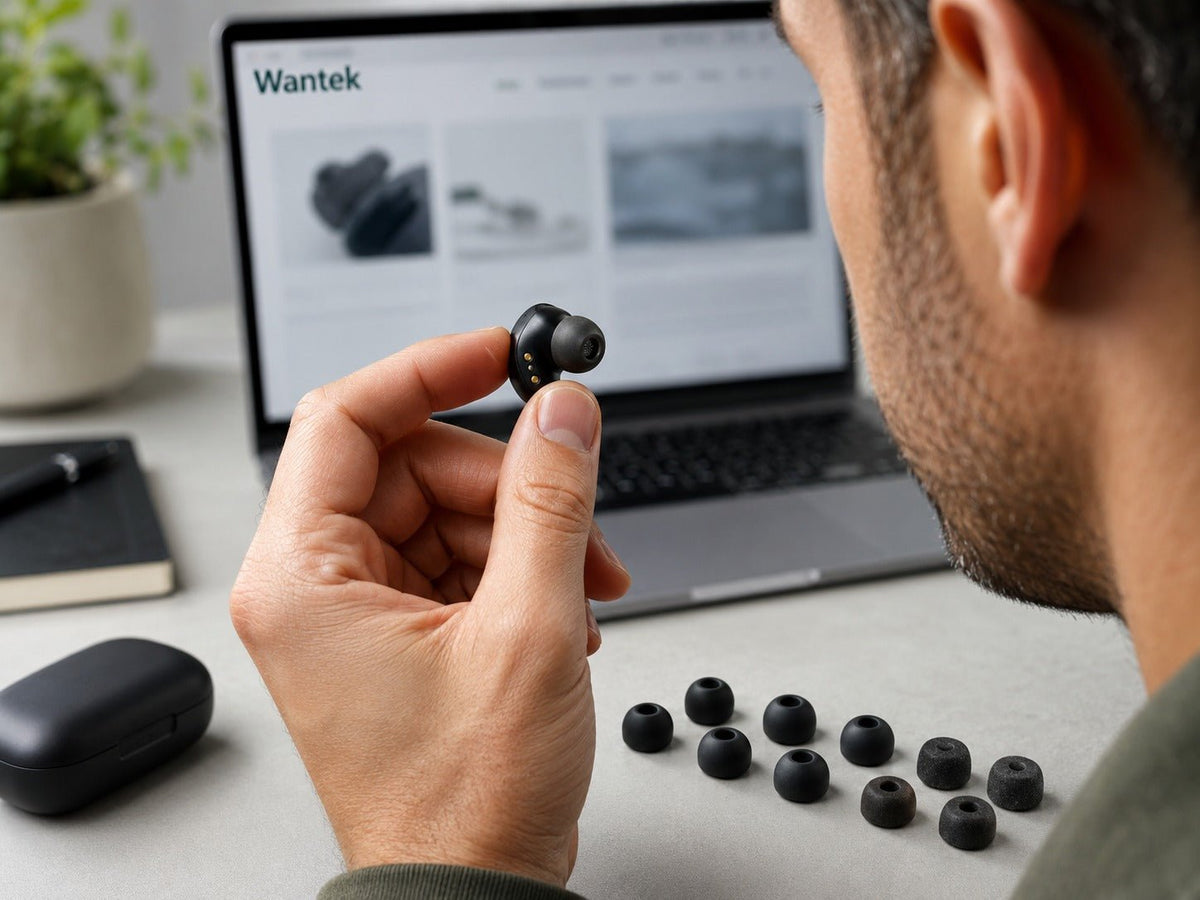
Elegir auriculares hipoalergénicos para oídos sensibles tiene menos que ver con confiar en una etiqueta y más con entender qué es lo que realmente toca tu piel. El metal expuesto, los adhesivos, los materiales de las almohadillas, la humedad atrapada, la fricción, la presión y los productos de limpieza son factores importantes. Un proceso de compra práctico comienza por identificar el probable desencadenante, comprobar las declaraciones de materiales del fabricante y elegir un ajuste que puedas regular.
Respuesta rápida: Ningún auricular garantiza estar libre de alérgenos para todo el mundo. Si tienes oídos sensibles, prioriza la información clara sobre los materiales, las piezas de contacto reemplazables, las múltiples opciones de ajuste y las instrucciones de limpieza específicas para el producto. Si el problema principal es la presión en el oído o la humedad, un diseño de oído abierto puede ser una mejor opción a considerar.
Por qué los auriculares pueden irritar los oídos sensibles
El picor, el enrojecimiento, la hinchazón, la descamación o el dolor tras el uso de auriculares pueden tener más de una causa. La dermatitis de contacto alérgica es una reacción inmunitaria retardada a una sustancia específica, mientras que la dermatitis de contacto irritativa puede derivar de la fricción, la humedad, la presión o la exposición repetida a residuos irritantes. También pueden presentarse síntomas similares cuando varios factores se solapan.
La pregunta útil no es simplemente "¿Son estos auriculares hipoalergénicos?", sino "¿Qué materiales están en contacto con mi piel, cuánto tiempo permanecen ahí y qué cambia cuando modifico el ajuste, la almohadilla, el método de limpieza o el estilo de uso?".
Materiales comunes y desencadenantes a comprobar
Níquel y otros metales
El níquel es un alérgeno de contacto bien conocido. En el caso de los auriculares, la preocupación práctica es si hay presencia de metal con níquel en una superficie de contacto con la piel y si el desgaste, el sudor o la corrosión pueden aumentar la exposición. El cobalto y el cromo también pueden causar alergia de contacto en personas sensibilizadas, por lo que etiquetas genéricas como "acero inoxidable" o "acero quirúrgico" no son suficientes para demostrar que unos auriculares específicos son adecuados para una alergia determinada.
Acrilatos, metacrilatos y adhesivos
Los acrilatos y metacrilatos se utilizan en muchos sistemas adhesivos y polímeros. Algunas personas desarrollan alergia de contacto a compuestos específicos de estas familias. La guía actual de Apple sobre materiales para dispositivos portátiles, por ejemplo, indica que los AirPods y productos relacionados contienen trazas de acrilatos y metacrilatos procedentes de adhesivos y que su malla acústica de acero inoxidable contiene algo de níquel. Ese tipo de declaración específica del producto es más útil que una afirmación genérica de "respetuoso con la piel".
Aditivos del caucho y resina
Los tiuramos, carbamatos, compuestos mercapto y productos químicos relacionados del caucho son alérgenos de contacto reconocidos. Los derivados de la resina o colofonia también pueden provocar dermatitis de contacto alérgica en usuarios susceptibles. Su presencia no debe asumirse en una almohadilla o adhesivo concreto sin pruebas específicas del producto.

Qué te dice —y qué no— el término "hipoalergénico"
"Hipoalergénico" debe tratarse como un término de evaluación, no como una garantía. La Administración de Alimentos y Medicamentos de EE. UU. (FDA) afirma que no existen normas federales ni definiciones que regulen el término "hipoalergénico" para los cosméticos. Esa norma se aplica a los cosméticos, no a los auriculares, pero la lección para el comprador es la misma: la palabra en sí es una evidencia más débil que una declaración clara de materiales o una prueba específica del producto.
La transparencia sobre los materiales importa más que una etiqueta tranquilizadora. Busca los materiales exactos en contacto con la piel, los recubrimientos, los adhesivos y las piezas reemplazables en lugar de asumir que un producto es seguro porque se comercializa para pieles sensibles.
Titanio y acero inoxidable
Ciertas aleaciones de titanio y aceros inoxidables estrictamente controlados se utilizan ampliamente en aplicaciones médicas, pero eso no hace que todos los productos de consumo que contienen titanio o acero sean a prueba de alergias. El acabado de la superficie, los recubrimientos, la composición, el desgaste, la corrosión y el contacto real con la piel siguen siendo importantes.
Silicona
Las almohadillas de silicona son comunes porque son flexibles, lavables en muchos diseños y están disponibles en varios tamaños. Una afirmación de "grado médico" solo es significativa cuando el fabricante identifica la formulación o la evaluación de respaldo. La norma ISO 10993-1:2025 describe la evaluación de la seguridad biológica de los dispositivos médicos dentro de un proceso de gestión de riesgos; no es una certificación universal que convierta a unos auriculares de consumo o a una formulación de silicona en no alergénicos.
Espuma viscoelástica y otros elastómeros
La espuma viscoelástica de poliuretano puede mejorar la adaptación y el sellado, pero las formulaciones difieren y las instrucciones de limpieza son específicas del material. Los elastómeros termoplásticos y las siliconas especiales también varían en cuanto a aditivos y química de superficie. Para los oídos sensibles, el nombre de la familia de materiales rara vez es información suficiente.

Auriculares a evaluar para oídos sensibles
No existe el auricular universal "más seguro" para todas las alergias. Una comparación más útil pregunta qué revela realmente el fabricante, qué partes tocan la piel, si esas partes son reemplazables y cuánta flexibilidad de ajuste ofrece el diseño.
| Modelo | Lo que el fabricante revela | Por qué puede importar | Limitación importante |
|---|---|---|---|
| Familia Apple AirPods Pro | Apple enumera la carcasa de plástico, las almohadillas de silicona o espuma de silicona, la malla acústica de acero inoxidable, algo de níquel en la malla y trazas de acrilatos/metacrilatos de los adhesivos. | La divulgación inusualmente detallada sobre el contacto con la piel ayuda a los usuarios con sensibilidades conocidas a evaluar materiales específicos. | La transparencia de materiales no hace que el producto esté libre de níquel o acrilatos. |
| Jabra Elite 10 Gen 2 | Jabra enumera cuatro tamaños de EarGels y publica el ajuste del modelo, la clasificación IP y las especificaciones del producto. | Varios tamaños de almohadillas pueden ayudar a reducir los problemas de presión y sellado cuando el ajuste es el principal desencadenante de la irritación. | La flexibilidad de ajuste no es prueba de hipoalergenicidad. |
| Auriculares Bose QuietComfort Ultra | Bose ofrece tres tamaños de almohadillas y tres tamaños de bandas de estabilidad que se pueden combinar. | Los tamaños separados para la almohadilla y la banda de estabilidad ofrecen más formas de cambiar la distribución de la presión. | Un ajuste cómodo no descarta la sensibilidad a un material de contacto. |
| Sony WF-1000XM5 | Sony suministra almohadillas con aislamiento de ruido y publica guías de ajuste y limpieza específicas del modelo. | El ajuste se puede regular mediante el tamaño de la almohadilla, y Sony advierte que sus almohadillas de espuma de poliuretano requieren un manejo específico. | La espuma no debe describirse automáticamente como hipoalergénica. |
| Shure AONIC 215 Gen 2 | Shure incluye fundas reemplazables Soft Flex y fundas de espuma en varios tamaños. | Las piezas de contacto reemplazables facilitan la experimentación con el ajuste y el tipo de funda. | La reemplazabilidad es útil, pero no garantiza la compatibilidad con una alergia específica. |
Principio de comparación: El rendimiento de la cancelación de ruido, la duración de la batería, la resistencia al agua y la calidad del sonido pueden importar en tu compra, pero ninguna de esas funciones prueba por sí sola un menor riesgo de alergia.
Cómo reducir la irritación causada por el ajuste, la humedad y la limpieza
1. Comienza con el tamaño correcto
La almohadilla debe crear el sellado previsto sin ejercer una presión dolorosa. Los oídos izquierdo y derecho no siempre necesitan el mismo tamaño. Si aparece irritación exactamente donde presiona la almohadilla o la carcasa, cambiar el tamaño o la forma puede importar más que cambiar de marca.
2. Evita la presión continua
Incluso un material relativamente inerte puede resultar incómodo cuando roza o presiona la misma zona durante horas. La sensibilidad persistente es un problema de ajuste que merece la pena solucionar, no algo que deba "ceder" con el uso. Quitarse los auriculares periódicamente también reduce el calor y la humedad continuos.
3. Sigue las instrucciones de limpieza exactas
No trates el alcohol isopropílico al 70% como un limpiador universal de auriculares. Los disolventes pueden dañar algunos recubrimientos, plásticos, mallas y almohadillas de poliuretano. Utiliza las instrucciones de limpieza del fabricante para el modelo y componente exactos. Reemplaza las almohadillas cuando se rompan, se endurezcan, se compriman permanentemente, pierdan elasticidad o ya no se puedan limpiar adecuadamente.

Cuando la sensibilidad al material no está clara
Las pruebas de comodidad y las pruebas de alergia responden a preguntas diferentes. Un periodo de devolución puede ayudarte a evaluar la presión, la estabilidad y la comodidad durante un uso prolongado. No puede identificar un alérgeno de contacto específico.
Las pruebas epicutáneas (parches) utilizan alérgenos definidos y lecturas retardadas para investigar la dermatitis de contacto alérgica. La Academia Americana de Dermatología explica cómo se utilizan estas pruebas para identificar las sustancias que pueden estar causando una erupción recurrente. Llevar información sobre los materiales del producto sospechoso puede ayudar a limitar las exposiciones relevantes.
¿Podría el propio Bluetooth causar dermatitis de contacto alérgica?
La radiofrecuencia de Bluetooth no es un alérgeno de contacto. La dermatitis de contacto alérgica está causada por una respuesta inmunitaria a las sustancias que entran en contacto con la piel. Las molestias por los auriculares pueden provenir de otros factores, como la presión, la fricción, el sudor, la oclusión o los residuos de limpieza.
Considera un estilo de uso diferente
Si la irritación sigue ocurriendo dentro del canal auditivo, cambiar el diseño puede ser más útil que cambiar repetidamente de marca de almohadillas de silicona. Los auriculares de diadema trasladan la zona principal de contacto a las almohadillas alrededor del oído, mientras que los diseños de oído abierto dejan el canal auditivo sin sellar. Cada enfoque crea diferentes puntos de contacto y ventajas o inconvenientes.
La guía de tipos de auriculares de Wantek compara los diseños intrauditivos, circumaurales, supraaurales y de ajuste abierto para que puedas diferenciar un problema de material de un problema de formato.

Alternativa de oído abierto: evitar las almohadillas de silicona dentro del canal
El Wantek OBT030 utiliza un diseño de clip de oído abierto, por lo que las almohadillas de silicona no se introducen en el canal auditivo. Esto puede ser útil cuando el problema es la presión en el canal o cuando simplemente prefieres un diseño que deje el canal abierto. No debe describirse como "a prueba de alergias" porque las superficies de contacto del oído externo siguen siendo importantes.
Compara un estilo de uso de oído abierto
Revisa el diseño, el ajuste, la información de la batería y las especificaciones del producto del Wantek OBT030 antes de decidir si un formato de clip de oído abierto se adapta mejor a tus necesidades.
Lista de control práctica para la compra
- Identifica el desencadenante que intentas evitar: un alérgeno conocido, presión en el canal, fricción, humedad o una reacción recurrente incierta.
- Comprueba los materiales en contacto con la piel: busca los materiales exactos en lugar de etiquetas amplias como "metal premium", "grado médico" o "hipoalergénico".
- Busca piezas de contacto reemplazables: las almohadillas o fundas extraíbles facilitan cambiar la interfaz sin reemplazar todo el auricular.
- Prioriza la flexibilidad de ajuste: varios tamaños de almohadillas, piezas de estabilidad alternativas o un estilo de uso diferente pueden reducir la irritación relacionada con la presión.
- Lee las instrucciones de limpieza antes de comprar: un material que requiere un cuidado que no seguirás de forma realista es una mala elección.
- Utiliza los términos de devolución para probar la comodidad: evalúa sesiones de uso realistas en lugar de asumir que una prueba corta predice la comodidad durante todo el día.
Referencias clave para afirmaciones sobre materiales y sensibilidad cutánea
- FDA de EE. UU.: Cosméticos "hipoalergénicos" — útil para entender por qué la palabra "hipoalergénico" no es un sustituto de la justificación.
- ISO 10993-1:2025 — la página estándar actual para la evaluación biológica de dispositivos médicos dentro de un proceso de gestión de riesgos.
- Apple: Uso de sus dispositivos AirPods, EarPods o Beats — divulgación de materiales y sensibilidad cutánea de la familia de productos, incluidos el níquel y los acrilatos.
- Academia Americana de Dermatología: Pruebas de parche — explica cómo se utilizan las pruebas de parche para investigar la dermatitis de contacto alérgica.
- Jabra Elite 10 Gen 2, Kit de ajuste de auriculares Bose QuietComfort Ultra, Especificaciones del Sony WF-1000XM5, y Shure AONIC 215 Gen 2 — fuentes del fabricante para la tabla comparativa.
Preguntas frecuentes
¿Son los auriculares hipoalergénicos seguros para todas las personas con alergia a los metales?
No. "Hipoalergénico" no significa libre de alérgenos. Si el níquel es un alérgeno conocido, prioriza la información explícita sobre los materiales y minimiza el contacto directo con superficies que contengan níquel en lugar de confiar solo en la etiqueta.
¿Pueden las almohadillas de silicona seguir irritando los oídos sensibles?
Sí. Incluso cuando el material en sí se tolera, una almohadilla puede causar irritación a través de la presión, la fricción, la humedad atrapada, un tamaño inadecuado o residuos de productos de limpieza.
¿Cómo puedo realizarme una prueba de parche para los materiales de los auriculares?
Las pruebas de parche colocan alérgenos seleccionados en la piel y comprueban si hay reacciones retardadas durante varios días. La información sobre los materiales del producto puede ayudar a identificar qué alérgenos son los más relevantes para investigar.
¿Puede el Bluetooth causar una reacción alérgica?
El Bluetooth no es un alérgeno de contacto. Las reacciones a los auriculares están más plausiblemente relacionadas con sustancias que tocan la piel o con factores no alérgicos como la fricción, la presión, la humedad o los residuos.
¿Con qué frecuencia debo reemplazar las almohadillas?
Reemplázalas cuando se agrieten, se rompan, se endurezcan, se compriman permanentemente, pierdan elasticidad, ya no sellen correctamente o no se puedan limpiar adecuadamente. Sigue la guía específica del material del fabricante cuando esté disponible.
Conclusión
El mejor enfoque para los auriculares hipoalergénicos es priorizar la evidencia. Comienza con el desencadenante probable, luego compara los materiales y superficies exactos que tocan el oído, la capacidad de cambiar el ajuste o las almohadillas, y las instrucciones de limpieza del producto. Si el formato sellado dentro del oído causa problemas de presión o humedad, considera un estilo de uso diferente en lugar de perseguir una etiqueta universal de "seguro contra alergias".

