
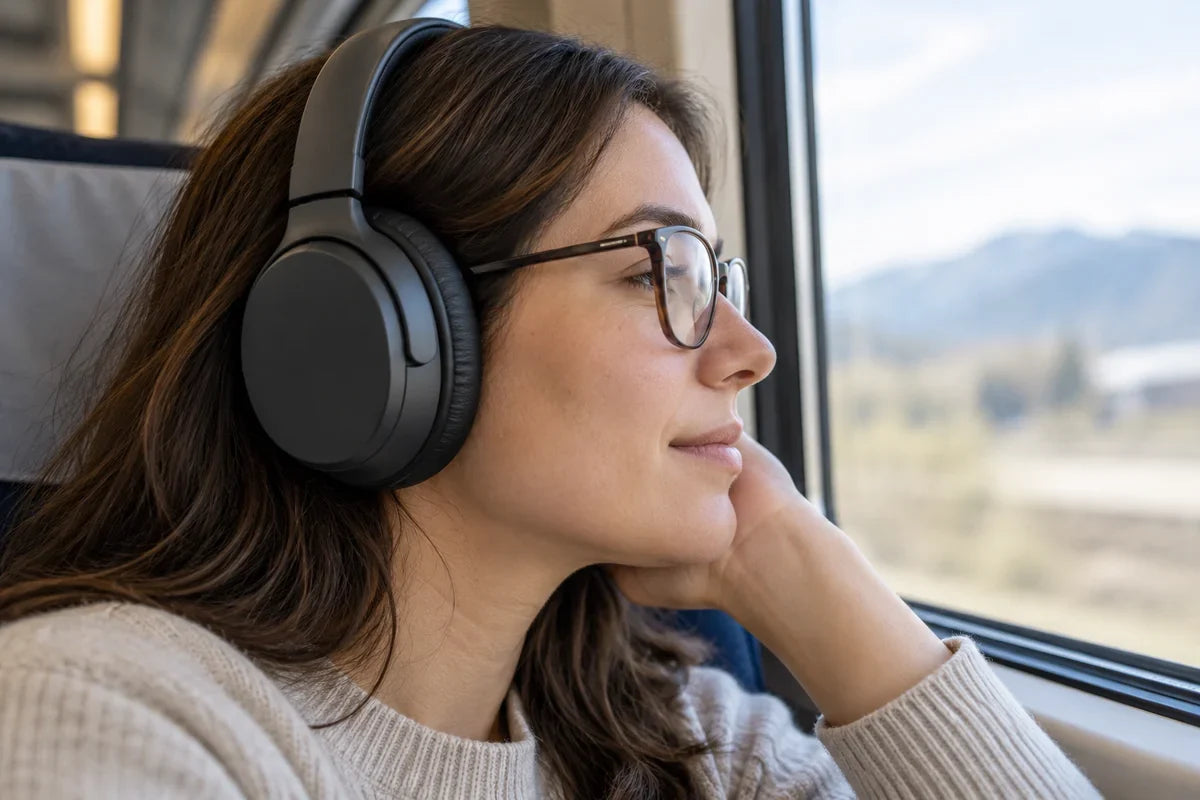
The best headphones for glasses leave enough room for your ears, cushion the frame arms without pinching, and stay comfortable when you turn your head. Start with soft over-ear pads if you want noise cancellation. If pressure under the pads is your main problem, consider earbuds or an open-ear design and check their contact points separately.
Where to start: Compare Bose QuietComfort Headphones (2nd Gen) for over-ear noise cancellation, Turtle Beach Stealth 600 (Gen 3) for gaming, and Shokz OpenRun Pro 2 for open-ear listening. These are three different approaches to fit, selected from published manufacturer information. They are not a hands-on comfort ranking, and none guarantees a comfortable fit with every pair of glasses.
Three Headphones to Try With Your Glasses
Choose the listening task first, then test the fit with the frames you actually wear. A gaming headset's microphone and connection options solve a different problem from an open-ear sports headphone's wearing style.
| Candidate | Reason to consider it | Check before keeping it |
|---|---|---|
| Bose QuietComfort Headphones (2nd Gen) | Over-ear ANC; Bose describes soft cushioning and noise cancellation that compensates for earcup seal gaps. | Pressure where your frame arms pass beneath the cushions, plus noise reduction with your glasses on. |
| Turtle Beach Stealth 600 (Gen 3) | Gaming headset with a boom mic and memory-foam cushions marketed for glasses wearers. | Frame pressure during a normal gaming session and compatibility of the exact platform version. |
| Shokz OpenRun Pro 2 | Open-ear sports design that avoids surrounding the ears with cushions. | Overlap between its support arms and your glasses, rear-band clearance, and whether you need isolation. |
Bose QuietComfort Headphones (2nd Gen): for over-ear ANC
Bose's QuietComfort Headphones (2nd Gen) announcement describes adjustable sliders, soft synthetic-leather headband cushioning, and revised clamping force. Bose also says its adaptive noise cancellation better accommodates gaps caused by glasses, hair, or hats.
That makes this model worth trying if you want enclosed over-ear listening with ANC. The electronic adjustment does not remove physical pressure from your frame arms. Check that the cushions surround your ears without pressing a temple arm into one spot. Confirm the exact model name: QuietComfort Headphones (2nd Gen) and QuietComfort Ultra Headphones (2nd Gen) are separate products.
Turtle Beach Stealth 600 (Gen 3): for gaming with a boom mic
The Stealth 600 (Gen 3) product page lists memory-foam cushions covered in athletic-weave fabric and describes them as glasses-friendly. It also lists a flip-to-mute microphone and both 2.4 GHz wireless and Bluetooth connections.
Consider it when game audio and voice chat are the main task. Test the cushion pressure rather than treating the glasses-friendly label as a fit guarantee. Turtle Beach sells platform versions, so check the compatibility information for the exact version you plan to buy. Its QuickSwitch feature switches between wireless and Bluetooth sources; it does not establish simultaneous mixing of both.
Shokz OpenRun Pro 2: for open-ear listening
Shokz OpenRun Pro 2 leaves the ear canals unsealed and comes in Standard and Mini sizes. It avoids the cushion-against-frame contact of over-ear headphones, although the support arms still share space with your glasses near the ears.
It is a candidate if you prefer an open-ear fit and do not need an enclosed headphone's isolation. Try it with your usual glasses and check the rear band against a chair back or clothing. Shokz's glasses-fitting guidance recommends trying different wearing orders and small position changes. Our bone-conduction headphone placement guide explains the contact points and common fitting problems.
What Makes Headphones Comfortable With Glasses?
Clamp and cushion contact
Your glasses' temple arms run along the sides of your head. An ear cushion can press those arms against your skin, particularly where a thick arm or curved tip sits under the pad. Check the contact on both sides; a headset can feel fine at the crown while pinching behind one ear.
Soft padding is a useful starting point, but it cannot tell you how firmly the whole headset will squeeze. Look for enough headband adjustment and cups that settle evenly around your ears. Do not bend a rigid headband beyond its manufacturer's instructions to force a looser fit.

Ear clearance and frame thickness
Over-ear cushions should sit around the outer ears. If a pad rests on your ear or your ear presses against the cup interior, changing the headband length may not solve the clearance problem. Thin glasses arms may fit beneath a cushion more easily than bulky ones, but the arm's shape and the pad's contact area matter too.
Noise cancellation and the seal
Check noise reduction while wearing your glasses, rather than assuming a fit without them represents normal use. Bose explicitly identifies glasses-related seal gaps in its QuietComfort (2nd Gen) announcement. Even when a headphone adapts electronically, comfort and cushion contact still need a separate check.
Over-Ear, On-Ear, or Earbuds?
If you want full-size headphones, try an over-ear design with enough space for your ears. On-ear pads rest directly on the outer ear, so check whether they press the ear against your frame arms. A smaller or lighter design is not automatically the more comfortable one.
In-ear earbuds remove the large cushion that presses against your glasses, but introduce an ear-tip fit to assess. Hooked earbuds and open-ear models can still overlap with the glasses arms. Choose them for their actual contact points, not a promise that all earbuds eliminate discomfort.

Run a Fit Test Before Committing
- Use your everyday frames. Include sunglasses if you expect to wear the headphones outdoors. Testing only with thin frames will not tell you how a thicker pair fits.
- Adjust the headphones before judging pressure. Center the cups, set the sliders evenly, and check both sides. For an open-ear model, follow its placement instructions and try the glasses in a different wearing order.
- Check movement. Turn your head, look down, and use your normal chair. Notice whether a cup shifts, a frame arm catches, or a rear band gets pushed forward.
- Compare sound at the same volume. While seated, briefly compare the fit with and without your glasses. Listen for a change in the familiar track or surrounding noise, then check the pad contact.
- Use a representative session. A brief fitting can miss heat or pressure that develops later. Follow the seller's trial and return conditions, and end the test if the combination becomes painful.
Before buying, check whether the seller permits opened-headphone returns, what the deadline is, and whether return shipping costs apply. These conditions vary by seller and region.
Check Your Current Fit First
Use the adjustment steps to see whether cup position or headband length explains the pressure before choosing a replacement.
Frequently Asked Questions
What are the best headphones for thick glasses frames?
Start with soft over-ear cushions and enough adjustment, then test the exact frames. If pressure persists under the pads, consider earbuds or open-ear models while checking their own contact points.
Do glasses affect noise-cancelling headphones?
They can interrupt the cushion seal. Some models compensate electronically, but the result still depends on the frame and fit. Test noise reduction with your glasses on.
Should glasses go over or under open-ear headphones?
There is no universal order. Follow the headphone's placement instructions, then try both wearing orders without forcing either frame. Keep the speakers or transducers in their intended position.
Will replacement ear pads fix glasses pressure?
They may change the fit, but they are not a guaranteed fix. Verify exact model compatibility and compare comfort and sound after fitting them; different pad shapes or materials can change cushion contact.

