
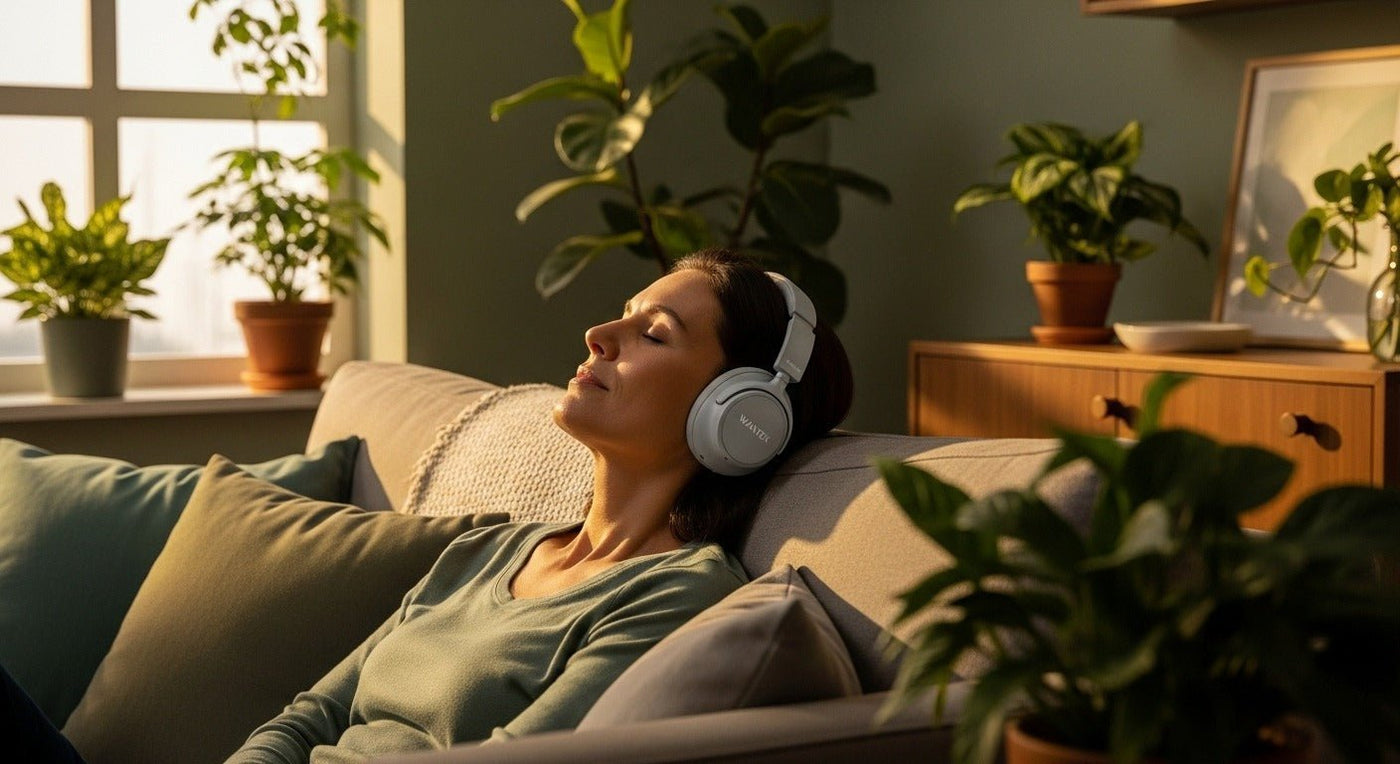
When ears become uncomfortable quickly, the most useful headphone comparison is physical: where the product touches you, how much pressure it applies, whether the material traps heat, and whether sound level or treble balance becomes fatiguing.
Start with the trigger: outer-ear pressure, ear-canal pressure, heat, clamp, material contact, or listening fatigue. Different headphone designs solve different problems.
Choose the pressure point you tolerate best
| Style | Main contact | Potential benefit |
|---|---|---|
| Over-ear | Headband and cushions around the ear. | Avoids direct ear-canal pressure. |
| On-ear | Cushions on the outer ear. | Compact, but pressure is concentrated on the pinna. |
| In-ear | Ear-canal entrance. | Light and portable; tip material/size is critical. |
| Open-ear | Outer ear or side of head. | Leaves the ear canal unsealed. |

Clamp, weight, and heat
Soft cushions do not guarantee comfort if the headset clamps strongly or builds heat. Look for enough headband adjustment, breathable pads, and a return policy when long-session fit is uncertain.

Ear-tip material and size
With in-ear products, try different included tip sizes instead of forcing a seal. Open-ear designs avoid the seal entirely but trade away passive isolation.

Listening level and fatigue
Lower volume and breaks can matter as much as the hardware. ANC may help in steady noise when it lets you listen without turning the volume up, but ANC itself is a separate comfort preference.
If canal pressure is the main issue, Wantek’s open-ear guide explains unsealed alternatives.
Compare a lightweight open-ear design
Wantek OBT030 uses an 8.5 g clip-on open-ear format that leaves the ear canal unsealed.
Reduce Pressure Before Chasing More Features
For sensitive ears, comfort depends on where the headphones touch: ear-cup depth, pad opening, clamp, headband pressure, weight distribution, heat, and whether glasses are trapped under the pads. A model that looks soft can still create pressure after an hour.
Try different wearing formats
Over-ear headphones can keep pressure off the outer ear when the cups are deep enough. On-ear designs place pressure directly on the pinna. Open-ear or speaker-style options avoid sealing the ear canal, but they solve a different listening problem and may not provide the isolation some users need.
Comfort Test
- Wear them for the expected session length.
- Check pressure with glasses.
- Notice heat buildup.
- Confirm the pads do not touch painful areas.


1 comment
Thank you so much for taking the time to write this. You covered everything I wanted to know and this is exactly what I needed to make a choice on some headphones for sensitive ears.