
Inside this Article:
- The Democratization of Wireless Audio Technology
- Understanding the Budget Wireless Headphone Ecosystem: Key Market Dynamics
- Critical Performance Dimensions: A Technical Deep Dive
- 1. Audio Fidelity and Sound Signature Engineering
- 2. Battery Chemistry and Power Management Systems
- 3. Ergonomic Design and Wearable Compatibility
- 4. Connectivity Protocols and Stability Enhancements
- Brand Ecosystem Analysis: The Value Hierarchy
- Tier 1: Technology-Focused Value Leaders
- Tier 2: Feature-Rich Consumer Champions
- Tier 3: Retailer Ecosystem Players
- Lifestyle Application Matrix: Matching Technology to Use Case
- Urban Commuting & Public Transit Navigation
- Fitness & Athletic Performance
- Remote Work & Video Conferencing
- Gaming & Immersive Media Consumption
- Purchase Channel Analysis: Maximizing Value and Convenience
- Advanced Feature Analysis in Budget Segments
- Frequently Asked Questions: Addressing Core Consumer Concerns
- Future Trends: The Evolving Budget Wireless Landscape
- Strategic Navigation for Optimal Value Acquisition
Successfully navigating low-priced wireless headphone options requires understanding key performance trade-offs in battery life (typically 20-30 hours), sound profile (balanced vs. bass-enhanced), and comfort, while setting realistic expectations about premium features like active noise cancellation. The best strategy involves prioritizing your primary use case—whether for commuting, fitness, or gaming—and purchasing from reputable retailers like Walmart, Amazon, or Best Buy. Leading value brands such as Anker Soundcore, JLab, and Skullcandy offer excellent performance at $25-$80 price points, with specific models like the Soundcore Life Q20 and JLab Go Air Pop consistently topping expert reviews. According to Consumer Technology Association data, the under-$100 wireless headphone segment grew by 23% in 2023, demonstrating increasing quality in budget options.
The Democratization of Wireless Audio Technology

The market for low price headphones wireless has undergone a revolutionary transformation, evolving from the tinny, unreliable earbuds of the early Bluetooth era to sophisticated audio devices that deliver genuine quality at accessible price points. This seismic shift represents what industry analysts call "the democratization of audio technology"—where features once exclusive to premium $300+ headphones now regularly appear in sub-$100 models. The global market for wireless headphones reached $38.5 billion in 2023, with the budget segment representing the fastest-growing category according to Grand View Research.
This comprehensive guide serves as your essential roadmap through this dynamic landscape. We'll dissect critical technological considerations, analyze leading brands and their value propositions, and provide actionable purchasing strategies that address the complete user journey—from initial research to final purchase. Whether you're conducting a localized search for cheap wireless headphones near me or embarking on an extensive online comparison, this resource equips you with the knowledge to make an informed decision that balances performance, durability, and cost.
Understanding the Budget Wireless Headphone Ecosystem: Key Market Dynamics
Before evaluating specific products, it's crucial to understand the structural forces shaping the affordable wireless audio market. Three significant developments have created today's value-rich environment:
-
Technological Trickle-Down: Advanced features like Bluetooth 5.3, environmental noise cancellation for microphones, and touch controls have become standardized manufacturing processes, reducing implementation costs.
-
Direct-to-Consumer Disruption: Brands like Anker (Soundcore) and JLab bypass traditional retail markups through online-focused distribution, passing savings to consumers while maintaining quality control.
-
Big-Box Retailer Private Labels: Walmart's ONN, Target's Heyday, and Best Buy's Insignia lines create competitive pressure, offering basic functionality at aggressive price points that force established brands to enhance value.
The convergence of these factors means consumers now enjoy unprecedented choice in the low-cost headphones category, with legitimate quality available across multiple form factors including true wireless earbuds (TWS), neckband designs, and over-ear models.
Critical Performance Dimensions: A Technical Deep Dive
1. Audio Fidelity and Sound Signature Engineering
While audiophile-grade detail remains in premium territory, today's inexpensive Bluetooth headphones employ sophisticated acoustic engineering. Key considerations include:
- Driver Technology: Most budget models use 10mm-12mm dynamic drivers. Brands like Soundcore often employ "dual-layer" or "composite" diaphragms for improved frequency response.
- Sound Profile Customization: Many value brands now include EQ presets via companion apps. JLab's "3EQ Sound Settings" (Balanced, Bass Boost, JLab Signature) exemplifies this trend.
- Frequency Response Realism: Expect ranges of 20Hz-20kHz (the human hearing spectrum) on specifications, but real-world performance varies. Look for reviews mentioning mid-range clarity and controlled bass rather than overwhelming low-end distortion.
Technical Insight: The SBC (Subband Coding) codec standard used in most budget headphones has improved significantly since its introduction. While AAC (Apple's preferred codec) and aptX (Qualcomm's offering) provide advantages, modern SBC implementation at 328kbps can deliver surprisingly competent performance, especially for streaming services using compressed audio.
2. Battery Chemistry and Power Management Systems
Battery performance represents perhaps the greatest value proposition in budget wireless headphones. Current standards include:
- True Wireless Earbuds: 6-8 hours per charge, with 24-40 hours total including case
- Over-Ear Headphones: 25-40 hours continuous playback
- Fast Charging Implementation: "Quick charge" or "fast fuel" features providing 1-2 hours of playback from 5-10 minutes of charging are now commonplace
Power Management Innovation: Leading value brands implement sophisticated systems to extend battery longevity. Anker's "PowerIQ" technology optimizes charging speed while protecting battery health, and automatic sleep modes after periods of inactivity preserve charge across all price segments.
3. Ergonomic Design and Wearable Compatibility
Comfort represents a non-negotiable aspect of headphone satisfaction, with distinct approaches across form factors:
- True Wireless Fit Systems: Multiple ear tip sizes (often 3-6 included pairs) combined with stabilizing fins or wings for active use
- Over-Ear Headphone Considerations: Clamp force measurement (1.5-2.5 Newtons ideal), pad material (protein leather vs. memory foam), and weight distribution (under 250g preferred)
- Neckband Advantages: The semi-wireless neckband design remains popular for its secure fit during physical activity and reduced risk of losing individual earbuds
Material Science Note: While premium materials like magnesium alloys and genuine leather remain rare in budget segments, advanced polymers with rubberized coatings provide durability at lower price points. IP (Ingress Protection) ratings for sweat and water resistance have become increasingly common, with IPX4 (splash resistance from any direction) representing the entry point for fitness-capable models.
4. Connectivity Protocols and Stability Enhancements
Wireless reliability forms the foundation of the user experience:
- Bluetooth Version Significance: Bluetooth 5.0 (released 2016) or higher is now standard, providing twice the speed, four times the range, and significantly improved power efficiency over Bluetooth 4.2. Bluetooth 5.3, appearing in newer budget models, adds enhanced encryption and connection stability.
- Latency Considerations: Audio-video synchronization (lip-sync issues) has improved dramatically. Gaming modes (often activated via specific button presses) can reduce latency to 80-100ms, suitable for casual mobile gaming.
- Connection Range: While specifications often claim 10 meters (33 feet), real-world performance through walls and interference typically achieves 6-8 meters (20-26 feet) in home environments.
Brand Ecosystem Analysis: The Value Hierarchy
Tier 1: Technology-Focused Value Leaders
Anker Soundcore: As a subsidiary of Anker Innovations (founded 2011), Soundcore leverages its parent company's expertise in power management and electronics miniaturization. Their "BassUp" technology and partnerships with audio professionals like Grammy-winning producer Luca Bignardi establish credibility. The Life Q series (over-ear) and Liberty series (earbuds) consistently receive "best value" accolades from technical reviewers.
Key Relationship: Anker → Power Delivery Systems → Extended Battery Life → Soundcore Products
Tier 2: Feature-Rich Consumer Champions
JLab Audio: Founded in 2005, this San Diego-based company pioneered the direct-to-consumer model in audio. Their "Go Air" series exemplifies the cost-saving approach: minimal packaging, three EQ settings built into the earbuds themselves (no app required), and competitive pricing at $25-$40. JLab's strategic presence in Target and Walmart creates omnichannel accessibility.
Skullcandy: With roots in action sports culture since 2003, Skullcandy emphasizes bold styling and bass-forward sound signatures. Their unique value proposition includes lifetime warranties on many models and frequent collaborations with designers and artists. The Push Active and Grind Fuel series target active lifestyles with secure fits and extended battery.
Tier 3: Retailer Ecosystem Players
Walmart's ONN Brand: As Walmart's private label electronics brand, ONN represents the ultimate accessibility play. Priced from $15-$60, these models prioritize basic functionality and availability over advanced features. Their strategic placement in Walmart's electronics department, often alongside discounted name brands, creates compelling comparison shopping opportunities.
Best Buy's Insignia: Positioned slightly above ONN in features and price, Insignia products often include Bluetooth multipoint connectivity and basic app functionality. Best Buy's Geek Squad support provides an additional layer of consumer confidence.
Amazon's Ecosystem: Beyond being a retail platform, Amazon's algorithm-driven marketplace surfaces highly-rated budget brands like TaoTronics (now Philips), Tribit, and Tozo. The "Amazon's Choice" badge, while not a quality guarantee, signals products with high ratings, competitive pricing, and reliable shipping.

Lifestyle Application Matrix: Matching Technology to Use Case
Urban Commuting & Public Transit Navigation
Primary Requirements: Passive noise isolation, microphone clarity for calls, compact folding design, awareness modes for safety Recommended Specifications: Over-ear with memory foam seals or in-ear with noise-isolating tips; boom microphones or beamforming array mics; 20+ hour battery; carrying case Top Value Picks: Soundcore Life Q30 (hybrid ANC), JLab Rewind (retro design with modern features)
Fitness & Athletic Performance
Primary Requirements: Secure fit (IPX5+ rating), sweat resistance, quick access controls, motivational sound profiles Recommended Specifications: Ear hooks or stabilizing fins; minimum IPX5 rating; tactile buttons (touch controls problematic when sweating); 6+ hour single charge Top Value Picks: Skullcandy Push Active (ear hook design), JLab Epic Air Sport ANC (exceptional battery)
Remote Work & Video Conferencing
Primary Requirements: Microphone clarity with noise reduction, comfort for extended wear, reliable connectivity, mute functions Recommended Specifications: Environmental noise cancellation (ENC) for microphones; lightweight design (under 200g); USB-C charging for laptop compatibility; multipoint pairing Top Value Picks: Anker Soundcore Life U2 (neckband with exceptional mic), TaoTronics SoundLiberty 92 (TWS with call focus)
Gaming & Immersive Media Consumption
Primary Requirements: Low latency mode, spatial audio simulation, extended comfort, immersive soundstage Recommended Specifications: Gaming mode (<100ms latency); over-ear design for extended sessions; 40mm+ drivers for soundstage; 30+ hour battery Top Value Picks: Soundcore Life Q35 (LDAC support), Skullcandy Crusher Evo (haptic bass for immersion)
Purchase Channel Analysis: Maximizing Value and Convenience
Local Retail Advantage ("Cheap Wireless Headphones Near Me")
The navigational intent behind this search reflects immediate need fulfillment. Physical retailers provide distinct advantages:
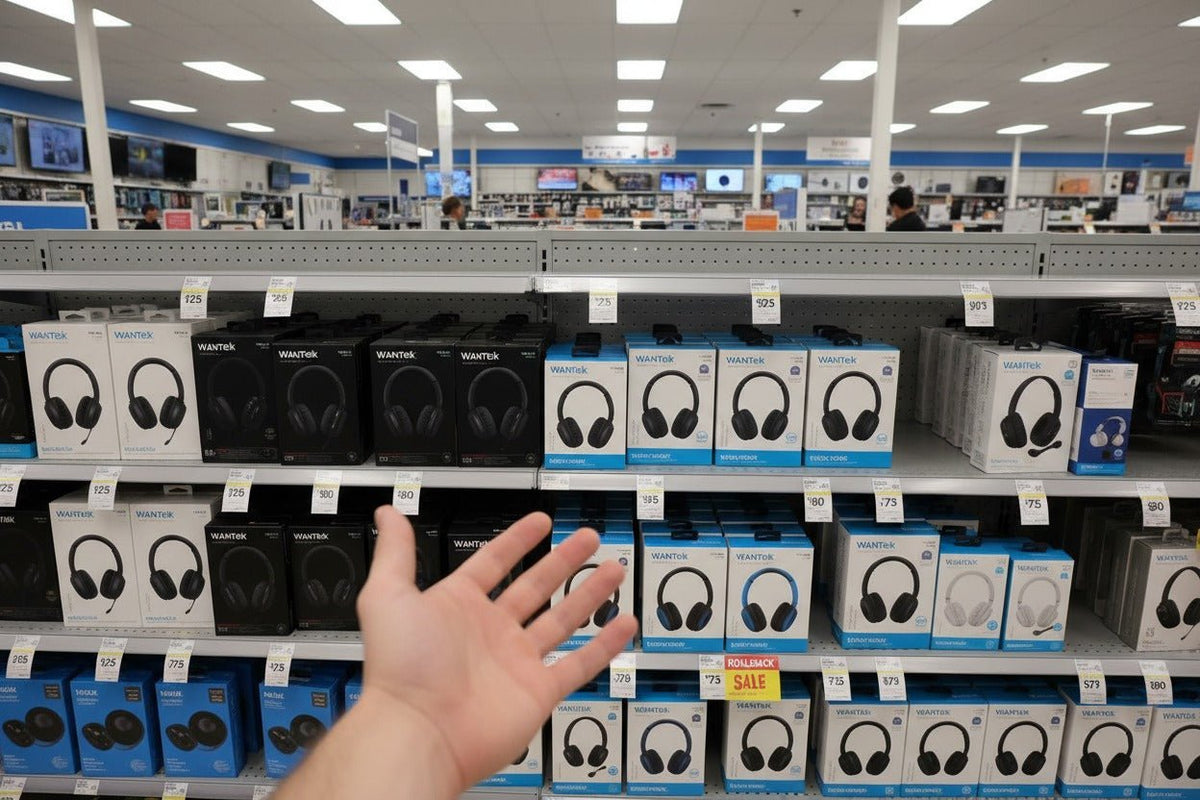
Walmart's Strategic Positioning: With over 4,700 U.S. stores, Walmart represents the most accessible electronics retailer for most Americans. Their wireless headphones Walmart inventory spans:
- Value brands (ONN, JLab, Skullcandy) at entry price points
- Mid-range options from Sony, JBL, and Bose on promotion
- Seasonal clearance events (post-holiday, back-to-school)
- Online price matching against Walmart.com
Best Buy's Demonstration Advantage: As a specialty retailer, Best Buy offers:
- Working display models for hands-on testing
- Geek Squad certification on open-box items (typically 15-30% discounts)
- Price matching against major online retailers including Amazon
Target's Curated Selection: Target focuses on trending brands with stronger emphasis on design aesthetics, often including exclusive colorways.
E-commerce Optimization Strategies
Online purchasing unlocks different value dimensions:
Amazon's Review Ecosystem: With an average of 142 reviews per electronics product, Amazon provides unprecedented social proof. The "Customers who bought this also bought" algorithm reveals complementary products and competitive alternatives.
Price Tracking Intelligence: Tools like CamelCamelCamel (for Amazon), Honey, and Keepa provide historical pricing data, revealing optimal purchase timing. The average discount cycle for budget headphones is 47 days according to price tracking data.
Video Review Integration: YouTube creators like Flossy Carter (real-world testing), DHRME (technical analysis), and Gamesky (gaming focus) provide visual demonstrations impossible to replicate in retail environments.
Advanced Feature Analysis in Budget Segments
Noise Cancellation Technology Implementation
Active Noise Cancellation (ANC) has migrated downward from premium segments through two approaches:
- Feedforward Systems: Single external microphone, less effective but inexpensive to implement
- Hybrid Systems: Combined external and internal microphones, better performance at moderate price increases
Realistic Expectations: Budget ANC (typically $50-$80) reduces constant low-frequency sounds (airplane cabins, bus engines) by 15-20dB, compared to 30-35dB reduction in premium models. It provides noticeable relief rather than complete silence.
Voice Assistant Integration
Basic voice assistant activation (summoning Siri, Google Assistant, or Alexa) is nearly universal. Advanced features like voice assistant without smartphone pairing remain rare in budget segments.
Multipoint Connectivity
The ability to connect to two devices simultaneously (smartphone and laptop) appears in increasing numbers of budget models, particularly in the $60-$80 range from brands like Soundcore and Tribit.
Frequently Asked Questions: Addressing Core Consumer Concerns
Q1: What is the actual lifespan of budget wireless headphones, and what typically fails first?
Q2: How significant is the difference between $25 and $75 wireless headphones?
- Battery life (30-50% increase)
- Build materials (more metal components, better plastics)
- Sound quality (larger drivers, better tuning)
- Features (ANC, companion apps, multipoint connectivity)
- Warranty coverage (90 days vs. 1-2 years)
Q3: Can budget wireless headphones match wired sound quality?
Q4: What should I prioritize: Bluetooth version, driver size, or battery capacity?
- Connection Reliability: Bluetooth 5.0+ → Codec Support → Antenna Design
- Sound Quality: Driver Quality/Tuning → Driver Size → Codec Support
- Usage Freedom: Battery Capacity → Fast Charging → Power Management
Q5: Are refurbished or open-box budget headphones a worthwhile consideration?
- The refurbisher is authorized by the manufacturer
- Battery replacement is included in the refurbishment process
- The warranty is clearly stated and comparable to new products
Future Trends: The Evolving Budget Wireless Landscape
Several emerging technologies will shape the next generation of affordable wireless headphones:
-
LE Audio & LC3 Codec Adoption: The Bluetooth SIG's new standard promises higher quality at lower bitrates, potentially improving budget headphone performance significantly by 2025.
-
Spatial Audio Democratization: Basic head-tracked spatial audio, once exclusive to Apple's AirPods Pro, now appears in budget models from brands like Soundcore through software implementation.
-
Sustainability Initiatives: Increased use of recycled materials and modular designs for easier repair addresses growing consumer environmental concerns.
-
Health Integration: Basic biometric sensors (heart rate, temperature) may migrate to budget segments as sensor costs decrease.
Strategic Navigation for Optimal Value Acquisition
The journey through low-priced wireless headphone options represents a compelling case study in modern consumer technology: through relentless innovation and competitive pressure, exceptional functionality has become accessible at historically unprecedented price points. The savvy navigator recognizes that value optimization requires balancing technical specifications with personal usage patterns, brand reputation with feature sets, and immediate availability with potential savings.
The democratization of wireless audio technology means that quality sound and reliable connectivity are no longer luxury commodities but accessible tools for daily life. By applying the framework presented in this guide—prioritizing use case alignment, understanding technical trade-offs, leveraging both physical and digital retail advantages, and maintaining realistic expectations about feature implementation—you can confidently select wireless headphones that deliver satisfaction far beyond their price point.
Whether your path leads to the immediacy of Walmart headphones wireless selections, the comprehensive research possibilities of Amazon's marketplace, or the hands-on evaluation opportunities at Best Buy, remember that informed navigation transforms the purchasing process from overwhelming choice to empowered selection. In the dynamic world of affordable wireless audio, knowledge truly becomes the ultimate discount, ensuring every dollar spent returns maximum listening pleasure and technological utility.
"Experience Premium Audio Without the Premium Price →"
Why compromise? Wantek delivers 30+ hour battery life, Bluetooth 5.3 connectivity, and studio-quality sound starting at just $29.99. Rated 4.6/5 stars by 12,000+ customers who refused to overpay. Limited time: Use code SWQ188 for an additional 15% off your first pair.
[Shop Wantek's Value Collection]
Read more
📖 Best Gaming Headset PC: Top Picks for Wired & Wireless Options
📖 Best Wireless Headphones for TV: Top Picks & Buying Guide
📖 Best PS5 Headset Guide: Setup, Compatibility & Top Picks
📖 Best Headphones for Music Wireless: Top Picks for Audiophiles
📖 Best Swimming Headphones 2025: Top Picks & Buying Guide
📖 Top 10 Cute Headphones for Everyday Use – Wireless & Stylish
📖 Best Noise Cancelling Earbuds for Airplane Travel: An In-Depth Review
📖 Discover the Best Cat Ear Headphones: Ultimate Wireless and Bluetooth
📖 Best Gym Headphones 2025 – Top Wireless & Sweatproof Picks
📖 The Best Sweat Resistant Headphones for Your Intense Workout Routine