
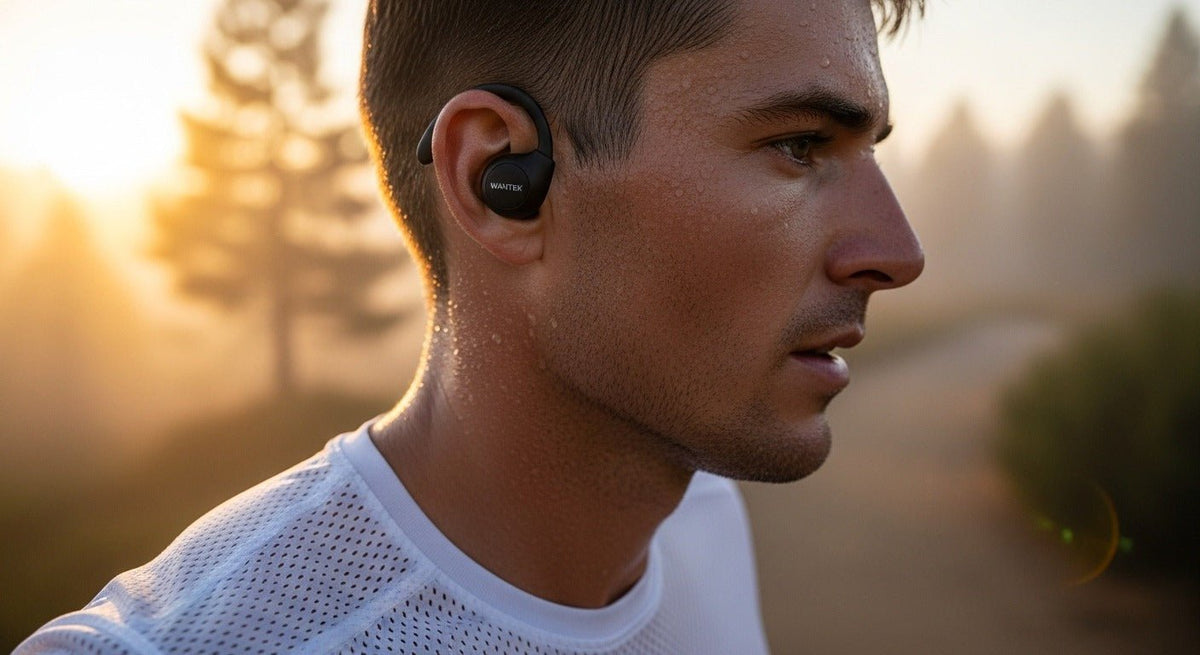
The best fitness headphones depend on how you train. For HIIT and running, compare sport earbuds with fitted tips, stabilizing wings, or ear hooks. On outdoor routes, balance a secure fit with access to surrounding sound. Swimming calls for explicit swim support and suitable underwater playback. Over-ear headphones may suit lower-movement gym sessions, but heat, stability, and sweat exposure matter.
Quick buying check: Test fit during your usual movements, read the manufacturer’s sweat and water-use guidance, compare continuous runtime rather than charging-case totals, and make sure the controls are practical during exercise.
Match the Headphone Design to the Workout
| Workout | Prioritize | Watch for |
|---|---|---|
| Gym and strength training | Stable fit, usable controls, sweat guidance, comfort around benches and equipment | Heat, pad sweat, loose headbands, or controls that are difficult to use mid-set |
| Running and road workouts | Secure retention, low movement, environmental awareness, single-charge runtime | Fit that shifts with impact or isolation that does not suit the route and surroundings |
| HIIT and high-movement training | Low weight, strong retention, sweat-resistant construction documented for the exact model | Large housings, loose tips, or a fit that changes during jumping and rapid direction changes |
| Swimming | Explicit swimming support, secure fit, and onboard playback that does not depend on a phone underwater | Assuming a generic water-resistance label means the product is designed for swimming |
For a comparison of named products rather than headphone types, see our 2026 workout headphones comparison. It covers running, gym, open-ear and over-ear starting points; check current model specifications and fit before choosing.
Secure Fit Matters More Than the “Fitness” Label
Ear-hook earbuds, conventional in-ear earbuds, open-ear bands, clip-on designs, and over-ear headphones all stay in place differently. There is no single form factor that is most secure for every person because ear shape, head size, glasses, hair, movement, and exercise type all affect fit.

When comparing sport earbuds, start with the retention system. In-ear tips create a seal, wings rest against the outer ear, and full ear hooks wrap around it. A hook can help with vigorous movement but may interfere with glasses; a wing or smaller tip may suit someone else. Our ear-hook earbuds comparison explains the differences between sealed hooks and open-ear clips.
When you can try on a pair, jog in place, bend forward, and turn your head. If the tips loosen, hooks pinch, or the headband slides, adjust the fit or try another design before judging sound or ANC.
For running specifically, our running headphones buying guide compares ear-hook, open-ear, in-ear, and bone-conduction designs, plus fit, water protection, and battery trade-offs.
Sweat Resistance and Swimming Support Are Different Requirements
Read the exact manufacturer guidance for the model you are considering. The IEC 60529 IP Code classifies enclosure protection; it does not certify a headphone for swimming. Sweat, rain, or splash resistance should not automatically be treated as swim-ready.
For example, Apple’s Beats water-resistance guidance identifies specific earbuds intended for non-water sports and exercise, not swimming. It also distinguishes protection for charging cases by model, so check the earbuds and case separately.
For sport earbuds, an IPX4 rating addresses water splashes under defined test conditions, not swimming. The “X” does not establish a dust-protection rating. Check the exact earbud model and charging-case guidance rather than assuming a “waterproof” label covers both.
For ordinary gym training, the useful question is whether the product is documented for the amount and type of moisture it will encounter. For pool use, choose a model explicitly intended for swimming and verify how audio is stored and played below the surface.
Open-Ear, In-Ear, or Over-Ear?
Open-Ear and Bone-Conduction Designs
Open-ear designs leave the ear canal unsealed, which can make environmental sound easier to hear than with a sealed design. That does not guarantee awareness: playback volume, traffic, equipment, and attention still matter.
In-Ear Sport Earbuds
In-ear sport earbuds can be compact and stable when the tip and housing fit correctly. Some models add wings or hooks for extra retention. The main limitation is that fit is highly personal, so a product that stays secure for one user may loosen for another.
If earbuds loosen during a run or jumping exercises, try a different tip size before replacing them. Compare pressure from any wing or hook during your usual workout; a fit that stays secure but becomes painful is not a good match.
Over-Ear Headphones
Over-ear headphones can provide large controls, familiar fit, and features such as ANC, but they also cover more skin and can move or trap heat during intense exercise. They may suit lower-movement training better than running or HIIT for some users.
Environmental Awareness Is a Workout Decision
Isolation can be useful in a controlled indoor environment, but outdoor training may require more awareness of traffic, other people, bikes, or trail conditions. Open-ear designs and transparency modes approach that problem differently; neither removes the need to pay attention to the environment.
Do not choose ANC simply because it appears on a specification sheet. Decide first whether reducing surrounding sound fits the workout and location.
Battery Life: Use the Number That Matches Your Session
Compare the continuous runtime of the headphones or earbuds with the length of your normal workout and charging routine. For true wireless earbuds, total battery including the case is not the same as single-session runtime.
A longer battery specification is useful only when it solves a real charging problem. There is no universal “10-hour minimum” for endurance users or fixed threshold that every gym user needs.
Controls Should Still Work When You Are Moving
Check whether volume, track, call, and mode controls can be used with sweaty hands, gloves, or while moving. Physical buttons can be easier for some workouts, while touch controls can work well when the interface is reliable. Treat control style as a usability choice, not an automatic winner.
Where a Swim-Focused Bone-Conduction Model Fits
For users who need one product specifically for pool sessions, Wantek BC3 Pro is a current swim-focused example. Its product page lists a 32 g open-ear design, IP68 protection, 32GB of onboard storage, Bluetooth 5.3, and up to six hours of battery life. For swimming, it directs users to stored MP3 playback rather than relying on Bluetooth underwater.
That makes it relevant to swimming and open-ear use, but it should not be treated as proof that every bone-conduction or IP68 headphone is suitable for the pool.
Frequently Asked Questions
What type of headphones are best for workouts?
There is no universal best type. Match the design to your activity, fit needs, sweat or water exposure, awareness requirements, controls, and the battery runtime you actually need.
Do sport earbuds need ear hooks?
Not necessarily. Well-fitted tips or stabilizing wings may stay secure during workouts. Ear hooks offer another retention point, but your ear shape, glasses, and comfort determine whether they help.
Are wireless headphones always better for exercise?
No. Wireless removes a cable, but fit, charging, battery life, controls, and connection reliability still matter. A wired option can work when its cable does not interfere with the activity.
Can I swim with sweat-resistant workout headphones?
Only when the exact model is documented for swimming. Sweat or splash resistance should not be treated as permission for submersion.
Are open-ear headphones better for outdoor workouts?
They can leave the ear canal open and make surrounding sound easier to hear, but they do not guarantee awareness or safety. Route, volume, traffic, and attention still matter.
Need a Swim-Focused Open-Ear Option?
Wantek BC3 Pro combines an open-ear bone-conduction design with IP68 protection and 32GB of onboard storage. Use stored MP3 audio for swimming and follow the product’s water-use instructions.

