
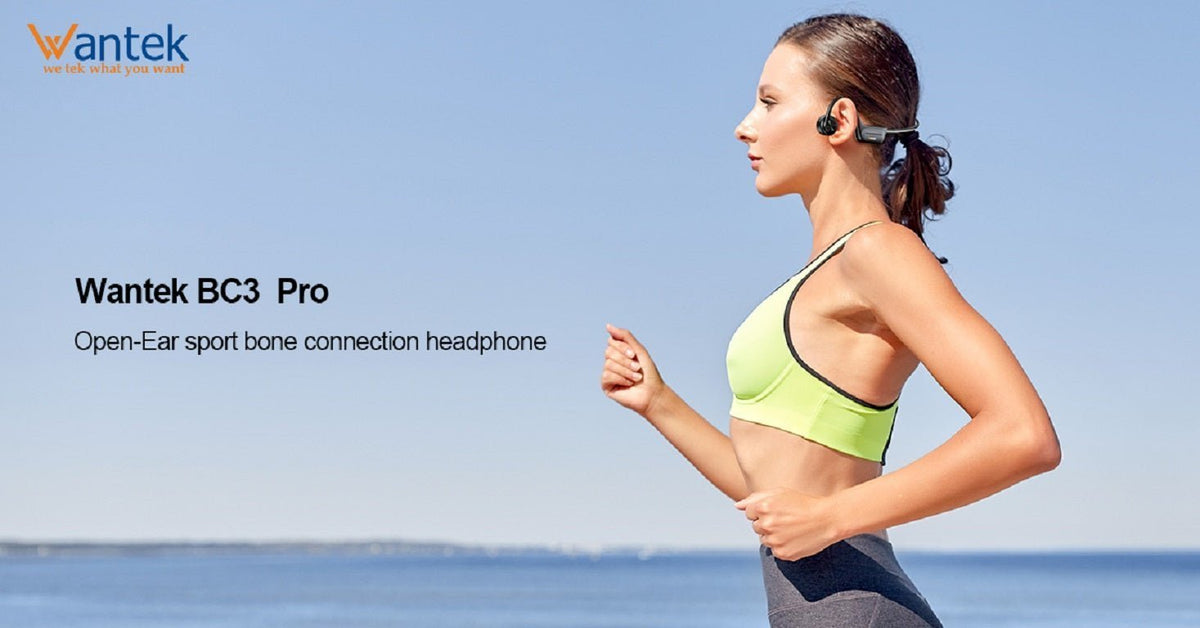
Running earbuds stay secure when the ear tip, the earbud body, and any hook or wing all work with your ear shape. If a pair keeps loosening during a run, do not start by chasing a higher IP rating or more audio features. First identify where the fit is failing, then adjust the retention system or move to a different form factor.
Quick answer: If your earbuds fall out while running, test tip size in each ear, reseat the earbud at the angle recommended by the manufacturer, confirm any wing or hook is actually bearing load, and do a short movement test before your next run. If the same side still works loose, a different retention style is usually more useful than a more expensive version of the same shape.
This page is about secure fit and troubleshooting, not a ranked list of running earbuds. If you are still choosing among current models, compare the options in Wantek’s wireless earbuds for jogging guide. If you have not chosen a form factor yet, the broader running-headphone guide compares in-ear, open-ear, and wraparound designs.
Why Earbuds Fall Out While Running
Most fit problems come from a mismatch between the earbud’s retention system and your ear anatomy. A sealed in-ear earbud depends on the ear tip and the outer housing sitting at the intended angle. A wingtip adds another contact point inside the outer ear. An over-ear hook transfers more of the load around the ear instead of asking the ear canal to hold everything in place.
- Tip too small: the earbud may feel easy to insert but gradually loses its seal and works outward.
- Tip too large: the earbud may not seat deeply enough, can feel pressured, or may slowly push itself out.
- Wrong insertion angle: the tip may seal while the housing or wing sits outside the position it was designed to use.
- Retention point not engaged: a wing or hook can be present without actually stabilizing the earbud if it is not positioned correctly.
- Movement and moisture: repeated impact, jaw movement, sweat, hair, glasses, hats, and skin oils can all expose a marginal fit that felt acceptable while standing still.
Left and right ears do not have to use the same tip size. If only one earbud falls out, troubleshoot that side independently instead of assuming the pair needs identical fittings.
Use This Secure-Fit Test Before Replacing Your Earbuds
Start with clean, dry contact surfaces
Dry the earbuds and the parts of the ear they touch. A fit test is easier to judge when sweat or skin oil is not changing the contact immediately.
Test tip sizes one ear at a time
Try the included sizes instead of assuming the preinstalled pair is correct. The right size should feel stable without painful pressure, and the earbud should sit where its housing is designed to rest.
Seat the body, wing, or hook correctly
Follow the model’s wearing instructions. A stabilizing fin should contact the intended part of the outer ear; an ear hook should sit around the ear without being forced into an uncomfortable angle.
Do a short movement check
Walk, turn your head, bend forward, and jog in place. You are looking for gradual movement, seal changes, pressure points, or one side loosening earlier than the other.
Run briefly before committing to a long session
A short test run reveals problems that a standing fit check can miss. If the same earbud repeatedly shifts after adjustment, the retention design may simply be a poor match for that ear.
Secure-Fit Designs Compared
No retention style is universally best. Choose the one that solves the specific way your current earbuds are failing.
| Design | Main retention point | Ear canal | Useful when | Watch for |
|---|---|---|---|---|
| Sealed TWS earbud | Tip + housing | Sealed | Your current issue is mainly tip sizing or insertion angle | Pressure, shallow seating, or seal changes during motion |
| Wing / fin earbud | Tip + outer-ear brace | Usually sealed | A standard in-ear bud seals well but rotates or backs out | Fin size and position can create pressure if mis |
| Over-ear hook | Tip + ear hook | Sealed or open | You want a stronger external anchor for repeated movement | Glasses, hats, hair, and hook shape can affect comfort |
| Open-ear clip or hook | Outer-ear contact | Open | You dislike an in-canal seal and want more outside sound | Less isolation; fit still depends on outer-ear geometry |
| Bone- |
Band + contact points | Open | In-ear retention remains unreliable or uncomfort |
Band pressure, glasses, hats, and different sound balance |
If an ear-hook design looks like the right next step, Wantek’s ear-hook headphones guide compares current sealed and open-ear approaches without treating every hook design as equivalent.

Do Not Use an IP Rating as a Fit Score
The IEC 60529 IP Code classifies enclosure protection against solid-particle and water ingress. It does not measure how securely an earbud fits your ear, how comfortable it is during a run, or whether a particular manufacturer approves a product for every wet environment.
For running, match the exact product documentation to the sweat, rain, dust, or water exposure you expect. Also check whether the charging case has a different protection rating from the earbuds. A higher water-resistance number cannot compensate for a retention system that keeps moving out of position.
Practical rule: solve fit and retention first. Then verify the product’s documented sweat and water limits for the conditions in which you actually run.
Outdoor Awareness Is a Separate Decision
Open-ear designs leave the ear canal physically unsealed, while transparency or ambient modes use microphones to pass in more outside sound through a sealed earbud. Either approach can make environmental sound more accessible than strong isolation, but neither guarantees that you will notice every vehicle, cyclist, runner, signal, or warning.
NHTSA pedestrian guidance emphasizes staying alert and using your eyes and ears around traffic. For outdoor running, choose a listening setup around the route, traffic conditions, volume, and the amount of environmental sound you need.
When a Better Fit Means Choosing a Different Design
If you can get a stable seal while standing but the earbud repeatedly works loose during running, do not keep solving the problem with tip size alone. Move one level up in retention: from a plain in-ear shape to a stabilizing wing, from a wing to an over-ear hook, or from an in-ear design to an open-ear or wraparound option if ear-canal retention is the recurring failure point.
That does not mean the more anchored design is automatically more comfortable. Ear hooks can compete with glasses. Wraparound bands can interact with hats or hair. Open-ear designs trade isolation for a more open canal. The useful comparison is not “which design is best?” but “which design removes the failure mode I already know I have?”
If you want to compare open-ear and bone-conduction approaches in more detail, see Wantek’s bone-conduction headphones guide.
Frequently Asked Questions
Why does only one earbud fall out when I run?
Your ears can differ in canal size and outer-ear geometry. Fit the problem side independently and try a different tip size or retention position instead of forcing both ears to use the same setup.
Should I use a bigger or smaller ear tip for running?
Use the size that seats securely without painful pressure. A tip that is too small may lose its seal; one that is too large can prevent the earbud from seating correctly.
Do foam ear tips stop earbuds from falling out?
They can improve the seal for some ears, but they do not fix every retention problem. Check that the foam tips are compatible with your exact earbuds and still allow the housing to seat correctly.
Are ear hooks better than wingtips for running?
Ear hooks add an external anchor around the ear; wingtips brace inside the outer ear. Either can be more stable than a plain in-ear shape, but comfort and retention depend on your ear geometry.
Are open-ear headphones better for outdoor running?
They keep the ear canal unsealed and can make surrounding sound more accessible. They are not automatically safer, and they provide less isolation in noisy environments.

