
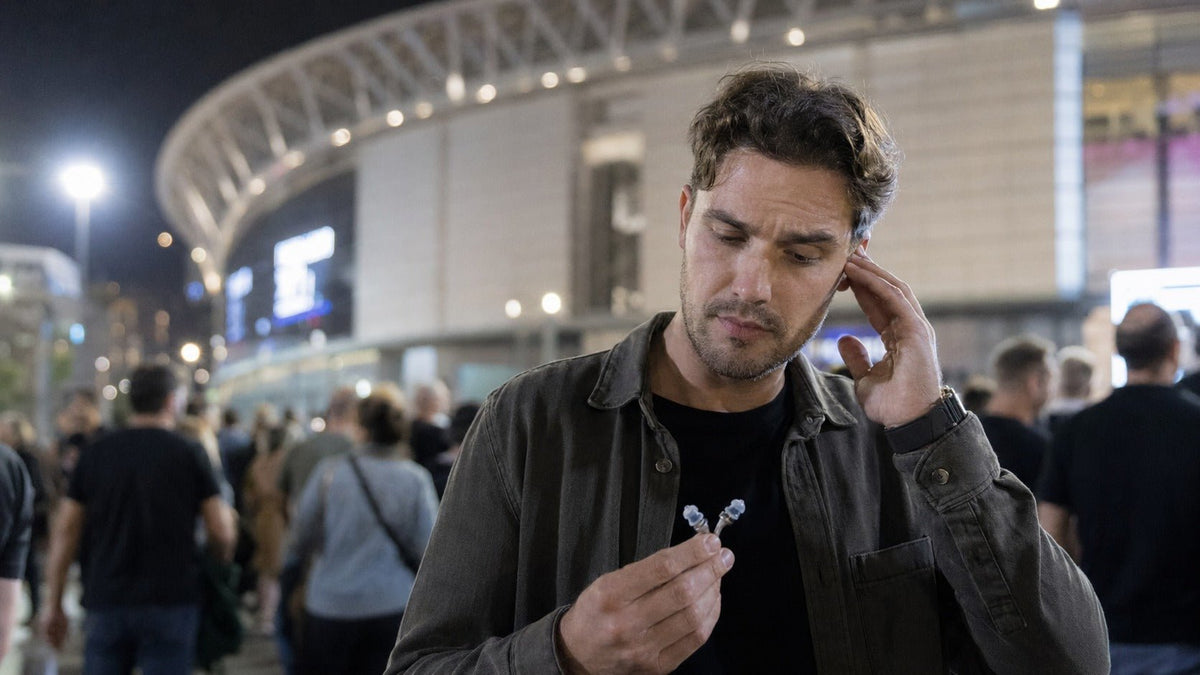
Earplugs can protect your hearing in loud environments, but they are not a treatment or cure for tinnitus. If ringing in your ear seems louder when you insert earplugs, the change may simply be more noticeable because the plugs reduce competing environmental sound.
Quick answer: Use earplugs when you need protection from hazardous noise. They can reduce sound reaching the ear and help limit additional noise exposure, but they do not remove the internal sound of tinnitus. In a quiet environment, blocking more outside sound may actually make tinnitus easier to notice.
Why can tinnitus seem louder when you wear earplugs?
Tinnitus is the perception of sound without an external source. It is often described as ringing, buzzing, roaring, hissing, humming, or another sound that other people cannot hear.
External sound can make tinnitus less prominent by giving the auditory system other sounds to process. When earplugs reduce that outside sound, the contrast between the environment and the internal tinnitus perception may increase.
This helps explain why someone may notice ringing more while wearing earplugs even when the plugs have not made the underlying tinnitus permanently worse.
Key distinction: noticing tinnitus more in a quieter environment is not the same as evidence that an earplug has damaged your hearing or permanently worsened tinnitus.
What earplugs can and cannot do for tinnitus
The most useful distinction is between hearing protection and tinnitus management. Earplugs are designed primarily for the first task. For a broader look at attenuation, comfort, and everyday use, see Wantek's guide to noise-reducing earplugs .
| Earplugs can | Earplugs cannot be assumed to |
|---|---|
| Reduce sound entering the ear in noisy environments | Cure tinnitus |
| Help reduce hazardous noise exposure when selected and fitted correctly | Remove the internal tinnitus sound |
| Provide hearing protection at concerts, noisy work sites, or other loud environments | Replace evaluation of persistent, sudden, or changing tinnitus |
| Reduce environmental sound | Guarantee that tinnitus will seem quieter while the plugs are being worn |

When should you wear earplugs?
The first choice is to avoid or reduce hazardous noise when practical. When the sound cannot be eliminated or reduced enough, appropriate hearing protection can lower the sound reaching the ear. The National Institute for Occupational Safety and Health emphasizes selecting protection according to the actual noise exposure, fit, environment, and task.
Situations where hearing protection may be appropriate include:
- concerts and other loud entertainment venues;
- power tools, machinery, and lawn equipment;
- industrial or construction environments;
- shooting and other impulse-noise activities; and
- other situations where sound exposure is high enough to threaten hearing.
The right protector depends on the noise level and how well it fits. More attenuation is not automatically better in every environment.
Do earplugs prevent tinnitus?
Earplugs cannot prevent every cause of tinnitus. Tinnitus has been associated with hearing loss, loud-noise exposure, certain medications, earwax blockage, ear infections, head or neck injuries, and other conditions. The World Health Organization and NIDCD both describe tinnitus as a symptom with multiple possible causes.
What hearing protection can do is reduce hazardous noise exposure. Loud or prolonged noise can contribute to both hearing loss and tinnitus, so protecting your hearing in genuinely noisy environments remains an important preventive measure.
Can wearing earplugs damage your ears?
Earplugs are designed for hearing protection when the correct type is selected, fitted, and maintained properly. It is more useful to focus on fit, hygiene, condition, and appropriate attenuation than to describe earplugs as either completely harmless or inherently damaging.
Good practice includes:
- using clean hands when inserting foam earplugs;
- following the manufacturer's insertion and replacement instructions;
- using a size and style that fits your ear correctly;
- keeping reusable protectors clean according to their instructions;
- replacing dirty, damaged, or poorly expanding foam plugs; and
- choosing enough attenuation for the exposure without unnecessary overprotection.
Earwax is another reason not to assume every change in ringing is caused directly by the earplug. Both NIDCD and Mayo Clinic list earwax blockage as a possible contributor to tinnitus. Fullness, discomfort, reduced hearing, or persistent ringing may therefore have another explanation that needs to be evaluated.
Do earplugs cause hyperacusis?
Hearing-protection guidance does not support turning this into a simple rule that ordinary earplug use directly causes hyperacusis.
What occupational hearing guidance does address is unnecessary overprotection. Excessive attenuation can reduce awareness of surroundings, interfere with communication, and make hearing protection less practical to use consistently.
That is a different issue from establishing that normal, appropriate earplug use causes hyperacusis.
How to insert foam earplugs correctly
Proper fit matters. NIOSH summarizes the insertion of soft foam earplugs as roll, pull, and hold.
Roll
With clean hands, roll the foam earplug into a small, thin cylinder so it can be inserted before the foam expands.
Pull
Reach over your head with the opposite hand and gently pull the top of the ear up and back to help straighten the ear canal.
Hold
Insert the rolled plug and hold it in place while the foam expands and forms a seal.
After insertion, check the fit. NIOSH notes that if cupping your hands over your ears makes outside sound substantially more muffled, the plugs may not be sealing effectively.
Foam, premolded, custom, or high-fidelity earplugs?
There is no single earplug type that is automatically best for tinnitus. The useful question is which protector provides appropriate attenuation, fit, comfort, and usability for the environment where you need hearing protection.
| Type | How it works | Typical consideration |
|---|---|---|
| Formable foam | Compressed before insertion, then expands inside the ear canal. | Correct insertion has a major effect on the protection achieved. |
| Premolded | Uses a reusable preformed shape rather than expanding foam. | Correct size and fit still matter. |
| Custom molded | Made to fit the individual ear. | Higher initial cost, but designed for repeated use when maintained properly. |
| High-fidelity / flat attenuation | Designed to reduce sound more evenly across frequencies. | Useful when sound quality or speech remains important while protection is required. |
Why more noise reduction is not always better
The goal of hearing protection is to reduce hazardous sound to an appropriate level, not necessarily to create the quietest possible environment.
In workplace guidance, NIOSH specifically recommends avoiding unnecessary overprotection because excessive sound reduction can make workers less aware of their surroundings and interfere with communication.
Printed Noise Reduction Ratings also do not tell you exactly how much attenuation an individual wearer receives. For workplace hearing-conservation programs, NIOSH now recommends individual quantitative fit testing to assess the protection actually achieved.
What can help manage tinnitus?
There is currently no universal cure for tinnitus, but several approaches can reduce how much it affects daily life. The appropriate approach depends on the symptoms, hearing status, and whether an identifiable cause is present.
Sound therapy
External sound can make tinnitus less prominent or reduce the contrast between tinnitus and a quiet environment. NIDCD describes options ranging from household sounds and sound generators to wearable devices.
Hearing aids when hearing loss is present
Hearing aids are one of the main management options for people who have tinnitus together with hearing loss. Amplifying environmental sound can improve hearing while making tinnitus less noticeable for some people. If you are comparing consumer listening devices with medical hearing devices, Wantek's guide to bone-conduction headphones and hearing loss explains why consumer bone-conduction headphones should not be treated as hearing-aid substitutes.
Behavioral therapies
Counseling and cognitive behavioral therapy do not remove the sound itself, but they can help reduce tinnitus-related distress and change how a person responds to it.
Addressing an identifiable cause
Tinnitus may sometimes be associated with an identifiable issue such as earwax blockage, an ear infection, medication effects, jaw problems, or another condition. Addressing the underlying cause can sometimes reduce the tinnitus.
For a broader overview of sound-based approaches, the American Tinnitus Association explains how hearing aids and external sound can be used in tinnitus management.
What about white noise or background sound?
Background sound and hearing protection perform opposite acoustic tasks.
Earplugs reduce external sound. Sound therapy adds controlled external sound. For someone who notices tinnitus most in quiet settings, these approaches can therefore affect perception differently.
A fan, sound generator, or other comfortable low-level background sound may make tinnitus less noticeable, particularly in quiet environments or at bedtime. For readers comparing an open-ear audio format with ear-blocking protection, Wantek also explains how bone-conduction headphones work and why they change the sound-delivery path without functioning as hearing protection.
Are earplugs useful for sleeping with tinnitus?
Earplugs can reduce external sounds that interrupt sleep, but they may also make tinnitus easier to notice because the room becomes quieter.
There is no single rule that everyone with tinnitus should or should not sleep with earplugs. Start with the problem you are trying to solve. If outside noise is disturbing sleep, reducing that noise may be useful. If the goal is only to make tinnitus less noticeable in an already quiet room, low-level background sound is a different strategy.
Can high-fidelity earplugs cure tinnitus?
No. High-fidelity or flat-attenuation earplugs are hearing protectors, not tinnitus treatments.
They are designed to reduce sound while maintaining a more balanced frequency response than some conventional earplugs. That can make them useful for music, performances, or other environments where sound quality matters while hearing protection is still required.
Their acoustic design does not turn them into a cure for tinnitus.
Should you wear earplugs all day because you have tinnitus?
Tinnitus by itself is not a reason to treat every ordinary environment as a hazardous-noise environment.
Use hearing protection where the sound exposure requires it. In normal environments, blocking more sound is not automatically better, particularly when the additional attenuation interferes with communication or awareness.
When should ringing in your ears be evaluated?
Do not automatically attribute new or changing tinnitus to your earplugs. Tinnitus has many possible causes, and some patterns deserve further evaluation.
The World Health Organization advises seeking prompt care when sudden tinnitus occurs with dizziness or hearing loss. Tinnitus that pulses in time with your heartbeat can also have a different underlying cause and should be evaluated.
Persistent tinnitus is also worth discussing with a healthcare professional when it is bothersome, changes significantly, or affects sleep, concentration, hearing, or everyday activities.
Do not use the earplug itself as the diagnosis. A quieter environment can explain why existing tinnitus becomes more noticeable, but sudden hearing changes, dizziness, pulsatile tinnitus, pain, or other new symptoms can point to a different issue.
Frequently asked questions
Why does my ringing seem louder when I put in earplugs?
Earplugs reduce external sound, increasing the contrast between a quieter environment and tinnitus. Greater awareness does not by itself prove the earplugs permanently worsened the tinnitus.
Can earplugs help tinnitus?
Earplugs protect hearing from hazardous noise, which matters because loud sound can contribute to tinnitus. They do not directly treat or cure tinnitus.
Can earplugs make tinnitus worse?
They can make tinnitus seem more noticeable while outside sound is reduced. That perceptual change does not automatically mean permanent worsening or hearing damage.
What type of earplug is best for tinnitus?
There is no single tinnitus-specific earplug. Choose hearing protection according to noise exposure, required attenuation, fit, comfort, and the task where protection is needed.
Are high-fidelity earplugs better for concerts?
High-fidelity earplugs reduce sound more evenly across frequencies, making them useful when sound quality matters while hearing protection is still required.
Should I use earplugs in a quiet room to stop tinnitus?
Earplugs reduce outside sound and may make tinnitus more noticeable in an already quiet room. Background sound or sound therapy serves a different purpose.
Can tinnitus go away?
Tinnitus can improve or disappear for some people, while others experience persistent symptoms. The course varies with the person and the factors contributing to the tinnitus.
Bottom line
Use earplugs for what they are designed to do: reduce potentially harmful sound exposure when hearing protection is appropriate.
Do not treat earplugs as a tinnitus cure, and do not assume that hearing ringing more clearly in a quieter environment automatically means the plugs damaged your hearing.
For tinnitus itself, established management approaches include external sound, hearing aids when hearing loss is present, behavioral therapy, and treatment of identifiable contributing conditions.

