
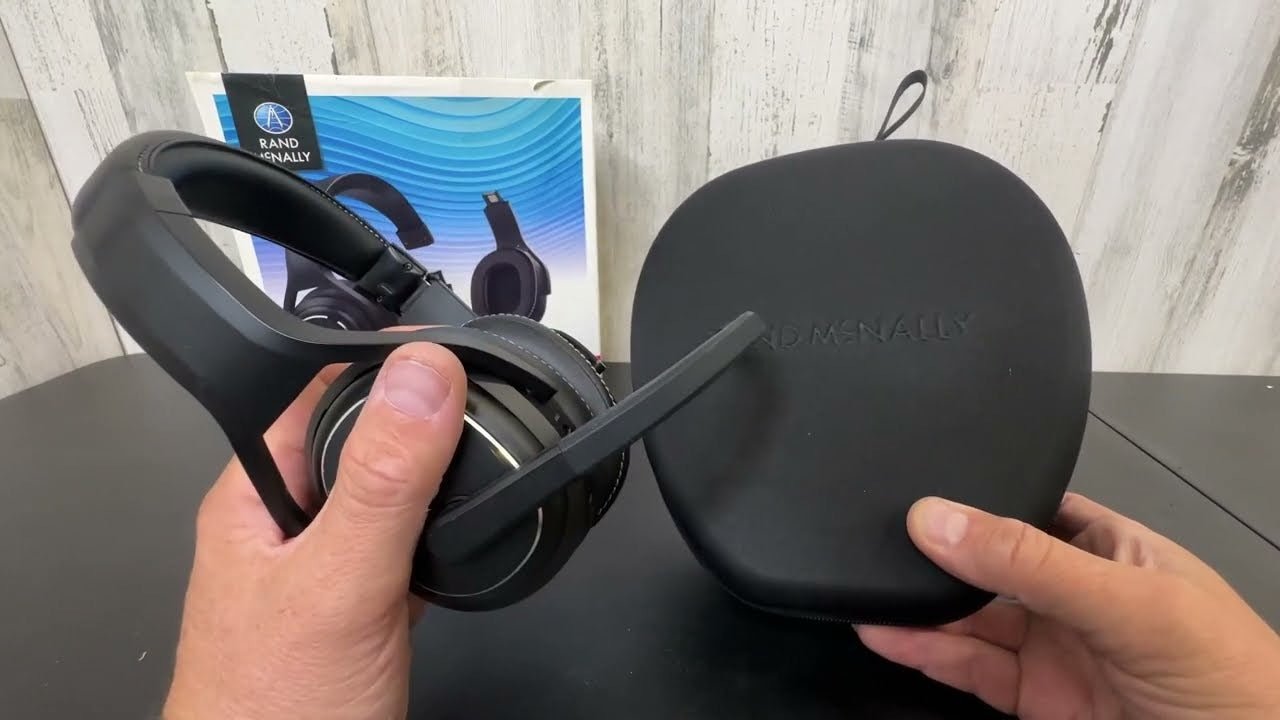
The Rand McNally ClearDryve 220 is a convertible Bluetooth headset built for professional drivers. It can operate as a single-ear call headset or convert to dual-ear stereo headphones, and Rand McNally currently lists Bluetooth 5.0, a flexible boom microphone, active noise cancellation, a 3.5 mm wired option, and up to 20 hours of talk or listening time.
Quick answer: the ClearDryve 220 makes the most sense for drivers who want one device for calls and off-duty stereo listening. Its strengths are the convertible design, long rated battery life, boom microphone, physical controls, and optional wired connection. Driving-law compliance still depends on how and where the headset is used.

ClearDryve 220 Specs That Matter for Drivers
| Feature | Current specification | What to check |
|---|---|---|
| Wearing modes | Convertible single-ear headset and dual-ear stereo headphones | Use the configuration that fits the task and the rules that apply where you drive. |
| Wireless | Bluetooth 5.0 | Test pairing, reconnect behavior, call controls, and voice-assistant behavior with your actual phone. |
| Battery | Up to 20 hours talk/listening; 200 hours standby; 2–2.5 hours charging | Compare the rated figures with your shift length and charging routine. |
| Microphone | Flexible boom with dual microphones | Microphone noise processing affects what callers hear; it is separate from listener-side ANC. |
| Listening-side ANC | Active noise cancellation; 20±2 dB performance listed by Rand McNally | ANC reduces noise reaching the wearer. It does not establish legal permission to drive with both ears covered. |
| Wired mode | 3.5 mm audio input | Rand McNally's guide says Bluetooth functions and headphone volume control do not operate in wired mode. |
| Weight | 10.4 oz | Try the headset with your glasses, cap, and normal wearing time before deciding that the fit works for you. |
Convertible Design: The Main ClearDryve 220 Difference
Rand McNally's current ClearDryve 220 page describes a 2-in-1 design. For call use, the headset can be configured with one earcup and the head pad. For stereo listening, the head pad can be replaced by the second earcup, while the boom microphone can be moved out of the way.
That is more useful than treating the 220 as two separate products. Drivers who prefer one ear uncovered during calls can use the mono configuration, then convert to two-ear stereo listening when parked or otherwise appropriate.
Microphone Noise Reduction and ANC Are Different
The ClearDryve 220 combines two different noise-control functions. Rand McNally says its dual microphones filter ambient noise for the person on the other end of a call, while active noise cancellation reduces noise heard by the wearer.
The manufacturer currently claims that the dual-microphone system filters out 90% of ambient noise. Treat that as a manufacturer performance claim, not a guarantee that every caller will hear the same result in every cab. Vehicle noise, boom position, window position, phone service, and speaking level can change real-world call quality.
If you are comparing this model with other road-use headsets, Wantek's Bluetooth headset guide for trucking explains how to test outgoing voice, controls, fit, battery, and multipoint behavior without assuming that ANC and microphone noise reduction are the same feature.
Battery and Charging
Rand McNally lists up to 20 hours of talk or listening time, 200 hours of standby time, and a 2–2.5 hour charging time. Those figures make the headset easier to plan around than a short-runtime consumer earbud, but they are still rated specifications rather than a promise for every volume level, call pattern, battery age, or temperature.
For a driver, the practical test is simple: compare expected daily call and audio time with charging opportunities. If the headset is used across multiple shifts or shared between drivers, also define who is responsible for charging and checking the battery before departure.
Bluetooth, Controls, and Wired Mode
The current product page lists Bluetooth 5.0 and on-ear controls for volume, track changes, and voice-assistant access. Pair and test the headset while parked, including answer/end behavior in the calling apps you actually use.
The ClearDryve 220 also includes a 3.5 mm wired option. Rand McNally's quick-start guide notes an important limitation: when the included aux cable is used, Bluetooth functions—including the headphone's volume control—do not work. Wired mode is therefore a fallback listening path, not a way to preserve every wireless feature.
Comfort and Fit
Rand McNally lists a retractable headband, flexible boom microphone, memory-foam padding, and oil-resistant materials. The headset weighs 10.4 oz. Those are useful design facts, but they do not prove all-day comfort for every driver.
Test the headset with the eyewear and headwear you actually use. Check pressure around the ear and temple, boom-mic reach, headband adjustment, and whether the single-ear configuration remains stable when you turn your head. For a broader comparison of road-use formats, see Wantek's current trucker headset guide.
Driving Rules: Hands-Free Does Not Mean Automatically Legal
FMCSA's current distracted-driving guidance prohibits covered commercial drivers from holding a mobile phone, unsafely reaching for it, or pressing multiple buttons to dial while driving. FMCSA says a hands-free phone should be close enough to operate while the driver remains properly restrained and identifies earpiece, speakerphone, voice-activated, and one-button features as compliant operating methods under the federal mobile-phone rule.
That federal phone rule is not the only rule that may matter. State headset or headphone laws can separately regulate what may cover or sit on one or both ears. Rand McNally itself warns that federal, state, or local law may restrict headset use. Wantek's selected U.S. driving-law guide shows why a single-ear Bluetooth headset is not a nationwide legal exemption.
Set up pairing and preferred controls before moving. If a call or device problem requires attention, handle it while safely parked rather than troubleshooting on the road.
Who the ClearDryve 220 Fits Best
- Drivers who want one device for calls and stereo listening: the convertible second earcup is the central reason to choose the 220.
- Long-call users: the current rated 20-hour talk/listening time can fit long workdays when charging is planned.
- Drivers who want a boom microphone: the flexible boom keeps the microphone position more repeatable than a cable-mounted mic.
- Users who sometimes need a wired fallback: the 3.5 mm input provides an alternate listening path, with the documented loss of Bluetooth controls in wired mode.
It is a weaker fit if you want a much lighter ear-hook device, do not need stereo conversion, or your route or employer rules make the intended wearing configuration unsuitable.
Review Scope and Limits
This is a specification- and source-based review, not a Wantek road test. It does not claim a universal durability ranking, guaranteed microphone result, or nationwide legal verdict. Current manufacturer documentation and the rules that apply to the driver's operation should control those decisions.
Rand McNally ClearDryve 220 FAQ
How long does the ClearDryve 220 battery last?
Rand McNally currently rates it for up to 20 hours of talk or listening time and 200 hours of standby, with a 2–2.5 hour charging time.
Can the ClearDryve 220 be used with one ear?
Yes. Its 2-in-1 design converts between a single-ear headset and dual-ear stereo headphones by swapping the head pad and second earcup.
Does the ClearDryve 220 have ANC?
Yes. Rand McNally lists active noise cancellation for the listening side and a separate dual-microphone noise-reduction system for outgoing calls.
Can the ClearDryve 220 work with a 3.5 mm cable?
Yes. Rand McNally documents a 3.5 mm wired mode, but Bluetooth functions and the headset's volume control do not operate while using the included aux cable.
Is a ClearDryve 220 automatically legal to wear while driving?
No. Hands-free phone rules and headset-wearing rules are separate. Check the federal rules that apply to your operation, each state's current law, and employer policy.

