
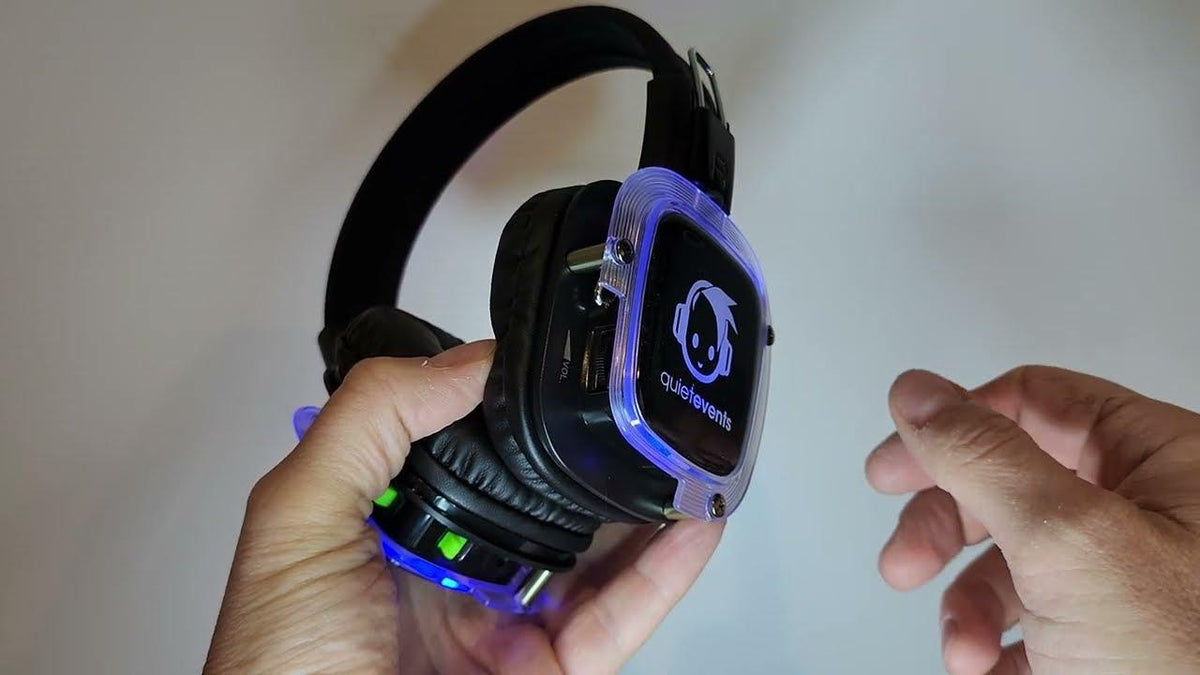
Silent disco headphones are part of an event system: a transmitter sends one or more audio channels to compatible wireless headphones worn by guests. Ordinary Bluetooth headphones are not automatically interchangeable with a silent-disco transmitter fleet.
Quick answer: Plan the transmitter, number of audio channels, headphone quantity, battery and charging workflow, venue range, sanitation, spare units, and on-site support as one system.

Silent Disco Headphones Work as a System
The headphones receive audio from a compatible event transmitter. Multi-channel systems can let guests switch between different DJs, playlists, languages, or program feeds. The transmitter and headphones must be designed to work together; do not build the event around unrelated consumer Bluetooth models.
What to Compare Before Renting or Buying
| Requirement | Why it matters | What to confirm |
|---|---|---|
| Channels | Determines how many audio feeds guests can choose. | Transmitter and headphone channel count. |
| Quantity | Every participating guest needs a compatible unit. | Guest count plus spare headphones. |
| Battery | Headphones must last through setup and the event. | Rated runtime, charging time, and pre-event charge process. |
| Range | Guests may move around a large venue. | Real venue size, walls, floors, and transmitter placement. |
| Sanitation | Units may be shared across events. | Cleaning process and replaceable contact parts. |
Comfort Matters at Multi-Hour Events
Guests may wear the headphones for much of the event. Check headband adjustment, cushion condition, clamp, weight, and how quickly staff can fit different users. Replaceable cushions can help with maintenance when the fleet is used repeatedly.
Battery Planning Starts Before Doors Open
Do not plan only around the published runtime. Include setup time, sound checks, the full event, and a reserve. Create a charging schedule and label units that need service. Spare headphones are useful for battery, fit, or hardware failures.
Range Should Be Tested at the Venue
Maximum range figures are measured under particular conditions. Walls, metal structures, crowd density, transmitter position, and interference can affect real coverage. Walk the actual guest area during setup and listen for dropouts.
Rental vs. Purchase
Rental
Rental can suit one-off or occasional events because the supplier may provide transmitters, headphones, charging, transport cases, and support. Confirm exactly what is included and who handles setup and return logistics.
Purchase
Ownership can make sense for recurring events when the organization is prepared to store, charge, clean, inventory, and repair a fleet. Include lost units and replacement parts in the operating plan.
Event Checklist
- Guest count and spare percentage
- Number of audio channels
- DJ or mixer output to the transmitter
- Venue coverage test
- Charging and battery plan
- Cleaning and cushion condition
- Staff process for distributing and collecting units
- Backup transmitter or other contingency for critical events
For a second event-focused comparison, see the silent disco headphone buying guide.
Silent Disco Headphone FAQ
Can I use normal Bluetooth headphones for a silent disco?
Do not assume so. Silent-disco systems normally depend on headphones that are compatible with the event transmitter and its channels.
How many headphones should I rent?
Cover the expected participating guests and add spares for fit, battery, damage, or late attendance. The right reserve depends on the event.
Do silent disco headphones need ANC?
Not necessarily. The core requirement is reliable reception from the event system. Comfort, volume management, and venue conditions may matter more.

