
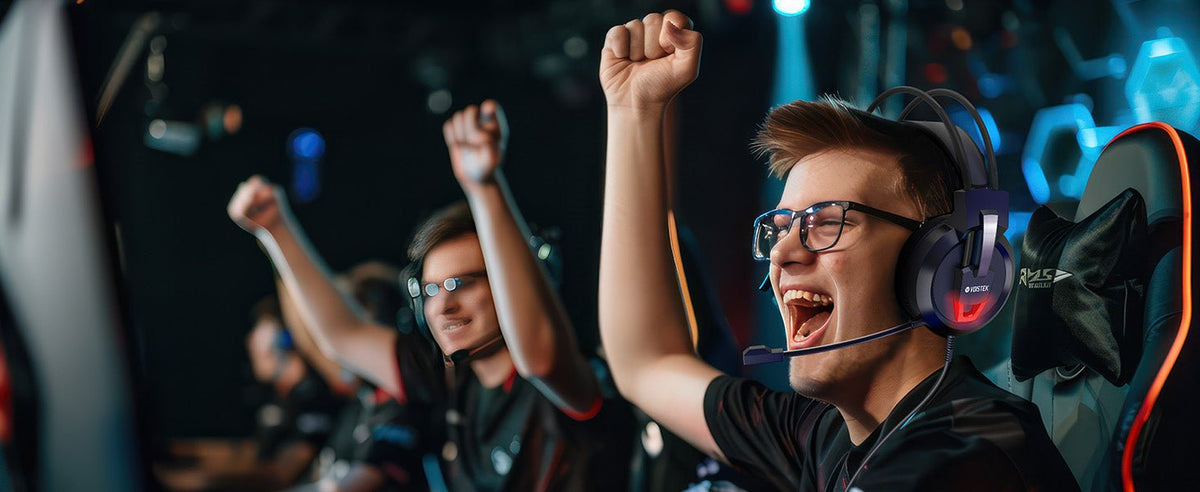
LED gaming headphones add decorative lighting to a gaming setup. Choose them by audio connection, microphone support, and fit; lighting alone does not establish sound quality or device compatibility. Gaming models may have fixed-color LEDs or adjustable RGB effects; audio connections and lighting controls still depend on the headset.
Quick answer: Choose a gaming headset with LED lights by matching game audio and microphone input to your device before comparing lighting styles. For wired options, the Wantek V10 pairs removable cat ears with LEDs, while the Voistek V9 Pro uses RGB lighting; both use 3.5 mm for audio and USB only for the lights. For wireless models, verify platform support, voice chat, latency, and battery life.
What Counts as Light-Up Headphones?
Light-up headphones have decorative LEDs on the earcups, headband, or attached accents. They can be wired or wireless, with fixed colors or selectable lighting patterns. A small charging or Bluetooth pairing indicator is not the same as decorative illumination.
For a child, check the manufacturer's stated age range, fit, and documented volume limits; lights alone do not imply child-specific listening controls. Cat-ear designs can have fixed or removable accents, as our cat-ear headphones comparison explains. The remaining checks focus on gaming headsets, where voice chat and platform support also matter.
Start With the Platform and Connection
| Connection | Typical strength | Verify |
|---|---|---|
| 3.5 mm | Simple wired audio path | TRRS headset support, controller/PC jack, splitter needs |
| USB | Digital audio plus power for features | Platform support, software, chat controls, connector type |
| 2.4 GHz wireless | Dedicated low-latency link on supported systems | Included receiver and console/PC compatibility |
| Bluetooth | Convenient for phones and many PCs | Gaming-platform support, microphone behavior, latency |
On Windows, Bluetooth audio behavior can depend on both the PC and headset. Microsoft notes that Bluetooth LE Audio features require compatible Windows 11 hardware, drivers, and an LE Audio-capable device; basic Bluetooth support alone does not guarantee the same microphone-and-playback behavior. See Microsoft’s LE Audio compatibility guide.
If PS5 is the target platform, use our PS5 headset setup and compatibility guide to verify the audio and microphone path before choosing by lighting or color.
LED vs. RGB Gaming Headphones: Check the Lighting and Cables
LED means the headset has light-emitting diodes. Some gaming headsets offer a fixed color or preset lighting effect; others use RGB LEDs with selectable colors or patterns. The term “RGB” alone does not guarantee software synchronization, per-zone controls, or the option to switch the lights off.
Lighting may draw power from USB, from the headset battery, or from a separate connection depending on the model. A 3.5 mm headset can sometimes use USB only for lighting while audio travels through the analog plug. Check the manual before assuming the USB cable carries sound. If the lights turn on but you hear no game audio, check that the audio plug or receiver is connected and that your device has the correct output selected. For a 3.5 mm model with USB-powered lights, plugging in USB alone does not connect game audio. If sound works but voice chat does not, check the microphone connection, inline mute switch, and the game's selected microphone input.
For a real two-connector example, the Voistek V9 Pro wired gaming headset uses its 3.5 mm plug for game audio and microphone input; its separate USB connection powers RGB lighting. Before buying a similar headset, check that your device has a compatible audio and mic connection as well as a suitable USB power source if you want the lights on.

For a cat-ear option, the Wantek V10 gaming headset with LED lights combines 3.5 mm wired audio, a boom microphone, removable cat ears, and USB-powered lighting. Its product specifications also list inline volume and microphone-mute controls. USB supplies lighting power rather than game audio, so check the headset jack on your device before choosing it.
RGB control software may be limited to specific operating systems or supported devices. Verify the lighting modes and software requirements on the exact listing instead of assuming a console can control PC-only effects.
If battery life matters, confirm whether published runtime includes lighting and whether RGB can be turned off.
Choosing Wireless RGB Headphones for Music
For wireless RGB headphones used mainly for music, match the audio connection to your listening device first. For a phone or tablet, confirm Bluetooth audio support on the exact model; a headset advertised as “wireless” may instead require a USB receiver. For a computer, check receiver compatibility and whether the lighting and EQ software supports your operating system. The wired Wantek V10 and Voistek V9 Pro discussed above are not Bluetooth alternatives.
Compare sound and fit separately from the lights: listen to familiar tracks at a similar volume, check whether bass masks vocals, and wear the headphones long enough to notice pressure or heat. RGB, driver size, and surround-sound branding do not establish music quality. If music is your main use, our wired vs. wireless headphones for music guide explains the connection and listening-environment tradeoffs.
Check playback controls and the conditions behind battery claims. The CORSAIR VIRTUOSO RGB WIRELESS XT user guide, for example, documents Bluetooth play/pause and track skipping, RGB and EQ configuration through iCUE on a compatible Windows PC, and the option to disable RGB in iCUE to extend battery life. For any model, compare runtime for the connection you will use, with lighting settings stated; an “up to” figure measured with lights off does not establish runtime with RGB enabled.
If you want the lights to react to music, look for a documented sound-reactive mode and check its device and app requirements. A cycling rainbow effect alone does not demonstrate music synchronization. For phone listening away from a computer, also verify whether the desired lighting effect works over Bluetooth, whether it needs software running, and whether the headset retains the setting after disconnection. If those details are missing, do not assume PC lighting features carry over to mobile use.
Microphone and Monitoring Matter More in Multiplayer
Check microphone position, mute control, sidetone or mic monitoring, and whether the mic remains active on the connection you plan to use. A detachable or flip-to-mute boom can be convenient, but the behavior is model-specific.
Comfort Is a Long-Session Requirement
Compare clamp, ear-cup depth, heat, headset weight, headband adjustment, glasses pressure, and replacement pads. A visually impressive headset that creates pressure after an hour is a poor gaming choice.
Buying Checklist
- Exact PC, PlayStation, Xbox, Switch, or mobile support
- Audio and microphone connection path
- Whether USB carries audio or only lighting power
- Wireless receiver or Bluetooth requirements
- Mute and chat controls
- Battery life with lighting settings stated
- Fixed LEDs versus adjustable RGB, and lighting on/off controls
- Lighting software support on your device
- Comfort and replacement parts
Light-Up Gaming Headset FAQ
Does USB always carry the audio on an RGB headset?
No. Some headsets use USB for audio and power, while others use 3.5 mm for audio and USB only for lighting. Check the exact model.
Is Bluetooth the best wireless choice for gaming?
Not automatically. Platform support and latency vary. A dedicated wireless receiver can be a better fit on systems designed for it.
Does RGB reduce battery life?
Lighting uses power on battery-operated headsets. The actual impact varies, so compare manufacturer runtime conditions and whether lighting can be disabled.
Can one gaming headset work on every console?
No. Connector shape alone does not prove full audio, microphone, or control compatibility. Verify each target platform.
Want a wired RGB gaming headset? Check the Voistek V9 Pro’s 3.5 mm audio connection and USB-powered lighting against your gaming setup.

