
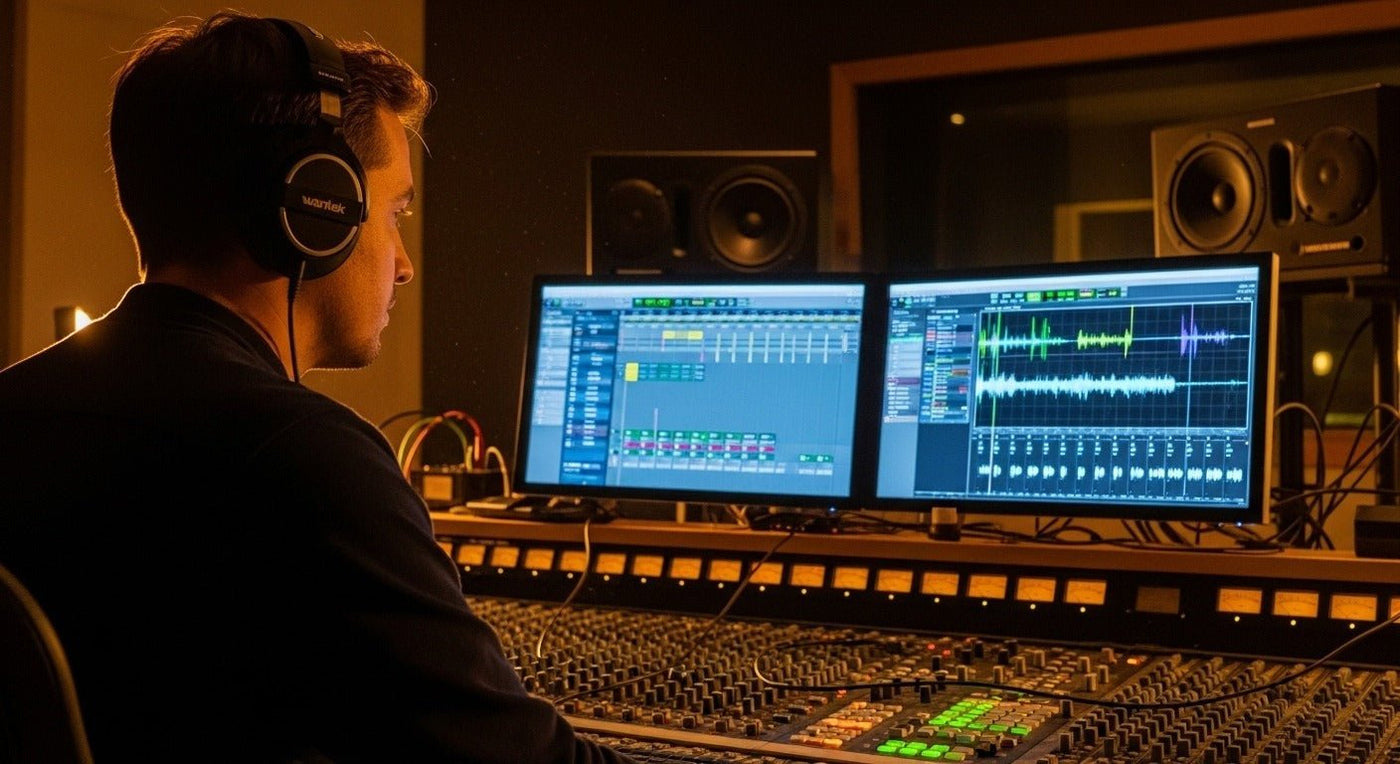
Good mixing headphones are useful because they remove the room from part of the monitoring chain, reveal small edits, and let you work quietly. They are not a substitute for mix translation checks on other playback systems.
For mixing: prioritize a stable, familiar frequency balance, low distortion, useful imaging, long-session comfort, and a connection your interface can drive cleanly.
What matters in mixing headphones?
| Factor | Why it matters | What to avoid |
|---|---|---|
| Tonal balance | A consistent reference helps EQ decisions. | Choosing solely for exaggerated bass or treble. |
| Imaging | Helps pan and spatial decisions. | Assuming a huge soundstage equals accuracy. |
| Comfort | Mix sessions can be long. | Ignoring clamp, heat, and weight. |
| Drive requirements | Your interface must supply suitable level. | Buying from impedance alone without sensitivity/context. |

Open-back vs. closed-back
Open-back headphones leak sound and provide little isolation but can feel more open spatially. Closed-back headphones isolate better and are useful during tracking, shared spaces, or noisy rooms.

Build a translation routine
Learn one pair well, then check important mixes on speakers, ordinary earbuds, a phone, car audio, or other familiar systems. The goal is not a headphone that makes every track exciting; it is a reference you can predict.
For the difference between consumer and critical-listening priorities, see Wantek’s audiophile vs. standard headphone guide.
Mixing Headphones Should Reveal Problems, Not Hide Them
For mixing, prioritize a consistent tonal balance, repeatable fit, low distortion at normal listening levels, and enough comfort for long sessions. A dramatic bass or treble presentation can be enjoyable for casual listening while making balance decisions harder.
Open-back and closed-back serve different workflows
Open-back designs can feel spacious in a quiet room but leak sound. Closed-back models provide more isolation and are usually more practical during tracking near live microphones. Many studios use both formats for different stages.
Mixing Workflow Check
- Reference familiar commercial tracks.
- Check mixes at moderate volume.
- Compare on speakers or another known playback system.
- Take breaks during long sessions.
Frequently asked questions
Are open-back headphones always better for mixing?
No. They can be useful in quiet rooms, but closed-back models provide isolation and can also become reliable references when you know them well.
Do high-impedance headphones need an amp?
Sometimes. Required output depends on impedance, sensitivity, target level, and the interface or source. Check the headphone and source specifications together.

