
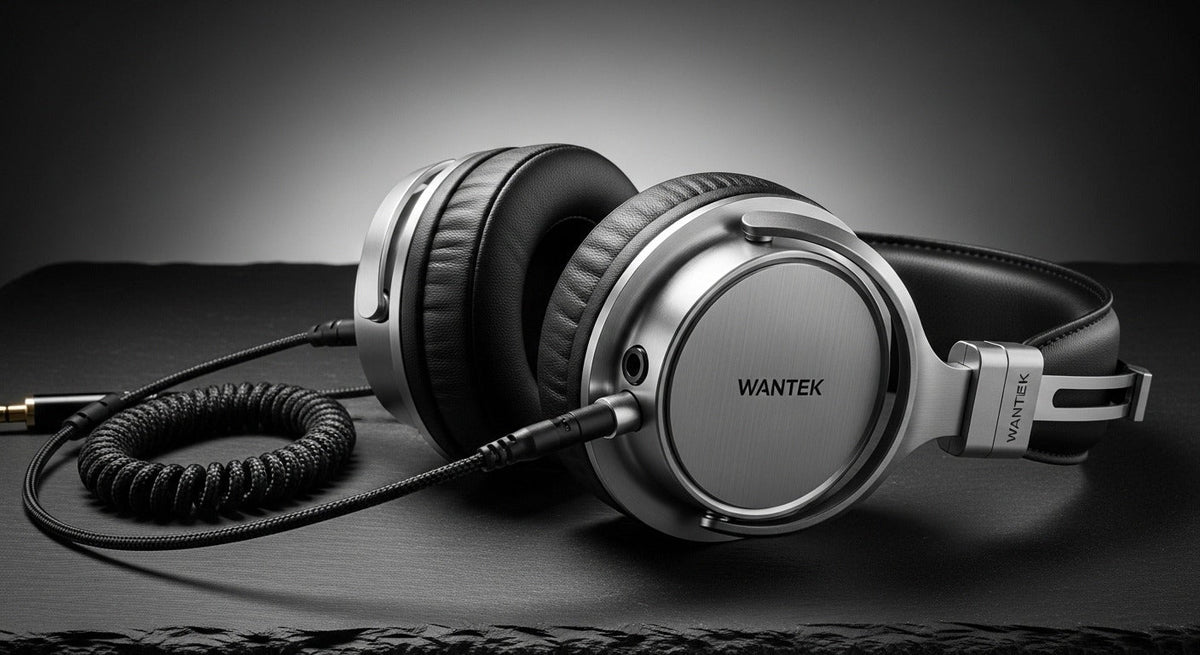
A wired connection removes Bluetooth batteries and radio compression from the headphone itself, but that does not automatically make every wired headphone high quality. The transducer, tuning, fit, enclosure, cable, and source still determine the result.
Start with use: closed-back for isolation and tracking; open-back for quiet-room listening and mixing; lightweight closed-back or office headsets for calls and computer work.

What “high quality” should mean
- Predictable tonal balance for your use.
- Low unwanted distortion at normal listening levels.
- Comfort that holds up over long sessions.
- A cable and connector suitable for the source.
- Replaceable wear parts when long-term ownership matters.

Open-back vs. closed-back
Open-back designs leak sound and provide little isolation but can create an open presentation. Closed-back designs are more practical around other people, microphones, travel, and noisy rooms.
Do you need an amplifier?
Do not decide from impedance alone. Sensitivity, desired listening level, and the source’s output capability also matter.
For critical listening and professional distinctions, see Wantek’s audiophile headphone guide.
“High Quality” Depends on the Job
For wired headphones, driver tuning is only one part of quality. Cable strain relief, connector fit, replaceable pads, headband durability, comfort, and repairability can matter just as much over years of use.
Choose the right connection
3.5 mm is common on portable devices and computers with analog audio. Studio equipment may use 6.35 mm, sometimes through an adapter. USB headsets use a different digital path and should not be treated as interchangeable with passive analog headphones.
Before Buying
- Check connector and impedance requirements.
- Decide whether a microphone is needed.
- Evaluate pad and cable replacement options.
- Prioritize comfort for the intended session length.

