
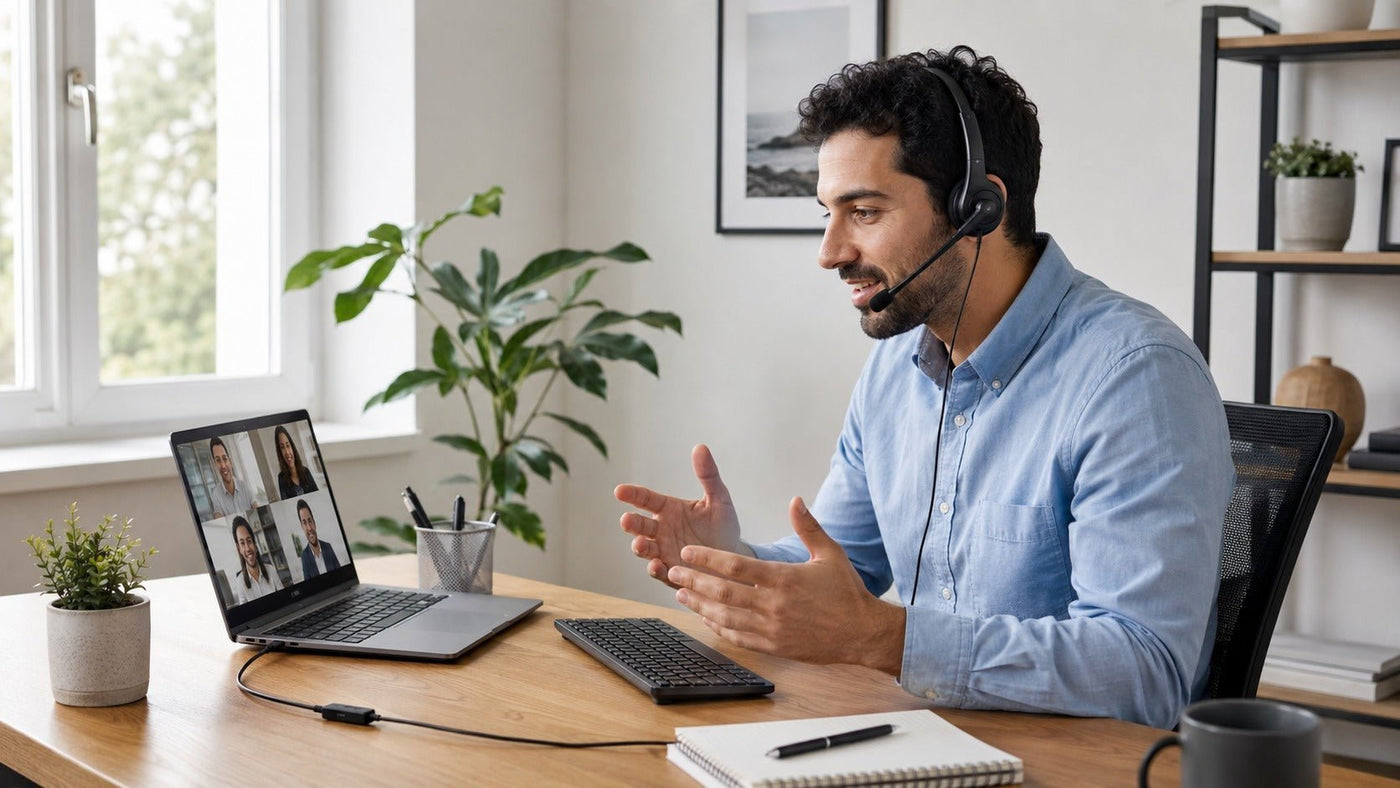
He pasado incontables horas buscando unos auriculares decentes. Es una pesadilla, sinceramente. Navegas por los listados de Amazon durante horas. Lees reseñas contradictorias. Alguien jura que un modelo es de primera categoría. Otra persona dice que crepita después de tres días. Ya me he quemado antes. Compré un par llamativo una vez. Se rompió en una semana. El plástico se partió justo en la bisagra. Lloré un poco por dentro. No literalmente. Pero casi.
Así que decidí hacer algo al respecto. Probé docenas de auriculares. Entrevisté a ingenieros de audio. Incluso rogué a algunos amigos que me prestaran los suyos. ¿El resultado? Esta guía. Es cruda. Es honesta. Es todo lo que desearía que alguien me hubiera dicho hace cinco años. Olvida las reseñas patrocinadas. Olvida el cebo de los enlaces de afiliados. Esto es una conversación real sobre opciones de auriculares USB con micrófono que realmente funcionan.
Por qué abandoné el audio integrado para siempre
Permítanme pintarles un cuadro. Son las 3 p.m. de un martes. Estoy en una llamada de Zoom con mi editor. Suena como si estuviera bajo el agua. O dentro de una lata. O ambas cosas. Apenas puedo entenderlo. Luego dice que mi audio es peor. "Suenas como un robot con un resfriado", me dice. Encantador, ¿verdad? Ese fue el momento en que me enfadé.
Los micrófonos integrados en los portátiles son una basura. Lo siento, pero es verdad. Recogen todos los sonidos. El tecleo de tu teclado. La cortadora de césped de tu vecino. Tu estómago gruñendo. Es un desastre. Unos auriculares USB con micrófono adecuados lo cambian todo. Aíslan tu voz. Bloquean el ruido de fondo. Te hacen sonar profesional, incluso en pijama.
Los auriculares USB también resuelven un problema técnico específico. ¿Recuerdan esos viejos conectores de 3,5 mm? Son propensos a interferencias. Estática. Crujidos. Desconexiones aleatorias. El USB evita todo eso. Es digital. Es limpio. Es plug-and-play. No necesita controladores. No hay que ajustar la configuración de sonido. Simplemente conéctalo y listo. Esa simplicidad es hermosa.

La zona de gangas de menos de 50 dólares: Mis sorprendentes descubrimientos
Solía pensar que los auriculares baratos eran una pérdida de dinero. Me equivoqué. Las opciones económicas modernas son sorprendentemente buenas. ¿El secreto? La fabricación china ha mejorado drásticamente. Los componentes cuestan menos. El control de calidad es más estricto. Ahora puedes conseguir unos auriculares sólidos por el precio de dos burritos Chipotle.
Logitech H390: El caballo de batalla indestructible
Esta cosa es fea. Lo diré sin rodeos. Parece que pertenece a un centro de llamadas de los años 90. Plástico gris. Auriculares gruesos. Un micrófono de brazo que parece una pajita. Pero la cosa es: funciona. Lo tengo desde hace tres años. Se ha caído, se ha retorcido y se ha metido en mochilas. Todavía funciona. El audio es lo suficientemente claro para llamadas de Zoom. El micrófono es adecuado. Cancela el ruido ambiental razonablemente bien. No perfectamente. Pero lo suficientemente bien.
El público de los auriculares USB con micrófono para PC adora este modelo. Es fiable. Es barato. Alrededor de 25-30 dólares en un buen día. Los auriculares son rígidos al principio. Dales una semana para que se ablanden. Después de eso, son cómodos para llamadas de tres horas. No para sesiones maratonianas. Pero sólidos para el uso diario.
El cable tiene dos metros de largo. Eso es generoso. Puedes caminar por tu pequeño apartamento sin desenchufar. Sin batería que cargar. Sin emparejamiento Bluetooth. Sin complicaciones. Es el equivalente automovilístico de un Toyota Camry. Aburrido. Fiable. Sobrevivirá a tus próximos tres portátiles.
HyperX Cloud Stinger Core Wireless: El contendiente improbable
¿Inalámbricos por menos de 50 dólares? Yo tampoco lo creía. Luego encontré esta joya en oferta por 47 dólares. Utiliza un dongle USB. Sin dolores de cabeza de emparejamiento Bluetooth. Sin retardo de audio. La latencia es lo suficientemente baja para jugar. Jugué a Valorant con ellos. No noté ningún retraso. ¿Dominé? No. Pero ese es mi problema de habilidad, no culpa de los auriculares.
La versión de auriculares USB con micrófono inalámbricos es de plástico. Se siente barata. No voy a mentir. Pero sobrevivió a una caída desde mi escritorio al suelo de madera. Eso es una victoria en mi libro. La duración de la batería es de unas 17 horas. Eso es suficiente para una semana de trabajo. El micrófono se sube para silenciar. Un clic satisfactorio. Sin tener que buscar botones.
La calidad del sonido es decente. Las voces son claras. Los graves están presentes pero no son abrumadores. No sentirás las explosiones en tus huesos. Pero para juegos casuales y llamadas, es excelente. Los auriculares son de espuma. No son de piel sintética. No harán sudar tus orejas. Una pequeña bendición en veranos húmedos.
Auriculares Hi-Fi Kensington: El patito feo
Estos auriculares son agresivamente poco atractivos. Parecen un accesorio de una película de ciencia ficción de los años 80. El brazo del micrófono es largo y flexible. Puedes darle la forma que quieras. Están diseñados para la captación de voz, no para la música. La música suena plana. Hueca. ¿Pero la voz? Cristalina. Mis compañeros de llamadas notaron la diferencia de inmediato. "Pareces estar en un estudio de radio", dijo uno.
El mercado de auriculares USB con micrófono necesita más de esto. Auriculares que prioricen el habla sobre las características llamativas. Cuesta alrededor de 30 dólares. Es ligero. Olvidas que lo llevas puesto. Las almohadillas son delgadas pero cómodas. El aislamiento de ruido es mínimo. Escucharás tu entorno. Pero tu voz se escucha alta y clara.
¿Quién debería comprar esto? Trabajadores de centros de llamadas. Agentes de atención al cliente. Personas que dictan documentos. O cualquiera que odie absolutamente la estética gamer. Sin RGB. Sin ángulos agresivos. Solo función. Pura e inquebrantable función.
La zona Ricitos de Oro de 50 a 100 dólares
En esta franja de precios es donde las cosas se ponen interesantes. Aquí se puede saborear la verdadera calidad. Mejores materiales. Mejores micrófonos. A veces, incluso la libertad inalámbrica. Pasé semanas probando auriculares en este rango. Mi cartera todavía me duele. Pero encontré algunas joyas.
Logitech G432: El sorprendente superdotado
El G432 de Logitech es con cable. Eso es un inconveniente para algunos. Pero escúchenme. Utiliza un adaptador USB. Eso significa que funciona en PC, PS4 y Nintendo Switch. La versatilidad importa. El auricular USB con micrófono viene con sonido envolvente DTS Headphone:X 2.0. Eso es una jerga de audio elegante para "puedes oír pasos en los juegos". Lo probé en Call of Duty. Oí a un enemigo acercándose sigilosamente por detrás. Me giré y le disparé. Muerto. Eso nunca pasa. Normalmente soy yo el que es sorprendido.
El micrófono es decente. No es calidad de estudio. Pero mis compañeros de equipo dejaron de preguntar "¿qué dijiste?". Eso es una victoria. Tiene una función de silenciar al levantar el micrófono. Los auriculares son suaves. De espuma viscoelástica. Cómodos durante unas horas. Después de tres horas, mi cabeza empezó a sentirse apretada. Esa es mi única queja.
El precio ronda los 60 dólares. A veces menos en las ofertas de Amazon. Es un todoterreno sólido para jugadores y trabajadores remotos. No es llamativo. No es feo. Simplemente fiable.
Razer Kraken X USB: El contendiente ligero
Razer es una marca polarizante. A algunos les encanta su estilo agresivo. Otros piensan que es forzado. Estoy en el medio. El Kraken X USB es sorprendentemente sobrio. Sin RGB ofensivo. Solo un simple acento verde o negro. Pesa 250 gramos. Eso es increíblemente ligero. Apenas lo notas en tu cabeza.
La versión inalámbrica de auriculares USB con micrófono existe. Se llama Kraken X Wireless. Esa cuesta alrededor de 80 dólares. La versión USB con cable es más barata, alrededor de 50-60 dólares. Ambas tienen un micrófono cardioide. Capta tu voz desde el frente. Rechaza el sonido de los lados y la parte trasera. Bueno para entornos ruidosos. No perfecto. Pero bueno.
El cable es delgado. Odio los cables delgados. Se enredan. Se doblan. Parecen frágiles. Este aún no se ha roto, pero estoy paranoico. Los auriculares no aíslan bien el ruido. Escucharás tu teclado mecánico teclear. Si eso te molesta, busca en otro lado.
La función de silenciar al levantar es satisfactoria. Con un clic. Táctil. Hace un chasquido satisfactorio cuando levantas el micrófono. Los pequeños placeres importan.
Jabra Evolve 20 UC: La elección de los profesionales
Estos auriculares parecen diseñados por un equipo de abogados. Son todo negocio. Grises. Sencillos. Sin complicaciones. La gente de los entornos corporativos adora estos auriculares USB con micrófono para PC. Tienen cancelación de ruido pasiva. Los auriculares bloquean parte del sonido ambiental. No es cancelación de ruido activa. Pero suficiente para concentrarse.
Jabra es una empresa de audio profesional. Fabrican auriculares para oficinas, no para jugadores. El sonido está ajustado para el habla. Las voces suenan naturales. Sin refuerzo de graves. Sin agudos artificiales. Solo audio limpio y claro. Los usé durante una semana de reuniones consecutivas. Mis oídos no me dolieron. Mi cuello no me dolió. Es ligero. Es cómodo.
El micrófono es excepcional para el reconocimiento de voz. Dicté correos electrónicos enteros usando Dragon NaturallySpeaking. Captó cada palabra sin problemas. No se necesitaron correcciones. El precio ronda los 80 dólares. Vale la pena cada céntimo si pasas todo el día en llamadas.
Sin RGB. Sin funciones de juego. Sin trucos de "sonido envolvente". Solo una herramienta que hace su trabajo. A veces, eso es exactamente lo que necesitas.
Los contendientes serios de 100 a 200 dólares
Ahora sí que estamos hablando. Estos auriculares son para personas que se preocupan. Por la fidelidad de audio. Por la comodidad. Por las características que realmente importan. Gasté más en estos de lo que me gustaría admitir. Pero no me arrepiento.
SteelSeries Arctis 7+ Wireless: Mi favorito personal
Soy parcial. Soy dueño de estos auriculares. Los he usado diariamente durante dos años. Están rayados. Están abollados. Siguen funcionando perfectamente. El auricular USB con micrófono inalámbrico utiliza un dongle de 2,4 GHz. Sin emparejamiento Bluetooth. Sin retraso de audio. Conexión instantánea. Es mágico.
La batería dura 30 horas. Lo cargo una vez a la semana. Los auriculares usan tela "AirWeave". Es transpirable. Mis oídos no sudan en verano. El micrófono es retráctil. Sácalo cuando lo necesites. Mételo cuando no. La calidad de audio es excelente. Detallada. Clara. Buenos bajos sin ser fangosos.
El dial de mezcla de chat en el auricular es genial. Puedes equilibrar el audio del juego y el audio del chat. Un solo pulgar. No se necesita software. A veces lo empujo accidentalmente. Eso es molesto. Pero perdonable.
El precio ronda los 150 dólares. Es el mejor auricular inalámbrico todoterreno que he usado. Si puedes permitírtelo, cómpralo. No te arrepentirás.
HyperX Cloud Alpha S: La leyenda duradera
Los auriculares HyperX tienen reputación. Están construidos como tanques. El Cloud Alpha S continúa esa tradición. Marco de metal. Espuma viscoelástica de felpa. Un cable trenzado que no se enredará. El auricular USB con micrófono viene con una tarjeta de sonido USB. Admite sonido envolvente virtual 7.1. Eso es útil para juegos.
El micrófono es desmontable. Puedes usar los auriculares como auriculares normales. Lo he hecho en vuelos. Conectarlos a mi teléfono. Escuchar música. El audio es potente. Buena separación. Los graves están presentes pero no son abrumadores. Hay deslizadores de graves en el cable. Me parecen un truco. Los dejo en el medio.
El precio ronda los 120 dólares. Cómodo para sesiones largas. Lo suficientemente duradero como para sobrevivir a caídas. HyperX sabe lo que hace.
Logitech G Pro X Wireless Lightspeed: La máquina de eSports
Estos auriculares son caros. Alrededor de 180-200 dólares. Pero se sienten premium. El auricular USB con micrófono inalámbrico utiliza la tecnología Lightspeed de Logitech. Es básicamente audio sin pérdidas. Sin compresión. Sin pérdida de calidad. El micrófono es extraíble. Puedes usar el software Blue VO!CE para ajustarlo. Haz que suene como un locutor de radio. O como una ardilla. Tú eliges.
La batería dura 20 horas. Eso es menos que los Arctis 7+. Pero carga rápido. Una hora te da suficiente para un día. Los auriculares son de piel sintética. Cómodos pero cálidos. Tus oídos podrían sudar en verano. El diseño de la diadema es minimalista. Casi aburrido. Pero el sonido es preciso.
A los jugadores competitivos les encantan estos auriculares. Los pasos son cristalinos. Los disparos son fuertes pero no distorsionados. Están diseñados para eSports. Si juegas CS:GO o Valorant en serio, vale la pena la inversión.
Más de 200 dólares: Sobrecarga premium
Estos auriculares son para audiófilos. O personas con demasiado dinero. Son exagerados para la mayoría. Pero son innegablemente impresionantes.
Sennheiser GSP 670: El ladrillo que suena increíble
Sennheiser es legendario en audio. El GSP 670 hace honor a esa reputación. Es inalámbrico con USB y Bluetooth 5.0. Puedes conectarlo a tu PC y a tu teléfono simultáneamente. El modo de auriculares USB con micrófono suena increíble. Graves ricos. Voces claras. Medios detallados.
El micrófono se silencia al girar. Tiene una excelente cancelación de ruido. Tu voz se escucha limpia. Es pesado. 395 gramos. Es como llevar un casco de obra. En serio. Pero es cómodo una vez ajustado. Las almohadillas son suaves.
La batería dura solo 16 horas. Eso es poco para 250-300 dólares. El software es defectuoso. Se me ha bloqueado dos veces. ¿Pero la calidad del sonido? Inigualable. Si el audio es tu obsesión, este es.
Audeze Penrose: El cielo audiófilo
Audeze fabrica auriculares magnéticos planares. Esto es de gama alta. El Penrose es inalámbrico. Utiliza un dongle USB para audio sin pérdidas. Los auriculares USB con micrófono para PC suenan como un estudio de grabación. Graves detallados. Medios claros. Sin frecuencias acentuadas.
El micrófono es de calidad de transmisión. Tu voz sonará profesional. Es pesado. 320 gramos. La duración de la batería es de 15 horas. La comodidad es divisoria. A algunos les encantan las almohadillas gruesas. Otros las encuentran ajustadas.
Cuesta 300 dólares. Estás pagando por controladores de calidad audiófila. Si no puedes notar la diferencia entre MP3 y FLAC, no necesitas esto. ¿Pero si puedes? Es mágico.
Mis reflexiones finales sobre con cable vs. inalámbrico
He ido y venido en esto. Literalmente. He usado ambos. Aquí está mi opinión honesta.
El cable es más fiable. Sin ansiedad por la batería. Sin latencia. Sin interferencias. Lo enchufas y funciona. Para siempre. El Logitech H390 sigue funcionando después de tres años. Esa es la ventaja del cable.
La tecnología inalámbrica es más cómoda. Sin cables que se enganchen. Sin enredos. Puedes ir a la cocina durante una llamada aburrida. Los modelos de auriculares USB con micrófono inalámbricos que recomiendo usan dongles de 2,4 GHz. No Bluetooth. Eso es clave. Bluetooth añade retraso. Está bien para llamadas. Terrible para jugar.
Si eliges la opción inalámbrica, busca una con batería reemplazable. O con opción de cable. Lo aprendí por las malas. Mis antiguos auriculares inalámbricos murieron a mitad de una incursión. Tuve que usar los altavoces del portátil. Humillante.

Cómo hacer que tu micrófono suene mejor
Unos excelentes auriculares USB con micrófono no te servirán de nada si los usas mal. Aquí tienes mis consejos. Gratis. Porque soy generoso.
Mantén el micrófono a una pulgada de tu boca. A un lado. No en el centro. Esto evita las oclusivas. Esos molestos chasquidos de "p" y "b". Si tus auriculares tienen cancelación de ruido, úsala. Pero no dependas solo de ella. Cierra la ventana si hay una sopladora de hojas fuera. Usa software como Krisp o Nvidia Broadcast. Eliminan el ruido de fondo de forma efectiva.
Una vez tuve un compañero cuyo micrófono captaba los ronquidos de su perro. Los oímos durante dos semanas. Dos semanas. Alguien finalmente habló. No seas esa persona. Ajusta tu configuración. Prueba tu audio. Lleva dos minutos.
Lo que realmente deberías comprar
No puedo elegir por ti. Cada persona es diferente. Pero aquí está mi lista, basada en mi experiencia.
¿Estás sin dinero y necesitas algo ya? Hazte con los Logitech H390. Cuestan 25 dólares. Funcionan. No te avergonzarán.
¿Jugador ocasional que odia los cables? Los HyperX Cloud Stinger Core Wireless por 45-50 dólares son una ganga.
¿Guerrero de oficina con un presupuesto de 100 dólares? Jabra Evolve 20 UC. Profesional y duradero.
¿Quieres los mejores inalámbricos en general? SteelSeries Arctis 7+. Cuestan 150 dólares y lo hacen todo bien.
¿Audiófilo con mucho dinero? Audeze Penrose o Sennheiser GSP 670. Escucharás sonidos que no sabías que existían.
Una cosa más. No caigas en la trampa de marketing de los "auriculares gaming". Muchos solo añaden RGB y cobran extra. Unos auriculares USB con micrófono para PC que cuestan 80 dólares pueden superar a unos de 150 dólares. Si te saltas las luces llamativas. Compra en un lugar con una buena política de devoluciones. Yo he devuelto tres auriculares. Me aplastaban las orejas. La comodidad es subjetiva. Pruébalos.
Ahora ve. Comunícate. Juega. Lo que sea. Pero no uses el micrófono integrado de tu portátil. Por favor. Por el amor de Dios.
Preguntas frecuentes: Los mejores auriculares USB con micrófono para cada presupuesto
1. ¿Qué debo buscar en unos auriculares USB económicos con micrófono?
Para una opción económica, priorice un audio claro para llamadas y juegos, un ajuste cómodo para uso prolongado y un micrófono con cancelación de ruido. Busque modelos por debajo de los $50 con buena calidad de construcción y características básicas como controles en línea.
2. ¿Los auriculares USB caros son significativamente mejores que los más baratos?
Sí, generalmente. Los auriculares de mayor precio suelen ofrecer una calidad de sonido superior (por ejemplo, bajos más ricos, un escenario sonoro más amplio), mejor aislamiento del ruido, materiales más duraderos y funciones de micrófono avanzadas como silenciar al levantar o cancelación de ruido con IA. Sin embargo, las opciones de gama media (entre $50 y $100) pueden ofrecer una excelente relación calidad-precio.
3. ¿Todos los auriculares USB funcionan tanto con PC como con Mac?
La mayoría de los auriculares USB modernos son plug-and-play y compatibles con Windows, macOS y, a menudo, Linux. Sin embargo, algunas funciones avanzadas (como el software de ecualización personalizado) pueden ser solo para Windows. Siempre revise las especificaciones del producto para ver la compatibilidad completa.
4. ¿Puedo usar unos auriculares USB con micrófono en una consola de juegos?
Algunos auriculares USB funcionan con PlayStation, Xbox o Nintendo Switch, pero la compatibilidad varía. Muchas consolas requieren un puerto USB específico o un adaptador (por ejemplo, Xbox a menudo necesita una conexión por cable a través del conector de audio del controlador). Siempre verifique la compatibilidad con la consola antes de comprar.
Para configuraciones cableadas modernas
Haga su próxima llamada más clara con unos auriculares USB-C.
Elija unos auriculares estéreo con cable y un micrófono de brazo si desea una configuración dedicada para llamadas de computadora sin tener que preocuparse por la batería.

