
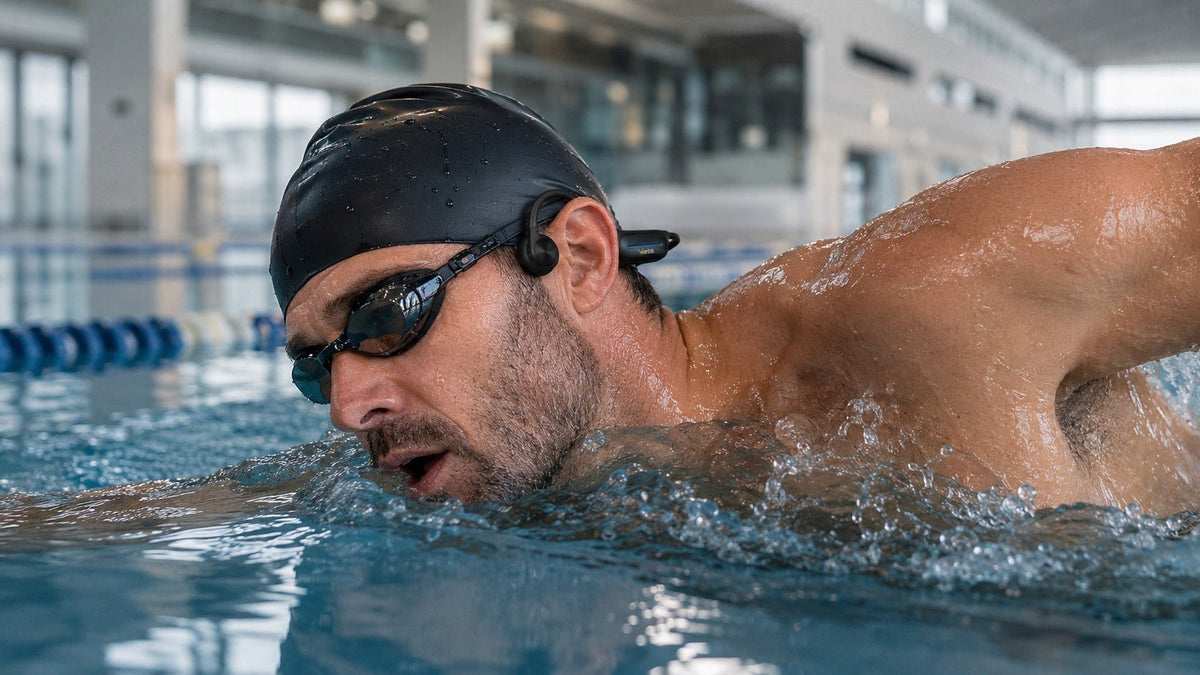
Die besten Knochenschall-Kopfhörer zum Schwimmen sind diejenigen, deren Hinweise zur Wassernutzung zu Ihrem tatsächlichen Schwimmtraining passen, deren integrierte Wiedergabe unter Wasser auch ohne Telefon funktioniert und deren Sitz mit Schwimmbrille und Badekappe sicher bleibt. Beim Bahnenziehen ist die lokale MP3- oder Offline-Wiedergabe wichtiger als die Bluetooth-Version, da eine normale Bluetooth-Verbindung zwischen Telefon und Headset nicht zuverlässig ist, sobald das Headset untergetaucht ist.
Für 2026 sind die fünf nützlichen, spezifikationsbasierten Ausgangspunkte Shokz OpenSwim Pro, Wantek BC3 Pro, NANK Runner Diver2 Pro, Suunto Aqua und H2O Audio TRI 2. Sie decken unterschiedliche Prioritäten ab, von der Flexibilität für Schwimmbad und Land sowie einfacher lokaler MP3-Wiedergabe bis hin zu Trainingskennzahlen und Multisport-Nutzung.
Wie dieser Leitfaden erstellt wurde: Die Herstellerdokumentation wurde am 19. September 2026 erneut überprüft. Dies ist ein spezifikationsbasierter Vergleich und kein kontrollierter Side-by-Side-Test im Schwimmbecken; die unten stehenden Beschreibungen der Anwendungsbereiche sind daher praktische redaktionelle Hinweise und keine gemessenen Auszeichnungen für Klangqualität, Komfort, Haltbarkeit oder Preis-Leistungs-Verhältnis.
Kurzvergleich: Fünf Knochenschall-Kopfhörer zum Schwimmen
| Modell | Nützlicher Ausgangspunkt für | Wasserspezifikation | Lokale Wiedergabe | Veröffentlichte Akkulaufzeit |
|---|---|---|---|---|
| Shokz OpenSwim Pro | Schwimmen plus normales Bluetooth-Hören an Land | IP68; bis zu 2 m in Süßwasser | 32 GB; MP3-Modus unter Wasser | Bis zu 6 Std. MP3 / 9 Std. Bluetooth |
| Wantek BC3 Pro | Ein unkompliziertes Wantek-Schwimmmodell mit lokaler MP3-Wiedergabe | IP68; aktuell keine spezifische Eintauchtiefe auf der Produktseite angegeben | 32 GB interner MP3-Speicher | Bis zu 6 Std. insgesamt |
| NANK Runner Diver2 Pro | Schwimmen plus Bluetooth-Nutzung an Land | IP69 | 32 GB; TF-Modus unter Wasser | Bis zu 10 Std. gelistet |
| Suunto Aqua | Offline-Musik plus Schwimmtrainingsdaten | IP68; getestet bis 5 m für 2 Std. | 32 GB Offline-Audio | Ca. 6 Std. offline / bis zu 10 Std. allgemeine Wiedergabe |
| H2O Audio TRI 2 | Schwimmen plus Laufen, Radfahren, Paddeln und andere Sportarten | IPX8; H2O gibt 3,6 m Untertauchtiefe an | 8 GB eingebauter MP3-Player | Bis zu 6 Std. Speicher / 9 Std. Bluetooth |
Diese Tabelle ist eine engere Auswahl, kein universelles Ranking. Wasser-Schutzarten ersetzen nicht die Tiefen-, Dauer-, Umgebungs- und Pflegehinweise der jeweiligen Hersteller. Akkuangaben beziehen sich zudem auf unterschiedliche Modi und Bedingungen; vergleichen Sie daher die Angabe, die zu Ihrer tatsächlichen Nutzung des Headsets passt.

Warum lokale Wiedergabe unter Wasser wichtiger ist als Bluetooth
Bluetooth ist vor und nach dem Schwimmen nützlich, aber normale 2,4-GHz-Bluetooth-Verbindungen verlieren im Wasser an Zuverlässigkeit. Aus diesem Grund bieten schwimmspezifische Modelle von Shokz, NANK, H2O Audio, Wantek und Suunto Wiedergabemodi für den Einsatz unter der Wasseroberfläche, anstatt sich auf eine Verbindung zum Telefon am Beckenrand zu verlassen.
Die Speicherkapazität ist nur ein Teil der Entscheidung. Prüfen Sie, wie Dateien übertragen werden, welche Formate das Headset akzeptiert, ob sich Wiedergabelisten oder Ordner praktisch verwalten lassen und ob die physischen Bedienelemente mit nassen Händen einfach zu bedienen sind. Eine größere Speicherzahl ist nicht automatisch nützlicher, wenn der Übertragungsworkflow nicht zu den bereits vorhandenen Audiodateien passt.
Wenn Sie noch zwischen Knochenschall und anderen wasserdichten Audioformaten entscheiden müssen, lesen Sie den Vergleich der besten Schwimmkopfhörer von Wantek.
Die fünf Schwimm-Favoriten im Detail
1. Shokz OpenSwim Pro: eine vielseitige Option für Becken und Land
Shokz führt den OpenSwim Pro mit IP68-Schutz, 32 GB Speicher, Bluetooth 5.4 und einem dedizierten MP3-Modus für den Unterwassereinsatz. Die aktuelle Produktdokumentation unterscheidet die Akkulaufzeit nach Modus, mit bis zu sechs Stunden im MP3-Modus und bis zu neun Stunden im Bluetooth-Modus.
Der OpenSwim Pro ist ein praktischer Ausgangspunkt, wenn Sie ein Headset sowohl für gespeicherte Musik im Schwimmbad als auch für normales Bluetooth-Hören an Land suchen. Shokz gibt an, dass das Modell bis zu zwei Meter tief in Süßwasser eingetaucht werden kann und nicht für tieferes Tauchen vorgesehen ist. Die aktuelle US-Seite enthält in verschiedenen Abschnitten unterschiedliche Aussagen zu Salzwasser; Käufer für den Einsatz in offenen Gewässern sollten daher eher den neuesten Anweisungen für das exakte Modell und die Region folgen, als das IP68-Label über die Herstellerhinweise hinaus auszulegen.
2. Wantek BC3 Pro: 32 GB lokale MP3-Wiedergabe zum Schwimmen
Der Wantek BC3 Pro kombiniert IP68-Schutz, 32 GB internen MP3-Speicher, Bluetooth 5.3 für unterstütztes Hören an Land, ein eingebautes Mikrofon, einen 32 g leichten Rahmen und eine angegebene Akkulaufzeit von bis zu sechs Stunden. Die aktuellen Produktanweisungen von Wantek raten Schwimmern dazu, MP3-Dateien zu übertragen und die lokale Wiedergabe zu nutzen, da Wasser Bluetooth stört.
Der BC3 Pro ist eher als einfaches Schwimm-Setup mit lokaler Wiedergabe zu verstehen und weniger als Gerät zum Streamen vom Telefon unter Wasser. Laden Sie kompatible MP3-Dateien vor dem Schwimmen auf, wechseln Sie in den MP3-Modus und nutzen Sie die physischen Bedienelemente des Headsets während des Schwimmens. Wantek listet derzeit den Gesamtwert für den Akku, veröffentlicht aber keine separaten Laufzeiten für MP3- und Bluetooth-Modus; die Sechs-Stunden-Angabe sollte daher nicht als direkt vergleichbarer Test zum Schwimm-Modus anderer Wettbewerber behandelt werden, die separate Modi veröffentlichen.
Der Sitz ist nach wie vor individuell. Prüfen Sie, wie der umschließende Rahmen mit Ihrer Badekappe und den Brillenbändern sitzt, und stellen Sie sicher, dass die Schallwandler konstanten Kontakt halten, ohne bei Wenden oder Abstoßvorgängen Druckstellen zu erzeugen.
Sie möchten ein unkompliziertes Schwimm-Setup von Wantek?
Überprüfen Sie die aktuellen Spezifikationen, Speicheroptionen, Bedienelemente, Farben und Übertragungsmethoden des BC3 Pro, bevor Sie entscheiden, ob er zu Ihrer Schwimmroutine passt.
3. NANK Runner Diver2 Pro: eine funktionsreiche Dual-Mode-Option
Die Produktseite des NANK Runner Diver2 Pro führt IP69-Schutz, 32 GB Speicher, Bluetooth 5.4 und bis zu 10 Stunden Akkulaufzeit auf. NANK gibt zudem an, dass unter Wasser nur der TF-Modus funktioniert, und listet MP3, M4A, WAV, APE und FLAC als unterstützte lokale Formate.
Behalten Sie den vollständigen Modellnamen „Runner Diver2 Pro“ im Auge, wenn Sie Spezifikationen prüfen, da NANK verwandte Runner-Diver-Modelle mit unterschiedlichen Funktionsumfängen verkauft. Das IP69-Label gibt Ihnen die veröffentlichte Schutzklasse an; es begründet für sich genommen keine spezifische Schwimmtiefe, unbegrenzte Eintauchdauer oder besseren Unterwasserklang als bei anderen Modellen.
4. Suunto Aqua: Offline-Musik plus Schwimmtrainingsdaten
Suunto Aqua kombiniert 32 GB Offline-Audiospeicher mit Bewegungserkennungsfunktionen für das Schwimmtraining. Suunto gibt IP68-Schutz an und erklärt, die Kopfhörer seien für zwei Stunden in fünf Metern Tiefe getestet. Die Produktseite beschreibt zudem Analysen von Schwimmzug-Haltung, Kopfneigung, Atemfrequenz und Gleitzeit.
Der Kontext der Akkulaufzeit ist hier entscheidend. Suunto gibt bis zu 10 Stunden allgemeine Musikwiedergabe an, während das Benutzerhandbuch besagt, dass Offline-Musik mehr Energie verbraucht und etwa sechs Stunden pro Ladung bietet. Beim Schwimmen ist der Offline-Wert relevanter, da das Telefon an Land bleibt. Der Aqua ist daher am sinnvollsten, wenn Trainingsdaten Teil der Kaufentscheidung sind und nicht nur ein zusätzliches Feature, das Sie selten nutzen.
5. H2O Audio TRI 2: eine wasserdichte Multisport-Alternative
H2O Audio TRI 2 ist sowohl für das Schwimmen als auch für Laufen, Radfahren, Paddeln, Surfen und andere Sportarten positioniert. H2O listet IPX8-Schutz, Untertauchen bis 12 Fuß / 3,6 Meter, einen eingebauten 8-GB-MP3-Player, Bluetooth 5.3, bis zu sechs Stunden im Speichermodus und bis zu neun Stunden Bluetooth-Wiedergabe.
Für das Hören unter Wasser weist H2O Nutzer explizit auf den MP3-Modus hin, da Bluetooth unter Wasser nicht funktioniert. Der TRI 2 ist daher eine praktische Option, wenn Sie ein Headset für mehrere Sportarten suchen und 8 GB lokaler Speicher für Ihre Musikbibliothek ausreichen.
Was Sie bei Knochenschall unter Wasser erwarten können
Knochenschall klingt unter Wasser nicht exakt wie an Land. Das Untertauchen verändert die akustische und mechanische Umgebung um das Headset, während sich der Kontakt der Schallwandler beim Atmen, Wenden und Abstoßen vom Beckenrand verschieben kann. Diese Veränderungen können die wahrgenommene Lautstärke, die Klangbalance, die Bässe und die Vibration beeinflussen.
Der Sitz ist daher Teil der Klangkonstanz. Wenn sich das Headset während eines Zugs oder einer Wende bewegt, ändert sich auch der Kontakt der Schallwandler. Sprachlastiges Material wie Podcasts und Hörbücher kann für manche Schwimmer gut funktionieren, da die Verständlichkeit wichtiger ist als die Wiedergabe tiefer Bässe – persönliche Vorlieben spielen jedoch weiterhin eine Rolle.
Die Open-Ear-Konstruktion garantiert zudem kein volles Bewusstsein für die Umgebung im Schwimmbad. Wassergeräusche, Wiedergabelautstärke, Distanz und das Untergetauchtsein können die Wahrnehmung der Umgebung reduzieren. Für Details zur zugrunde liegenden Technologie und ihren Kompromissen lesen Sie unseren Leitfaden zum Thema wie Knochenschall-Kopfhörer funktionieren.
So wählen Sie die richtigen Knochenschall-Kopfhörer zum Schwimmen
Beginnen Sie bei den Wasserbedingungen, nicht bei der Klassifizierungsnummer
Notieren Sie, wo Sie tatsächlich schwimmen: gechlortes Becken, Süßwasser, Salzwasser oder eine Mischung. Vergleichen Sie dann die modellspezifischen Tiefen-, Dauer-, Umgebungs- und Pflegehinweise. Ein IP-Code ist nützlich, aber kein Ersatz für die vom Hersteller angegebenen Nutzungsbedingungen.
Stimmen Sie den Speicher auf die Dateien ab, die Sie tatsächlich übertragen können
Sowohl 8 GB als auch 32 GB können je nach Dateigröße und Format eine beachtliche lokale Bibliothek aufnehmen. Wichtiger ist, ob Ihre Audiodateien in Formaten vorliegen, die das Headset akzeptieren kann. Offline-Downloads innerhalb von Spotify, Apple Music oder anderen Streaming-Apps sind nicht automatisch gewöhnliche Dateien, die auf ein separates Speicherlaufwerk kopiert werden können.
Testen Sie den Sitz mit Schwimmbrille und Kappe
Beurteilen Sie den Sitz mit der gleichen Brille und Kappe, die Sie im Wasser tragen, nicht mit dem Headset allein.
Setzen Sie zuerst die Schwimmbrille auf
Setzen Sie die Brille wie gewohnt auf und stellen Sie sicher, dass sie dicht sitzt, bevor Sie das Headset positionieren.
Positionieren Sie die Schallwandler
Platzieren Sie das Headset so, dass die Schallwandler stetigen Kontakt zum Kopf haben.
Fügen Sie die Kappe hinzu, falls Sie eine verwenden
Prüfen Sie, ob die Spannung der Kappe das Headset nicht verschiebt oder den Sitz der Schwimmbrille stört.
Prüfen Sie Druck und Bedienelemente
Achten Sie auf Druckstellen, Interferenzen mit den Bändern und darauf, ob die physischen Bedienelemente noch gut erreichbar sind.
Beginnen Sie mit einfachen Bahnen
Bestätigen Sie die Stabilität, bevor Sie schwierigere Wenden, wiederholte Abstöße oder längere Intervalle durchführen.
Es gibt keine universelle Reihenfolge, die für jedes Headset, jede Kappe, jedes Brillendesign und jede Kopfform perfekt funktioniert. Ziel ist stabiler Kontakt der Schallwandler, ohne die Dichtung der Schwimmbrille zu beeinträchtigen oder unangenehmen Druck zu erzeugen.
Vergleichen Sie die Akkulaufzeit im Modus, den Sie verwenden werden
Vergleichen Sie nicht einfach eine Bluetooth-Wiedergabezeit eines Headsets mit der Offline-Schwimmzeit eines anderen und bewerten Sie die größere Zahl als Sieg. Suchen Sie beim Schwimmen nach der Laufzeit im MP3-, Speicher- oder Offline-Modus, wenn der Hersteller diese angibt. Wenn eine Marke nur eine allgemeine Akku-Zahl nennt, behandeln Sie diese als grobe Schätzung und nicht als direkt vergleichbares Ergebnis für den Schwimmmodus.
Bereiten Sie das Headset auf das erste Schwimmen vor
Prüfen Sie unterstützte Dateiformate
Wählen Sie ein paar Audiodateien und stellen Sie sicher, dass Ihr genaues Modell diese unterstützt.
Nur im trockenen Zustand anschließen
Verbinden Sie das Headset bei trockenen Lade- oder Datenkontakten mithilfe der vom Hersteller unterstützten Workflow-Methode (Computer, Kabel, Dock oder Powerbank).
Übertragen Sie eine kleine Wiedergabeliste
Kopieren Sie eine Test-Playlist, bevor Sie den gesamten Speicherplatz füllen.
Überprüfen Sie die lokale Wiedergabe
Werfen Sie das Headset sicher aus, trennen Sie die Verbindung und bestätigen Sie, dass die gespeicherte Musik auch ohne Telefon spielt.
Üben Sie die Bedienelemente
Lernen Sie die Funktionen für Wiedergabe, Pause, Titelwechsel, Lautstärke und Moduswechsel, bevor Sie ins Wasser gehen.
Überprüfen Sie den Sitz erneut
Setzen Sie das Headset mit Schwimmbrille und Kappe auf und stellen Sie sicher, dass die Steuerung erreichbar bleibt.
Planen Sie die Routine nach dem Schwimmen
Befolgen Sie die modellspezifischen Anweisungen zur Reinigung und Trocknung, bevor Sie das Gerät wieder an den Strom oder PC anschließen.
Pflege nach dem Schwimmen und Ladekontakte
Der Wasserschutz beseitigt nicht die Notwendigkeit einer Wartung nach dem Schwimmen. Chlor, Salz, Feuchtigkeit und andere Rückstände können nach der Benutzung auf dem Headset und an den Ladekontakten verbleiben.
Befolgen Sie die Pflegehinweise für Ihr spezifisches Modell. Wenn der Hersteller nach dem Kontakt mit Chlor- oder Salzwasser das Abspülen mit Süßwasser empfiehlt, gehen Sie so vor, entfernen Sie sichtbares Wasser, lassen Sie das Headset an der Luft trocknen und halten Sie Rückstände von den Lade- oder Datenkontakten fern. Der Ladebereich sollte vollständig trocken sein, bevor Sie Strom anschließen oder Dateien übertragen.
Ein magnetischer oder proprietärer Anschluss macht das Laden bequem, entbindet Sie aber nicht davon, den Kontaktbereich sauber und trocken zu halten.

Häufig gestellte Fragen
Können Bluetooth-Kopfhörer unter Wasser Musik streamen?
Verlassen Sie sich beim Eintauchen nicht auf normales Bluetooth zwischen Telefon und Headset. Schwimmspezifische Modelle nutzen unter der Oberfläche üblicherweise integrierte MP3-, Speicher- oder Offline-Wiedergabe und kehren für die Nutzung an Land zu Bluetooth zurück.
Bedeutet IP68 automatisch, dass ein Headset zum Schwimmen geeignet ist?
Nein. IP68 ist eine Schutzklasse; der Hersteller definiert dennoch die getestete Tiefe, Dauer, Umgebung und die Pflegebedingungen. Bestätigen Sie vor dem Schwimmen die Anweisungen für Ihr genaues Modell.
Wie viel internen Speicher benötigen Schwimmkopfhörer?
Es gibt kein universelles Minimum. 8 GB können bereits eine umfangreiche lokale Bibliothek aufnehmen, während 32 GB mehr Spielraum bieten. Unterstützte Formate, Übertragungsworkflow, Wiedergabelisten-Management und physische Bedienelemente können wichtiger sein als die Kapazität allein.
Kann ich Spotify- oder andere Streaming-App-Downloads auf ein Schwimm-Headset kopieren?
Nicht automatisch. Downloads innerhalb einer Streaming-App werden normalerweise für die Wiedergabe innerhalb dieses Dienstes gespeichert. Ein Schwimm-Headset benötigt übertragbare Dateien in unterstützten Formaten oder eine herstellerspezifische Offline-Funktion.
Können Knochenschall-Kopfhörer mit Schwimmbrille und Kappe getragen werden?
Oft ja, aber die Passform hängt vom jeweiligen Modell und Schwimmer ab. Testen Sie die exakte Badekappe und die Brillenbänder, die Sie verwenden, damit das Headset stabil bleibt, die Schwimmbrille dicht sitzt und die Bedienelemente erreichbar bleiben.

