
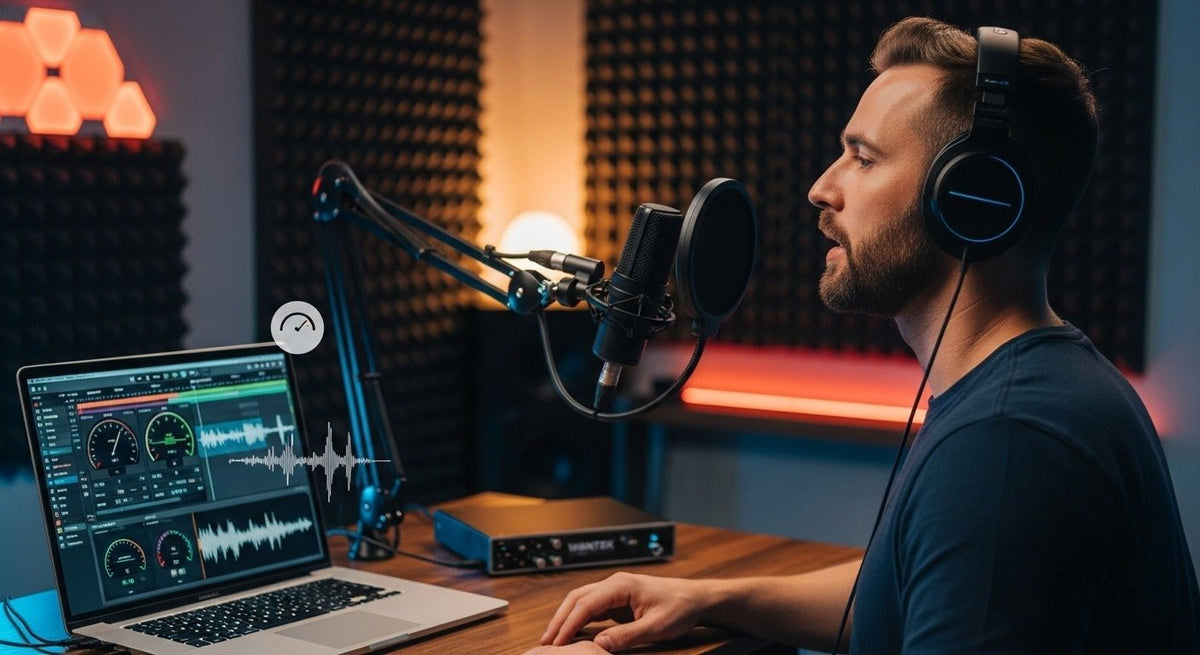
Podcasters wear headphones so they can monitor the recording chain while it is happening. That lets a host or producer hear microphone position, remote guests, playback, unexpected noise, and technical problems before the session is over.
Monitoring is the main reason: headphones give each participant a controlled audio feed without sending loudspeaker sound back into open microphones.

1. Hear the microphone, not just your natural voice
Headphones reveal plosives, mouth noise, clothing contact, gain changes, and whether the speaker moved off-axis. Closed-back designs are common because they reduce playback leakage into nearby microphones.

2. Monitor remote guests and playback
A host needs to hear guests, intro music, clips, and producer talkback without using room speakers. The monitoring mixer or interface determines exactly what each person hears.
3. Catch latency and routing mistakes
Direct monitoring can let a speaker hear the microphone before it makes a full software round trip. Excessive latency makes speaking uncomfortable; wrong routing can create echoes or feedback.

What to look for in podcast headphones
- Comfort for the full recording session.
- Closed-back isolation when microphones are nearby.
- A cable length and connector that match the interface.
- Replaceable pads or cables when long-term use matters.
- Enough sensitivity for the headphone output being used.
For purchase criteria, see Wantek’s podcast headphone buying guide.
Headphones Let Podcasters Hear Problems While They Can Still Fix Them
Monitoring helps a host notice microphone level changes, clothing noise, desk vibration, guest dropouts, plosives, clipping, and background sound during the recording rather than after the session ends.
Direct monitoring reduces delay
When an audio interface or recorder provides direct monitoring, the performer can often hear the input before it makes a round trip through recording software. That can make speech monitoring feel more natural than delayed software monitoring.
Closed-back headphones reduce spill
Closed-back designs are common during recording because they limit the amount of monitored audio that can leak back into an open microphone. Comfort still matters: a long interview can expose clamp, pad heat, or pressure points that are easy to miss in a short test.

