
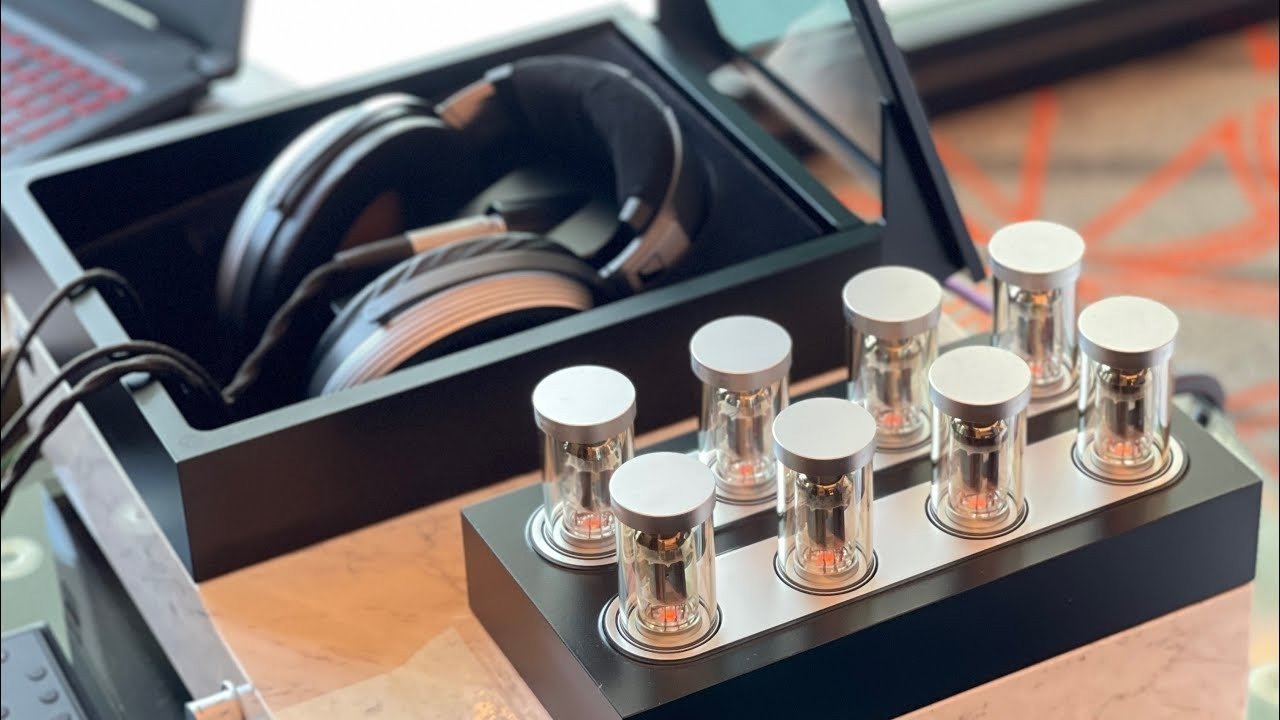
The most expensive headphones are usually complete statement systems, limited-production audiophile products, or custom in-ear monitors—not simply ordinary headphones with better materials. Price can reflect engineering, hand assembly, specialized drivers, amplifiers, luxury finishing, scarcity, and brand positioning.
The important distinction: expensive does not mean proportionally better sound. At the extreme end, buyers are paying for a complete engineering concept, craftsmanship, exclusivity, and ownership experience as well as acoustic performance.

Luxury Headphones and IEMs to Know in 2026
| Product | Current verified price context | What makes it unusual |
|---|---|---|
| Sennheiser HE 1 | Sennheiser currently requires a $10,000 reservation deposit before production and final payment. | A complete electrostatic headphone/amplifier system with integrated high-voltage amplification in the earcups and a dedicated DAC/amplifier base. |
| Focal Utopia | Focal currently lists a €5,000 recommended retail price on its European product page. | Open-back headphone made in France with pure-beryllium M-dome drivers and forged-carbon yokes. |
| 64 Audio A18t Custom | Currently listed from $2,999 USD before customization options. | Custom-fit 18-driver in-ear monitor using balanced-armature drivers and 64 Audio's tia, Apex, LID and 3D-Fit systems. |
| Noble Khan Custom | Current acrylic custom version starts at $2,999 USD. | Custom-fit luxury IEM with personalized shell/faceplate options; price rises with customization. |
Why the Sennheiser HE 1 Is in a Different Category
The HE 1 is not just a headphone sold separately from the electronics needed to drive it. Sennheiser sells it as an integrated electrostatic system with its own amplifier, DAC, motorized presentation base, and production process. Its current U.S. purchase page starts the order with a $10,000 deposit and a representative confirms the final order details.
That is why comparing the HE 1 directly with a conventional $3,000–$5,000 headphone is misleading: the HE 1 price covers a complete playback system rather than only the transducer worn on the head.
Luxury Materials Are Only Part of the Price
High-end products may use beryllium, carbon fiber, machined aluminum, leather, custom acrylic, or hand-finished components. Those materials can serve structural or acoustic purposes, but their presence alone does not guarantee better sound.
Driver design, acoustic loading, damping, fit, measurement consistency, electronics, and tuning still determine the listening result. Luxury finishing can add cost independently of measurable acoustic performance.
Custom IEMs Are Expensive for a Different Reason
Custom in-ear monitors such as the 64 Audio A18t and Noble Khan are built around an ear impression or digital ear scan and a personalized shell. Their price combines multiple drivers, crossovers, proprietary acoustic systems, individual manufacturing, and custom fit.
They also solve a different job from large open-back audiophile headphones: portability, stage monitoring, isolation, and fit can matter more than a speaker-like open presentation.
Does a Higher Price Guarantee Better Sound?
No. Above a certain level, price and audible improvement do not move in a simple straight line. Two expensive headphones can use different targets, driver technologies, fit assumptions, and presentation goals.
Compare frequency response, distortion, channel matching, fit consistency, amplification requirements, and long-session comfort. Then audition with familiar material whenever possible.
What Else You Need to Budget For
- Amplification: some headphones need more voltage or current than a phone or laptop can provide comfortably.
- DAC/source: not every expensive headphone needs an expensive DAC, but the source must provide the required output and connection.
- Cables and connectors: balanced outputs and proprietary connectors may require specific cables.
- Maintenance: pads, headbands, batteries, tubes, cables, or custom-IEM remolds can create long-term costs.
- Insurance and service: extreme-value products may justify shipping, service, and insurance planning.
How to Evaluate a Luxury Headphone
- Confirm the current manufacturer price and what the package actually includes.
- Check whether the product is a standalone headphone, custom IEM, or complete headphone/amplifier system.
- Verify source and amplifier requirements before buying accessories.
- Audition long enough to judge comfort and fit rather than only first impressions.
- Compare independent measurements and multiple listening perspectives.
- Check serviceability, warranty, replacement pads/cables, and long-term support.
Frequently Asked Questions
What are the most expensive Sennheiser headphones?
The HE 1 is Sennheiser's flagship electrostatic headphone system. Its U.S. purchase process currently begins with a $10,000 deposit and a representative-managed order.
Are $5,000 headphones five times better than $1,000 headphones?
There is no objective multiplier like that. Price reflects engineering, production scale, materials, accessories, exclusivity and positioning as well as sound performance.
Why are custom IEMs so expensive?
They combine multi-driver designs with custom shell manufacturing, individual fit, specialized acoustic systems and low-volume production. Personalization can add further cost.
Do luxury headphones need an amplifier?
Some do and some do not. Check impedance, sensitivity, manufacturer requirements and the output capabilities of the source rather than assuming price determines amplification needs.

