
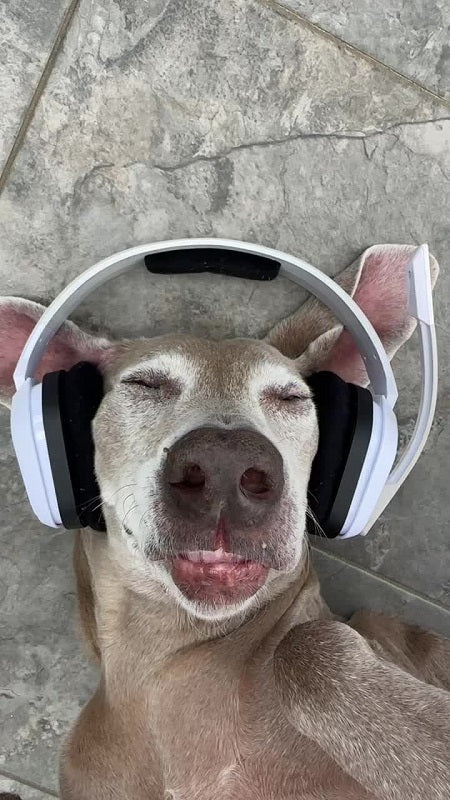
Dog ear muffs or noise-reduction gear may help some dogs by reducing the intensity of loud sounds, but “noise cancelling is best” is too broad. Noise sensitivity can involve fear, learned associations and the environment, so equipment is only one possible part of the plan.
Quick answer: Use dog-specific hearing or noise-reduction gear only if it fits securely and the dog is comfortable wearing it. Introduce it before a stressful event. For significant noise fear, environmental management and gradual behavior work are more important than treating headphones as a standalone cure.

Ear Muffs Can Reduce Sound, but They Do Not Treat the Fear by Themselves
The American Kennel Club notes that dog ear muffs can be useful around intense noise and that anxiety-care products should be introduced before a fearful situation. VCA's behavior guidance emphasizes minimizing exposure where possible and using controlled desensitization and counterconditioning for noise fears.
Choose Dog-Specific Fit, Not Human Headphones
Human over-ear headphones are shaped for human ears and head proportions. A dog-specific product should stay in place without obstructing breathing, vision or normal movement. It should not require excessive pressure to remain secure.
| Approach | What it can do | Main limitation |
|---|---|---|
| Dog ear muffs / hearing protection | Reduce some incoming sound when properly fitted | The dog must tolerate the gear; attenuation varies by product and fit |
| Quiet indoor space / masking sound | Reduce or cover external triggers | Cannot eliminate every storm, firework or construction sound |
| Desensitization and counterconditioning | Change the dog's response through controlled training | Must stay below the fear threshold; poor execution can worsen fear |
Introduce Any Head Gear Before the Noisy Event
Do not make the first wearing experience happen during fireworks or a thunderstorm. Start in a calm environment, keep sessions short, pair the gear with positive reinforcement, and stop if the dog shows distress or tries persistently to remove it.
Do Not Confuse Consumer ANC With Certified Hearing Protection
Active noise cancellation in human music headphones is not the same claim as protective attenuation. If the dog will be near genuinely hazardous noise, use equipment designed and documented for animal hearing protection rather than assuming ordinary ANC headphones provide the needed protection.
For the general distinction between ANC and hearing protection, see Wantek's hearing protection guide.
For Noise Fear, Reduce the Trigger as Well as the Sound Level
VCA recommends minimizing exposure when possible and describes systematic desensitization and counterconditioning as controlled, gradual approaches. The training level should remain low enough that it does not trigger the full fear response.
See VCA's noise-fear guidance for the behavioral framework.
Dog Noise Anxiety FAQ
Can dogs wear noise-reducing ear muffs?
Some dogs can, if the product is designed for canine fit and introduced gradually. The gear should stay secure without causing distress or excessive pressure.
Are noise-cancelling headphones a cure for dog anxiety?
No. Reducing sound may help with exposure, but noise fear can require environmental management and gradual behavior work rather than a single piece of equipment.
Should I force my dog to keep ear muffs on?
No. Forced exposure can increase distress. Introduce gear gradually in calm conditions and stop if the dog is persistently uncomfortable.

