
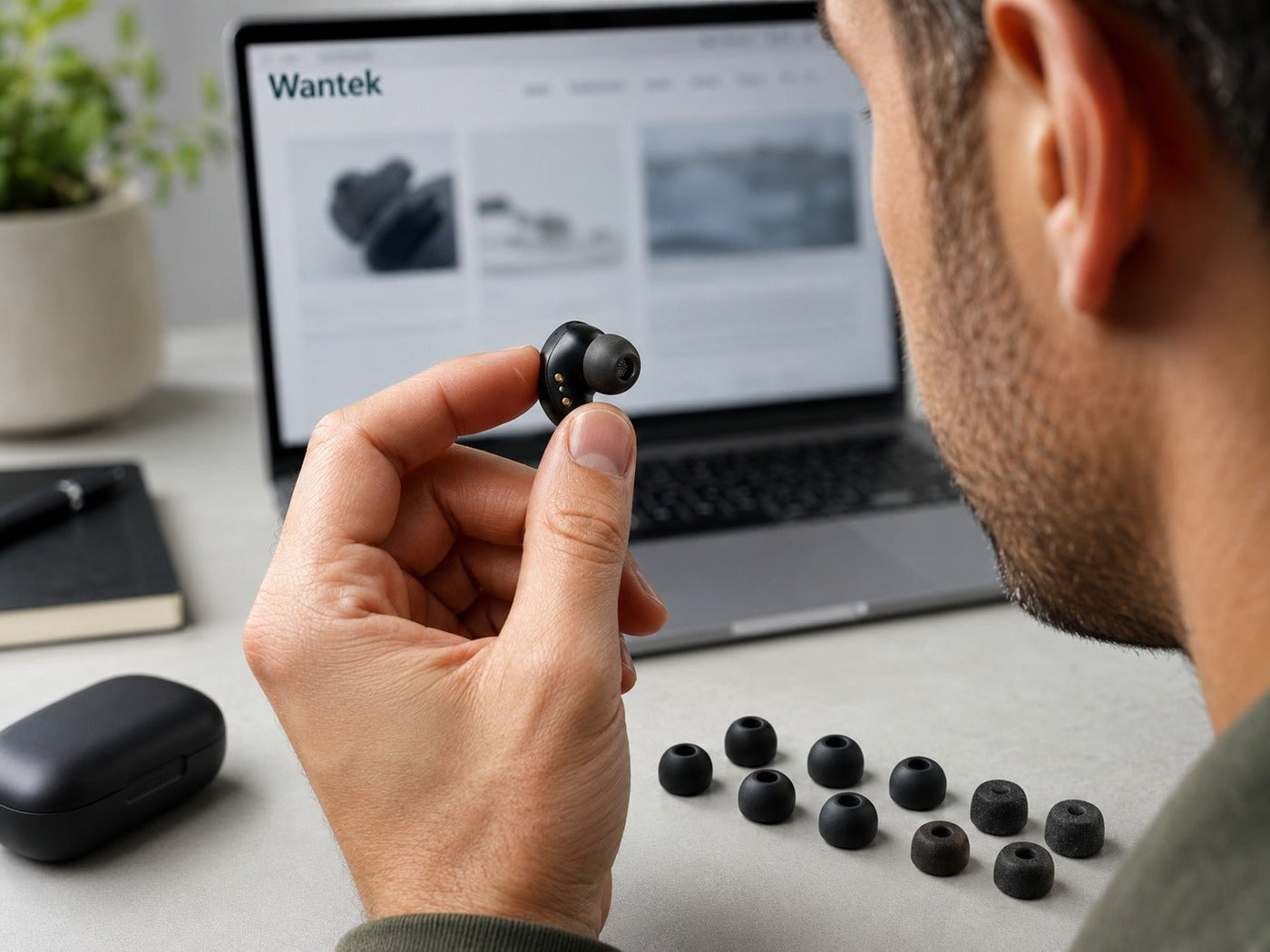
Choosing earbuds for sensitive ears is less about finding a universal “hypoallergenic” label and more about controlling what actually touches and stresses the skin: exposed metals, adhesives, polymers, ear-tip materials, moisture, friction, pressure, and cleaning practices. A useful strategy combines three steps: identify known allergens or irritants, favor products with clear material disclosures and replaceable contact parts, and optimize fit and hygiene.
The Silent Epidemic of Earbud Allergies
Wireless earbuds are often worn for hours at a time. For some users, prolonged contact is followed by itching, redness, swelling, scaling, or discomfort around the concha, antihelix, or ear canal. Those symptoms can have different causes. Allergic contact dermatitis (ACD) is an immune-mediated delayed reaction to a specific allergen, while irritant contact dermatitis can result from friction, moisture, pressure, or repeated exposure to irritating substances.
The practical goal is not to assume every reaction is an allergy. Instead, evaluate the material touching the skin, fit, wear duration, and whether symptoms recur after exposure. This guide explains how to compare hypoallergenic earbuds using evidence rather than marketing language.
Chapter 1: The Dermatology of Sound – Understanding Earbud-Induced Allergies
Earbud-related skin reactions are not a single condition. Similar symptoms can arise from allergic sensitization, direct irritation, occlusion, sweat, excessive pressure, or several factors at once.
Primary Allergens and Irritants: A Clinical Breakdown
- Nickel (Ni): Nickel is a well-established contact allergen. In electronics, risk is most relevant when nickel-containing metal reaches a skin-contact surface and releases nickel to susceptible skin.
- Acrylates & Methacrylates: These compounds are used in many adhesives and polymer systems. Some people develop contact allergy to specific acrylates or methacrylates.
- Cobalt & Chromium: These metals can also cause contact allergy. Composition, surface treatment, corrosion, wear, and actual ion release matter more than the alloy name alone.
- Rubber Accelerators & Antioxidants: Thiurams, carbamates, mercapto compounds, and related chemicals are established rubber allergens, but they should not be assumed to be present in a particular ear tip without product-specific evidence.
- Rosin/Colophony: Rosin derivatives are used in some adhesive and industrial formulations and can trigger allergic contact dermatitis in sensitized individuals.
Critical Distinction: Allergy vs. Irritation
- Allergic Contact Dermatitis (ACD): A delayed immune reaction to a substance to which the person has become sensitized. Reactions often emerge hours to days after exposure and can recur with re-exposure.
- Irritant Contact Dermatitis (ICD): Inflammation caused by direct physical or chemical irritation. Friction, moisture, residues from cleaning products, and poor fit can all contribute.
Changing from one “hypoallergenic” product to another will not necessarily solve a problem caused primarily by pressure, trapped moisture, or aggressive cleaning.

Chapter 2: The Materials Science of Safety – Deconstructing Hypoallergenic Components
“Hypoallergenic” should be treated as a screening term, not a guarantee. The FDA’s cosmetics guidance illustrates why the word itself is weak evidence:
“There are no Federal standards or definitions that govern the use of the term "hypoallergenic."” — U.S. Food and Drug Administration, “Hypoallergenic” Cosmetics
That statement applies to cosmetics, but the buyer lesson transfers well to consumer audio: material disclosure and product-specific testing are more informative than the label alone.
1. Metallurgical Safeguards: Beyond “Hypoallergenic Metal”
- Titanium Alloys: Certain titanium alloys are widely used in medical devices, but that history does not make every titanium-containing consumer product allergy-proof.
- Stainless Steel: “Stainless steel” and “surgical steel” are broad labels. Implant-material standards such as ASTM F138 or ISO 5832-1 describe tightly controlled materials for specific medical applications, not blanket safety certifications for earbuds.
- Surface Coatings: PVD and other coatings can reduce direct contact with base metal while intact. Their value depends on coverage, adhesion, and resistance to wear.
2. Polymer and Elastomer Considerations
- Silicone: Silicone ear tips are common because they are flexible, washable in many designs, and available in multiple sizes. A “medical-grade” claim is meaningful only when the supporting standard or evaluation is identified.
- ISO 10993: ISO 10993-1:2025 describes biological-safety evaluation of medical devices within a risk-management process. It is not a universal certification that makes a consumer earbud or silicone formulation non-allergenic.
- Memory Foam: Polyurethane foam can improve conformity and seal, but formulations differ. Cleaning and replacement should follow manufacturer instructions.
- Other Elastomers: Thermoplastic elastomers and specialty silicones vary in additives and surface chemistry, so product-specific disclosure is more useful than the material family name alone.

Chapter 3: Market Analysis – Earbuds and IEMs to Evaluate for Sensitive Ears
No mainstream model should be assumed to be “the safest” for every allergy. A better comparison asks what the manufacturer discloses, what touches the skin, whether contact parts are replaceable, and how much fit flexibility the design provides.
| Brand & Model | Verified Material / Fit Information | Relevant Features | Sensitive-Ear Takeaway |
|---|---|---|---|
| Apple AirPods Pro (2nd Gen) | Apple identifies plastic housing, silicone or silicone-foam ear tips, and stainless-steel acoustic mesh. Its wearable-material guidance states that the mesh contains some nickel and that AirPods products contain trace acrylates and methacrylates from adhesives. | ANC, transparency features, replaceable tips. | Good material transparency, but not nickel-free or acrylate-free. |
| Jabra Elite 10 | Silicone EarGels are available in four sizes; the design is semi-open. | ANC, six microphones, Dolby Atmos with head tracking, IP57. | Multiple tip sizes can help manage seal and pressure, but fit flexibility is not proof of hypoallergenicity. |
| Bose QuietComfort Ultra Earbuds | Replaceable eartips and stability bands can be mixed across sizes. | ANC, Immersive Audio, fit testing. | Useful when pressure and stability are the main problem; material sensitivity still requires separate consideration. |
| Sony WF-1000XM5 | Sony’s Noise Isolation Earbud Tips include polyurethane foam and require material-specific handling. | ANC, LDAC, app sound adjustment. | A conforming tip may improve fit, but foam should not automatically be called hypoallergenic. |
| Shure AONIC 215 Gen 2 | Includes replaceable Soft Flex and foam sleeves in several sizes, with detachable earphones. | Sound isolation, modular connection, secure over-ear fit. | Replaceable contact parts make fit experimentation easier. |
| Etymotic ER4XR | Uses anodized-aluminum shells and replaceable tips; Etymotic specifies 35–42 dB passive attenuation depending on tip and insertion depth. | Deep-seal design and high passive isolation. | Useful for passive isolation, but deep insertion can increase pressure or irritation for some users. |
Comfort claims, ANC performance, water resistance, and replaceable tips are relevant buying factors, but none independently proves low allergy risk.
Open-Ear Alternative
Prefer an Option That Stays Outside the Ear Canal?
Wantek OBT030 uses an open-ear clip-on design, so silicone tips are not inserted into the ear canal. Compare the wearing style and product details to see whether open-ear listening fits your needs.
Chapter 4: Proactive Protocol – Essential Earbud Tips and Hygiene
Product selection is only half the equation. Skin contact changes over time as ear tips accumulate oils, sweat, debris, and residues.
1. Hygiene Without Material Damage
- After Use: Wipe external surfaces with a clean, dry, lint-free cloth and let damp earbuds dry before returning them to a closed case.
- Deep Cleaning: Follow the manufacturer’s instructions for the exact model and component. Do not treat 70% isopropyl alcohol as a universal cleaner; some coatings, plastics, meshes, and polyurethane tips can be damaged by solvents.
- Ear Tip Care: Silicone and foam often require different cleaning methods. Manufacturer instructions should take precedence over a fixed weekly routine.
- Replacement: Replace tips when they tear, harden, lose elasticity, no longer seal correctly, or cannot be cleaned adequately rather than by an arbitrary calendar interval.
2. Fit and Ergonomics: The Forgotten Frontier
An earbud can use relatively inert materials and still cause irritation if it rubs the same area for hours.
- Get the Size Right: The tip should create the intended seal without painful pressure; each ear may need a different size.
- Limit Pressure Points: Persistent tenderness or rubbing is a fit problem, not something to train through.
- Take Wear Breaks: Periodic removal reduces continuous pressure, heat, and moisture.
- Change the Contact Interface: Compatible replacement tips can alter pressure distribution and the material touching the skin. When researching non-allergenic earbuds, evaluate the full contact system rather than the tip material alone.
3. Smart Acquisition and Testing
Use return policies to evaluate comfort over realistic wear sessions, but do not confuse informal forearm exposure with clinical allergy testing. When allergic contact dermatitis is suspected, clinical patch testing exposes the skin to defined allergens under controlled conditions and includes delayed readings.
Custom ear molds or custom in-ear monitors can change fit and contact geometry, but “custom” does not automatically mean allergy-safe. The impression material, shell, coatings, and adhesives still matter.

Chapter 5: Search Intent Fulfillment – A User Journey Map
This guide supports the main questions people ask when earbud use causes discomfort:
- Informational Intent: “Why do my ears itch after using earbuds?” → Start with Chapter 1 to distinguish allergy from irritation.
- Material Investigation: “Could nickel, acrylates, silicone, or foam be the trigger?” → Use Chapter 2 and manufacturer disclosures.
- Commercial Evaluation: What are the best hypoallergenic earbuds? → Compare disclosed contact materials, fit options, and replaceable parts rather than relying on rankings alone.
- Value Decision: Are hypoallergenic earbuds worth it? → They can be worth considering when they reduce a known exposure, but the label adds little value without supporting material information.
- Transactional Intent: Before buying, confirm return terms, replacement-tip availability, cleaning instructions, and material disclosures.
Chapter 6: Advanced Considerations & Alternatives
The Role of IP Ratings and Sweat Resistance
An IP rating describes tested protection against ingress of solids and/or water under defined conditions. It does not certify hypoallergenicity, corrosion resistance under every condition, or compatibility with alcohol, soap, disinfectants, or other cleaning chemicals.
Water resistance can still matter for exercise and moisture exposure, but the correct cleaning method remains the one specified for that model.
When to Consider Over-Ear Headphones
For people who repeatedly develop canal discomfort, an over-ear design may reduce or eliminate direct ear-canal contact.
- Material Choice: Evaluate the pad cover, foam, exposed metal, dyes, coatings, and replaceability rather than assuming velour, microsuede, or synthetic leather is universally safe.
- Fit Advantage: Over-ear headphones distribute pressure around the ear instead of sealing inside the canal, although clamp force, heat, and pad materials can create other irritation points.
- Open-Ear Alternative: Some users prefer open-ear or ear-hook designs because they avoid sealing the canal; their skin-contact materials still deserve scrutiny.
For broader headset and headphone form factors, Wantek focuses on wired and wireless headsets for office, call-center, remote-work, and communication use.

Comprehensive FAQs
Are “hypoallergenic” earbuds safe for everyone with metal allergies?
No. “Hypoallergenic” does not mean allergen-free, and a person can react to a substance that most users tolerate. If nickel is a known allergen, prioritize explicit material information and minimize direct contact with nickel-containing surfaces.
My doctor mentioned contact dermatitis. How do I get patch tested for earbud materials?
Patch testing is designed to identify delayed allergic reactions to specific substances. Small amounts of selected allergens are applied under patches, followed by readings after removal and again several days later. Material information from the suspected earbud can help identify relevant allergens.
Can wireless connectivity (Bluetooth) cause allergic contact dermatitis?
Bluetooth radiofrequency is not a contact allergen. Allergic contact dermatitis is driven by immune reactions to substances contacting the skin. Earbud discomfort can also arise from friction, pressure, sweat, occlusion, or cleaning residues.
What are the best aftermarket hypoallergenic ear tip brands?
There is no universal “best” brand for sensitive skin. Comply, SpinFit, and other established accessory makers offer foam or silicone options, but compatibility, formulation, fit, cleaning method, and the user’s specific sensitivity matter more than a generic hypoallergenic label.
How often should I replace my earbuds or ear tips?
Replace ear tips when they become damaged, permanently compressed, stiff, cracked, difficult to clean, or unable to maintain the intended seal. Replace the earbud body based on functional condition, battery health, surface wear, and manufacturer guidance rather than a fixed two- or three-year schedule.
Achieving Auditory-Dermatological Harmony
Sensitive-ear buying decisions improve when “hypoallergenic” is treated as the beginning of the investigation rather than the conclusion. Start with the trigger: a known contact allergen, friction, moisture, pressure, or an uncertain recurring reaction. Then compare the exact surfaces and materials touching the ear, the ability to change tips or fit, and the manufacturer’s cleaning instructions.
The strongest product is not necessarily the one with the most reassuring marketing language. It is the one whose materials and fit are compatible with the individual user and whose claims are transparent enough to evaluate. That evidence-first approach turns the search for comfortable earbuds into a practical process of exposure control, fit optimization, and informed testing.
Find Your Starting Point
Not Sure Which Wearing Style Fits Your Setup?
Use the Wantek Headset Finder to narrow your starting options by how you plan to use the headset, your device, connection, priority, and wired or wireless preference.
Continue Exploring Sensitive-Ear Listening
Compare fit, ear-tip materials, headphone form factors, and open-ear alternatives before choosing the setup that best matches your needs.
Prefer a design that stays outside the ear canal?
Wantek OBT030 open-ear clip-on earbuds
