
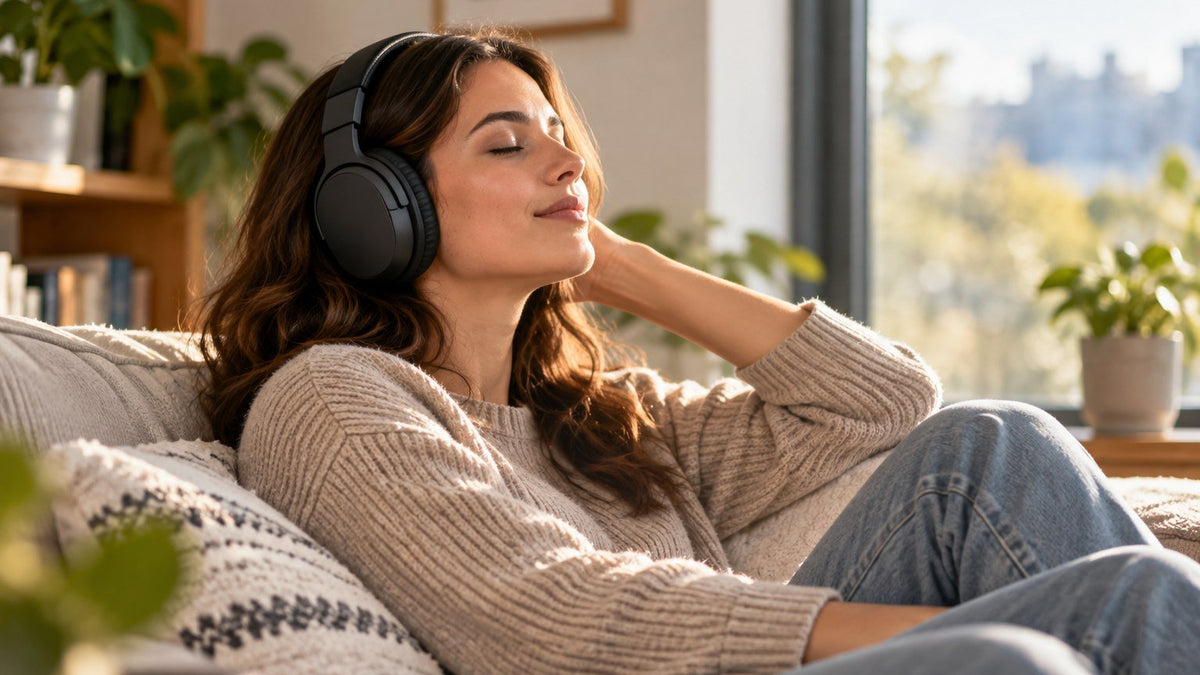
For comfortable over-ear headphones, start with ear-cup clearance, headband pressure, and heat during your longest normal session. This guide compares eight wired and wireless options using manufacturer specifications and published comfort assessments. Wantek has not tested them side by side.
Quick answer: Start with Bose QuietComfort Ultra Headphones (2nd Gen) for travel ANC, Sony WH-1000XM6 if lower weight is a priority, or Meze 99 Classics V2 for a self-adjusting wired fit. For a quiet private room, compare the open-back Sennheiser HD 660S2. Choose the design that suits your environment, then check pressure, ear clearance, and warmth with your usual glasses.
SoundGuys names Bose its comfort pick, while Crutchfield's comfort guide selects Meze overall and separates work, travel, and audiophile options. Their choices provide starting points for a try-on; neither establishes the best fit for every listener.
What Actually Makes Headphones Comfortable for Long Sessions?
Comfort is personal, so a useful comparison should focus on the physical variables you can verify rather than a universal “ideal” clamping-force number. Start with five factors:
- Pressure distribution: A wider or better-padded headband can reduce concentrated pressure on the crown.
- Ear-cup fit: Your ears should sit inside the cups without persistent contact with the driver cover or pad seams.
- Pad material and heat: Soft pads can feel excellent initially but still become warm during a multi-hour session.
- Weight and balance: Lower mass can help, but a heavier headphone may still feel comfortable when its weight is distributed well.
- Your use case: Travel, desk work, critical listening, gaming, and calls place different demands on fit, isolation, mobility, and battery life.
If you are still deciding between over-ear, on-ear, in-ear, and other formats, start with Wantek’s headphone types guide before comparing individual models.
Closed-back versus open-back fit
Closed-back headphones usually suit travel, shared spaces, and listeners who need isolation, but sealed ear cups can trap heat. Open-back designs let more room sound pass through and can feel less enclosed, yet their sound leakage makes them a poor choice around other people. Open-back is not automatically more comfortable: clamping force, pad dimensions, and headband pressure still matter.
Over-ear pads surround the ear; on-ear pads rest on it. If that wearing-style distinction matters to your fit, see Wantek's over-ear versus on-ear guide.

8 Comfortable Over-Ear Headphones to Compare
How to read this shortlist: Compare these models by wearing style and environment, then use the fit checklist below. Head shape, ear size, glasses, and heat sensitivity can change which feels best. Published weights and battery ratings follow each manufacturer's conditions; the DT 770 PRO figure includes its cable.
| Model | Comfort-relevant facts | Main trade-off |
|---|---|---|
| Bose QuietComfort Ultra Headphones (2nd Gen) | Soft, plush ear cushions; adjustable headband; current independent comfort pick from SoundGuys | Premium price; personal fit still depends on head and ear shape |
| Sony WH-1000XM6 | Over-ear design; about 8.96 oz (254 g); up to 30 hours with noise canceling on | Low weight does not guarantee the ear cups will suit every ear shape |
| Sennheiser MOMENTUM 5 Wireless | Circumaural fit; about 290 g; up to 57 hours with ANC on | Battery endurance does not replace a real fit and heat check |
| beyerdynamic DT 770 PRO | Breathable velour pads; secure spring-steel hoop; replaceable components | Wired design; current product page lists 375 g including the cable |
| AirPods Max 2 | Breathable knit-mesh canopy; memory-foam cushions; 386.2 g including cushions | Much heavier than Sony WH-1000XM6 and MOMENTUM 5 Wireless |
| Sennheiser HD 660S2 | 260 g; wired open-back over-ear design; velour pads; 300-ohm impedance | Open-back sound leakage; playback source may need sufficient headphone output |
| Meze 99 Classics V2 | 290 g; self-adjusting headband; replaceable memory-foam pads; wired closed-back design | No Bluetooth or ANC; glasses fit and pad heat still vary by listener |
| Focal Bathys MG | 350 g; padded leather headband; ergonomic foam cushions; up to 30 hours in Bluetooth ANC mode | Heavier premium wireless option; try the headband fit before deciding |
1. Bose QuietComfort Ultra Headphones (2nd Gen): Cushioned ANC for Travel
The Bose QuietComfort Ultra Headphones (2nd Gen) have support from independent comfort recommendations, but the label depends on the reviewer's criteria. In its September 2026 update, SoundGuys named them its most comfortable headphones pick; Crutchfield identifies the same model for travel. SoundGuys highlights generous padding, a mostly plastic build, and angled drivers that sit around rather than directly on the ears.
Bose also describes soft, plush ear cushions and an adjustable headband designed to provide a lightweight fit and secure seal. That makes this model a sensible first comparison for long travel, focused office listening, or buyers who prioritize cushioned ANC headphones.
Watch for: “Comfortable” still is not the same as “fits everyone.” Glasses arms, jaw shape, ear height, and heat sensitivity can change the experience after the first hour.
2. Sony WH-1000XM6: A Lighter Wireless Option
The Sony WH-1000XM6 is a practical comparison when low mass matters. Sony lists the over-ear headphones at approximately 8.96 oz, or about 254 g, with up to 30 hours of continuous music playback when noise canceling is on.
The published weights put the XM6 below AirPods Max 2 and MOMENTUM 5 Wireless. Check whether its ear cups clear your ears and whether the headband remains comfortable through your normal session; lower mass alone cannot answer those questions.
Good match for: commuters, travelers, and mobile listeners who want a relatively light over-ear wireless design with ANC.
3. Sennheiser MOMENTUM 5 Wireless: Long Battery Endurance Without Extreme Weight
Sennheiser lists the MOMENTUM 5 Wireless as a circumaural model weighing about 290 g. Its published battery figure is up to 57 hours of music playback with ANC on, under Sennheiser’s stated test conditions, and the battery is user-replaceable.
For long sessions, that battery endurance reduces charging interruptions, but it should not be confused with guaranteed physical comfort. Pad temperature, clamp, crown pressure, and glasses interaction still need a personal fit check.
Good match for: wireless listeners who value long battery life and want an around-ear design for extended home, travel, or desk use.
4. beyerdynamic DT 770 PRO: Breathable Velour for a Fixed Listening Station
The wired DT 770 PRO remains useful when battery life and wireless mobility do not matter. beyerdynamic highlights its soft, breathable velour ear pads, secure spring-steel hoop, and replaceable components. The current product page lists a weight of 375 g including the cable.
The wired design makes most sense at a desk, studio, or other fixed listening position. The replaceable pads are also valuable because compressed or worn cushions can change both fit and comfort over time.
Good match for: stationary listening, editing, production, or gaming where a cable is acceptable and breathable pads are a priority.
5. AirPods Max 2: Smart Weight Distribution With a Real Weight Trade-Off
Apple’s comfort approach is different. The company says the breathable knit-mesh canopy distributes weight to reduce on-head pressure, while the ear cushions use memory foam. That design can improve how the load feels, but the headphones are still heavy.
Apple lists AirPods Max 2 at 386.2 g including the cushions, with up to 20 hours of listening time on a charge with ANC enabled. For long sessions, that makes an in-person trial especially important rather than assuming the canopy will offset the extra mass for your head.
Good match for: listeners already invested in Apple’s ecosystem who value its features and are comfortable with the weight after a representative trial.
3 More Comfort-Focused Alternatives
For a quiet desk or a different headband design, consider these three options from Crutchfield's comfort shortlist. The HD 660S2 suits a private listening space, the Meze offers a self-adjusting wired fit, and the Bathys MG adds a heavier wireless alternative.
Sennheiser HD 660S2: Open-Back Listening at a Quiet Desk
The wired Sennheiser HD 660S2 weighs 260 g and uses an open-back over-ear design with velour pads. Because it does not seal the ears like a closed ANC headphone, it can be worth trying if warmth or a closed-in feeling bothers you. It also leaks sound and admits room noise, so a shared office or flight is not its intended environment.
Sennheiser lists a 300-ohm impedance. Check that your audio interface, headphone amplifier, or other playback source can deliver your preferred listening level rather than assuming every phone or laptop output will be adequate.
Meze 99 Classics V2: Self-Adjusting Wired Fit
The Meze 99 Classics V2 weighs 290 g and pairs a self-adjusting headband with removable memory-foam ear pads. Crutchfield chose it as its overall comfort pick in 2026. Its wired, closed-back design suits a stationary setup, particularly for listeners who do not need Bluetooth or ANC.
Replaceable cushions offer a maintenance advantage, but they cannot ensure a comfortable fit with every head or pair of glasses. Check pad depth, temple pressure, and heat over the duration you normally listen.
Focal Bathys MG: Premium Wireless Audio With a Weight Trade-Off
Focal lists the Bathys MG at 350 g, with ergonomic foam ear cushions, a leather-covered headband, and up to 30 hours of Bluetooth listening with ANC. Crutchfield's guide selects it in the wireless audiophile category rather than as a universally comfortable option.
Its higher mass makes weight distribution and headband pressure especially important. If lighter weight is your main comfort priority, try the Sony WH-1000XM6 or another lower-mass model before deciding whether the Bathys MG is worth the trade-off.
Considering a Wantek over-ear option? The Wantek T3 product page lists Bluetooth 5.3, ANC, transparency mode, and up to 60 hours of battery life. Those are published features, not independent evidence that it fits better than the models above. Use the same pressure and heat checklist before buying.
How to Test Headphone Comfort Before You Keep a Pair

Before ordering, check the seller's current return terms, including whether opened headphones can be returned and whether fees apply. During an allowed trial, use the same glasses, seat, and listening conditions as usual. A brief try-on can miss pressure or heat that appears later.
Wear them for a representative session.
Compare how the headphones feel at the start and later in a normal session. If a pressure point or heat becomes uncomfortable, take them off and reassess the fit.
Use your normal glasses and hairstyle.
Check whether the pads push frames into your temples or whether the headband creates a concentrated pressure point.
Check ear clearance and heat.
If your ears touch the driver cover or pad seam, compare a deeper or differently shaped cup opening. If warmth is the problem, evaluate pad material and ventilation separately from softness.
Move the way you normally move.
Turn your head, look down, stand up, and operate the controls. A comfortable fit should not require constant repositioning.
Separate physical comfort from feature appeal.
ANC, spatial audio, battery life, and sound quality may improve the overall experience, but they do not fix a pressure point or poor ear-cup fit.
For flights and daily commutes, comfort also depends on isolation, portability, and how the headphones handle surrounding sound. Wantek's headphones for commuting guide covers those additional trade-offs.
For meeting-heavy work, Wantek’s home-office headset fit checklist uses the same practical idea: test pressure, heat, slipping, and glasses during a representative meeting rather than trusting an “all-day comfort” claim.
Comfort Also Includes Safe Listening Habits
Physical fit is only one part of a long listening session. The World Health Organization’s safe-listening guidance emphasizes that risk depends on both sound level and duration. It gives 80 dB for up to 40 hours per week as one example and recommends well-fitted, noise-canceling headphones when they reduce the need to raise volume in noisy places.
That is a better rule than assuming ANC itself makes any listening level safe. Keep volume and exposure time under control even when the headphones feel physically comfortable.
Need a Headset for Work Calls Instead?
For call-heavy work, use Wantek’s finder to narrow the category by device, connection, wearing style, and wired or wireless preference. Check the individual headset’s microphone details and fit before ordering.
Frequently Asked Questions
Which headphones should I shortlist first for long-session comfort?
Compare Bose QuietComfort Ultra (2nd Gen) for cushioned travel ANC, Sony WH-1000XM6 for a lighter wireless fit, and Meze 99 Classics V2 for a self-adjusting wired option. Third-party picks differ, so try the fit yourself.
Are lighter headphones always more comfortable?
No. Lower weight can help, but headband pressure, ear-cup clearance, pad heat, and weight distribution can matter just as much during a long session.
What should glasses wearers test first?
Wear the headphones with your normal frames and check temple pressure, pad seal, heat, and slipping through a representative session. A soft pad does not guarantee a comfortable glasses fit.
Does ANC make headphones more comfortable for long listening?
ANC can reduce the need to raise volume in noisy places, which may improve the overall listening experience. It does not correct physical discomfort from clamp, weight, heat, or poor fit.
Can open-back headphones feel more comfortable than closed-back models?
Some listeners prefer the less sealed feel of an open-back design, but ventilation and comfort still depend on the pads and fit. Open-back headphones leak sound, so they work best in quiet private rooms.
Are over-ear headphones better than on-ear headphones for long use?
Over-ear pads surround rather than press directly on the outer ear, which may help some listeners. However, closed over-ear headphones can retain heat and create headband pressure, so neither style wins for everyone.

