
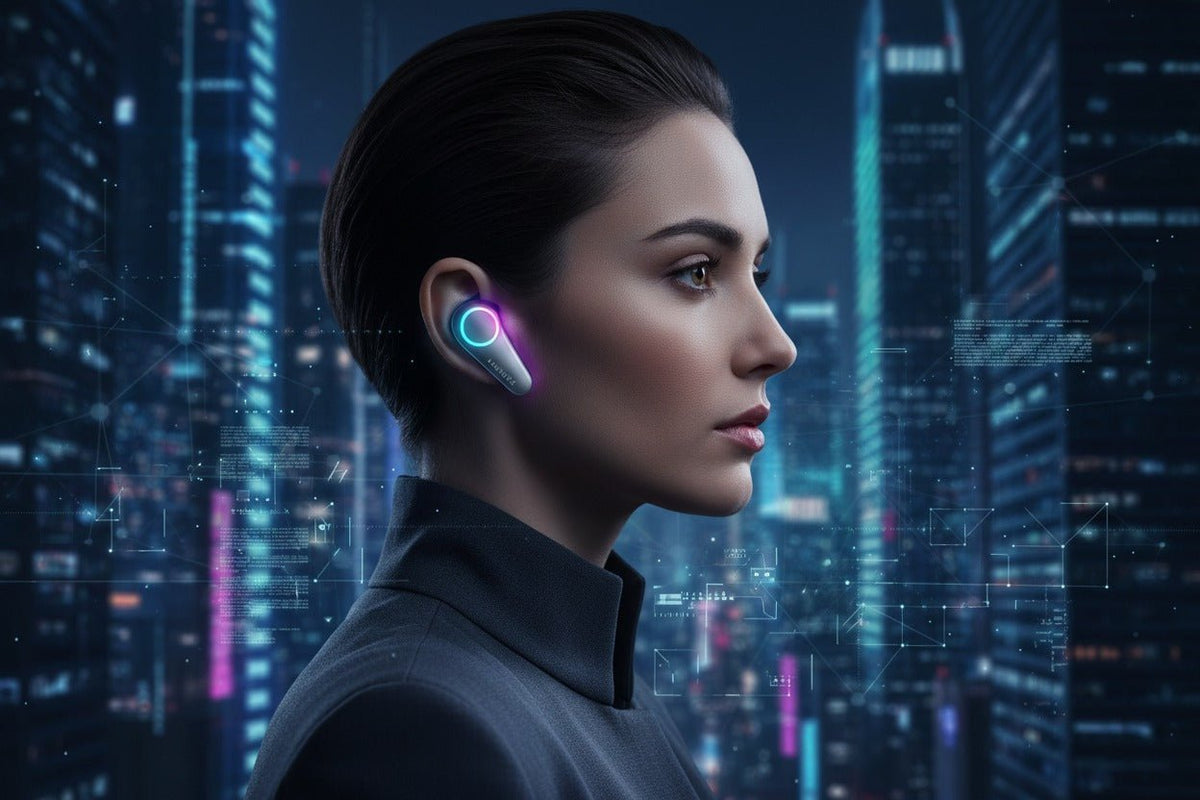
Les écouteurs sans fil de type « true wireless » deviennent plus intelligents en 2026, mais le changement majeur ne réside pas dans l'intégration soudaine d'une intelligence artificielle autonome dans chaque écouteur. L'évolution la plus utile réside dans une combinaison de traitement audio adaptatif, de traduction assistée par téléphone, de capteurs de santé sélectionnés et de l'extension de la prise en charge du Bluetooth LE Audio et d'Auracast.
Ce qui compte le plus : considérez chaque revendication liée à l'« IA », à la santé, à la faible latence et à Auracast comme une fonctionnalité propre à chaque modèle. Vérifiez ce qui est géré par les écouteurs, ce qui dépend du téléphone ou de l'application compagnon, et si les deux extrémités de la connexion prennent en charge la fonctionnalité souhaitée.

Qu'est-ce qui a réellement changé pour les écouteurs « true wireless » en 2026 ?
La catégorie s'est orientée davantage vers l'audio défini par logiciel. Les écouteurs phares actuels peuvent adapter le contrôle du bruit à l'environnement, personnaliser le son, se connecter plus étroitement aux services d'IA basés sur le téléphone et, dans certains cas, ajouter des capteurs peu courants dans les générations précédentes.
Ces tendances sont réelles, mais elles ne sont pas universelles. Apple, Samsung, Sony, Qualcomm et le Bluetooth SIG documentent des implémentations et des dépendances différentes. Cela rend la vérification des fonctionnalités plus importante que les étiquettes générales telles que « écouteurs IA » ou « écouteurs Bluetooth 5.2 ».
Le terme « écouteurs IA » peut signifier plusieurs choses différentes
L'IA est désormais utilisée comme une étiquette marketing pour de multiples fonctions qui ne partagent pas la même architecture matérielle. Certains traitements peuvent se dérouler à l'intérieur des écouteurs ; d'autres fonctionnalités dépendent fortement d'un téléphone appairé, de son système d'exploitation, de modèles de langage téléchargés ou d'une application compagnon.
| Domaine fonctionnel | Exemples documentés | Éléments à vérifier |
|---|---|---|
| Audio adaptatif | Les AirPods Pro 3 listent l'Audio adaptatif et l'EQ adaptatif ; les Galaxy Buds4 Pro listent l'ANC adaptatif et le contrôle adaptatif du bruit ; Sony documente le contrôle adaptatif du son et DSEE Extreme pour le WF-1000XM6. | Modèle exact, paramètres de l'application et appareil pris en charge. |
| Traduction | La traduction en direct des AirPods nécessite un iPhone compatible avec Apple Intelligence. La traduction en direct (Live Translate) de Samsung utilise un appareil Galaxy compatible pour l'interprétation. | Modèle de téléphone, système d'exploitation, région, langue et exigences du compte. |
| Capteurs de santé | Les AirPods Pro 3 incluent un capteur de fréquence cardiaque pour les entraînements. La détection biométrique étendue ne doit pas être déduite de la présence d'une marque « IA » ou « audio adaptatif ». | Matériel de détection listé par le fabricant et cas d'utilisation pris en charge. |
| LE Audio / Auracast | Les Galaxy Buds4 Pro listent le LE Audio et Auracast. Le Bluetooth SIG documente Auracast comme une capacité optionnelle plutôt que comme un résultat automatique lié à un numéro de version Bluetooth. | Prise en charge explicite sur l'émetteur/source et sur les écouteurs récepteurs. |
L'audio adaptatif est réel, mais les implémentations diffèrent
Samsung documente le traitement adaptatif du bruit en temps réel sur les Galaxy Buds4 Pro, incluant l'ANC adaptatif, le contrôle adaptatif du bruit, la détection vocale et la détection de sirène. Sony documente le contrôle adaptatif du son et DSEE Extreme pour le WF-1000XM6 ; Sony précise que DSEE Extreme utilise l'IA pour améliorer la reproduction des hautes fréquences à partir d'un audio compressé.
C'est une manière plus rigoureuse de comprendre l'« audio IA » que de supposer que chaque écouteur haut de gamme contient la même architecture de traitement neuronal. Une plateforme de chipset peut prendre en charge l'IA sur l'appareil sans pour autant garantir que chaque écouteur utilisant cette technologie implémente toutes les fonctions disponibles. Qualcomm, par exemple, documente un cœur IA dédié et des capacités LE Audio/Auracast sur sa plateforme Snapdragon S7 Gen 1 Sound, mais les fonctionnalités finales du produit dépendent toujours de l'implémentation du fabricant.
La traduction montre pourquoi le téléphone reste essentiel
La traduction en temps réel est l'un des exemples les plus clairs d'écouteurs agissant comme une interface vers un système d'IA plus vaste plutôt que de tout gérer seuls. Apple indique que les AirPods Pro 3 prennent en charge la traduction en direct, mais que cette fonctionnalité nécessite un iPhone compatible avec Apple Intelligence. Une fois les langues nécessaires téléchargées, Apple précise que le traitement de la traduction s'effectue sur l'iPhone.
Samsung décrit une dépendance similaire dans un autre écosystème : lors des appels avec traduction en direct, les Galaxy Buds envoient l'entrée vocale vers l'appareil Galaxy appairé pour interprétation, puis diffusent le résultat traduit via les écouteurs. Samsung note également que la disponibilité des fonctionnalités Galaxy AI varie selon l'appareil compatible et la version du logiciel.
La question d'achat pragmatique n'est donc pas simplement : « Ces écouteurs ont-ils une IA ? », mais : « Quelle fonctionnalité je souhaite, où est-elle traitée et mon téléphone prend-il en charge le chemin logiciel requis ? »
Les fonctionnalités de santé se développent, sans devenir universelles

Certains écouteurs « true wireless » ajoutent de véritables capacités de capteurs, mais la catégorie n'a pas encore standardisé la surveillance biométrique étendue. Les spécifications techniques des AirPods Pro 3 d'Apple listent un capteur de fréquence cardiaque pour les entraînements, parallèlement à des fonctions de santé auditive telles que le test auditif, l'aide auditive et la protection auditive.
Cela ne justifie pas de supposer que les écouteurs actuels mesurent généralement la température corporelle, la VRC (variabilité de la fréquence cardiaque), l'oxygène dans le sang ou les cycles de sommeil. Si une mesure de santé est importante pour vous, vérifiez le capteur exact et la fonction prise en charge sur la page de spécifications du fabricant plutôt que de considérer l'image de marque « IA » ou « bien-être » comme une preuve.
Le LE Audio et Auracast se développent, mais le Bluetooth 5.2 ne suffit pas
Le Bluetooth LE Audio représente un changement de plateforme important, et la diffusion audio Auracast est l'une de ses applications les plus visibles. La FAQ Auracast du Bluetooth SIG indique que les produits compatibles et les déploiements publics se multiplient, incluant des installations dans les cinémas, universités, églises, musées et stades.
Cependant, un numéro de version Bluetooth ne prouve pas à lui seul la prise en charge d'Auracast. Le Bluetooth SIG déclare qu'Auracast nécessite des fonctionnalités spécifiques introduites avec le Bluetooth Core 5.2, ainsi que les exigences de profil LE Audio pertinentes. Il précise également qu'Auracast est optionnel pour les appareils LE Audio. En d'autres termes, recherchez une mention explicite d'Auracast à la fois sur la source de diffusion et sur l'appareil récepteur, plutôt que de supposer qu'une version Bluetooth 5.2, 5.3, 5.4 ou supérieure le garantit.
La latence ultra-faible universelle n'existe toujours pas
Il n'existe aucune règle Bluetooth unique en 2026 garantissant une latence inférieure à 20 ms sur iPhone, Android, Windows et les consoles de jeux. La latence réelle peut dépendre de l'appareil source, du système d'exploitation, de l'implémentation Bluetooth, du codec ou du mode LE Audio, du micrologiciel des écouteurs, de l'application et de l'activation ou non du microphone.
Si la latence ou la compatibilité Android est une priorité, utilisez le guide de compatibilité des écouteurs sans fil Android 2026 de Wantek pour comparer les codecs documentés, Fast Pair, la connexion multipoint, les options LE Audio et les conditions de faible latence spécifiques à chaque appareil avant de choisir un modèle.
L'audio spatial, la réparabilité et la durabilité nécessitent toujours des vérifications par modèle
L'audio spatial est largement disponible, mais il ne s'agit pas d'une expérience standardisée sur toutes les gammes de prix. Le suivi des mouvements de la tête, la personnalisation, le contenu compatible et la prise en charge des appareils varient selon l'écosystème. La même prudence s'applique à la réparabilité : les embouts remplaçables sont courants, mais il ne faut pas supposer que les batteries ou les haut-parleurs sont remplaçables par l'utilisateur, sauf si le fabricant le documente explicitement.
Les revendications de durabilité nécessitent également des preuves spécifiques. Les spécifications des AirPods Pro 3 d'Apple, par exemple, listent l'aluminium, le cobalt, le lithium et le plastique recyclés dans des composants définis. Il s'agit d'une allégation vérifiable au niveau du produit ; ce n'est pas la preuve que les boîtiers biosourcés, la construction modulaire, la charge solaire ou cinétique sont devenus la norme sur le marché du « true wireless ».

Que devez-vous vérifier avant d'acheter des écouteurs « true wireless » en 2026 ?
Commencez par votre téléphone et votre écosystème.
Confirmez l'iPhone, Galaxy, Pixel ou tout autre appareil que vous utilisez, car les fonctionnalités de traduction, de basculement, d'audio spatial, d'assistant et de codec peuvent dépendre de l'écosystème.
Traduisez l'étiquette « IA » en une tâche spécifique.
Recherchez une fonction documentée telle que l'ANC adaptatif, l'isolation vocale, la reconstruction audio, la traduction ou l'accès à un assistant. Ne traitez pas l'étiquette elle-même comme une preuve de capacité.
Vérifiez où s'effectue le traitement.
Déterminez si la fonction s'exécute sur les écouteurs, dans une application mobile, via le système d'exploitation ou via un service réseau. Cela affecte la compatibilité et le comportement hors ligne.
Vérifiez explicitement le LE Audio et Auracast.
Ne déduisez aucune de ces fonctionnalités de la version Bluetooth. Vérifiez la source et les écouteurs séparément, ainsi que toute exigence logicielle ou régionale.
Considérez les chiffres de latence et de batterie comme conditionnels.
Les modes à faible latence et les fonctionnalités IA peuvent modifier le comportement de connexion ou l'autonomie de la batterie. Comparez les chiffres selon le mode que vous comptez réellement utiliser.
En résumé : le marché du « true wireless » en 2026 est plus performant, mais aussi plus dépendant de la compatibilité logicielle et de l'écosystème. L'achat le plus sûr est le modèle dont les fonctionnalités documentées correspondent exactement à votre téléphone et à votre usage—pas celui avec la plus longue liste d'étiquettes IA.
Questions fréquemment posées
Quel est le changement majeur pour les écouteurs sans fil en 2026 ?
Le changement le plus important est une intégration logicielle plus profonde : l'audio adaptatif, la traduction, les fonctionnalités liées à l'écosystème et certains capteurs sont devenus cruciaux. Les capacités exactes varient encore considérablement selon le modèle et le téléphone.
Les écouteurs IA fonctionnent-ils sans téléphone ?
Certains traitements audio peuvent s'exécuter sur les écouteurs, mais de nombreuses fonctionnalités marquées comme « IA » dépendent d'un téléphone appairé, d'une application, du système d'exploitation ou d'un modèle téléchargé. Vérifiez la fonctionnalité spécifique plutôt que l'étiquette.
Le Bluetooth 5.2 signifie-t-il que les écouteurs prennent en charge Auracast ?
Non. Le Bluetooth 5.2 a introduit des fonctionnalités essentielles utilisées par le LE Audio, mais la prise en charge d'Auracast nécessite également les profils et l'implémentation pertinents. Recherchez une mention explicite d'Auracast.
Les capteurs de santé sont-ils standard dans les écouteurs sans fil de 2026 ?
Non. Certains modèles incluent des capteurs de santé spécifiques, comme le capteur de fréquence cardiaque des AirPods Pro 3, mais le suivi biométrique étendu n'est pas une fonctionnalité universelle des écouteurs « true wireless ».
Les écouteurs sans fil de 2026 ont-ils tous une faible latence ?
Non. La latence dépend du chemin audio complet, incluant le téléphone ou l'appareil source, le mode ou codec Bluetooth, le micrologiciel, l'application, et parfois l'utilisation du microphone.

