
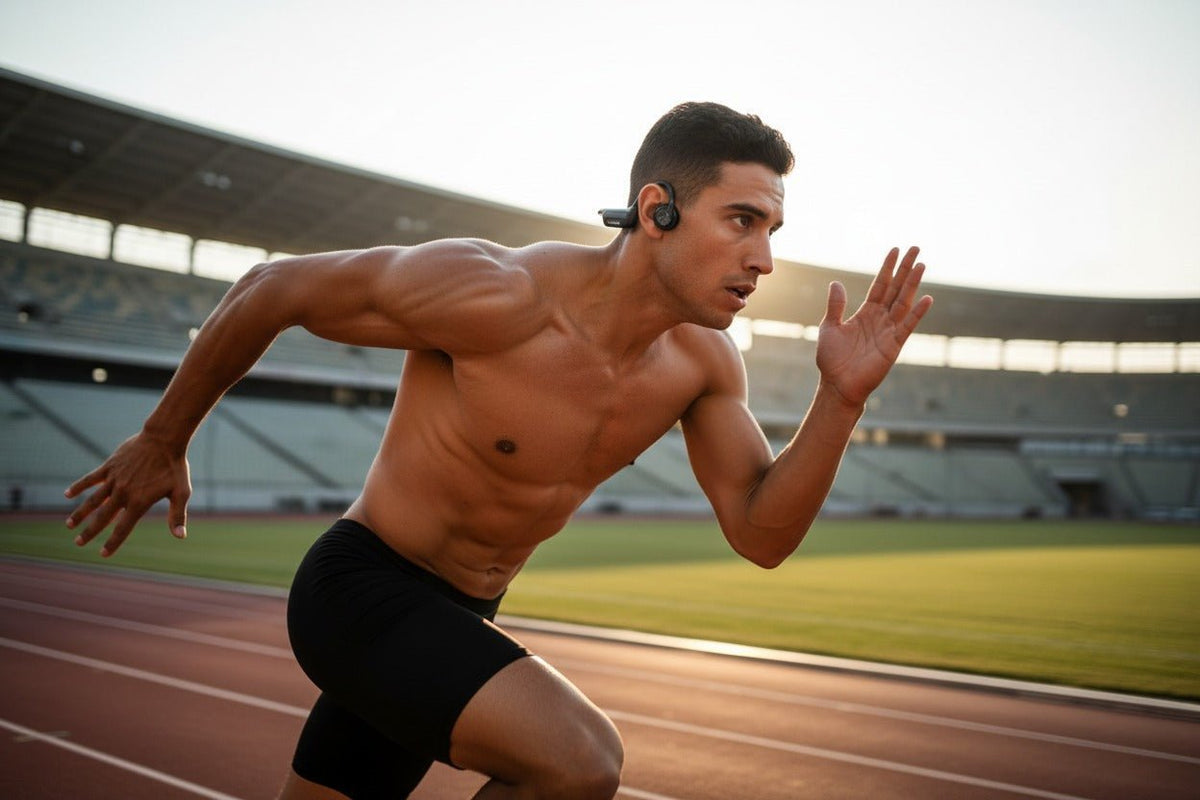
Los auriculares Bluetooth son una opción práctica para correr porque eliminan el cable entre tus oídos y tu teléfono o reloj. Sin embargo, el Bluetooth por sí solo no garantiza que un par de auriculares sea seguro, resistente al sudor, más seguro al aire libre o que tenga un mejor sonido. Para los corredores, el ajuste, la percepción del entorno, la protección documentada contra el agua, la duración de la batería, los controles y la compatibilidad con el dispositivo son más importantes que el número de versión impreso en la caja.
Respuesta rápida: elige Bluetooth para disfrutar de movimiento sin cables, pero evalúa los auriculares según cómo se ajustan a tus oídos, cuánto sonido exterior necesitas escuchar, lo que indica el fabricante sobre la exposición al sudor o al agua, y si la batería y los controles se adaptan a tu entrenamiento.

Por qué el Bluetooth funciona bien para correr
La ventaja más clara es simple: no hay ningún cable de audio que vaya desde los auriculares hasta el dispositivo fuente. Esto elimina un elemento que puede engancharse en la ropa, balancearse durante el movimiento de los brazos o requerir que el teléfono permanezca en un bolsillo específico.
El Bluetooth también ofrece a los corredores más libertad para elegir un dispositivo fuente. Muchos teléfonos, tabletas y relojes GPS pueden transmitir audio de forma inalámbrica, aunque la compatibilidad y el soporte de control varían según el dispositivo. Si la reproducción desde el reloj es importante, consulta la documentación del reloj y de los auriculares en lugar de asumir que cada par Bluetooth funcionará de la misma manera.
La comodidad inalámbrica tiene sus inconvenientes. Los auriculares Bluetooth necesitan energía, y algunas funciones como la cancelación activa de ruido, los modos de transparencia, las llamadas o ciertos modos de códec pueden alterar la duración real de la batería. Para obtener un marco de compra más profundo, consulta la guía de Wantek sobre auriculares para correr: ajuste, protección, percepción del entorno y compatibilidad.
El Bluetooth no determina la percepción del entorno
El hecho de que puedas escuchar el tráfico, a ciclistas, a otros corredores o a usuarios de senderos depende principalmente del diseño de los auriculares, del nivel de escucha y de tu atención, no del Bluetooth en sí.
Los diseños de oído abierto y de conducción ósea dejan el canal auditivo físicamente abierto, lo que puede hacer que el sonido ambiental sea más fácil de escuchar que con unos auriculares intraurales aislantes. Los modos de transparencia o ambientales adoptan un enfoque diferente al utilizar micrófonos y procesamiento para mezclar el sonido exterior con la experiencia auditiva. Ninguno de los dos diseños garantiza una percepción situacional completa.
Si estás comparando esos formatos, la guía de conducción ósea de Wantek explica cómo funciona la tecnología y por qué un oído abierto no es lo mismo que tener atención plena.
El nivel de escucha también es importante. La guía de escucha segura de la Organización Mundial de la Salud señala que el riesgo depende tanto del nivel de sonido como del tiempo de exposición, y recomienda no superar el 60% del volumen máximo del dispositivo personal como precaución práctica.
El ajuste importa más que una etiqueta de "deporte"
Correr implica impactos repetidos, movimiento de la cabeza, sudor y movimiento de la mandíbula. Un diseño útil debe mantenerse en su sitio sin crear una presión que resulte molesta con el paso del tiempo.
- Los ganchos para la oreja añaden soporte mecánico alrededor del oído.
- Los soportes o aletas refuerzan el diseño intraural contra el pabellón auditivo.
- Los diseños de oído abierto con clip se colocan fuera del canal y utilizan la propia oreja para sujetarse.
- Los diseños envolventes de conducción ósea utilizan una banda para mantener los transductores contra los laterales de la cabeza.
Ninguna especificación puede garantizar un ajuste seguro para cada corredor. La forma de las orejas, el uso de gafas, gorros, el cabello y la comodidad personal afectan a la sujeción, por lo que la política de devoluciones y las opciones de ajuste pueden ser tan importantes como una lista de características.
Verifica la protección contra el agua documentada
El sudor y la lluvia son condiciones comunes al correr, pero términos de marketing como "deportivo", "resistente al sudor" e "impermeable" no son intercambiables. El código IP de la norma IEC 60529 clasifica la protección contra la entrada de elementos bajo condiciones definidas. Una clasificación debe leerse junto con las propias instrucciones de uso y limitaciones del fabricante.
No deduzcas la idoneidad para nadar, las instrucciones de enjuague o la resistencia al sudor a largo plazo a partir de una foto genérica o de un número que parezca más alto. Si una página de producto no publica una clasificación IP o el alcance de su uso en agua, considera que el nivel de protección es desconocido.

Una imagen relacionada con el agua no es prueba de una clasificación IP específica. Verifica la especificación publicada del modelo exacto y las instrucciones de cuidado antes de exponerlo a la lluvia, al sudor, al enjuague o a la inmersión.
Versión de Bluetooth y códecs: qué es lo que realmente importa
Una versión de Bluetooth más reciente puede admitir capacidades más nuevas, pero el número de versión por sí solo no garantiza una mejor calidad de audio, menor latencia, mayor alcance, conexión multipunto o una conexión más estable al correr. Esos resultados dependen de la implementación completa de los auriculares y del dispositivo fuente.
Por ejemplo, Bluetooth LE Audio introdujo el códec LC3 y una nueva arquitectura de audio, pero el producto debe implementar las funciones relevantes y el dispositivo fuente debe ser compatible. La visión general de LE Audio de Bluetooth SIG es una referencia mejor que asumir que cada producto Bluetooth 5.x tiene el mismo conjunto de funciones.
Para correr, prioriza la compatibilidad verificada y un comportamiento estable en el día a día por encima de buscar el número de Bluetooth más alto. Si utilizas un reloj para música sin conexión, confirma esa combinación específica de reloj/auriculares antes de comprar.
Adapta el estilo de los auriculares al lugar donde corres
| Situación al correr | Diseño inicial útil | Qué verificar |
|---|---|---|
| Carreteras y senderos compartidos | Oído abierto o conducción ósea | Ajuste, volumen utilizable, percepción de la ruta, duración de la batería |
| Cinta de correr o gimnasio | Intraural seguro u oído abierto | Sujeción, comodidad, controles, ANC opcional |
| Entrenamiento bajo lluvia o sudor intenso | Modelo deportivo con protección documentada | Clasificación IP exacta, límites de uso en agua del fabricante, instrucciones de cuidado |
| Sesiones de larga distancia | Diseño ligero de ajuste seguro | Autonomía con una sola carga, método de carga, comodidad con el paso del tiempo |
Qué verificar antes de comprar
- Primero el ajuste: elige el estilo de sujeción que se adapte a tus oídos y a las condiciones en las que corres.
- Decide cuán abierto quieres el canal auditivo: las rutas al aire libre y las cintas de correr en interiores pueden justificar prioridades diferentes.
- Verifica la afirmación exacta sobre el uso en agua: no sustituyas una etiqueta genérica de "deporte" por una clasificación IP e instrucciones del fabricante.
- Ajusta la duración de la batería a la sesión más larga: compara la autonomía con una sola carga, no solo los totales del estuche de carga.
- Confirma la compatibilidad de la fuente: especialmente si quieres dejar el teléfono y reproducir audio desde un reloj.
- Verifica los controles mientras te mueves: los diseños de botones o táctiles deben ser utilizables con sudor, guantes o gorro si esas condiciones son importantes para ti.
Una opción de oído abierto de Wantek para tus entrenamientos
El Wantek OBT030 utiliza un diseño de clip de oído abierto y está orientado al entrenamiento, al transporte diario, a las llamadas y a la escucha cotidiana. Su página de producto actual indica Bluetooth 5.4, un peso de 8,5 g, una especificación de 8 horas de batería para los auriculares, micrófono integrado y hasta 50 horas de batería total con el estuche de carga.
La página actual del OBT030 no indica una clasificación IP en sus especificaciones, así que no asumas un nivel particular de protección contra el sudor o el agua basándote solo en su enfoque deportivo.
Revisa las especificaciones del OBT030
Revisa los detalles actuales sobre el ajuste, la batería, el micrófono, la compatibilidad, el precio y la disponibilidad antes de decidir si el formato de clip de oído abierto se adapta a tu rutina de entrenamiento.
Preguntas frecuentes
¿Son los auriculares Bluetooth mejores que los cableados para correr?
Generalmente son más cómodos porque no hay cables de la fuente que gestionar. Eso no hace que cada modelo Bluetooth sea mejor para correr; el ajuste, la percepción, la protección contra el agua y la duración de la batería siguen siendo los factores que deciden la idoneidad.
¿Qué versión de Bluetooth es mejor para auriculares de running?
No elijas solo por el número de versión. Confirma las funciones y la compatibilidad con el dispositivo fuente que realmente necesitas, ya que la versión de Bluetooth por sí sola no establece la calidad de sonido, el alcance, la latencia o el soporte multipunto.
¿Son los auriculares de oído abierto buenos para correr al aire libre?
Pueden hacer que el sonido ambiental sea más fácil de escuchar porque no sellan el canal auditivo. El volumen de escucha y la atención siguen siendo importantes, por lo que un diseño de oído abierto no garantiza una percepción situacional completa.
¿Qué clasificación IP necesitan los auriculares para correr?
No hay una clasificación universal para todos los corredores. Ajusta la protección documentada y las instrucciones de cuidado del fabricante a las condiciones de sudor, lluvia, salpicaduras o inmersión que realmente esperas.

