
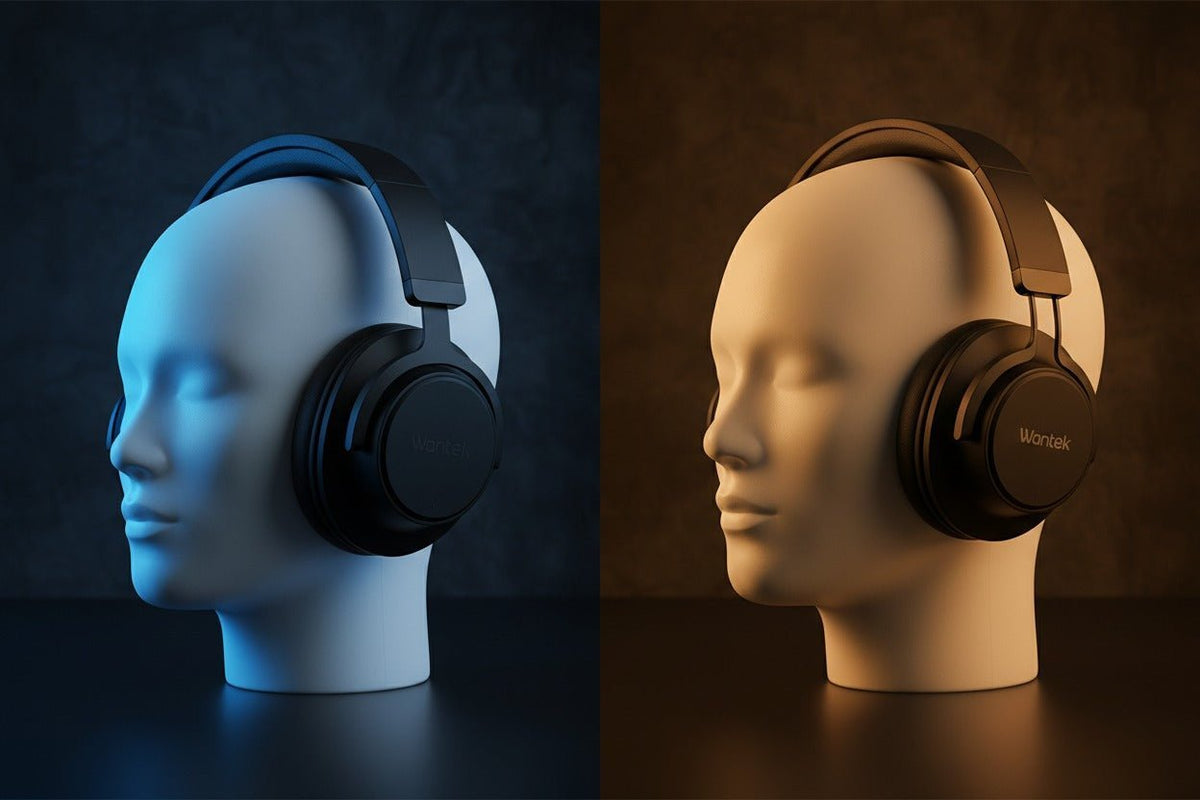
Ohrumschließende Kopfhörer umschließen das Außenohr; ohraufliegende Kopfhörer ruhen direkt darauf. Dieser einfache Unterschied in der Passform beeinflusst den Komfort, die Wärmeentwicklung, die Portabilität und die Konsistenz der Abdichtung der Ohrpolster, macht jedoch keines der beiden Designs universell besser in Bezug auf Klangqualität oder Geräuschunterdrückung.
Kurzantwort: Wählen Sie ohrumschließende Kopfhörer, wenn Sie bei langen Hörsitzungen normalerweise Wert auf Komfort, eine stärkere physische Isolierung und eine immersive Passform legen, statt auf eine kompakte Größe. Wählen Sie ohraufliegende Kopfhörer, wenn Ihnen ein leichterer, kleinerer Kopfhörer wichtiger ist und es Sie nicht stört, wenn die Polster auf dem Außenohr aufliegen. Vergleichen Sie bei beiden Typen die Abstimmung des jeweiligen Modells, den Anpressdruck, die Polstermaße, das Klangverlustverhalten, ANC, Mikrofon, Akkulaufzeit und Verbindungsfunktionen.

Ohrumschließende vs. ohraufliegende Kopfhörer auf einen Blick
| Faktor | Ohrumschließend (Over-Ear) | Ohraufliegend (On-Ear) |
|---|---|---|
| Passform | Die Ohrpolster umschließen das Außenohr. | Die Polster liegen direkt auf dem Außenohr auf. |
| Komfort bei langer Nutzung | Oft angenehmer für das Ohr selbst, jedoch können Gewicht und Wärme limitierend wirken. | Meist leichter, aber der direkte Druck auf die Ohren kann für manche Nutzer unangenehm werden. |
| Portabilität | Meist sperriger aufgrund größerer Ohrmuscheln. | Meist kleiner und einfacher zu verstauen. |
| Passive Isolierung | Bei geschlossenen Designs oft konsistenter, wenn die Polster gut abdichten. | Stärker vom Polsterkontakt und der Ohrform abhängig; oft weniger isolierend. |
| Wärme | Kann mehr Wärme um das Ohr stauen. | Lässt den Bereich um das Ohr oft stärker frei. |
| Klangqualität | Keiner der Formfaktoren garantiert automatisch einen besseren Klang. Abstimmung, Gehäuse, Treiber-Implementierung, Passform, Abdichtung und das gesamte akustische Design sind entscheidender. | |
Wenn Sie sich noch zwischen ohrumschließenden, ohraufliegenden, In-Ear- und Open-Ear-Designs entscheiden müssen, trennt Wanteks Leitfaden zu den wichtigsten Kopfhörertypen die Passform von Gehäuse-, Verbindungs- und Geräuschkontrollfunktionen.
Was ist der physische Unterschied?
Ohrumschließend, auch zirkumaural genannt, beschreibt Ohrmuscheln, die groß genug sind, um das Außenohr zu umschließen und auf dem Bereich darum aufzuliegen. Ohraufliegend, auch supra-aural genannt, beschreibt Polster, die auf der Ohrmuschel – dem sichtbaren Außenohr – sitzen.

Diese Begriffe beschreiben, wo die Polster sitzen, nicht, ob der Kopfhörer offen oder geschlossen, kabelgebunden oder kabellos ist oder über ANC verfügt. Ein offenes, ohrumschließendes Modell kann zum Beispiel weit mehr Schall nach außen dringen lassen als ein gut abgedichtetes, geschlossenes, ohraufliegendes Modell.
Komfort: Druck um das Ohr vs. Druck auf dem Ohr
Ohrumschließende Kopfhörer verteilen den Kontakt oft um das Ohr herum anstatt direkt darauf. Das kann sie für langes Arbeiten am Schreibtisch, auf Reisen, beim Gaming oder bei längeren Hörsitzungen komfortabel machen, sofern die Ohrmuscheln tief genug sind und der Kopfbügel das Gewicht gut verteilt. Der Nachteil ist mehr Material um das Ohr, was die Wärmeentwicklung steigern kann.
Ohraufliegende Kopfhörer reduzieren in der Regel Volumen und Gewicht, aber die Polster drücken direkt gegen das Außenohr. Manche Nutzer bevorzugen dieses leichtere Gefühl; andere empfinden schneller Druckschmerzen. Auch eine Brille kann den Komfort und die Abdichtung bei beiden Designs beeinträchtigen, da die Bügel zwischen Kopf und Polstern liegen.
Es gibt keinen universellen Gewinner beim Komfort. Anpressdruck, Polsterweichheit, Tiefe der Ohrmuschel, Gesamtgewicht, Kopfform, Ohrgröße, das Tragen einer Brille und die Nutzungsdauer beeinflussen das Ergebnis. Unabhängige Tests aus RTINGS’ Vergleich zwischen Over-Ear und On-Ear kommen zum gleichen praktischen Schluss: ohrumschließende Designs verteilen den Druck tendenziell breiter, während ohraufliegende Modelle meist kleiner und atmungsaktiver sind.
Geräuschisolierung und ANC
Geschlossene, ohrumschließende Kopfhörer haben bei der passiven Isolierung oft einen Vorteil, da die Polster eine größere Barriere um das Ohr bilden können. Aber die Isolierung ist dennoch vom Modell und der Passform abhängig. Haare, Brillen, abgenutzte Polster, Kopfform und Polstergeometrie können die Abdichtung schwächen.
Aktive Geräuschunterdrückung (ANC) ist zudem ein produktabhängiges Feature, kein automatischer Vorteil der ohrumschließenden Kategorie. Ein gut entwickeltes ANC-System kann stetige Umgebungsgeräusche wie Motor- oder Lüftergeräusche reduzieren, aber das Ergebnis hängt von den Mikrofonen, der Verarbeitung, der Passform, der Frequenz und der Umgebung ab.
Betrachten Sie „ohrumschließend“ nicht als Synonym für „geräuschunterdrückend“. Offene, ohrumschließende Kopfhörer sind absichtlich belüftet und bieten meist kaum Isolierung, während ANC auch bei ohraufliegenden Modellen und In-Ear-Kopfhörern vorkommen kann.
Klangqualität: Formfaktor ist keine Gütebewertung
Ohrumschließende Kopfhörer bieten mehr physischen Raum für Polster, Treiber, Dämpfung und akustische Strukturen, was Designern verschiedene technische Optionen gibt. Das bedeutet nicht, dass eine größere Ohrmuschel oder ein größerer Treiber automatisch tiefere Bässe, eine breitere Klangbühne, geringere Verzerrungen oder einen akkurateren Klang erzeugt.
Auch ohraufliegende Kopfhörer können sehr gut abgestimmt sein. Ein hilfreicherer Vergleich findet zwischen den exakten Modellen statt: Frequenzgang, Verzerrung, Kanalgleichheit, Dichtigkeit, Gehäusetyp und wie die Kopfhörer auf Ihren Kopf passen. Der Formfaktor setzt Rahmenbedingungen, die Implementierung bestimmt das Ergebnis.
Portabilität, Wärme und täglicher Gebrauch
Ohraufliegende Kopfhörer gewinnen meist bei der Packgröße, da die Ohrmuscheln kleiner sein können. Das kann für Pendler, Studenten, Reisende und alle, die Kopfhörer in einer kleinen Tasche transportieren, wichtig sein. Viele ohraufliegende Modelle lassen zudem einen größeren Bereich um das Ohr frei, was sich kühler anfühlen kann.
Ohrumschließende Modelle sind typischerweise sperriger, obwohl Faltgelenke, drehbare Muscheln und kompakte Etuis den Unterschied verringern können. Ihre größeren Polster können am Schreibtisch oder auf Flügen vorzuziehen sein, können sich aber bei aktiver Nutzung oder in heißen Umgebungen warm anfühlen.
Welcher ist besser für Reisen, Arbeit, Zuhause und Sport?
Reisen und Pendeln
Geschlossene, ohrumschließende Kopfhörer mit effektivem ANC sind ein guter Ausgangspunkt, wenn die Reduzierung von kontinuierlichem Kabinen- oder Fahrzeuglärm wichtiger ist als der Platz in der Tasche. Wenn Portabilität Priorität hat, ist ein kompaktes, ohraufliegendes Modell eventuell leichter zu transportieren, aber vergleichen Sie dessen tatsächliche Isolierung und Schallemission, anstatt vorauszusetzen, dass die Kategorie eine bestimmte Leistung erbringt.

Büro und Remote Work
Für fokussiertes Arbeiten am Schreibtisch ist eine ohrumschließende Passform attraktiv, wenn Sie Wert auf Isolierung und Komfort bei langer Nutzungsdauer legen. Für kommunikationsintensive Arbeit können Mikrofonqualität, Stummschaltung, Gerätekompatibilität, Sidetone (Eigenstimmenwiedergabe) und Verbindungszuverlässigkeit wichtiger sein als die Größe der Ohrmuschel.
Hören zu Hause und Gaming
Ohrumschließende Modelle dominieren viele Kategorien im Bereich Heimkino, Studio und Gaming, da ihre Größe eine breite Palette an offenen und geschlossenen Designs ermöglicht. Das ist ein Design-Trend des Marktes, kein Beweis dafür, dass jedes ohrumschließende Modell besser klingt. Vergleichen Sie den spezifischen Kopfhörer und beziehen Sie beim Gaming Mikrofon- und Plattformkompatibilität mit ein.
Fitnessstudio und Laufen
Man sollte nicht davon ausgehen, dass einer der Kopfbügel-Typen grundsätzlich für Sport geeignet ist. Prüfen Sie die vom Hersteller angegebene Schweiß- oder Wasserbeständigkeit, den sicheren Halt, die Reinigbarkeit und die Garantiebedingungen. Bei Outdoor-Aktivitäten ist zudem die Wahrnehmung der Umgebung wichtig. Ohrhörer oder offene Designs können praktischer sein, wenn geringes Gewicht und Bewegungsfreiheit Priorität haben.
Akkulaufzeit und kabellose Funktionen
Treffen Sie Ihre Entscheidung zwischen ohrumschließend und ohraufliegend nicht auf Basis einer angenommenen Akkulaufzeit. Die physische Größe kann Designern mehr Raum für einen Akku geben, aber die reale Laufzeit variiert je nach Kapazität der Akkuzellen, Verstärkereffizienz, ANC-Nutzung, Codec, Lautstärke, Gesprächszeit und Energiemanagement-Software.
Ebenso können Bluetooth-Version, Multipoint, Codec-Unterstützung, Transparenzmodus, App-Equalizer, Trageerkennung und Mikrofonfunktionen bei beiden Formfaktoren vorhanden sein. Überprüfen Sie diese am jeweiligen Modell und an den Quellgeräten, die Sie verwenden möchten.
Wie man zwischen ohrumschließenden und ohraufliegenden Kopfhörern wählt
Beginnen Sie mit Ihrer längsten normalen Hörsitzung
Wenn Sie regelmäßig Kopfhörer für mehrere Stunden tragen, priorisieren Sie Passform, Freiraum für die Ohren, Anpressdruck, Wärme und Gewicht vor erweiterten Funktionen.
Entscheiden Sie, wie wichtig Portabilität ist
Wenn die Kopfhörer in eine kleine Tasche für den Alltag passen müssen, vergleichen Sie die Faltmaße und die Größe des Etuis. Ohraufliegende Designs sind hier meist im Vorteil.
Passen Sie die Isolierung an die Umgebung an
Für Flüge, Züge oder laute Büros vergleichen Sie die gemessene Isolierung und das ANC. Erwägen Sie für geteilte Räume oder Außenbereiche, wie viel Außenlärm Sie wahrnehmen müssen.
Vergleichen Sie die exakten Modelle zuletzt
Sobald die Kategorie der Passform stimmt, vergleichen Sie Klang, Mikrofon, Akkulaufzeit, Steuerung, Reparierbarkeit, Verbindungsoptionen, Garantie und Preis. Wanteks Leitfaden zum Kopfhörerkauf deckt diese modellbezogenen Prüfungen ab.
Ein weiterer Faktor: Sicheres Hören
Das Gehörrisiko hängt von der Lautstärke und der Expositionsdauer ab, nicht davon, ob die Polster um das Ohr oder auf dem Ohr sitzen. An lauten Orten können eine gute Passform und effektive Geräuschkontrolle das Hören erleichtern, ohne die Lautstärke so weit aufdrehen zu müssen. Die Richtlinien der Weltgesundheitsorganisation zum sicheren Hören empfehlen, sowohl die Lautstärke als auch die Hördauer zu kontrollieren.
Sie suchen ein Headset für geschäftliche Anrufe?
Wenn Ihre Entscheidung primär Konferenzen, Kundengespräche oder Gerätekompatibilität betrifft, starten Sie bei der Wahl des Geräts und der Verbindung, anstatt nur nach der Größe der Ohrmuschel zu entscheiden.
Häufig gestellte Fragen
Sind ohrumschließende Kopfhörer komfortabler als ohraufliegende?
Oft, aber nicht immer. Ohrumschließende Polster vermeiden direkten Druck auf das Außenohr, während ohraufliegende Modelle meist leichter sind. Anpressdruck, Wärme, Polstertiefe, das Tragen einer Brille, Ohrgröße und Kopfform können das Ergebnis verändern.
Klingen ohrumschließende Kopfhörer besser?
Nicht automatisch. Ohrumschließende Designs bieten mehr physischen Raum, aber Abstimmung, Gehäuse, Treiber-Implementierung, Abdichtung, Verzerrung und Passform bestimmen die Klangqualität. Ein gut designtes ohraufliegendes Modell kann ein schlecht designtes ohrumschließendes Modell übertreffen.
Welcher Typ blockiert mehr Außengeräusche?
Geschlossene, ohrumschließende Kopfhörer isolieren oft konsistenter, da die Polster das Ohr umschließen, aber Passform und Konstruktion sind entscheidend. Die ANC-Leistung muss am exakten Modell verglichen werden, anstatt sie vom Formfaktor abzuleiten.
Sind ohraufliegende Kopfhörer besser zum Pendeln?
Sie sind oft leichter zu transportieren, da sie meist kleiner sind. Wenn Ihr Arbeitsweg laut ist, vergleichen Sie die tatsächliche Isolierung, Schallemission, ANC, Etuigröße und den Komfort, bevor Sie nur die Portabilität priorisieren.
Welcher Typ ist besser für Brillenträger?
Keiner ist garantiert besser. Brillen können bei beiden Designs Druckstellen verursachen und die Polsterabdichtung verändern. Probieren Sie die Kopfhörer mit Ihren gewohnten Brillengestellen und prüfen Sie den Komfort nach einer üblichen Nutzungsdauer.
Sind ohrumschließende Kopfhörer besser für das Fitnessstudio?
Nicht grundsätzlich. Achten Sie auf sicheren Halt, die vom Hersteller angegebene Schweiß- oder Wasserbeständigkeit, die Reinigbarkeit der Polster und die Wahrnehmung der Umgebung. Bei intensiver Bewegung können kleinere Ohrhörer oder offene Designs praktischer sein.

