
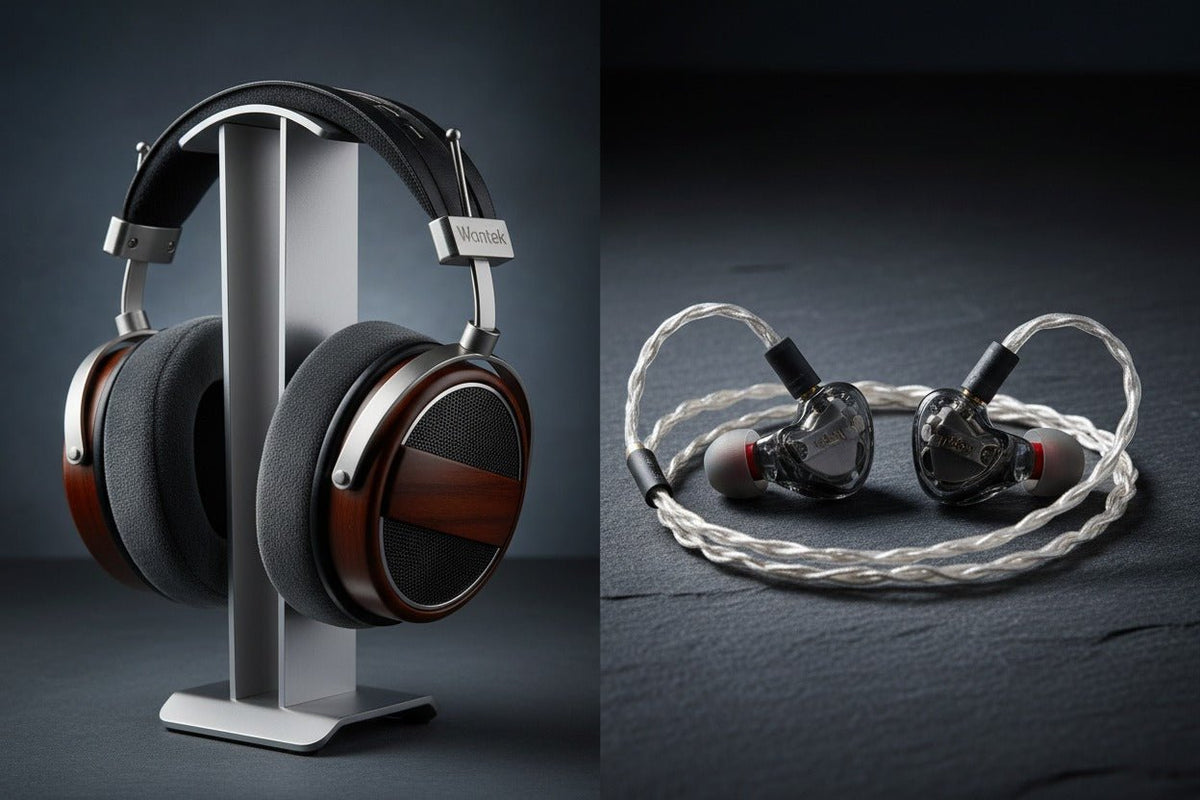
Kopfhörer und In-Ear-Hörer lösen dasselbe grundlegende Problem auf unterschiedliche Weise. Kopfhörer verwenden einen Bügel mit Ohrmuscheln, die auf oder um Ihre Ohren sitzen. In-Ear-Hörer sind deutlich kleiner und sitzen am Eingang des Gehörgangs oder dichten diesen ab. Dieser Unterschied wirkt sich auf die Tragbarkeit, den Sitz, die Isolierung, die Wärmeentwicklung und die Integration in den Alltag aus.
Kurzantwort: Wählen Sie Kopfhörer, wenn Sie ein größeres, am Kopf getragenes Design für die Arbeit am Schreibtisch, lange stationäre Sitzungen oder eine größere Auswahl an Modellen mit offener Rückseite und ohrumschließendem Design bevorzugen. Wählen Sie In-Ear-Hörer, wenn Taschenformat, ein für Sport geeigneter Sitz oder eine starke passive Isolierung durch ein abdichtendes In-Ear-Design für Sie wichtiger sind. Weder die eine noch die andere Bauform garantiert automatisch einen besseren Klang, mehr Komfort, eine bessere Geräuschunterdrückung oder mehr Schutz für das Gehör.
| Faktor | Kopfhörer | In-Ear-Hörer |
|---|---|---|
| Sitz | Ohrumschließende Modelle umgeben das Ohr; aufliegende Modelle ruhen darauf. | Earbuds ruhen in der Ohrmuschel; In-Ear-Modelle nutzen Aufsätze, die den Gehörgang abdichten. |
| Tragbarkeit | Meist sperriger und auffälliger beim Transport. | Meist einfacher in der Tasche zu verstauen und unterwegs zu nutzen. |
| Komfort | Hängt von Anpressdruck, Polstergröße, Gewichtsverteilung, Brillen und Wärmeentwicklung ab. | Hängt von der Ohrform, der Aufsatzgröße, der Einsetztiefe und der Verträglichkeit des In-Ear-Sitzes ab. |
| Isolierung | Modelle mit geschlossener Rückseite können gut isolieren; offene Modelle lassen absichtlich Schall nach außen. | Abdichtende In-Ear-Modelle können bei korrektem Sitz eine starke passive Isolierung bieten. |
| Klang | Ohrumschließende und offene Designs können eine räumliche Klangbühne unterstützen, aber Abstimmung und Umsetzung sind wichtiger als die reine Größe. | Gut entwickelte In-Ear-Modelle liefern exzellente Bässe, Details und geringe Verzerrungen; ein schlechter Sitz kann den Klang erheblich beeinträchtigen. |
| Kabellose Nutzung | Mehr physischer Platz ermöglicht größere Akkus und Bedienelemente, aber die Laufzeit variiert je nach Modell und Einstellungen. | True-Wireless-Modelle tauschen sehr kleine Ohrhörer gegen ein Ladecase und häufigere Ladezyklen. |

Was zählt als Kopfhörer und In-Ear-Hörer?
Für diesen Vergleich bezeichnen Kopfhörer Designs mit Kopfbügel: ohrumschließende Modelle, die das Ohr vollständig umgeben, und aufliegende Modelle, die auf dem Ohr ruhen. In-Ear-Hörer sind kleinere Produkte, die im oder am Ohr getragen werden. Die Alltagssprache ist hier inkonsistent, daher werden Begriffe wie „Earbuds“, „In-Ear-Kopfhörer“, „IEMs“ und „In-Ear-Hörer“ manchmal austauschbar verwendet, obwohl sich der Sitz unterscheiden kann.
Ohrumschließende und aufliegende Kopfhörer
Ohrumschließende Kopfhörer nutzen Polster, die um das äußere Ohr liegen. Aufliegende Kopfhörer verwenden kleinere Polster, die direkt auf das Ohr drücken. Das größere Gehäuse bietet Designern mehr Raum für Treiber, Akkus, Steuerung, Mikrofone und akustische Strukturen, doch keiner dieser Vorteile garantiert für sich allein eine bessere Leistung.
Earbuds und In-Ear-Monitore
Traditionelle Earbuds ruhen in der Ohrmuschel, ohne den Gehörgang tief abzudichten. In-Ear-Kopfhörer und IEMs nutzen Aufsätze aus Silikon, Schaumstoff oder maßgefertigte Passstücke, um den Gehörgang abzudichten. Diese Abdichtung kann die Konsistenz des Basses und die passive Isolierung verbessern, aber nur, wenn der Sitz für den Hörer passt.
1. Komfort und Sitz: Kein Stil gewinnt für jeden
Komfort ist individueller, als die Kategoriebezeichnung vermuten lässt. Ohrumschließende Kopfhörer vermeiden das Einführen von etwas in den Gehörgang, was manche Hörer bei langen Sitzungen bevorzugen. Zu ihren Nachteilen können der Druck des Kopfbügels, Wärmeentwicklung an den Ohren, der Druck der Polster auf Brillenbügel und das Gesamtgewicht zählen.
In-Ear-Hörer kommen ohne Kopfbügel und das meiste Gewicht aus, bringen aber ein anderes Problem mit sich: Ohrhörer und Aufsatz müssen genau zur Anatomie des Nutzers passen. Ein zu großer, zu kleiner oder schlecht sitzender Aufsatz kann Schmerzen, lockeren Halt, schwache Bässe oder eine reduzierte Isolierung verursachen.
Praktische Regel: Kaufen Sie nicht allein nach Bauform, wenn Komfort Priorität hat. Prüfen Sie Rückgabemöglichkeiten, testen Sie bei Bedarf mehrere Aufsatzgrößen und bewerten Sie den Komfort über die Dauer der Sitzungen, die Sie tatsächlich erwarten.
2. Tragbarkeit und Bewegung
In-Ear-Hörer haben den klaren Größenvorteil. Kabelgebundene Modelle passen in einen kleinen Beutel, während True-Wireless-Earbuds meist in ein taschengroßes Ladecase passen. Das macht sie bequem für Pendler, Reisen, Spaziergänge und Workouts.
Kopfhörer benötigen mehr Platz in der Tasche und können sich bei starker Aktivität stärker bewegen. Faltbare Designs reduzieren das Volumen, bleiben aber größer als In-Ear-Hörer. Für stationäres Hören spielt dieser Größennachteil jedoch kaum eine Rolle.
3. Klangqualität: Die Bauform beeinflusst das Design, nicht das Endergebnis
Es ist ungenau anzunehmen, dass Kopfhörer immer besser klingen, weil sie größere Treiber verwenden, oder dass In-Ear-Hörer automatisch detailreicher sind, weil der Treiber näher am Ohr sitzt. Frequenzgang, Verzerrung, Gehäusedesign, Abdichtung, Treiberimplementierung, DSP und Abstimmung spielen alle eine Rolle.
Ohrumschließende Kopfhörer – besonders offene Designs – können eine räumliche Darstellung erzeugen, da Treiber und Gehäuse anders mit der Ohrmuschel interagieren. In-Ear-Modelle können eine exzellente Frequenzwiedergabe und Detailtreue erreichen, indem sie den Verschluss des Gehörgangs nutzen, um Bassverluste zu kontrollieren. Ein starkes Modell aus jeder Kategorie kann ein schwaches Modell aus der anderen übertreffen.
4. Passive Isolierung und aktive Geräuschunterdrückung sind verschiedene Themen
Passive Isolierung entsteht durch die physische Barriere zwischen Außengeräuschen und Ihrem Ohr. Ein gut abdichtender In-Ear-Monitor kann ohne Elektronik stark isolieren. Geschlossene Kopfhörer können Außengeräusche durch ihre Polster und Muscheln ebenfalls blockieren, während offene Kopfhörer absichtlich kaum Isolierung bieten.
Aktive Geräuschunterdrückung (ANC) nutzt Mikrofone und Signalverarbeitung, um bestimmte Umgebungsgeräusche zu reduzieren. ANC gibt es sowohl bei ohrumschließenden Kopfhörern als auch bei True-Wireless-Hörern; die Leistung ist modellspezifisch. Gehen Sie nicht davon aus, dass eine Kategorie pauschal besser ist, ohne Messungen oder zuverlässige Tests für das spezifische Produkt zu vergleichen.
5. Kabellose Kopfhörer und True-Wireless-Hörer
Beide nutzen Akkus, Funktechnik, Codecs und interne Elektronik. Kopfhörer haben mehr physischen Platz für Akkus, aber die tatsächliche Laufzeit hängt vom Modell, der Lautstärke, ANC, Codecs, Gesprächen, Temperatur und anderen Funktionen ab. True-Wireless-Hörer teilen die Akkukapazität zwischen den Ohrhörern und deren Ladecase auf.
Wenn die Verbindungsart nach der Bauform die nächste Entscheidung ist, vergleichen Sie kabelgebundene und kabellose Optionen getrennt hinsichtlich Mobilität, Aufladen, Latenz, Quellenkompatibilität und den Funktionen, die Sie wirklich nutzen.

6. Anrufe und Meetings: Das Mikrofon-Design ist wichtiger als die Muschelgröße
Bei Telefongesprächen sind das Mikrofonsystem und seine Platzierung oft wichtiger als die Frage, ob die Lautsprecher ohrumschließend oder im Gehörgang sitzen. Consumer-Kopfhörer und -Earbuds nutzen oft integrierte Mikrofon-Arrays. Zweckgebundene Arbeits-Headsets verwenden häufig ein Schwanenhals-Mikrofon, dedizierte Stummschalt-Bedienelemente und Verbindungsoptionen, die speziell für Gespräche entwickelt wurden.
Wenn Anrufe die Hauptaufgabe sind, vergleichen Sie Mikrofon, Steuerung, Gerätekompatibilität und Verbindungsweg, anstatt „Kopfhörer“ oder „In-Ear-Hörer“ als Indikator für Gesprächsqualität zu nutzen.
7. Was ist besser für Pendeln, Sport, Gaming oder Hören zu Hause?
| Einsatzgebiet | Empfohlener Einstieg | Warum |
|---|---|---|
| Pendeln | Abdichtende In-Ear-Hörer oder geschlossene ANC-Kopfhörer | Isolierung, Tragbarkeit und Lärmkontrolle sind meist wichtiger als die reine Bauform. |
| Workouts | Sicher sitzende In-Ear-Hörer oder Sport-Designs mit offenem Ohr | Geringes Gewicht und Stabilität sind bei Bewegung wichtig; prüfen Sie Sitz, Haltbarkeit und Umgebungsbewusstsein für die Aktivität. |
| Hören zu Hause | Ohrumschließende Kopfhörer | Größe ist zu Hause weniger wichtig, und Sie erhalten Zugang zu vielen geschlossenen und offenen Designs. |
| Gaming | Headset oder Kopfhörer/In-Ear-Hörer je nach Plattform und Mikrofonbedarf | Verbindung, Latenz, Mikrofonführung, Komfort und Plattformunterstützung zählen mehr als der Lautsprecherort. |
| Arbeitsgespräche | Zweckgebundenes Headset bei häufigen Anrufen | Die Platzierung des Schwanenhals-Mikrofons, Stummschaltung, Verbindung und Gerätekompatibilität sind wichtiger als Musik-Features. |
| Minimales Alltagsgepäck | In-Ear-Hörer | Sie sind einfacher in der Tasche zu verstauen und zu transportieren als Full-Size-Kopfhörer. |
8. Was ist sicherer für Ihr Gehör?
Weder Kopfhörer noch In-Ear-Hörer sind bei normaler Lautstärke von Natur aus sicher oder unsicher. Das Risiko für das Gehör hängt hauptsächlich von der Lautstärke und der Expositionszeit ab. Die Leitlinien der Weltgesundheitsorganisation zum sicheren Hören geben 80 dB für bis zu 40 Stunden pro Woche als beispielhaftes Expositionsniveau an; bei 90 dB sinkt der Wert auf vier Stunden pro Woche. Die WHO schlägt zudem vor, die Gerätelautstärke als einfache praktische Gewohnheit auf nicht mehr als 60 % des Maximums zu begrenzen, wobei eine Überwachung der Lautstärke aussagekräftiger ist.
Das National Institute on Deafness and Other Communication Disorders merkt an, dass lange oder wiederholte Exposition bei oder über 85 dBA zu lärmbedingtem Hörverlust führen kann. Ein gut sitzendes Gerät oder effektive Lärmkontrolle kann helfen, die Versuchung zu verringern, die Lautstärke an lauten Orten zu erhöhen, aber das Hörniveau bleibt entscheidend.
Wie Sie zwischen Kopfhörern und In-Ear-Hörern wählen
- Wählen Sie den Tragestil, den Sie vertragen. Entscheiden Sie, ob Sie Druck um die Ohren, auf den Ohren oder im Gehörgang bevorzugen.
- Passen Sie die Bauform an Ihren Hörort an. Taschenfreundlichkeit begünstigt In-Ear-Hörer; stationäre Nutzung am Schreibtisch oder zu Hause macht Full-Size-Kopfhörer alltagstauglicher.
- Entscheiden Sie, wie viel Isolierung Sie benötigen. Vergleichen Sie abdichtende In-Ear-Modelle, geschlossene, offene und ANC-Designs getrennt.
- Prüfen Sie den Verbindungsweg. Kabel, Bluetooth, USB und Konsolen/Controller-Unterstützung sind unabhängig vom Tragestil.
- Priorisieren Sie die Aufgabe, die am wichtigsten ist. Musik, Anrufe, Gaming, Pendeln und Sport erfordern unterschiedliche Kompromisse.
Für eine umfassendere Checkliste zu Bauform, Klang, Konnektivität, Komfort, ANC, Mikrofonen und Budget nutzen Sie Wanteks Anfängerguide zur Wahl des richtigen Kopfhörers.
Haupteinsatz für Arbeitsgespräche?
Beginnen Sie mit Ihrem Gerät und der Verbindung, dann schränken Sie die Anforderungen an Tragestil und Mikrofon ein.
Häufig gestellte Fragen
Sind In-Ear-Hörer und Earbuds das Gleiche?
Nicht immer. „In-Ear-Hörer“ wird oft allgemein für kleine In-Ear-Produkte verwendet. Traditionelle Earbuds ruhen nahe am Eingang des Gehörgangs, während In-Ear-Kopfhörer und IEMs Aufsätze verwenden, die eine Abdichtung im Kanal erzeugen.
Sind Kopfhörer besser als In-Ear-Hörer?
Nein. Kopfhörer und In-Ear-Hörer optimieren unterschiedliche Kompromisse. Sitz, Abstimmung, Isolierung, Verbindung, Mikrofon-Design und die Hörumgebung sind wichtiger als der Kategoriename selbst.
Was ist besser für lange Hörsitzungen?
Das hängt vom Sitz ab. Manche Leute bevorzugen ohrumschließende Polster, da nichts in den Gehörgang eingeführt wird; andere bevorzugen leichte In-Ear-Hörer. Bewerten Sie Druck, Wärme, Passform der Aufsätze und Komfort über Ihre normale Sitzungsdauer.
Was ist besser für Workouts?
In-Ear-Hörer und Sport-Designs mit offenem Ohr sind bei Bewegung oft einfacher zu sichern und zu tragen. Prüfen Sie den exakten Sitz, die Haltbarkeit, die Schweiß- oder Wasserbeständigkeit, die Steuerung und das erforderliche Maß an Umgebungsbewusstsein für Ihre Aktivität.
Was ist sicherer für das Gehör: Kopfhörer oder In-Ear-Hörer?
Keines ist von Natur aus sicherer. Die Hauptvariablen sind die Wiedergabelautstärke und die Dauer der Belastung. Ein sicherer Sitz oder eine effektive Lärmkontrolle können helfen, klar zu hören, ohne in lauten Umgebungen die Lautstärke zu sehr aufdrehen zu müssen.

