
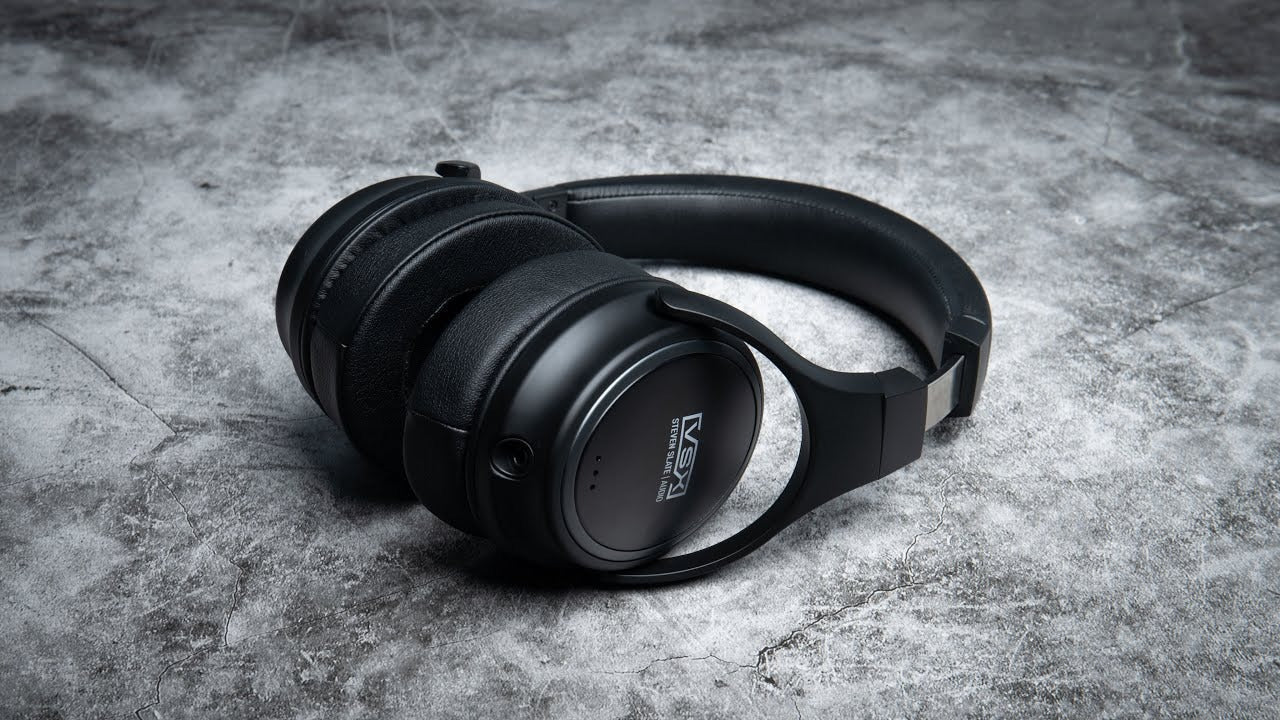
Steven Slate Audio VSX is not a conventional consumer headphone. It is a mixing and reference system that combines dedicated headphones with software designed to simulate studios, speakers, cars, clubs, headphones, and other playback environments. That distinction matters more than the usual “does it sound good?” question.
Quick answer: VSX makes the most sense for producers, mixers, and engineers who want several repeatable reference environments without building several physical monitoring setups. It is a much harder purchase to justify for casual listening, commuting, calls, or anyone who only wants a normal pair of headphones. This article is a fact-checked buying analysis, not a hands-on lab test.
What the VSX Headphone System Actually Is
The current Steven Slate Audio VSX system pairs purpose-built headphone hardware with software that uses binaural psychoacoustic modeling. The software presents modeled listening environments so you can check a mix through different studios, speakers, cars, clubs, consumer devices, and headphone references without physically changing systems.
That means the value is in the hardware-and-software combination. Buying VSX only because you want a premium music-listening headphone misses the main reason the product exists.

What You Get with the Closed-Back VSX Hardware
Steven Slate Audio currently describes the closed-back VSX model as using beryllium drivers and emphasizes isolation and portability. The headphone is tuned as part of the VSX monitoring system rather than marketed around consumer features such as phone calling or travel ANC.
Do not assume the closed-back VSX is a consumer ANC headset. The current official product page does not list active noise cancellation or a built-in hands-free microphone as core features; its focus is production monitoring and passive isolation.
VSX Essentials vs Platinum: What Changes?
For the closed-back VSX package, both current editions include the VSX headphone hardware. The main difference is the software library you receive.
| Area | Essentials Edition | Platinum Edition |
|---|---|---|
| Headphone hardware | VSX closed-back headphones | VSX closed-back headphones |
| Included environments | A smaller core set of rooms and reference models, including Steven Private Mix Room, Sonoma Studios, LA Club, Luxury SUV, 770, Pod, and HD Linear references. | A much broader library of modeled studios, cars, clubs, consumer devices, and headphone references. |
| Expansion path | Additional spaces can be added through the VSX Expansion Marketplace. | The official page states that new spaces are included for Platinum owners. |
| Best fit | People who want the core VSX workflow and do not need the entire environment library on day one. | People who expect to use many room, speaker, vehicle, and headphone references regularly. |
What Does VSX Cost?
VSX pricing is date-sensitive. Steven Slate Audio's current page may show sale pricing, local dealer pricing, one-time purchase options, or rent-to-own terms depending on edition and market. A static price copied into an evergreen review can become wrong quickly.
For that reason, use the current official VSX page as the price check. Then judge the purchase against the edition you actually need rather than comparing an old promotional number with today's package.
Where VSX Can Add Real Value
Multiple reference environments in one workflow
The core advantage is fast switching between modeled listening conditions. Instead of exporting a mix and walking to several playback systems, you can make a first translation check inside the VSX workflow. That does not make every model identical to the physical room or device, but it gives you repeatable references you can learn.
A monitoring option for imperfect rooms
Headphones remove the acoustic behavior of your physical room from the direct listening path. VSX goes further by deliberately modeling other spaces. That can be useful when your room is untreated, when monitors are impractical, or when you need to work quietly.
A structured translation routine
The system encourages a useful habit: check the same mix in more than one listening context. An independent Producer Hive review also describes VSX primarily as a referencing and mixing tool rather than a general-purpose lifestyle headphone.
Where VSX Is a Weak Fit
VSX is specialized. If you mainly want wireless convenience, commuting features, phone calls, or casual music playback, you are paying for a monitoring system whose defining software capabilities may not help your daily use.
It also does not remove the need to learn your reference. Any monitoring system becomes more useful after you spend time with familiar commercial tracks and notice how your own mixes translate elsewhere.
VSX vs Conventional Mixing Headphones
A normal studio headphone gives you one physical acoustic presentation. VSX is built around switching among modeled environments. That makes the buying decision different from choosing a conventional open-back or closed-back reference headphone.
If you are still deciding what matters in a standard studio pair, start with Wantek's mixing-headphones buying guide. It explains tonal balance, imaging, comfort, source requirements, and open-back versus closed-back tradeoffs without assuming that room-modeling software is part of the purchase.
Closed-Back VSX vs Immersion One
Steven Slate Audio now presents two hardware directions. The closed-back VSX uses beryllium drivers and is positioned around isolation and portability. The newer Immersion One is open-back and uses planar-magnetic drivers, with the company emphasizing detail, realism, and a more open presentation.
Both use the VSX speaker-and-room modeling concept. The practical choice starts with environment: closed-back is easier to use when isolation matters, while open-back designs are generally better suited to quiet spaces where leakage is not a problem.
How to Decide Whether VSX Is Worth It for You
- Define the job. If the job is mixing, mastering, editing, or repeated translation checks, VSX is relevant. If the job is commuting or calls, it is probably the wrong category.
- Choose the hardware format. Decide whether you need closed-back isolation or can use an open-back design in a quiet room.
- Compare Essentials with Platinum. Do not pay for a larger environment library unless you expect to use it.
- Check today's price. Use the official page or authorized dealer rather than an old review price.
- Plan a reference period. Listen to familiar finished tracks before trusting mix decisions in any new monitoring system.
Is VSX a Smart Investment?
For a producer or mixer who will actually use virtual rooms and playback references, VSX can solve a specific monitoring problem: it puts many repeatable listening contexts into one headphone-based workflow. That is a clearer reason to buy it than vague promises of “better sound.”
For a casual listener, the same money may be better directed toward a headphone chosen specifically for music enjoyment, comfort, portability, or wireless features. VSX earns its price through the monitoring system around the headphones, not by trying to be the best universal headphone for every use.
Frequently Asked Questions
Are VSX headphones noise-cancelling?
The current official VSX page emphasizes the closed-back design's isolation, but it does not present the system as an active-noise-cancelling consumer headphone. Do not treat passive isolation and ANC as the same feature.
Do VSX headphones include a microphone for calls?
The current official product page positions VSX as a mixing and monitoring system and does not list a built-in call microphone as a core feature. Buy it for production monitoring, not headset calling.
What is the difference between VSX Essentials and Platinum?
Both closed-back editions include VSX headphone hardware. Essentials includes a smaller core environment library, while Platinum includes a much broader collection of modeled rooms, speakers, vehicles, consumer devices, and headphone references.
Should beginners buy VSX?
It can make sense if a beginner is already mixing regularly and needs repeatable references in an imperfect room. For casual listening or very occasional production, a simpler conventional studio headphone is easier to justify.

