
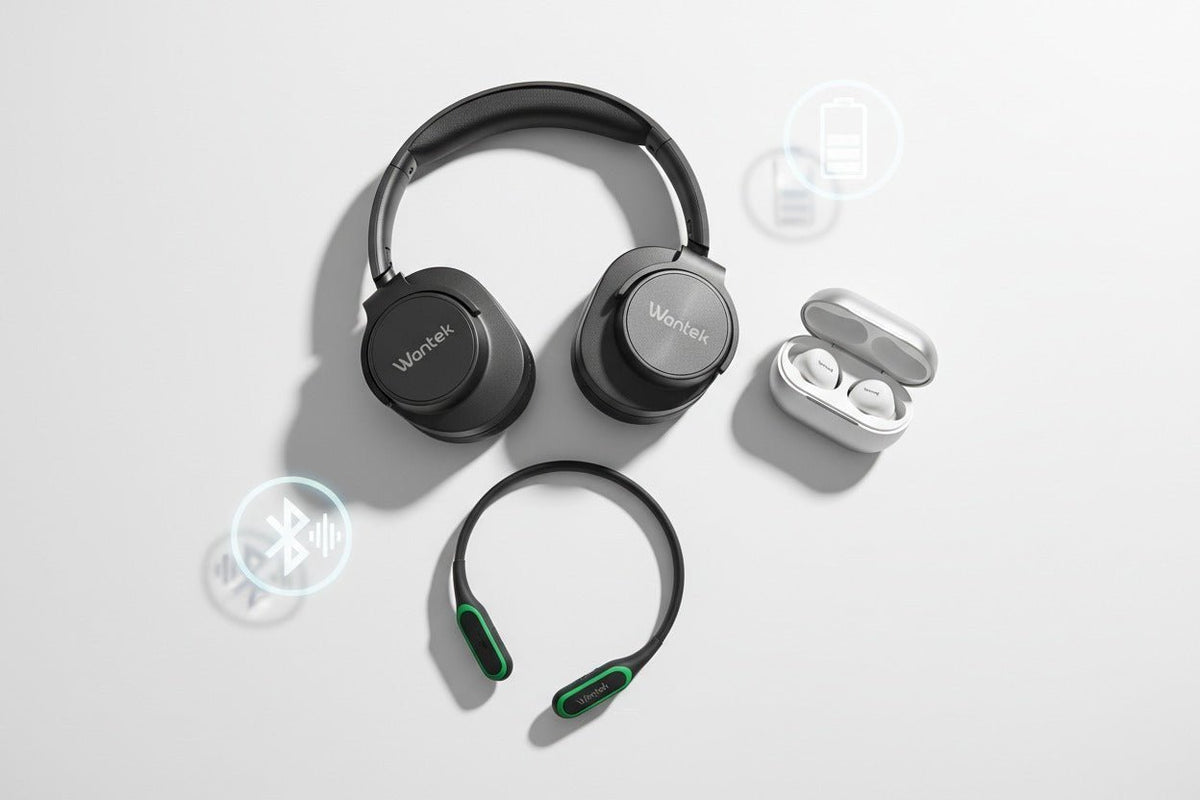
To buy wireless headphones online without getting trapped by a long feature list, start with the way you will actually use them, then verify device compatibility, fit and return options, battery conditions, noise control, microphone needs, and the seller behind the listing. The goal is not to find a universal “best” pair. It is to remove products that do not fit your devices or routine before price and marketing claims influence the decision.
Fast buying rule: choose the use case and form factor first, confirm that your phone or computer supports the connection features you care about, compare independent test results where performance matters, and check the exact seller, warranty, return terms, and total delivered price before paying.

Start With the Job, Not the Brand
Wireless headphones built for commuting, work calls, gaming, exercise, and music listening can prioritize very different things. A commuter may care about active noise cancellation and portability. A remote worker may care more about microphone placement, multipoint switching, mute controls, and long-session comfort. A runner may prioritize secure fit and environmental awareness.
If you are still deciding among wired, wireless, over-ear, on-ear, and in-ear designs, use Wantek’s headphone selection guide first. This page focuses on the next step: how to verify a wireless option before buying it online.
Write down your non-negotiables
- Main device: iPhone, Android phone, Windows PC, Mac, tablet, TV, console, or a combination.
- Main environment: office, commute, flights, gym, home, or outdoor use.
- Primary task: music, calls, video, gaming, workouts, or mixed use.
- Fit: over-ear, on-ear, in-ear, open-ear, or ear-hook.
- Required features: ANC, transparency mode, multipoint, microphone controls, water resistance, low-latency mode, or a wired fallback.
- Budget ceiling: the maximum delivered price you will pay, not just the advertised product price.
Choose the Form Factor Before Comparing Small Specs
Over-ear headphones generally give manufacturers more room for batteries, controls, microphones, and ANC hardware, but they are bulkier and can become warm during long sessions. True wireless earbuds are easier to carry and can work well for commuting or exercise, but fit is highly individual and each earbud has a smaller battery. Open-ear designs avoid sealing the ear canal and can increase awareness of surrounding sound, but they are not intended to isolate you from the environment.
Do not use driver diameter as a shortcut for sound quality. Tuning, fit, seal, distortion, DSP, and the acoustic design all matter. A larger driver does not automatically mean deeper bass, better detail, or a wider soundstage.
Verify Bluetooth Compatibility, Not Just the Version Number
A newer Bluetooth version can add platform capabilities, but the version number by itself does not tell you which audio codec, multipoint behavior, or app feature will work in your setup. Check the headphone specifications and the source device together.
Codecs matter only when both sides support them
For conventional Bluetooth audio, SBC remains a common baseline. AAC is widely used in Apple’s wireless ecosystem. Apple’s current support documentation notes that many AirPods and Beats wireless models use AAC over Bluetooth and that ordinary Bluetooth connections are not lossless. If you are buying for an iPhone, confirm the actual connection path instead of paying extra for a codec your phone will not use.
On compatible devices, Qualcomm’s aptX Adaptive can adjust bitrate and latency behavior, while Sony documents LDAC support and connection requirements on supported products. Treat codec support as an end-to-end compatibility question: the phone or computer and the headphones need a shared option.
LE Audio and LC3 are separate checks
The Bluetooth SIG describes LE Audio as a newer Bluetooth audio architecture that uses the LC3 codec and enables features beyond Classic Audio. A product labeled “Bluetooth 5.x” does not automatically prove that its LE Audio features are enabled on your source device. Check the exact phone, operating system, headphone model, and required app or firmware.
Multipoint is a workflow feature, not an audio-quality label
If you use a laptop and phone together, verify how many active connections the model supports and how it switches between media and calls. Remembered pairings, two active connections, and simultaneous audio mixing are different capabilities. Wantek’s multipoint Bluetooth guide explains what to test before relying on a two-device setup.
Compare the Features You Will Actually Notice
Active noise cancellation and passive isolation
ANC is most useful when you regularly face steady environmental noise such as aircraft cabin rumble, trains, traffic, or HVAC. Passive isolation comes from the physical fit and seal. They work differently, so a product with an ANC label can still perform poorly if the fit is wrong or the implementation is weak.
When ANC matters, look for measurements or reviews that test several frequencies and realistic environments. Do not compare products using a single marketing reduction number unless the test method is clearly comparable.
Battery life and charging
Compare battery figures under matching conditions. ANC, call activity, codec choice, volume, temperature, and extra processing can change runtime. If a manufacturer lists multiple figures, use the one closest to your normal mode—for example, playback with ANC enabled rather than the largest number on the page.
Also check charging time, connector type, quick-charge conditions, and whether the headphones can keep working through an analog or USB connection when the battery is low. Those details can matter more than a headline maximum-hour figure.
Microphone and call controls
For frequent calls, microphone design deserves its own check. ANC mainly changes what the wearer hears; microphone noise reduction targets what the other person hears. A boom microphone, beamforming array, or “AI noise cancellation” label does not establish call quality by itself.
Look for voice samples recorded in environments similar to yours, then confirm mute, answer/end, sidetone, and app behavior on the exact connection method you plan to use.
Comfort, fit, and water resistance
Online specifications cannot predict comfort perfectly. For over-ear models, check weight distribution, earpad opening size, clamping comments, heat buildup, and glasses compatibility. For earbuds, check included tip sizes and whether replacement tips are readily available.
If you need sweat or water resistance, verify the exact IP rating and what the manufacturer says it covers. Do not translate an IP rating into broader protection than the rating and product documentation actually support.
Read Product Listings Like a Verification Sheet
Before comparing prices, make sure you are comparing the same product. Similar names can hide different generations, bundles, colors, regional variants, USB receivers, charging cases, or warranty coverage.
| Check | What to verify | Why it matters | Common mistake |
|---|---|---|---|
| Exact model | Full model name, generation, SKU, region, and included accessories | Features and warranty terms can vary between similar listings | Comparing prices for different bundles or generations |
| Device support | Codec, operating-system requirements, app support, ports, and receiver needs | A listed feature may require a compatible phone, PC, app, or firmware version | Assuming a Bluetooth version guarantees every feature |
| Battery | Playback mode, ANC state, charging time, and quick-charge conditions | Headline battery numbers may use different test conditions | Comparing the largest published numbers without matching modes |
| Noise and calls | ANC performance, passive isolation, microphone samples, and control support | Listening-side noise reduction and outgoing voice quality are separate | Treating “noise cancelling” as one universal capability |
| Seller and warranty | Seller identity, authorized-dealer status when relevant, warranty provider, and claim process | Marketplace protections and manufacturer coverage can depend on who sold the item | Assuming the marketplace name is the actual seller |
| Return terms | Return window, opened-item rules, shipping costs, restocking fees, and refund method | Fit and comfort often cannot be settled from specifications alone | Buying before reading the seller’s current return policy |
If your budget is fixed, compare products inside the same use-case lane rather than asking which model has the longest specification list. Wantek’s budget headphone guide under $100 shows how priorities change across work, commuting, gaming, music, and exercise.
Check the Seller, Return Policy, and Total Cost

The final buying decision is not only about the headphones. It is also about the seller and the terms of the transaction. The U.S. Federal Trade Commission’s online shopping guidance recommends checking the seller, total cost, return and refund terms, and keeping purchase records. Its marketplace guidance also emphasizes identifying the actual seller and understanding what protections the marketplace provides.
Confirm the seller
On a marketplace, the platform name and the seller name may be different. Check who is actually selling and shipping the item and whether the brand recognizes that seller when warranty eligibility depends on the sales channel.
Read the current return terms
Check the return window, whether opened headphones can be returned, who pays return shipping, whether restocking fees apply, and how refunds are issued.
Calculate the delivered price
Compare the product price together with shipping, taxes, required accessories, adapters, replacement tips, or a receiver you need for the intended setup.
Save the listing and order record
Keep the model number, seller, receipt, delivery promise, warranty information, and return terms. Those records make it easier to resolve a mismatch later.
Use Reviews for Performance, Not for Basic Specifications
A manufacturer page is the better starting point for model identity, included accessories, supported codecs, battery claims, water-resistance ratings, and warranty terms. Independent reviews are more useful for questions the specification sheet cannot answer well: comfort over time, ANC effectiveness, microphone behavior in noise, sound tuning, latency, and connection reliability.
Compare more than one source when the result is subjective. Head shape, ear anatomy, glasses, listening level, firmware, phone model, and environment can change the experience. A single review score should not override a compatibility problem that applies to your setup.
A 10-Minute Pre-Purchase Checklist
- Use case: Can you describe the primary job in one sentence?
- Form factor: Does the wearing style fit that job?
- Compatibility: Have you checked the exact phone, computer, codec, app, receiver, and multipoint requirements you need?
- Noise and calls: Have you separated ANC, passive isolation, and microphone noise reduction?
- Battery: Are you comparing runtime under a mode close to your real use?
- Comfort: Does the return policy give you a practical way to evaluate fit?
- Seller: Do you know who is actually selling the product and who handles warranty claims?
- Total cost: Have you included shipping, taxes, and required accessories?
- Evidence: Have you used official specifications for features and independent sources for performance claims?
- Records: Have you saved the order confirmation and current return/warranty terms?
Decision rule: eliminate incompatible products first. Then compare fit, measured or independently reviewed performance, battery behavior, and total cost. Brand reputation and a long feature list should come after those checks, not before them.
Shopping for a Wireless Headset for Work Calls?
Wantek’s wireless range is focused on office, remote-work, and everyday communication use. Compare the exact microphone, connection, battery, and wearing-style details on each product page before choosing.
Frequently Asked Questions
What should I check first when buying wireless headphones online?
Start with your main device, use case, and preferred form factor. Then verify compatibility, battery conditions, noise control, microphone needs, return terms, warranty coverage, seller identity, and total delivered cost.
Does a newer Bluetooth version automatically mean better sound?
No. Sound depends on the codec, source device, headphone implementation, fit, tuning, and connection conditions. Verify the features supported by both devices instead of judging by Bluetooth version alone.
Is ANC the same as microphone noise cancellation?
No. ANC mainly reduces environmental sound heard by the wearer. Microphone noise reduction targets background sound sent to the person on the other end of a call.
How should I compare wireless-headphone battery life?
Compare battery figures under similar conditions, especially ANC mode and usage type. Charging time, quick-charge requirements, volume, call activity, codec, and extra processing can also change practical runtime.
How can I reduce the risk of buying the wrong model online?
Confirm the exact model and seller, read current return and warranty terms, compare official specifications with independent performance reviews, calculate total cost, and save the listing and order records.

