
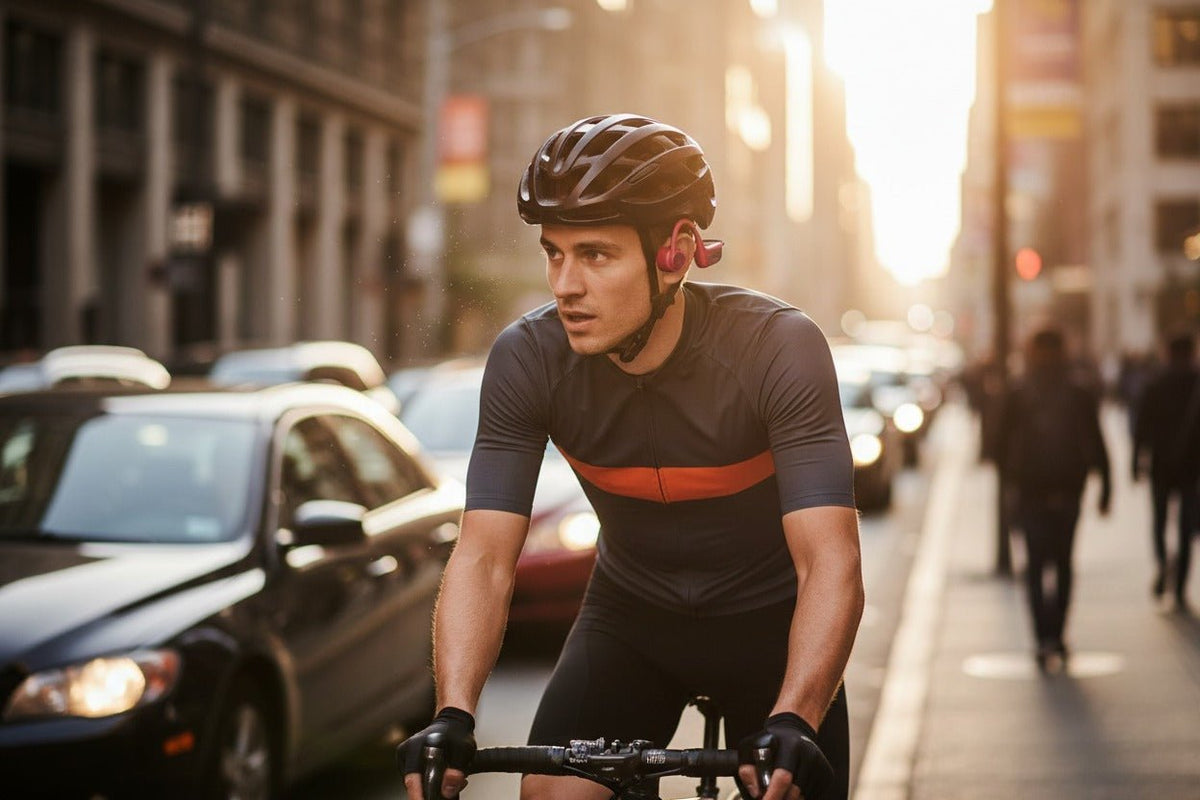
If you are looking for a Shokz OpenRun alternative, start with the feature you want to change. OpenRun is still a lightweight, open-ear bone-conduction headset with up to 8 hours of battery life, IP67 protection, Bluetooth 5.1, and multipoint pairing, but Shokz does not recommend it for swimming.
Quick answer: compare OpenRun Air 2 if you want a newer Shokz model with longer battery life and app support; Suunto Sonic for a cross-brand sports alternative; OpenRun Pro 2 for a longer battery rating and a hybrid bone-plus-air driver system; Suunto Wing for LED visibility and a charging powerbank; or Wantek BC3 Pro if swimming and onboard MP3 playback are the priority.
This is a specification-based comparison using current manufacturer documentation checked September 20, 2026. It is not a controlled listening or fit test, so the use-case labels below are decision aids rather than performance awards.
Why compare alternatives to Shokz OpenRun?

OpenRun is the quick-charge evolution of the former AfterShokz Aeropex. Shokz currently lists it at about 26 g with an 8-hour battery rating, IP67 protection, Bluetooth 5.1, and multipoint pairing. Its biggest limitation for some buyers is that the IP67 rating does not make it a swimming headset; Shokz explicitly says it should not be used for swimming.
That makes the right alternative highly use-case dependent. A runner may care most about weight and rain resistance, while a long-distance athlete may prioritize battery life. A swimmer needs a different feature set entirely, including manufacturer-supported water use and local audio storage because Bluetooth does not remain reliable underwater.
| Model | Documented specifications | Why compare it with OpenRun |
|---|---|---|
| Shokz OpenRun | Up to 8 h; IP67; about 26 g; Bluetooth 5.1; multipoint | Baseline sports model; Shokz says it is not for swimming |
| Shokz OpenRun Air 2 | Up to 10 h; IP67; 26.4 g standard; Bluetooth 6.0; multipoint; Shokz App | Newer same-brand option with longer listed battery life and app features |
| Suunto Sonic | Up to 10 h; IP55; 31 g; Bluetooth 5.2; dual-device connection | Cross-brand sports alternative with a longer listed battery rating |
| Shokz OpenRun Pro 2 | Up to 12 h; IP55; 30.3 g; hybrid bone- and air-conduction drivers | Higher-tier option when battery and audio architecture matter more than OpenRun-level water protection |
| Suunto Wing | Up to 10 h; IP67; 33 g; dual-device connection; LEDs; powerbank adds up to 20 h | Outdoor-adventure option with visibility and portable charging features |
| Wantek BC3 Pro | Up to 6 h; IP68; 32 g; Bluetooth 5.3; 32GB onboard MP3 storage | Swimming-oriented alternative with local playback rather than a direct land-running replacement |
Battery figures come from each manufacturer and are not based on matched test conditions. IP ratings also need to be read with each manufacturer’s actual use instructions; a higher number alone does not establish that two products support the same activities.
1. Shokz OpenRun Air 2: a newer same-brand alternative
OpenRun Air 2 is the most direct comparison if you like the OpenRun form factor but want a newer Shokz platform. Shokz lists up to 10 hours of battery life, IP67 protection, a 26.4 g standard weight, Bluetooth 6.0, multipoint pairing, and Shokz App support.
The trade-off is that it does not expand into swimming. Shokz says OpenRun Air 2 should not be worn while swimming or during underwater activities. Choose it for running, walking, workouts, and general open-ear use rather than pool sessions.
2. Suunto Sonic: a cross-brand sports substitute
Suunto Sonic is a useful cross-brand comparison for running and outdoor training. Suunto lists a 31 g weight, IP55 water resistance, Bluetooth 5.2, dual-device connection, Suunto App support, and up to 10 hours of music playback under its stated test conditions.
Compared with OpenRun, Sonic gives up the higher IP67 rating but adds a longer published battery figure. That makes it worth comparing when battery life and cross-brand app support matter more than matching OpenRun’s water-protection level.
3. Shokz OpenRun Pro 2: longer battery and a hybrid driver design
OpenRun Pro 2 is not simply a waterproofing upgrade. Shokz lists up to 12 hours of battery life, a 30.3 g weight, and IP55 protection. It uses DualPitch technology with separate bone-conduction and air-conduction driver units rather than relying on bone conduction alone.
That architecture makes it the more feature-heavy Shokz option for listeners who care about the Pro line’s audio design and longer battery rating. The compromise is water protection: IP55 is below OpenRun’s IP67 rating, and Shokz does not position OpenRun Pro 2 for swimming.
4. Suunto Wing: for low-light outdoor use and portable charging
Suunto Wing targets outdoor athletes who want features beyond basic playback. The current model lists a 33 g weight, IP67 protection, dual-device connection, side LEDs for visibility, head-movement controls, and up to 10 hours of music playback. Its included powerbank can add up to 20 more hours of playback.
Those features make Wing meaningfully different from OpenRun for longer adventures and low-light training. The LEDs and head controls are the differentiators here; there is no need to invent biometric or navigation hardware that the product does not document.

5. Wantek BC3 Pro: for swimming and offline MP3 playback
BC3 Pro solves a different problem from OpenRun. Wantek lists IP68 protection, 32GB of onboard MP3 storage, Bluetooth 5.3, a 32 g weight, a built-in microphone, and up to 6 hours of battery life. The product page does not publish separate battery figures for Bluetooth and MP3 modes, so those modes should not be treated as having identical measured runtime.
For pool use, local playback matters more than the Bluetooth version. Water disrupts normal Bluetooth transmission, so BC3 Pro is designed to play stored MP3 files directly from the headset while swimming. For a broader pool-focused comparison, see the bone-conduction headphones for swimming guide.
Need a swimming-first bone-conduction option?
Review BC3 Pro’s current IP68, storage, battery, and playback specifications before deciding whether its pool-focused feature set matches your routine.
How to choose an OpenRun alternative
Start with the activity.
For running and walking, compare fit, weight, water resistance, controls, battery life, and how much outside sound you want to hear. This running-headphones guide covers the broader form-factor decision.
Treat swimming as a separate requirement.
Do not infer pool suitability from a sport label or IP number alone. Follow the manufacturer’s water-use instructions and check for local storage or another underwater playback method.
Compare battery claims under the stated conditions.
Published battery numbers come from different test methods, volumes, codecs, modes, and feature settings. Use them as manufacturer ratings, not as a controlled head-to-head result.
Choose between pure bone conduction and hybrid/open-ear designs.
OpenRun, OpenRun Air 2, Sonic, Wing, and BC3 Pro use bone conduction as their core listening method. OpenRun Pro 2 adds an air-conduction driver for bass, so it is not an apples-to-apples pure bone-conduction design.
Check fit and return terms before treating specifications as the final answer.
Weight and dimensions cannot tell you how a neckband will interact with your head shape, glasses, helmet, goggles, or cap. Fit remains personal.
Which alternative fits which use case?
- Want a newer Shokz model without changing the basic sport use case? Compare OpenRun Air 2.
- Want a cross-brand running and workout alternative? Compare Suunto Sonic.
- Want a longer published battery rating and Shokz’s hybrid driver system? Compare OpenRun Pro 2.
- Want visibility features and a portable charging powerbank? Compare Suunto Wing.
- Want swimming plus onboard MP3 playback? Compare Wantek BC3 Pro or other swim-specific models.
No single model is the universal replacement for OpenRun. The useful comparison is whether the alternative solves a specific limitation that matters in your routine without giving up a feature you already rely on.
Frequently Asked Questions
What is the closest alternative to Shokz OpenRun?
OpenRun Air 2 is the closest same-brand comparison, while Suunto Sonic is a practical cross-brand sports alternative. The better match depends on whether you prioritize IP rating, battery, app features, weight, or price.
Is Shokz OpenRun suitable for swimming?
No. Shokz lists OpenRun as IP67 but explicitly says it is not for swimming. Pool use requires a model whose manufacturer supports swimming and, in practice, local playback rather than normal underwater Bluetooth.
Is OpenRun Air 2 better than OpenRun?
It adds a 10-hour battery rating, Bluetooth 6.0, Shokz App support, and newer audio features while retaining IP67 protection. Whether those changes matter more than keeping the original OpenRun depends on your use case.
Does OpenRun Pro 2 have better water protection than OpenRun?
No. OpenRun Pro 2 is rated IP55, while OpenRun is rated IP67. Pro 2 instead emphasizes a 12-hour battery rating and its hybrid bone- plus air-conduction driver system.
What should swimmers compare instead of OpenRun?
Look for manufacturer-supported swimming use, onboard storage, and local playback. Wantek BC3 Pro lists IP68 protection and 32GB storage; other swim-focused options should be compared under their own water-use instructions.

