
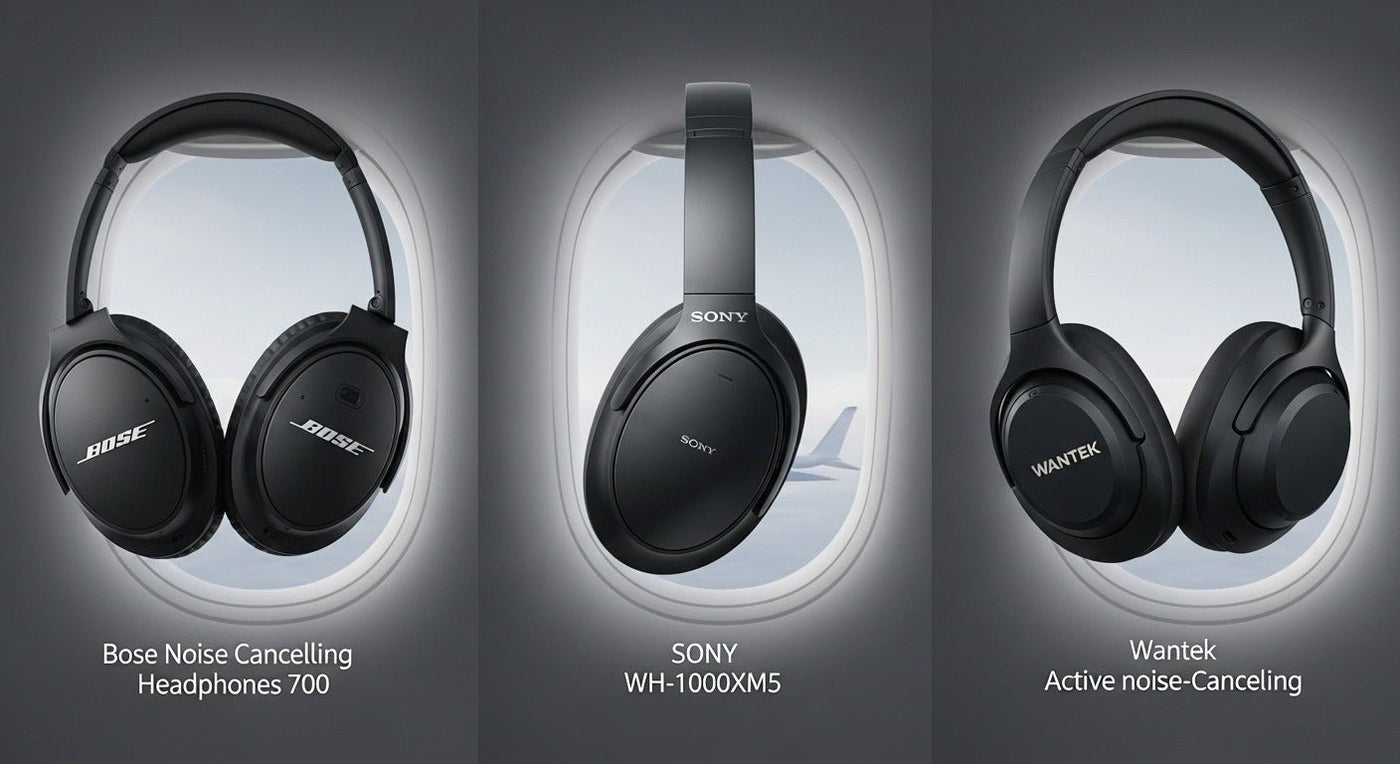
Good airplane headphones reduce travel friction: they should be comfortable for hours, handle steady cabin noise, fit in your bag, and connect to the devices or seatback system you actually use. ANC can help with low-frequency cabin noise, but comfort and connection remain separate decisions.
Quick answer: Prioritize long-session fit, ANC or passive isolation, battery reserve, a wired fallback when seatback audio matters, and a case or foldable design that travels well.

ANC Helps With Steady Cabin Noise
Active noise cancellation is especially useful against continuous low-frequency sound, while the ear cups or ear tips provide passive isolation. Neither should be described as hearing protection unless the product is designed and rated for that purpose.
| Factor | Why it matters | What to check |
|---|---|---|
| Comfort | Flights can mean hours of continuous wear. | Clamp, pad heat, glasses pressure, ear-cup depth. |
| ANC / isolation | Reduces some cabin noise reaching the listener. | ANC modes, seal, passive isolation. |
| Battery | Wireless and ANC features need power. | Runtime under the mode you use plus reserve. |
| Wired fallback | Seatback systems may use analog headphone connections. | Included cable and any airline/seat adapter needed. |
Bluetooth Use Depends on Airline and Flight Instructions
FAA passenger guidance says portable electronic devices should be used in airplane mode or with cellular service disabled, while Wi-Fi can be used when the aircraft and airline allow it. Bluetooth and other device use can still be subject to airline and crew instructions, so follow the rules on the specific flight. See the FAA passenger safety guidance.
Carry Battery-Powered Headphones Correctly
The FAA allows most personal rechargeable electronic devices within its battery limits, while spare lithium batteries and power banks must be carried in the cabin rather than checked. Check current airline and regulatory guidance when traveling with unusual battery sizes. See the FAA battery guidance.
Plan for Seatback Entertainment
Wireless headphones may not connect directly to an aircraft entertainment system. If seatback audio matters, carry the appropriate wired cable or a permitted adapter that matches the aircraft system. Do not assume every seat uses the same jack.
Over-Ear vs. Earbuds on a Flight
Over-ear headphones provide larger cushions and can be comfortable for long listening, but they take more bag space. Earbuds are compact but depend more on tip fit and can create pressure for some users. Choose based on your ears and travel routine.
Travel Checklist
- Comfort for the longest flight segment
- ANC or isolation preference
- Battery plus reserve
- Wired cable for seatback audio if needed
- Charging cable and approved power bank handling
- Case or folding design
- Airline instructions for Bluetooth and electronics
For a broader travel comparison, see the noise-cancelling travel headphone guide.
Airplane Headphone FAQ
Can I use Bluetooth headphones on a plane?
Policies and flight instructions can vary. Use airplane mode as required and follow the airline and cabin crew guidance for Bluetooth and portable electronics.
Do ANC headphones work on airplanes?
ANC can reduce some steady cabin noise, but performance varies by model and fit. It does not make the cabin silent.
Do I need a wired cable for seatback entertainment?
Potentially. Seatback systems may use analog headphone jacks and may not support your wireless headphones directly.

