
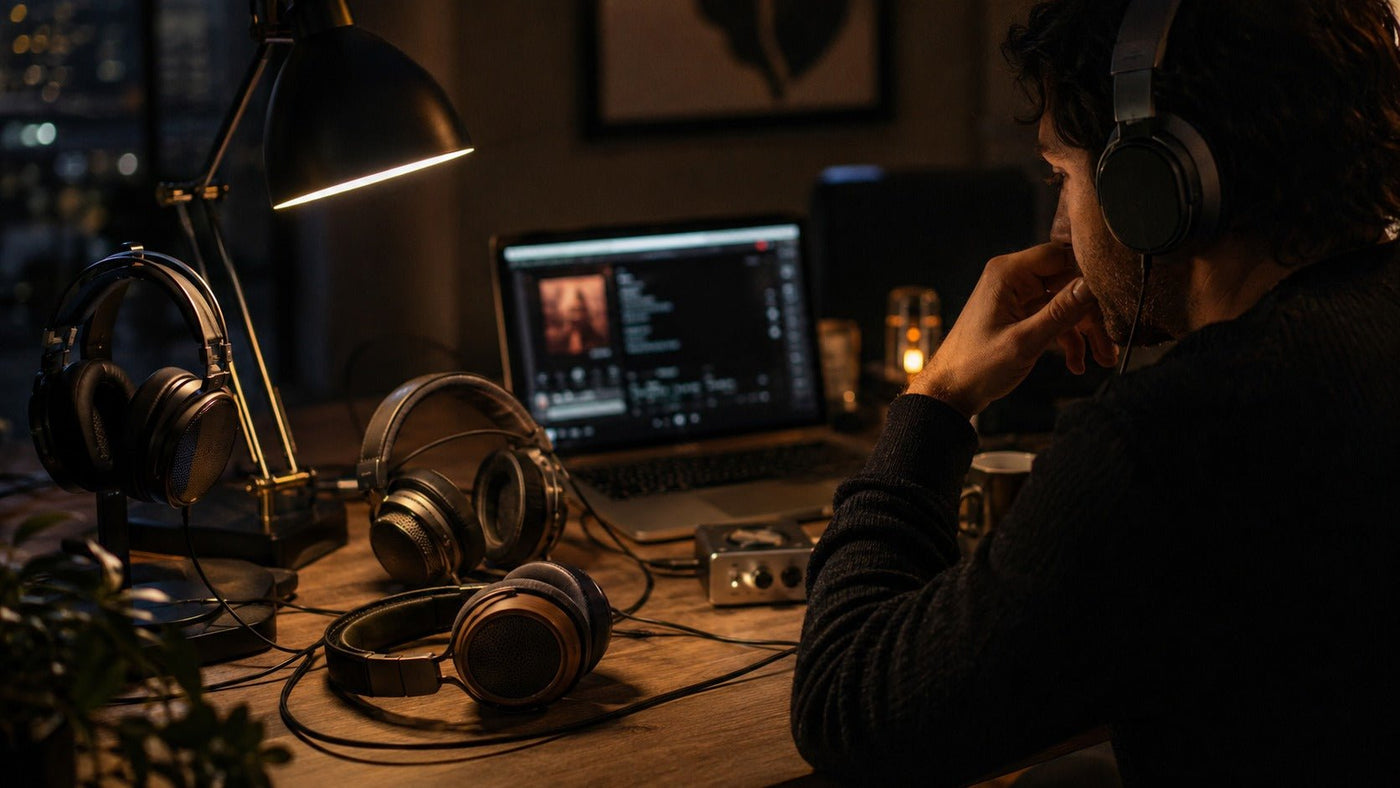
I remember the exact moment everything changed. It was 3 AM. I was alone in my apartment. My cheap earbuds had finally given up. The left channel crackled like bacon in a pan. I sighed. Fished out my phone. Opened Amazon. And typed “best audiophile headphones” into the search bar.
That was three years ago.
I didn’t know it then. But I was stepping into a rabbit hole. A deep one. One that would drain my bank account. Test my patience. And ultimately change how I hear music forever.
You’re probably here for similar reasons. Maybe you just discovered your favorite song has layers you’ve never heard. Maybe you’re tired of muddy bass that sounds like someone stuck a pillow over a speaker. Or maybe you’re just curious. Why do people spend thousands on headphones?
I get it. I really do.
Let me take you on a journey. We’ll explore five headphones that have shaped my obsession. Some are wired. Some are audiophile headphones wireless. All of them taught me something about sound, about music, and about myself.

Sennheiser HD 800 S: The Soundstage King That Humiliated My Music Collection
I remember the first time I put these on.
I was at a high-end audio store in Manhattan. The salesman looked at me like I didn’t belong. I didn’t. My clothes were wrinkled. My wallet was thin. But I sat down anyway. And I put on the Sennheiser HD 800 S.
The first track was Time by Hans Zimmer.
I cried.
Not because it was sad. But because I had never heard so much space in a recording. The organ at the beginning felt like it was in a cathedral. The drums hit like distant thunder. The strings wrapped around my head like a warm blanket. I could hear the air moving in the recording studio.
That’s what these headphones do. They don’t just play music. They reconstruct the environment where the music was made.
What Actually Makes Them Special?
Let’s talk tech for a moment. But keep it real.
The HD 800 S use 56mm ring radiator drivers. That sounds like something from a car engine. But it’s actually a brilliant design. The driver is shaped like a donut. This reduces distortion. It also creates that famous soundstage. Instruments feel like they’re placed around you, not crammed inside your skull.
The impedance is 300 ohms. That’s high. Very high. You cannot plug these into a phone. You cannot plug them into a laptop. They will whisper instead of shout. You need a dedicated amplifier. Something with real power. Something that costs more than your dining table.
I learned this the hard way.
When I first bought mine, I tried to use them with my MacBook. The volume was barely audible. I thought they were broken. I nearly returned them. But a friend told me to buy a Schiit Magni Heresy amp. That changed everything. Suddenly, the headphones came alive. It was like upgrading from a bicycle to a sports car.
The Personality Quirks
These headphones have character. And character means flaws.
First, they’re open-back. That means sound leaks out. Everyone in your room will hear your music. Your roommate will know you’re listening to Taylor Swift on repeat. Your cat will judge your taste.
Second, the bass is tight but not thumpy. Bassheads will hate these. If you want skull-rattling lows that shake your glasses loose, look elsewhere. The HD 800 S deliver bass that’s accurate. Not exaggerated. For genres like classical, jazz, and acoustic, this is perfection. For dubstep, it’s disappointing.
Third, they’re ugly.
I said it. I’m sorry. But the design looks like something from a 1990s sci-fi movie. The ear cups are massive. The headband has a weird shape. Some people love the aesthetic. I think they look like a robotic insect is trying to mate with your head.
But here’s the thing.
When I listen to Nirvana Unplugged on these, I hear every detail. The squeak of a guitar string. The breath Kurt Cobain takes before a line. The subtle feedback from the monitors. It’s like I’m in the front row. But also somehow backstage.
I once spent four hours listening to Pink Floyd’s The Wall on these. I heard footsteps in “The Trial” that I had missed for twenty years. I felt like I had discovered secret tracks hidden in the grooves.
These headphones ruined normal music for me.
Focal Utopia 2022: The Brutally Honest Overachiever
Here’s a confession.
I bought these after a bad breakup.
I was sad. I was lonely. I needed something to fill the void. So I dropped $4,000 on headphones. That’s not healthy. But I don’t regret it.
The Focal Utopia 2022 are the most revealing headphones I’ve ever used. They don’t hide anything. They don’t flatter anything. They show you every flaw in your music. And then they show you the beauty.
How Do They Do That?
The secret is the driver.
Focal uses 40mm beryllium drivers. Beryllium is a fascinating metal. It’s lighter than titanium. It’s stiffer than steel. It reacts almost instantly to electrical signals. This means the driver can move fast. It can stop fast. It can reproduce transients with incredible accuracy.
But here’s the weird part.
Beryllium dust is toxic. If you inhale it, you can get a disease called chronic beryllium disease. It damages your lungs. So don’t grind up your headphones. Don’t snort them. Just enjoy the sound.
The impedance is 80 ohms. That’s much easier to drive than the Sennheisers. You can run these with a decent portable DAC. I use a Chord Mojo 2. It works beautifully.
The Brutal Honesty
Remember how I said these headphones reveal flaws?
Let me give you an example.
I love In Rainbows by Radiohead. That album is my comfort food. I’ve listened to it hundreds of times. But on the Utopias, I heard something terrible. The mastering is slightly compressed. The dynamic range isn’t as wide as I thought.
This broke my heart.
But then I listened to a well-mastered recording. I put on Random Access Memories by Daft Punk. The difference was stunning. The Utopias showed me the instrument separation in a way I never knew existed. In “Give Life Back to Music,” the guitar and synths occupy different spaces in the mix. They don’t fight each other. They dance.
For poorly recorded music, these headphones are punishing. For great recordings, they’re transcendent.
The Physical Experience
These headphones feel expensive.
The ear cups are made from carbon fiber. The headband is covered in leather. The yokes are metal. They weigh about 400 grams. That’s not heavy. But they feel solid. Like a luxury car door closing.
The ear pads are deep. My ears don’t touch the inside. That’s rare for me. I have weird-shaped ears. Most headphones crush them. The Utopias don’t.
But the headband is tight.
I have a big head. I wear a 7 5/8 hat size. The Utopias squeeze my skull after an hour. I have to take breaks. Some people stretch the headband. I haven’t tried that.
Who Should Buy These?
If you’re a musician, these are worth every penny. You will hear details that help you mix better. You will catch mistakes in your recordings. You will improve your craft.
If you’re a casual listener, these might be too much. They’re like a microscope for sound. Not everyone wants to see the bacteria in their food.
But if you’re obsessed with detail, these are the best audiophile headphones for you. Just prepare for disappointment when you listen to your old MP3 files.
Audeze LCD-X: The Bass Master That Weighs a Ton
I have a confession to make.
I love bass.
Not the kind of bass that rattles car trunks. Not the kind that makes your nose bleed at a club. I mean deep, textured, articulate bass. Bass that you can feel in your chest. But also hear in your brain.
That’s what the Audeze LCD-X delivers.
These headphones use planar magnetic technology. It’s different from traditional dynamic drivers. And it’s magnificent.
Planar Magnetic Explained Simply
Imagine a thin sheet of plastic. That’s the diaphragm. It has a conductor printed on it. Like a circuit board. That conductor is sandwiched between two magnetic arrays. When electricity flows through the conductor, it creates a magnetic field. That field pushes against the magnets. The diaphragm moves. Sound is produced.
This design has advantages.
First, the diaphragm is large. The LCD-X uses a 106mm driver. That’s massive. It can move more air. This creates deeper bass.
Second, the diaphragm is uniform. It doesn’t have a heavy voice coil attached to it. So it can respond instantly. The bass is fast. It doesn’t smear into the midrange.
Third, distortion is incredibly low. Even at high volumes, the sound stays clean.
The Sound Signature
The LCD-X has a slightly warm sound. The mid-bass is lifted. This makes kick drums sound punchy. This makes bass guitars sound rich.
The mids are intimate. Vocals feel close. Like the singer is whispering in your ear. I listened to Hallelujah by Jeff Buckley on these. His voice had so much texture. I could hear the rasp in his throat. I could hear him breathe between lines.
The treble is rolled off. Some people call this “dark.” It’s not bright. It’s not sparkly. Cymbals don’t crash as much as they should. Hi-hats don’t sizzle.
This can be fixed with EQ. I use the Reveal plugin from Audeze. It boosts the treble slightly. It makes the headphones more balanced.
The Weight Issue
Let’s talk about the elephant in the room.
These headphones weigh 650 grams.
That’s heavy.
To put that in perspective, the Sennheiser HD 800 S weigh about 330 grams. The Focal Utopias weigh about 400 grams. The LCD-X are almost double the weight.
Wearing these for more than an hour hurts. The pressure builds on your neck. The headband digs into your scalp. I’ve had to take breaks because of discomfort.
Some people mod these with different headbands. I haven’t tried that. I just accept the pain.
Perfect Genres
Electronic music sounds incredible on these. I listened to Aphex Twin’s Selected Ambient Works 85-92. The bass lines were deep and textured. The sub-bass was physical. I felt it in my chest.
Rock music also works well. The punch of the kick drum is satisfying. The electric guitars have weight.
Classical music is okay. Not great. The rolled-off treble makes string sections sound slightly muffled.
A Personal Story
I once had a party at my apartment. A friend brought his own headphones. He was a bass producer. He makes dubstep. He tried my LCD-X. He listened to one of his tracks. He started crying.
He said, “I never heard my own bass correctly before.”
That’s what these headphones do. They show you the foundation of music. The low end. The part that makes your body move.
Sony WH-1000XM5: The Miracle Workers of Wireless
I was a snob.
For years, I refused to consider wireless headphones. I thought they were inferior. I thought the Bluetooth compression ruined the sound. I thought anyone who used them was a casual listener. Not a true audiophile.
I was wrong.
The Sony WH-1000XM5 changed my mind.
These are not perfect. They are not the best audiophile headphones in terms of pure sound quality. But they are the best audiophile headphones wireless for daily life. And that matters.
The Noise Cancellation
Let me paint a picture.
I live in New York City. My apartment is above a busy street. Sirens. Trucks. Honking. It never stops.
I put on the Sony XM5. I turn on noise cancellation.
Silence.
Not silence like my room is quiet. Silence like I’m in a soundproof box. Silence like the world ceased to exist.
It’s disorienting at first. You feel like you’re underwater. But then you get used to it. And you realize how much noise you were tolerating before.
The Sound Quality
The XM5 support LDAC. That’s Sony’s high-resolution codec. It can transmit up to 990 kbps. That’s close to CD quality. If you have a compatible phone, the sound is surprisingly good.
The tuning is balanced. Bass is present but not overwhelming. Mids are clear. Treble is smooth. It’s not as detailed as the wired headphones on this list. But it’s impressive for wireless.
I listen to Billie Eilish on these. Her whispery vocals sound intimate. The sub-bass in “Bad Guy” is controlled. It doesn’t distort.
The Smart Features
These headphones are smart. Maybe too smart.
There’s adaptive noise cancellation. It adjusts based on your environment. If you’re walking, it lets some sound in. If you’re sitting still, it blocks everything.
There’s speak-to-chat. If you start talking, the music pauses. The ambient sound comes through. You can have a conversation without taking off the headphones.
These features work well. But they can be creepy. I once had a conversation with myself while testing. The headphones paused the music. I felt like they were judging me.
The Downsides
The soundstage is narrow. These are closed-back headphones. Music feels like it’s inside your head. Not around you.
The touch controls are annoying. I accidentally change tracks when adjusting the fit. Sometimes I skip songs I was enjoying.
The battery lasts 30 hours with ANC. That’s great. But the case is bulky. It takes up half my backpack.
Who Should Buy These?
If you commute, fly, or work in an open office, these are essential. They transform noisy environments into peaceful sanctuaries.
If you’re a purist who only listens at home with a dedicated setup, skip these.
But for everyone else? These are the audiophile headphones wireless that will change your relationship with music.
Beyerdynamic DT 900 Pro X: The Sensible Choice
I have a friend.
He’s not an audiophile. He likes music. But he doesn’t want to spend $4,000 on headphones. He doesn’t want to buy an amp. He just wants something that sounds better than his gaming headset.
I recommended the Beyerdynamic DT 900 Pro X.
He bought them. He loves them. He sends me messages about songs he’s rediscovering.
Why These Are Special
The DT 900 Pro X are the successor to the DT 990. They fixed the problems. The bass is more present. The treble is less piercing. The fit is better.
The drivers are new. Beyerdynamic calls them STELLAR.45. They use a special coating that improves transient response. This means drums hit faster. Cymbals decay more naturally.
The impedance is 48 ohms. You can drive these with a phone. You can drive them with a laptop. You don’t need a dedicated amp. That makes them accessible.
The Sound Signature
Neutral with a slight treble lift.
Vocals are forward. They sit in front of the instruments. This makes lyrics easy to understand. I listened to Bob Dylan’s Blood on the Tracks. His voice was clear and present. I heard every syllable.
Bass is adequate. It’s not deep. It’s not powerful. But it’s clean. It doesn’t muddy the midrange.
The soundstage is wide for a closed-back. Wait, these are open-back. That’s right. They leak sound. But they also create space. Instruments feel separated.
The Build Quality
Beyerdynamic makes things that last.
These headphones are mostly plastic. But it’s good plastic. It doesn’t creak. It doesn’t flex. The headband has a metal core. The ear cups are removable.
The cable is detachable. It uses a mini XLR connector. This is a huge improvement over the older models. If the cable breaks, you can replace it easily.
The ear pads are velour. They’re soft and breathable. I can wear these for hours without sweating.
The Comfort
These are comfortable.
The clamping force is moderate. Not too tight. Not too loose. The ear cups are oval-shaped. They fit most ears without pressure.
I’ve fallen asleep with these on. That’s the highest compliment I can give.
The Value
These cost under $400.
That’s a fraction of the other headphones on this list. But they deliver 80% of the performance.
If you’re starting your audiophile journey, these are the perfect first step. You don’t need expensive gear. You don’t need to learn about DACs or amps. You just plug them in and listen.
A Story
My friend called me last week.
He said, “I heard a tambourine in ‘Hotel California’ that I never heard before.”
That’s the magic of these headphones. They reveal details without breaking the bank. They invite you into the world of high-end audio. But they don’t force you to become obsessed.

The Real Questions Nobody Asks
I’ve given you my picks. But you might still have questions.
Let me address the ones I hear most often.
Do I Need an Expensive Setup?
It depends.
If you buy the Sennheiser HD 800 S, yes. You need an amp. You need a DAC. You need cables that don’t suck. That adds hundreds of dollars to the cost.
If you buy the Beyerdynamic DT 900 Pro X, no. Plug them into anything. They sound good.
Are Wireless Headphones Good Enough?
Yes and no.
The Sony XM5 are excellent for convenience. But they don’t match wired headphones in detail. The soundstage is smaller. The treble is less refined.
If you primarily listen at home, go wired. If you listen everywhere, go wireless.
How Do I Know What I Like?
Go to a store. Try them.
I know that sounds obvious. But many people buy headphones based on reviews. Then they’re disappointed.
Everyone’s ears are different. My perfect headphones might be uncomfortable for you. My favorite sound signature might sound dull to you.
Demo first. Buy later.
Final Thoughts Without Being Finished
I’ve spent years chasing perfect sound.
I’ve spent thousands of dollars. I’ve spent hundreds of hours. I’ve learned that perfection doesn’t exist. Every headphone is a compromise. Every choice involves trade-offs.
But that’s okay.
The journey is the reward. Each new pair of headphones reveals something different about the music I love. Each upgrade changes how I hear familiar songs.
The Sennheiser HD 800 S taught me about space. The Focal Utopia taught me about detail. The Audeze LCD-X taught me about bass. The Sony XM5 taught me that convenience matters. And the Beyerdynamic DT 900 Pro X taught me that you don’t need to spend a fortune.
Now it’s your turn.
Go listen to your favorite album. Really listen. Close your eyes. Pay attention to the background. Notice the instruments you never heard before.
That’s what audiophilia is about. Not specs. Not arguments. Not spending money.
Just connecting with music on a deeper level.
And maybe finding yourself in the process.
That’s why these headphones matter. That’s why I’ll never stop searching. That’s why I’m sharing this with you.
Now go listen.
I’ll be doing the same.
FAQ: Top 5 Audiophile Headphones for the Ultimate Listening Experience
1. What criteria were used to select the top 5 audiophile headphones in this article?
The selection was based on critical listening factors including soundstage, frequency response accuracy, driver technology (e.g., planar magnetic vs. dynamic), build quality, and overall tonal balance. Each model was evaluated for its ability to deliver a reference-grade listening experience.
2. Are these headphones suitable for everyday portable use, or are they best for home setups?
Most of the listed headphones are designed for stationary, high-fidelity listening due to their open-back design, high impedance, and large form factor. They are not ideal for noisy environments or portable use; a dedicated headphone amplifier is often required.
3. Do I need additional equipment like a headphone amplifier to get the best sound from these models?
Yes, many of the top-tier audiophile headphones featured benefit significantly from a high-quality external headphone amplifier and DAC. Their high impedance or low sensitivity typically exceeds what standard smartphones or laptops can drive to full potential.
4. How do the sound profiles of the "Top 5" differ from standard consumer headphones?
Audiophile headphones prioritize accuracy and detail over exaggerated bass or treble boosting found in consumer models. They offer a wider soundstage, better instrument separation, and a neutral frequency response that reveals nuances in recordings with greater transparency.
Build Your Audio Setup Around Your Life
Wired, wireless, open-back, noise-canceling, or everyday work-ready—the best headphone choice depends on where and how you listen. Explore audio solutions that match your routine instead of chasing specs that may not matter to you.

