
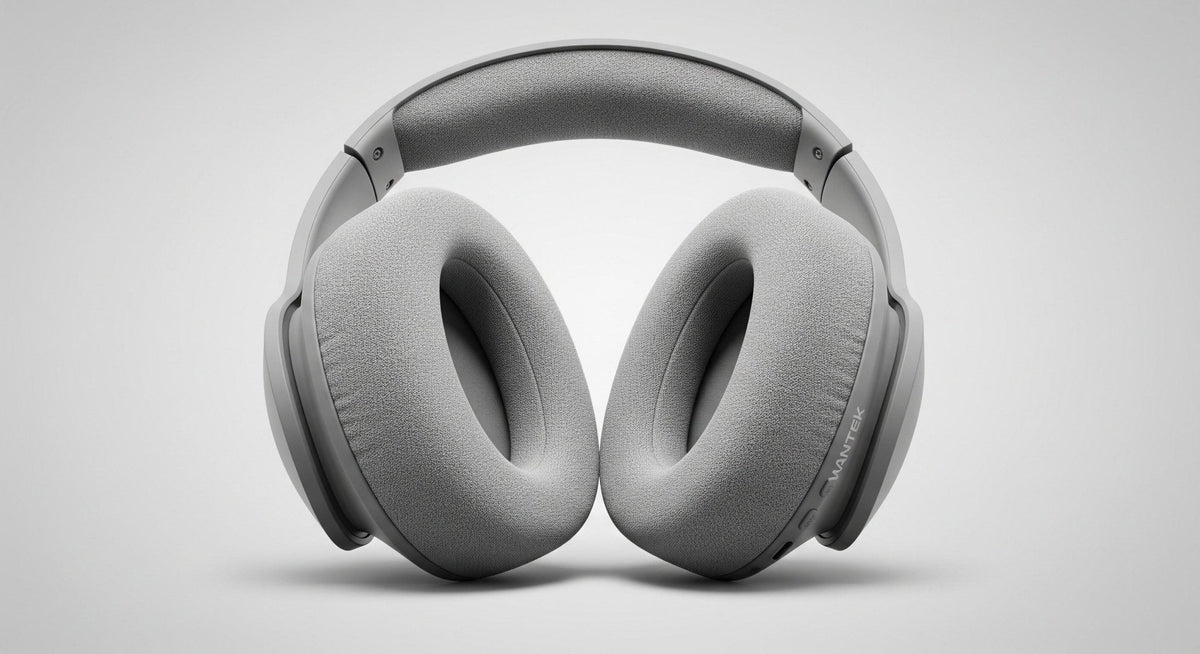
For large ears, compare the space inside the pads rather than the outside size of the headphone. The opening must accommodate your ear's height and width, while the compressed pad depth must keep the inner lining from pressing uncomfortably against it. “Over-ear” is a design category, not a fit guarantee.
Measure the space that matters
Ask for the pad opening's internal height, width, and depth. Check whether dimensions describe the opening or the entire cushion. Photos and driver diameter cannot supply those measurements reliably.
| What you feel | What to inspect | What may help |
|---|---|---|
| Pressure on top or bottom of ear | Internal pad height | A taller opening or different cup shape |
| Ear touching the driver cover | Depth after pad compression | A deeper compatible design |
| Pressure around the jaw | Clamp and cup articulation | A different frame fit |
| Cups hanging too low | Minimum headband setting | A shorter adjustment range |
The last problem concerns head size rather than ear size. Our small-head headphone guide covers that distinction. A person can need a short headband and a spacious pad opening at the same time.

Choose the listening environment first
A roomy open-back headphone may suit a quiet room, but it will not provide the same isolation task as a closed-back travel model. The Sennheiser HD 599 is one documented example with large cups and replaceable pads. It is a candidate to try, not a verified universal fit for large ears.
For commuting or shared spaces, look for a closed-back candidate and compare its interior dimensions directly. For gaming, also verify the console edition, microphone connection, and total weight. Good ear clearance does not resolve an incompatible connection or an uncomfortable headband.
Test fit without modifying the headphone
- Position both cups so your ears sit inside the pad openings.
- Wear your normal glasses and adjust the band evenly.
- Check where the padding compresses and whether your ears contact the lining.
- Listen at a comfortable level and move your head normally.
- Recheck pressure and heat after a longer session within the return conditions.
Do not rely on a promise that every tight headset will “break in.” If the opening is physically too small, softer padding may not solve the problem. A return or different model can be more practical than adding accessories.
Replacement pads are a separate fit decision
Verify the attachment and exact model revision before ordering. Thicker pads can create clearance but also change cup position, clamp, and sound. Keep the original pads for comparison. A third-party part should not be described as an included factory option.
For a broader explanation of where pads contact the ear, see our over-ear versus on-ear comparison.
Frequently asked questions
Do large drivers mean large ear openings?
No. Driver diameter and usable pad space are different measurements. Ask for the interior opening and depth, then test how the pads compress on your head.
Are oval cups always better than round cups?
No. Shape matters alongside actual dimensions and your ear shape. A smaller oval opening can provide less usable space than a larger round one.

