
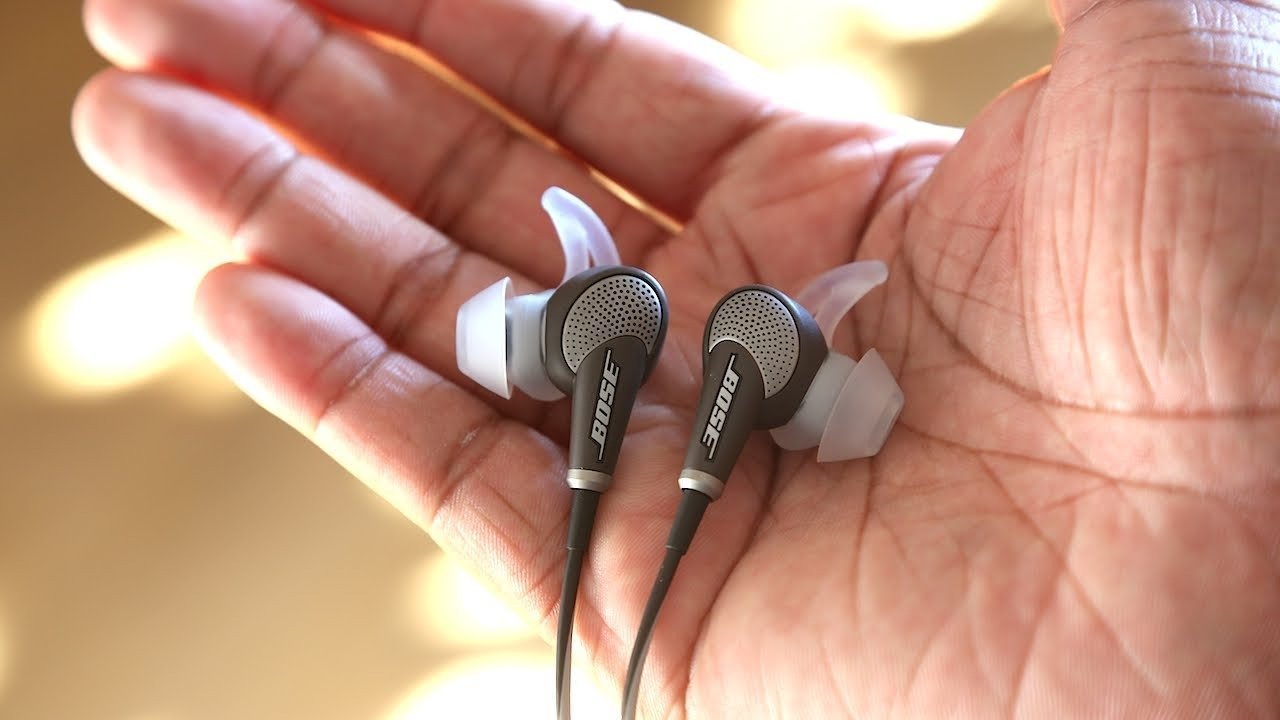
The Bose QuietComfort 20 (QC20) is a legacy wired in-ear noise-cancelling headphone that still attracts buyers who want compact 3.5 mm audio with active noise cancellation. In 2026, the important question is not whether it is still a current flagship. It is whether an older QC20 in good condition still fits your devices and travel routine.
Short answer: QC20 remains an unusual combination of wired playback, compact in-ear fit, ANC, Aware mode, and an inline microphone. Bose support pages show the Samsung/Android version was sold from 2015–2021 and the Apple version from 2015–2022, so buyers today should treat it as a discontinued product and inspect condition, battery health, controls, cable integrity, and device compatibility carefully.

What the Bose QC20 Actually Is
QC20 is a wired 3.5 mm in-ear headphone with Bose active noise cancellation. Bose produced separate versions for Apple devices and for Samsung/Android devices, each with an inline microphone and remote designed around the supported device family.
Bose documentation also lists StayHear+ tips, a built-in rechargeable lithium-ion battery, USB charging, and Aware mode. The battery powers the noise-cancelling system rather than the basic wired audio path.
| Feature | Original QC20 design | What to check now |
|---|---|---|
| Connection | Wired 3.5 mm audio | Your current phone, tablet, laptop, or adapter must provide a compatible analog audio path. |
| Noise cancellation | Battery-powered ANC with Aware mode | Confirm the rechargeable battery still holds useful charge and that both ANC and Aware mode work. |
| Battery behavior | Bose rated the rechargeable battery for up to 16 hours of use; music can continue when the battery is depleted. | Age can reduce runtime, and wired playback without charge does not mean ANC remains active. |
| Controls | Inline microphone and three-button remote | Verify Apple versus Samsung/Android version and test the buttons with your actual device and apps. |
| Ear tips | StayHear+ tips in multiple sizes | Inspect tip condition and confirm replacements are available if the original silicone has aged or is missing. |
Is the Bose QC20 Still a Current Product?
No. Bose’s support site identifies the Samsung-device QC20 as sold from 2015 through 2021 and the Apple-device version as sold from 2015 through 2022. Bose still hosts manuals, troubleshooting information, and some accessories, but the QC20 should be evaluated as a discontinued model rather than a current-generation ANC earbud.
That changes the buying decision. A used or old-stock QC20 may still function well, but battery age, cable wear, remote compatibility, missing tips, and seller return terms matter more than they did when the product was new.
How Good Was the Noise Cancellation?
For historical context, RTINGS tested the QC20 under its older Methodology v1.5 and updated that review in April 2018. It found the QC20 strong at reducing noise for commuting and loud environments, while rating its overall sound more modestly than newer Bose products available at that time.
That result is useful evidence about the product’s original performance, but it should not be converted into a 2026 ranking. Test methods, competing products, batteries, ear-tip condition, and the age of individual QC20 units have all changed since then.
See the RTINGS Bose QC20 review for the archived independent measurements and methodology context.
Battery Life: The Important Correction
QC20 is wired, but its ANC is not battery-free. Bose stated up to 16 hours of use from the rechargeable lithium-ion battery. If the battery runs down, music can continue through the wired connection, but the powered noise-cancelling function is no longer the same experience.
For a second-hand unit, battery health is therefore one of the first things to test. Charge the control module fully, confirm ANC stays active for a reasonable session, and check that charging is reliable before relying on the earbuds for a long trip.
Aware Mode and the Inline Remote
Aware mode lets more outside sound through without removing the earbuds. That can be useful for announcements or a brief conversation, but it is an older hardware implementation rather than the app-controlled transparency systems found on many current wireless products.
The inline remote also deserves attention because QC20 versions were designed for different device families. Bose’s compatibility documentation shows that microphone and button behavior can vary by phone or application. Test play/pause, volume, calls, and microphone input with the device you plan to use.
Bose’s QC20 support page remains the best starting point for manuals and product-specific troubleshooting.
Sound and Comfort: Avoid Turning an Old Review Into a Universal Verdict
QC20 uses an in-ear design with Bose StayHear+ tips that sit at the entrance of the ear canal rather than relying on a deep insertion. Fit still varies by ear shape and tip size, and an old pair may not include the original tip set.
Sound quality is also preference-dependent. RTINGS’ older measurements described a darker, bass-emphasized presentation rather than a neutral tuning. That is more useful than saying the QC20 is universally “refined,” “audiophile,” or better than current alternatives.
What to Inspect Before Buying a Used Bose QC20
- Identify the exact version. Confirm whether it is the Apple or Samsung/Android control version.
- Test the ANC battery. A decade-old rechargeable battery can be the biggest ownership risk.
- Inspect the cable and control module. Look for splitting, stiffness, exposed conductors, intermittent audio, or damaged strain relief.
- Test both earbuds. Check for channel imbalance, crackling, or dropouts while moving the cable gently.
- Test Aware mode. Confirm the mode switch changes the listening behavior as expected.
- Check the tips. Make sure the correct size fits securely and that replacements are obtainable.
- Verify your source device. Modern phones may require a USB-C or Lightning-to-3.5 mm adapter with appropriate audio support.
- Use a return window when possible. Battery and cable faults may not be obvious from listing photos.
QC20 vs. Modern Wireless ANC Earbuds
The QC20 avoids Bluetooth pairing and can keep playing wired audio after its ANC battery is exhausted. Modern wireless ANC earbuds trade that cable for integrated batteries, charging cases, app controls, firmware, wireless microphones, and newer transparency systems.
Neither architecture is automatically better. If you are choosing between wired and wireless audio more broadly, the wired vs. wireless headphones guide explains the connection, battery, latency, and mobility trade-offs without assuming one format always wins.
Who Should Still Consider the QC20?
QC20 can still make sense for someone who specifically wants compact wired earbuds with legacy Bose ANC and is comfortable buying discontinued hardware. It is a less obvious choice for someone who wants a current warranty, a fresh battery, modern phone integration, easy replacement, or the latest ANC and microphone features.
If you are starting from scratch rather than looking specifically for a QC20, use a current buying framework first and compare new products on fit, connection, noise control, microphone needs, and serviceability.
Frequently Asked Questions
Is the Bose QuietComfort 20 discontinued?
Yes. Bose support pages show the Samsung/Android version was sold from 2015–2021 and the Apple version from 2015–2022. Bose still provides support information for the legacy product.
Does the Bose QC20 work when the battery is dead?
Wired music playback can continue when the rechargeable battery is depleted, according to Bose. The battery powers the active noise-cancelling system, so a dead battery does not provide the full ANC experience.
How long is the Bose QC20 battery rated to last?
Bose originally rated the built-in rechargeable battery for up to 16 hours of use. A used unit can deliver less because lithium-ion batteries lose capacity with age and use.
Is the Bose QC20 still worth buying in 2026?
It can be for a buyer who specifically wants compact wired ANC and finds a well-preserved unit. For most buyers, battery age, discontinued status, adapter needs, and limited replacement options deserve careful consideration.

