
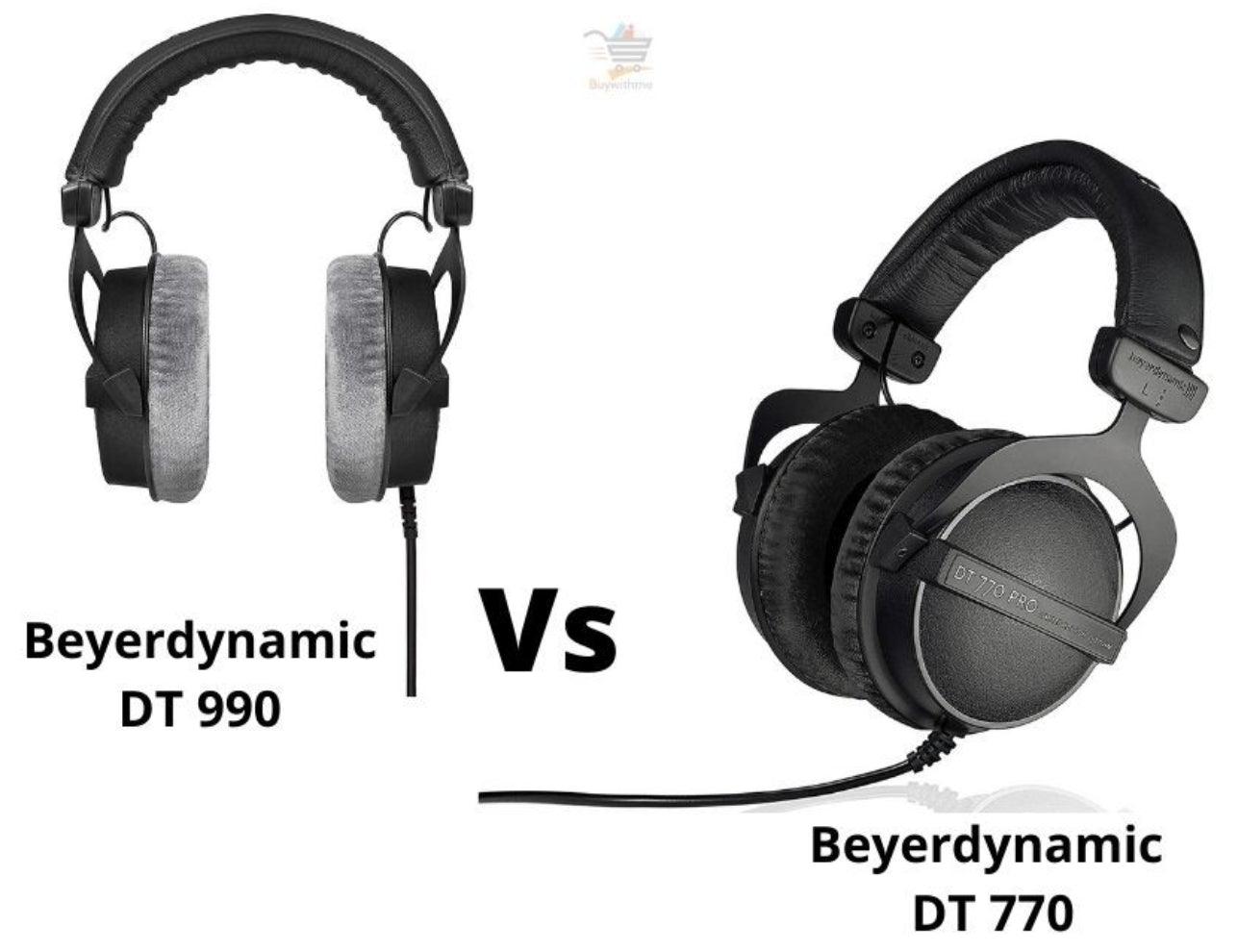
For a task-by-task studio view, continue with the DT 770 PRO vs. DT 990 PRO recording, editing, and mixing comparison.
Beyerdynamic DT 770 PRO and DT 990 PRO share a studio lineage, but they solve different monitoring problems. DT 770 PRO is closed-back for isolation; DT 990 PRO is open-back for critical listening where leakage is acceptable.
| Area | DT 770 PRO | DT 990 PRO |
|---|---|---|
| Design | Closed-back | Open-back |
| Isolation/leakage | More isolation; less leakage | Little isolation; audible leakage |
| Use | Tracking, monitoring, noisy/shared rooms | Editing/critical listening in quiet rooms |
| Impedance | Current line includes 32/80/250 Ω variants | PRO classic commonly 250 Ω |
| Cable | Varies by impedance version | 250 Ω PRO uses coiled cable |
Beyerdynamic's current DT 770 PRO page lists closed operation and 32/80/250-ohm variants; its DT 990 PRO page lists open operation and 250 ohms for the classic PRO version.
Which for Recording?
DT 770 PRO is generally the more practical tracking choice because the closed cups reduce sound leakage into microphones.
Which for Quiet-Room Editing?
DT 990 PRO's open design is intended for critical listening and editing where isolation is not needed.
FAQ
Do DT 770 and DT 990 sound identical?
No. The closed/open acoustic designs produce different presentation and bass/treble behavior.
Do I need an amp?
It depends on the impedance version, sensitivity, source output and target level. The 250-ohm versions deserve more source-power attention.
Original Article Media


