
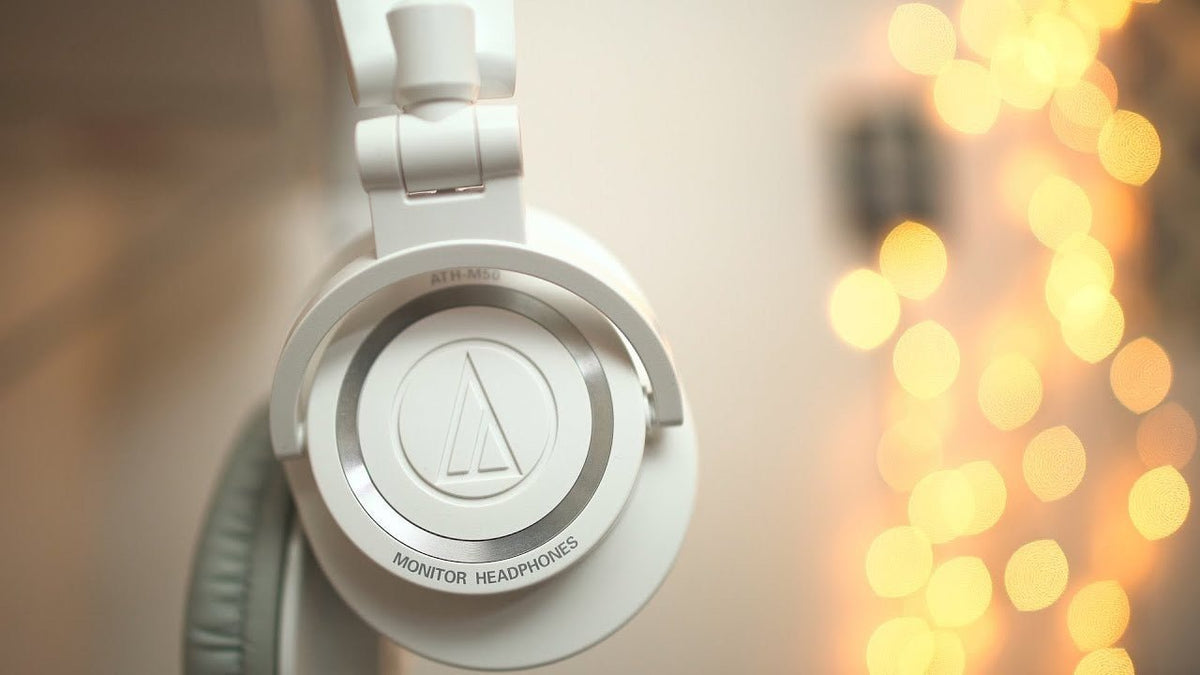
The ATH-M50x, ATH-M40x, and ATH-M20x belong to Audio-Technica’s closed-back M-Series, but they are not simply the same headphone at three prices. The useful comparison is how each model fits monitoring, portability, cable replacement, and long-term use.
Quick answer: Choose by workflow, not by a generic ranking. Verify the current connector, cable package, swiveling/folding design, and replaceable-part support on Audio-Technica’s product pages before buying.

Start With the Work You Need the Headphones to Do
For tracking and everyday monitoring, isolation, fit, cable management, and durability can matter more than small specification differences. For mobile use, folding and cable options become more important.
M50x, M40x, and M20x Are Different Hardware Tiers
Audio-Technica maintains separate product documentation for the M-Series. Check the current ATH-M50x product page and the matching M40x/M20x pages for included cables, connector design, weight, and replacement accessories. Those details can change the ownership experience more than a frequency-response number.
Do Not Turn Specifications Into a Sound Ranking
Driver size, impedance, sensitivity, and frequency response describe electrical or mechanical properties; they do not by themselves prove which headphone a listener will prefer. If tonal balance matters, audition the models under the same source and level conditions.
Check Serviceability Before Buying
A detachable cable can simplify replacement, while a fixed cable changes the repair path. Ear pads are wear items on any studio headphone, so confirm current replacement-part availability if the headphones will see daily use.
FAQ
Is the ATH-M50x automatically better than the ATH-M40x?
No. It is a different model with a different feature set and tuning. The better fit depends on your monitoring task, comfort, connection, and budget.
Are these Bluetooth headphones?
The standard ATH-M50x, ATH-M40x, and ATH-M20x are wired models. Audio-Technica also sells separate wireless variants in parts of the M-Series.
Should I choose by frequency response alone?
No. Published frequency range is not a complete measure of tonal accuracy, isolation, comfort, or suitability for a particular recording workflow.

