
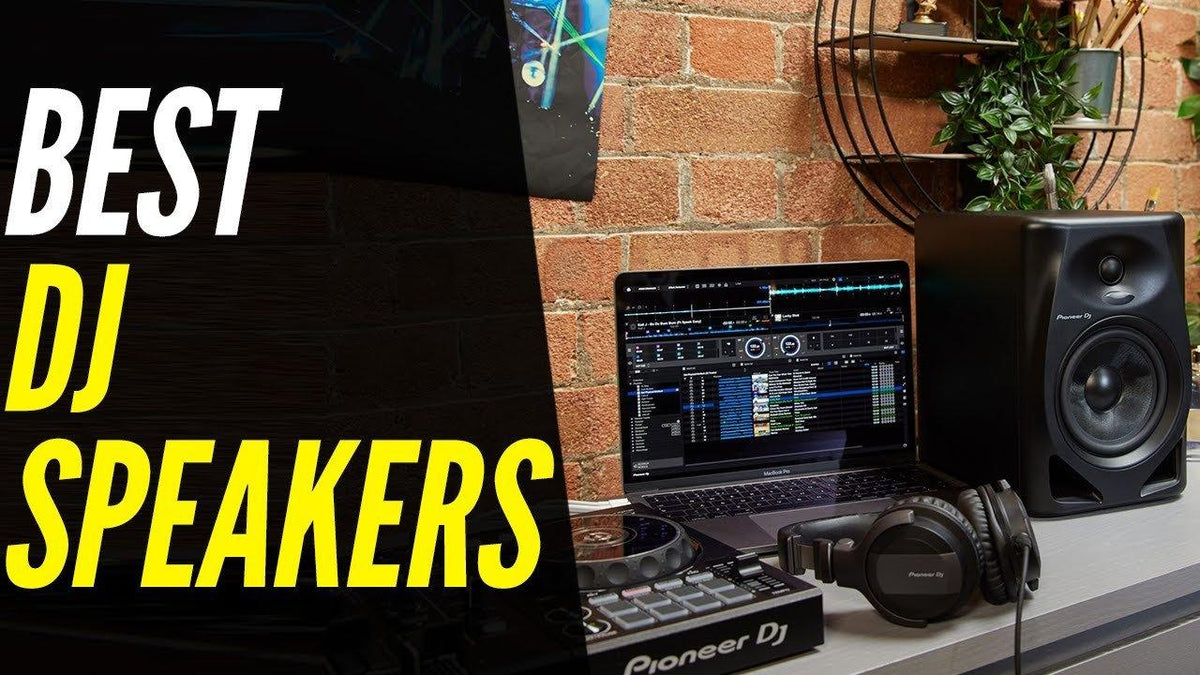
Powered PA/DJ speakers include amplification inside the cabinet, which simplifies a home DJ setup. The main question is not “how many watts?” but whether the speaker's inputs, output capability and size fit your mixer and room.
For home use: prioritize clean balanced connections, controllable level and sensible room placement. A speaker designed to cover a venue can be excessive at bedroom distances.
Powered vs Passive
An active/powered speaker includes amplification. A passive speaker needs an external amplifier. This changes cabling and system complexity, not automatically sound quality.
Match the Mixer Output to the Speaker Input
DJ mixers commonly provide balanced XLR or TRS outputs. Use compatible balanced inputs when available and keep gain staging sensible.
| Check | Why it matters | Home priority |
|---|---|---|
| Cabinet/driver size | Affects output and low-frequency extension | Fit the room rather than buying the largest box |
| Balanced inputs | Better suited to mixer/longer cable runs | XLR/TRS compatibility |
| Max SPL | Indicates output capability | Do not equate higher SPL with better sound |
| Subwoofer need | Extends low-frequency output | Optional for practice; room-dependent |
Protect Your Hearing and Neighbors
Near-field listening to high-output PA speakers can become dangerously loud quickly. Keep monitoring levels moderate and take breaks; maximum venue output is not a target for a small room.
Frequently Asked Questions
Do powered DJ speakers need an amplifier?
No external power amplifier is required because amplification is built into the speaker.
Is more wattage always better?
No. Compare measured output, limiter behavior, frequency range and room needs rather than wattage alone.
Do I need a subwoofer at home?
Not necessarily. Start with the main speakers and add a sub only if the room and music need more low-frequency extension.
Original Article Media


