
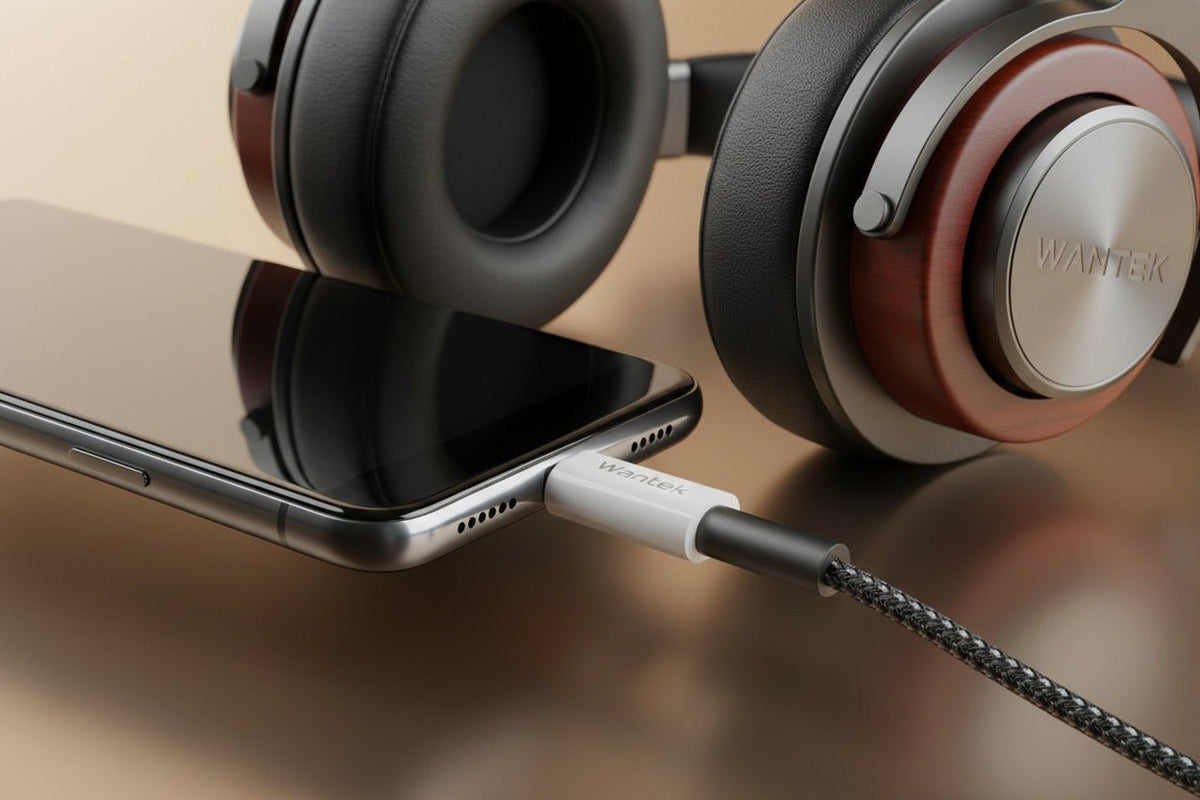
Le meilleur adaptateur USB-C vers jack 3,5 mm est celui qui répond aux exigences de votre appareil hôte, de votre casque et de votre microphone. Pour la plupart des téléphones modernes, cela signifie un adaptateur audio numérique USB doté de son propre DAC, et non un adaptateur passif (simple prolongateur). Si vous avez également besoin d'un microphone de casque, de boutons intégrés, d'une puissance de sortie supérieure ou d'une recharge simultanée, ces besoins doivent être vérifiés séparément avant tout achat.
Réponse rapide : Basez votre choix sur la compatibilité, et non sur la marque de la puce DAC ou un taux d'échantillonnage maximal. Pour les appareils Apple dotés d'un port USB-C, l'adaptateur USB-C vers jack 3,5 mm d'Apple constitue le point de départ documenté le plus simple. Si vous avez besoin de la prise en charge d'un microphone de casque et de la recharge simultanée, StarTech propose un adaptateur audio et charge USB-C avec une prise TRRS et une fonction Power Delivery jusqu'à 60 W. Si vous recherchez des spécifications de sortie audio publiées plutôt qu'un adaptateur basique, un DAC/ampli portable dédié, comme l'iFi GO link 2, appartient à une catégorie de produit différente.

De quel type d'adaptateur USB-C vers prise casque avez-vous besoin ?
Une prise casque de 3,5 mm transmet de l'audio analogique. L'USB-C peut transporter des données numériques, de l'alimentation et d'autres fonctions ; la forme du connecteur ne suffit donc pas à déterminer si un adaptateur analogique simple fonctionnera.
Pour les spécifications des accessoires USB-C vers analogique d'Android, Google exige explicitement un adaptateur numérique-analogique et précise que les adaptateurs USB-C purement analogiques ne sont pas pris en charge. L'adaptateur convertit la lecture numérique en audio analogique et peut également offrir un chemin analogique-numérique pour un microphone de casque compatible.
C'est pourquoi « USB-C vers 3,5 mm » ne constitue pas une information suffisante sur une fiche produit. Pour un téléphone moderne qui émet de l'audio USB numérique, recherchez des termes tels que DAC intégré, adaptateur audio numérique, ou une compatibilité explicite avec votre modèle d'appareil.
| Besoin | À vérifier | Pourquoi c'est important |
|---|---|---|
| Écoute basique | Prise en charge de l'audio USB numérique et DAC intégré | Un adaptateur passif peut ne pas fonctionner sur un appareil hôte qui ne fournit que de l'audio USB numérique. |
| Appels ou chat de jeu | Entrée microphone TRRS et prise en charge des boutons nécessaires | La lecture audio peut fonctionner même si le microphone ou les commandes ne le font pas. |
| Casques exigeants | Tension ou puissance de sortie publiée sur une charge pertinente | Le taux d'échantillonnage maximal n'indique pas la puissance disponible pour alimenter le casque. |
| Écouter tout en chargeant | Prise en charge explicite de l'audio + USB-C Power Delivery | Un téléphone doté d'un port unique nécessite un adaptateur conçu pour gérer les deux fonctions simultanément. |
Trois types d'adaptateurs à comparer
Il n'existe pas de solution universelle infaillible, car l'appareil hôte et le casque modifient la donne. Ces trois exemples illustrent les principales catégories de produits plutôt que de prétendre qu'un seul adaptateur est idéal pour chaque configuration.
Adaptateur USB-C vers prise casque 3,5 mm Apple
Apple propose son adaptateur USB-C vers prise casque 3,5 mm pour connecter des casques ou haut-parleurs standard à des appareils USB-C compatibles. La liste de compatibilité actuelle d'Apple inclut les modèles d'iPhone, iPad et Mac équipés de ports USB-C.
Choisissez-le si votre priorité est un adaptateur compact de la marque pour un appareil Apple pris en charge. Apple ne publie pas la puissance de sortie, l'identité de la puce DAC ou de mesures audio indépendantes sur la page produit citée ; il ne doit donc pas être considéré comme un amplificateur audiophile haute puissance sur la seule base de cette page.
Adaptateur audio et charge USB-C StarTech CDP235APDM
Le modèle CDP235APDM de StarTech répond à un problème différent : l'utilisation d'un casque filaire 3,5 mm tout en chargeant un hôte USB-C. StarTech documente une prise casque TRRS 3,5 mm, la prise en charge du microphone et le passage du Power Delivery USB-C jusqu'à 60 W pour les ordinateurs portables et tablettes compatibles.
Choisissez ce type d'adaptateur lorsque l'audio et la recharge simultanés sont des besoins réels. Vérifiez le comportement de charge de l'hôte et les fonctions du casque avant l'installation, car un adaptateur à deux ports ajoute davantage de variables de compatibilité qu'un simple dongle audio.
iFi GO link 2
L'iFi GO link 2 représente la catégorie des DAC/amplis casque portables plutôt que celle des adaptateurs basiques. iFi publie une sortie 3,5 mm, la prise en charge du PCM jusqu'à 384 kHz, du DSD256, une impédance de sortie inférieure à 0,4 ohm et au moins 79 mW à 32 ohms ou 14 mW à 300 ohms.
Choisissez un produit de cette classe lorsque vous avez besoin de spécifications d'amplification publiées, utilisez un casque nécessitant une sortie plus puissante qu'un adaptateur de base, ou souhaitez spécifiquement un DAC/ampli portable dédié. Ne l'achetez pas simplement parce que son taux d'échantillonnage est plus élevé ; les exigences de sortie et les performances audibles dépendent de l'ensemble de la chaîne audio.

Avez-vous besoin d'un DAC dans l'adaptateur ?
Si l'hôte envoie de l'audio numérique via USB-C et que votre casque se termine par une prise jack analogique 3,5 mm classique, oui : la conversion numérique-analogique doit s'effectuer quelque part entre l'hôte et les haut-parleurs du casque.
Cela ne signifie pas que chaque DAC externe sonne mieux que chaque prise casque intégrée. La qualité audio dépend du DAC, de l'amplificateur, de l'impédance de sortie, du bruit, de la distorsion, de la sensibilité et de l'impédance du casque, ainsi que de l'enregistrement lui-même. Le connecteur n'est pas un indice de qualité.
Si vous hésitez entre conserver un casque analogique avec adaptateur ou passer à un casque USB direct, le guide comparatif des casques USB et 3,5 mm explique où la conversion a lieu dans chaque signal et pourquoi aucune connexion ne l'emporte automatiquement sur la qualité du son ou du microphone.
Le microphone et les commandes intégrées du casque fonctionneront-ils ?
Ne le prenez pas pour acquis. Les spécifications de l'adaptateur Android de Google incluent les accessoires stéréo avec ou sans microphones, la conversion analogique-numérique à un canal pour l'entrée micro, la détection du micro du casque et la traduction des événements des boutons du casque en événements USB HID. Cela décrit ce qu'un adaptateur conforme peut prendre en charge ; cela ne garantit pas que chaque adaptateur du marché implémente correctement chaque fonction sur chaque hôte.
La prise 3,5 mm a également son importance. Une prise casque stéréo courante est de type TRS, tandis que de nombreux casques grand public utilisent une prise TRRS à quatre contacts pour l'audio stéréo et le microphone. La compatibilité du brochage est importante, même si le diamètre physique est identique. Consultez le guide TRS vs TRRS avant d'acheter un adaptateur pour des appels, des chats de jeu ou un microphone intégré.
Quelles spécifications sont réellement importantes ?
Compatibilité de l'appareil hôte
C'est le premier filtre. Google recommande aux utilisateurs de Pixel de vérifier que les adaptateurs USB-C fonctionnent avec l'audio numérique. Apple documente son propre adaptateur pour les appareils USB-C compatibles. Samsung impose une condition de support explicite sur son adaptateur. Le fait qu'une fiche USB-C s'insère physiquement dans le port ne prouve pas la compatibilité audio.
Sortie casque
Pour des écouteurs et casques portables faciles à alimenter, un adaptateur actif de base peut suffire. Pour les casques plus exigeants, recherchez la tension ou la puissance de sortie publiée pour une impédance donnée. La sensibilité du casque compte tout autant que l'impédance ; une règle simple du type « 100 ohms égale difficile » n'est pas fiable.
Prise en charge du microphone et de la télécommande
Si vous utilisez un casque plutôt qu'une simple prise TRS, confirmez que l'entrée micro et les commandes dont vous avez réellement besoin sont prises en charge. La compatibilité de lecture seule ne suffit pas à garantir la compatibilité pour les appels.
Taux d'échantillonnage et profondeur de bits
Les chiffres comme 24 bits/96 kHz, 24 bits/192 kHz ou 32 bits/384 kHz décrivent les formats numériques pris en charge. Ils ne garantissent pas, par eux-mêmes, un bruit plus faible, une distorsion réduite, plus de puissance de sortie ou de meilleures performances audibles.
Passage de la charge
Pour les téléphones et tablettes dotés d'un seul port USB-C, les adaptateurs audio et charge peuvent être utiles. Vérifiez la norme de charge prise en charge ainsi que les fonctions audio sur votre appareil spécifique. Ne déduisez pas la prise en charge du microphone ou la puissance de charge simplement par la présence de deux prises.
Conseils d'achat par appareil
iPhone et iPad USB-C
Le support Apple indique que les iPhone USB-C peuvent utiliser des casques filaires et d'autres accessoires audio via le connecteur USB-C, et souligne spécifiquement l'adaptateur USB-C vers prise casque 3,5 mm d'Apple pour les haut-parleurs ou casques 3,5 mm. Cela fait de cet adaptateur la référence documentée la plus fiable pour le matériel Apple pris en charge.
Google Pixel
Google indique que les accessoires USB-C Pixel, y compris les adaptateurs, doivent fonctionner avec l'audio numérique. Pour un casque analogique 3,5 mm, utilisez un adaptateur audio numérique actif plutôt que de supposer qu'un dongle USB-C uniquement analogique fonctionnera.
Samsung Galaxy
Vérifiez le modèle exact de Galaxy plutôt que de supposer que chaque adaptateur USB-C est interchangeable. Samsung a publié un adaptateur de prise casque USB-C dans certaines régions, et sa propre documentation indique qu'il est destiné aux appareils Samsung prenant en charge les écouteurs USB Type-C. La disponibilité des accessoires et les listes de modèles pris en charge peuvent varier selon les régions.
Ordinateurs portables Windows, Mac et tablettes
Vérifiez que le port USB-C et le système d'exploitation prennent en charge l'audio USB, puis confirmez le comportement du microphone et des commandes si vous en avez besoin. Pour l'écoute musicale, comparez également les besoins en puissance du casque avec la sortie publiée de l'adaptateur, plutôt que de choisir uniquement en fonction du taux d'échantillonnage.
Problèmes courants et points à vérifier
Aucun son
Confirmez que l'adaptateur est un appareil audio USB numérique avec DAC, puis vérifiez la prise en charge audio USB de l'hôte et la sélection de la sortie audio.
Le casque fonctionne mais pas le microphone
Vérifiez que l'adaptateur accepte un microphone de casque, que la prise 3,5 mm est du type TRRS attendu et que l'hôte sélectionne l'adaptateur comme périphérique d'entrée.
Volume trop faible
Comparez la sensibilité et l'impédance du casque avec la sortie publiée de l'adaptateur. Si le fabricant ne publie aucune donnée, ne supposez pas qu'une spécification de taux d'échantillonnage élevé signifie une amplification puissante.
Comportement incohérent des boutons
Le comportement de la télécommande dépend du câblage du casque, de l'implémentation de l'adaptateur, du système d'exploitation et de l'application. Confirmez la fonction exacte dont vous avez besoin plutôt que de considérer la mention « micro pris en charge » comme une preuve que chaque bouton fonctionne.
Comment choisir sans dépenser inutilement
Pour des écouteurs filaires classiques ou des casques portables efficaces, commencez par un adaptateur actif compact qui prend explicitement en charge votre appareil. Passez à un DAC/ampli dédié uniquement si vous avez une raison : besoins en sortie documentés, prise en charge de formats spécifiques, impédance de sortie plus faible ou toute autre fonctionnalité que vous utiliserez réellement.
Si votre objectif est simplement d'utiliser un casque professionnel filaire, un adaptateur n'est peut-être pas la solution la plus simple. Un casque USB direct peut supprimer un point de connexion et intégrer le microphone et les commandes directement au système du casque.
Vous préférez un casque professionnel direct à un adaptateur ?
Utilisez l'outil de recherche de casques Wantek pour affiner les options par appareil, type de connexion (USB-C ou 3,5 mm), cas d'utilisation et préférence filaire ou sans fil.
Questions fréquemment posées
Tous les adaptateurs USB-C vers 3,5 mm ont-ils un DAC ?
Non. Il existe des adaptateurs USB-C purement analogiques, mais les spécifications actuelles d'Android ne les prennent pas en charge. Pour les hôtes audio numériques modernes, choisissez un adaptateur actif avec conversion numérique-analogique.
Un adaptateur USB-C peut-il améliorer la qualité sonore d'un casque ?
Il peut modifier le résultat car il contient le DAC et l'amplificateur, mais l'amélioration n'est pas automatique. Comparez le bruit, la distorsion, la puissance de sortie, l'impédance de sortie et les besoins du casque plutôt que le type de connecteur.
Un adaptateur USB-C vers 3,5 mm fonctionnera-t-il avec un microphone de casque ?
Uniquement si l'adaptateur et l'hôte prennent en charge l'entrée microphone et que le câblage du casque 3,5 mm est compatible. Vérifiez la prise en charge du microphone TRRS au lieu de supposer que tous les adaptateurs de casque gèrent les appels.
Le 24 bits/192 kHz est-il automatiquement meilleur que le 24 bits/48 kHz ?
Non. La prise en charge d'un format maximal n'établit pas la qualité audible. L'implémentation du DAC, les performances de l'amplificateur, le matériau source, le casque, le niveau d'écoute et la chaîne complète comptent tous.
Ai-je besoin d'un DAC/ampli portable plutôt qu'un dongle basique ?
Utilisez-en un lorsque votre casque nécessite plus de puissance de sortie documentée ou que vous avez besoin de fonctionnalités audio spécifiques. Les casques de tous les jours efficaces ne justifient généralement pas un DAC/ampli plus volumineux uniquement pour une spécification de taux d'échantillonnage plus élevée.

