
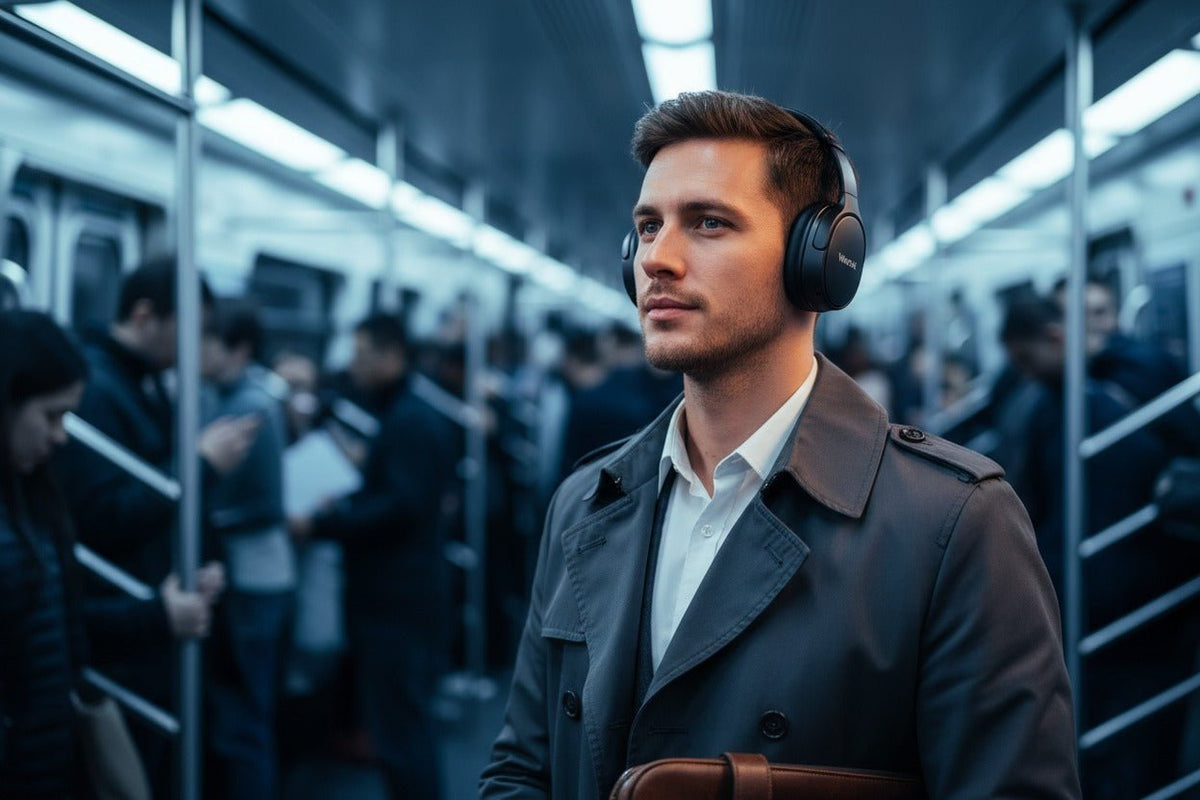
Die besten Kopfhörer für den Arbeitsweg hängen von der Reise ab. In Zügen und Bussen können ein sicherer Halt sowie eine effektive aktive Geräuschunterdrückung dafür sorgen, dass das ständige Motor- und Schienengeräusch weniger störend wirkt. Bei Flugreisen können die Akkulaufzeit und eine kabelgebundene Alternative genauso wichtig sein. In jedem Fall sollten Komfort und eine schnelle Möglichkeit, Durchsagen zu hören, Vorrang vor Zusatzfunktionen haben.
Kurz gefasst: Wählen Sie Over-Ear-Kopfhörer mit ANC (aktiver Geräuschunterdrückung), wenn Sie maximale Abschirmung und Komfort bei längerer Nutzung wünschen, oder kompakte Noise-Cancelling-Ohrhörer, wenn Portabilität wichtiger ist. Nutzen Sie den Transparenz- oder Umgebungsmodus, wenn Sie Bahnhofsdurchsagen, Verkehr oder Ihre Umgebung wahrnehmen müssen.
Was macht Kopfhörer gut für den Arbeitsweg?

Pendeln stellt andere Anforderungen als das Musikhören zu Hause. Tiefe, gleichmäßige Geräusche von Motoren und Schienensystemen sind genau das, wofür ANC am nützlichsten ist, während eine gute physische Abdichtung bei Stimmen und höherfrequenten Tönen hilft. Unabhängige Tests von Reisekopfhörern durch RTINGS bewerten Geräuschisolierung, Komfort und Akkulaufzeit ebenfalls als zentrale Kriterien für Reisen.
Die andere Entscheidung betrifft den Formfaktor. Over-Ear-Kopfhörer bieten in der Regel mehr Platz für Polsterung und größere Akkus, während Ohrhörer weniger Platz beanspruchen. Wenn Sie sich noch zwischen beiden entscheiden müssen, erläutert Wanteks Ratgeber zu Kopfhörern vs. Ohrhörern die praktischen Unterschiede in Bezug auf Portabilität, Passform, Isolierung und Komfort.
Die besten Kopfhörerfunktionen je nach Pendelart
| Pendeln | Priorität | Achten Sie auf |
|---|---|---|
| Zug oder U-Bahn | ANC, sicherer Halt, Transparenzmodus | Plötzliche Durchsagen, Lärm durch Menschenmassen, Platz in der Tasche |
| Bus | ANC, Komfort, einfache Bedienung | Motorbrummen, häufige Stopps, Anrufe bei wechselnder Geräuschkulisse |
| Flugzeug | ANC, lange Akkulaufzeit, optionaler Kabelanschluss | Richtlinien der Fluggesellschaften und Kompatibilität mit dem Entertainment-System |
| Fußweg zwischen Stationen | Transparenz- oder offener Hörmodus, sicherer Halt | Verkehr, Kreuzungen, Radfahrer und andere Bewegungen in der Nähe |
Sechs Aspekte, die Sie vor dem Kauf vergleichen sollten
1. Aktive Geräuschunterdrückung und passive Isolierung
ANC funktioniert am besten gegen kontinuierliche, tieffrequente Geräusche wie Motorbrummen und Schienenlärm. Es lässt die Außenwelt nicht vollständig verschwinden, daher bleibt die physische Abdichtung wichtig. Over-Ear-Polster sollten gleichmäßig um die Ohren sitzen; Ohrhörer sollten verschiedene Aufsatzgrößen enthalten, damit Sie eine stabile Abdichtung ohne Unbehagen erzielen können.
2. Transparenz- oder Umgebungsmodus
Beim Pendeln ist maximale Isolierung nicht immer wünschenswert. Ein Transparenz- oder Umgebungsmodus kann es erleichtern, Durchsagen am Bahnsteig zu hören, sich kurz zu unterhalten oder auf dem Fußweg achtsam zu bleiben. Die Funktion sollte schnell aktivierbar sein, ohne dass Sie umständlich in einer App navigieren müssen.
3. Komfort für Ihre tatsächliche Reisedauer
Anpressdruck, Wärmeentwicklung an den Ohrmuscheln, Druck durch Ohrstöpsel, Gewicht und das Tragen einer Brille können den Komfort beeinflussen. Ein Kopfhörer, der sich für zehn Minuten gut anfühlt, kann nach einer Stunde störend werden. Für lange Zugfahrten oder Flüge verdient der Komfort die gleiche Aufmerksamkeit wie die ANC-Leistung.
4. Akkulaufzeit mit den Funktionen, die Sie nutzen
Die Akkuangaben der Hersteller sind meist Maximalwerte unter festgelegten Testbedingungen. Planen Sie basierend auf Ihren tatsächlichen Einstellungen: ANC, Transparenzmodus, Gesprächszeit und Wiedergabelautstärke können die Laufzeit beeinflussen. Das Ziel ist simpel: genug Ladung für den längsten erwarteten Reisetag inklusive Puffer.
5. Flexibilität durch Kabel und Drahtlosverbindung
Bluetooth ist praktisch für Telefone und Tablets, aber Vielflieger schätzen möglicherweise auch einen Kabelanschluss für Entertainment-Systeme in Flugzeugen, die kein Audio per Bluetooth übertragen. Ein abnehmbares analoges Kabel ist daher bei einigen Over-Ear-Reisemodellen weiterhin nützlich.
6. Portabilität und Haltbarkeit im Alltag
Überprüfen Sie, ob sich Over-Ear-Kopfhörer zusammenklappen oder flach drehen lassen, ob ein Schutzetui enthalten ist und ob Ohrhörer ein taschenfreundliches Ladeetui besitzen. Wenn ein Teil Ihres Arbeitswegs im Freien liegt, prüfen Sie die tatsächliche Wasserfestigkeit, anstatt davon auszugehen, dass jedes kabellose Modell regenfest ist.
Vier aktuelle Kopfhörer für Pendler im Vergleich
Dies ist ein technischer Vergleich und kein Hinweis darauf, dass Wantek jedes der folgenden Modelle unabhängig getestet hat. Das Ziel ist aufzuzeigen, wie aktuelle Produkte unterschiedliche Pendler-Probleme lösen.
| Modell | Bewährte Pendler-Funktionen | Nützlich, wenn |
|---|---|---|
| Sony WH-1000XM6 | ANC, Ambient Sound, Multipoint, Stereo-Miniklinke, bis zu 30 Stunden mit aktiviertem Noise Cancelling | Sie ein Over-Ear-Modell für Züge und Flüge mit kabellosen und analogen Audiooptionen wünschen. |
| Bose QuietComfort Ultra Headphones (2. Gen) | Noise Cancelling, Aware-Modus, AUX-Eingang, bis zu 30 Stunden Akkulaufzeit | Sie ein Over-Ear-Reisemodell mit dediziertem Aware-Modus und Kabeloption suchen. |
| AirPods Pro 3 | ANC, Transparenzmodus, bis zu 8 Stunden Wiedergabe mit aktiviertem ANC pro Ladung | Sie ein kompaktes In-Ear-Design bevorzugen und nur minimalen Platz in Tasche oder Rucksack beanspruchen möchten. |
| Wantek T3 | ANC, Transparenzmodus, Bluetooth 5.3, bis zu 60 Stunden angegebene Akkulaufzeit | Sie eine kostengünstige Wantek-Over-Ear-Option mit langer Laufzeit und grundlegenden Reisefunktionen suchen. |
Vergleichen Sie Akkuwerte nicht blind: Hersteller können unterschiedliche Wiedergabelautstärken, ANC-Einstellungen, Codecs und Testbedingungen verwenden. Betrachten Sie jede Angabe als produktspezifisches Maximum, nicht als markenübergreifenden Laborwert.
Was funktioniert am besten in Zügen und U-Bahnen?
Priorisieren Sie für das Pendeln mit der Bahn zuerst ANC, dann den Transparenzmodus und die Passform. Schienenlärm kann von gleichmäßigem tieffrequenten Grollen zu schärferen Rad- und Bremsgeräuschen wechseln, daher wird kein Kopfhörer jeden Teil der Umgebung gleich gut unterdrücken. Eine gute Abdichtung hilft, wenn ANC an seine Grenzen stößt.
Over-Ear-Kopfhörer sind eine starke Wahl, wenn Sie Platz in der Tasche haben und lange Zeit sitzen. Ohrhörer lassen sich leichter in der Tasche verstauen und sind oft praktischer, wenn Sie häufig umsteigen. Nutzen Sie in beiden Fällen den Transparenzmodus, wenn Sie Bahnsteigwechsel oder andere wichtige Durchsagen hören müssen.
Was funktioniert am besten in Bussen?
Buspendler begegnen Motorgeräuschen, Straßenvibrationen, häufigen Stopps und wechselnden Gesprächslautstärken. ANC ist hilfreich, aber eine einfache Bedienung ist ebenso wichtig: Das Pausieren der Wiedergabe oder das Umschalten auf den Transparenzmodus sollte mit ein oder zwei schnellen Handgriffen möglich sein.
Wenn Sie beim Pendeln telefonieren, betrachten Sie die Mikrofonqualität als Anforderung, die von ANC unabhängig ist. Ein Kopfhörer kann die Geräusche reduzieren, die Sie hören, ohne dem Gesprächspartner bei Wind oder Verkehr ein klares Sprachsignal zu liefern.
Was funktioniert am besten im Flugzeug?
Für Flüge ist die praktischste Kombination effektives ANC, genügend Akkulaufzeit für den gesamten Reisetag und eine kabelgebundene Alternative für das Entertainment-System an Bord. Die FAA empfiehlt, Telefone und tragbare elektronische Geräte im Flugmodus oder bei deaktiviertem Mobilfunkdienst zu nutzen, während die Anweisungen der Fluggesellschaft bestimmen, was auf einem spezifischen Flug erlaubt ist.
Die Richtlinien zu Bluetooth und Unterhaltungssystemen an Bord variieren je nach Fluggesellschaft und Flugzeugtyp. Überprüfen Sie vor dem Flug den Wantek-Ratgeber zur Nutzung von Bluetooth-Kopfhörern im Flugzeug, um die Details zu Regeln und Kompatibilität zu erfahren, sobald der Flugmodus aktiviert ist.
Wenn Sie Ersatz-Lithium-Akkus oder eine Powerbank für eine lange Reise einpacken, beachten Sie, dass die FAA-Richtlinien für Akkus vorsehen, dass Ersatz-Lithium-Akkus im Handgepäck und nicht im aufgegebenen Gepäck mitgeführt werden müssen. Kopfhörer mit integrierten Akkus sind meist am einfachsten zu handhaben, wenn sie bei Ihrer Elektronik im Handgepäck bleiben.
Sollte man beim Gehen Noise-Cancelling verwenden?
Achten Sie auf mehr Wahrnehmung statt auf mehr Isolierung, wenn Sie den Zug, Bus oder Terminal verlassen und sich in den Verkehr begeben. Ein Transparenzmodus, das Hören mit nur einer Ohrmuschel oder ein offenes Design können es erleichtern, Fahrzeuge, Fahrräder und Menschen in der Nähe wahrzunehmen. Das Ziel verschiebt sich von der Geräuschreduzierung hin zur Wahrung der situativen Aufmerksamkeit.
Vergleichen Sie eine Wantek-Option für Pendler
Der Wantek T3 kombiniert Over-Ear-ANC, Transparenzmodus, Bluetooth 5.3 und bis zu 60 Stunden angegebene Akkulaufzeit für das tägliche Hören und Reisen.
Häufig gestellte Fragen (FAQ)
Lohnen sich Noise-Cancelling-Kopfhörer zum Pendeln?
Sie sind besonders nützlich in Zügen, Bussen und Flugzeugen, da ANC für stetige, tieffrequente Geräusche gut geeignet ist. Passform, Komfort und Funktionen zur Umgebungssteuerung sind weiterhin wichtig, da ANC nicht jeden Ton eliminieren kann.
Sind Over-Ear-Kopfhörer oder Ohrhörer besser zum Pendeln?
Over-Ear-Modelle bieten mehr Komfort bei langer Nutzung und größere Akkus; Ohrhörer punkten bei der Portabilität. Die bessere Wahl hängt von Ihrer Reisedauer, dem Platz in Ihrer Tasche, der Vorliebe für die Passform und davon ab, wie häufig Sie zwischen Verkehrsmitteln wechseln.
Kann ich Bluetooth-Kopfhörer im Flugzeug verwenden?
In der Regel ja, aber befolgen Sie die Anweisungen der Fluggesellschaft und des Personals. In den USA verlangt die FAA, dass der Mobilfunkdienst deaktiviert oder das Gerät in den Flugmodus versetzt wird; es gelten zudem die Richtlinien der jeweiligen Fluggesellschaft.
Wie viel Akkulaufzeit benötigen Kopfhörer für Pendler?
Es gibt kein allgemeingültiges Minimum. Wählen Sie genügend Laufzeit, um Ihren längsten Reisetag mit Puffer für Verzögerungen, Anrufe, ANC-Nutzung und Akkualterung abzudecken, anstatt sich auf eine willkürliche Stundenangabe zu stützen.
Ist ein Transparenzmodus für Pendler wichtig?
Er ist immer dann nützlich, wenn Sie Durchsagen oder Aktivitäten in der Umgebung hören müssen, ohne die Kopfhörer abnehmen zu wollen. Besonders wertvoll ist er bei Gleiswechseln und auf dem Fußweg zwischen Stationen.

