
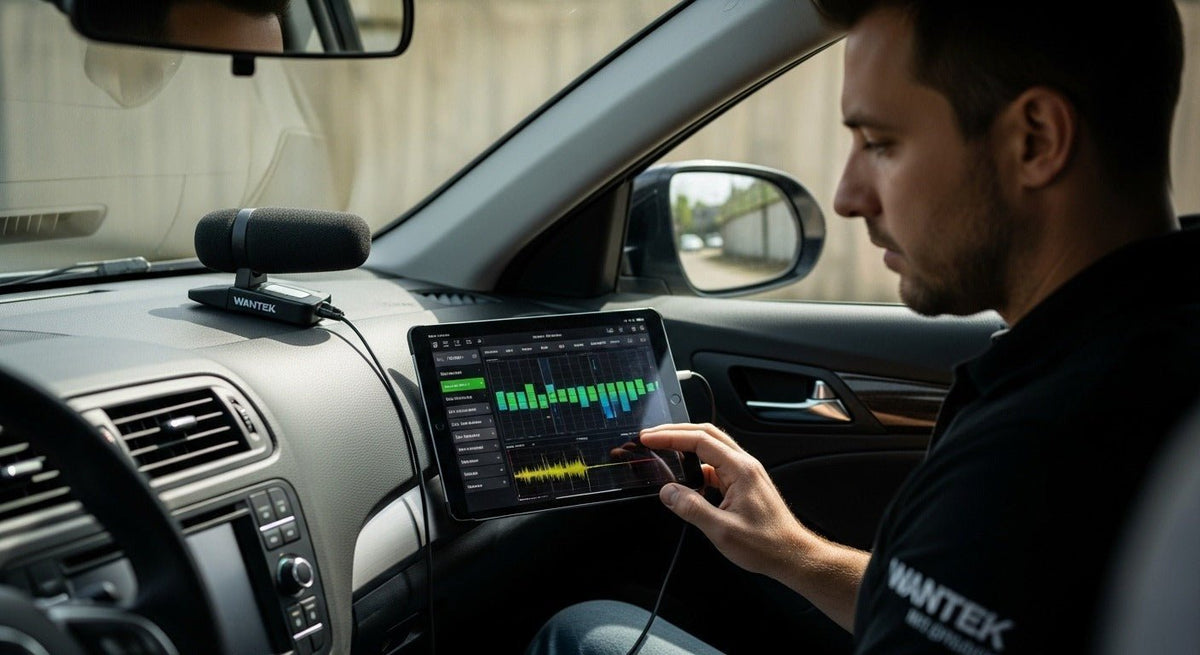
A digital signal processor (DSP) gives a car-audio system precise control over how audio is divided, delayed, equalized, and balanced between speakers. The value comes from tuning the system to the vehicle and listening position, not from the DSP box alone.
Main benefits: time alignment, equalization, crossover control, level matching, phase correction, and flexible integration with factory or aftermarket systems.
What a car-audio DSP actually changes
| Function | Purpose | Risk if misused |
|---|---|---|
| Time alignment | Delays nearer speakers so arrivals can be better aligned at the listening position. | Wrong distances can pull the image off-center. |
| EQ | Adjusts frequency response. | Large boosts can consume headroom or amplify problems. |
| Crossovers | Limits the frequency range sent to each driver. | Incorrect settings can create gaps, overlap, or stress drivers. |
| Level / phase | Balances channels and integration. | Can weaken bass or imaging when mismatched. |

Why cars benefit from time alignment
The driver sits much closer to some speakers than others. DSP can delay the nearer channels so arrival timing is better coordinated. Audiotec Fischer describes time alignment, EQ, crossovers, and phase correction as core DSP tuning tasks.
See the Audiotec Fischer DSP technology guide for an example of these functions.
DSP does not fix every system problem
Distorted speakers, poor mounting, rattles, insufficient amplifier headroom, bad gain structure, and noisy source signals need physical or electrical fixes. DSP can shape a signal; it cannot repair a damaged driver.
A DSP Is Most Useful When the System Can Be Measured and Tuned
A digital signal processor can provide routing, equalization, crossover, level, and delay controls, but simply adding a DSP does not guarantee better sound. The benefit comes from using those controls to address the vehicle, speaker positions, crossover points, and target listening position.
Plan the signal chain
Identify the source unit, factory integration, amplifier channels, speaker layout, and available input/output connections before buying a processor. Some vehicles require additional interfaces to retain factory functions.
Before Tuning
- Verify clean signal and correct gain structure.
- Set safe crossover points.
- Measure before making large EQ changes.
- Adjust delay and level with a defined listening position.
Frequently asked questions
Does a DSP automatically improve car audio?
No. The hardware enables precise tuning, but results depend on measurement, installation, system limits, and the settings applied.
Is EQ the same as a DSP?
EQ is one DSP function. A full car-audio DSP can also provide crossovers, delay/time alignment, level control, routing, phase tools, and presets.

