
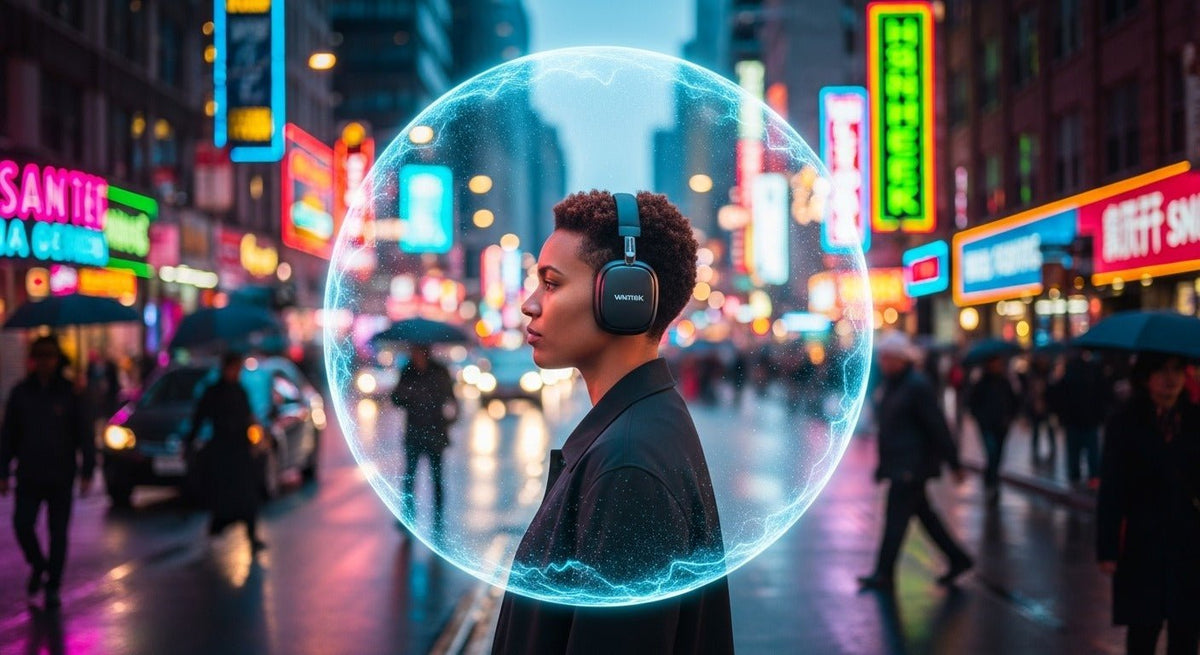
Noise-cancelling headphones can make a noisy environment easier to manage, but the strongest ANC is not automatically the best choice for sensory overload. Fit, pressure, heat, awareness modes, control simplicity, and how the headphones feel after 30–60 minutes can matter just as much as raw noise reduction.
Quick answer: choose by the kind of sound you want to reduce and by what you can comfortably tolerate. Over-ear ANC headphones are useful for steady background noise, while transparency or ambient modes help when you still need to hear people or surroundings. If you are comparing current models, Bose QuietComfort Ultra Headphones (2nd Gen), Sony WH-1000XM6, Apple AirPods Max 2, Sennheiser MOMENTUM 4 Wireless, and Wantek T3 represent different combinations of ANC, weight, battery life, controls, and price positioning. None should be treated as universally best for sensory overload without trying the fit and noise-control behavior for yourself.
The National Autistic Society lists ear defenders and noise-cancelling headphones among tools that some autistic people find helpful for managing sensory input, while also noting that heavy reliance on them may increase sensitivity over time. That makes adjustability important: the goal is not necessarily maximum isolation all day, but a level of sound control that fits the situation and the individual.

What Noise-Cancelling Headphones Can—and Cannot—Do
Active noise cancellation (ANC) uses microphones and electronics to reduce some incoming sound. It tends to be most useful for steady or repeating background noise such as engine rumble, ventilation systems, or traffic. A physical earcup or ear-tip seal adds passive isolation, which can help with other parts of the sound spectrum.
ANC does not create total silence, and it is not the same thing as certified hearing protection. The U.S. National Institute for Occupational Safety and Health (NIOSH) specifically notes that active-noise-cancelling headphones should not be treated as hearing protection unless they are labeled with a Noise Reduction Rating (NRR). If the environment is dangerously loud, use hearing protection designed for that purpose.
For everyday listening, noise cancellation can still be useful because it may reduce the temptation to turn music or podcasts up over background noise. The World Health Organization recommends keeping listening levels down and notes that well-fitted noise-cancelling headphones can help reduce the need for higher volume in noisy settings.
Start With Your Sensory Priorities, Not a Brand Name
1. Decide how much outside sound you still need to hear
If the main problem is a constant hum, full ANC may be useful. If you need to hear a coworker, family member, transit announcement, or traffic cue, a good transparency or ambient mode may be more important than maximum cancellation. Look for controls that let you change modes quickly without navigating a complicated app.
2. Test physical comfort separately from sound quality
Sensory comfort is highly individual. Check clamping pressure, earcup depth, cushion texture, heat buildup, headband pressure, glasses interaction, and total weight. A headphone that sounds excellent for ten minutes may become distracting after an hour. If possible, use a return window to test the exact model in the environments where you plan to wear it.
3. Pay attention to how ANC itself feels
Some listeners notice hiss, changing background texture, or an uncomfortable sensation when ANC is active. Manufacturers implement ANC differently, so one model may feel easier to tolerate than another even when both reduce noise effectively. Adjustable ANC or an easy ANC-off mode gives you more control if the processing itself becomes distracting.
4. Treat battery life as a reliability feature
Long battery life matters if you depend on noise control during commuting, study, work, or travel. Compare the manufacturer’s ANC-on battery figure rather than the largest battery number on the box, because some models quote longer runtimes with ANC disabled.
5. Separate personal noise control from call performance
Headphone ANC changes what you hear. Microphone noise reduction changes what the person on the other end of a call hears. If sensory overload happens mainly in an open office, but you also spend hours in meetings, use Wantek’s noise-cancelling headphones for a noisy office guide to compare listener-side ANC with call-focused features.
Current Over-Ear ANC Headphones Worth Comparing
This is a feature comparison, not a head-to-head sensory test. The specifications below come from current manufacturer documentation; they do not prove that one model will feel better for a particular person.
| Model | Verified current features | What to test for sensory comfort |
|---|---|---|
| Bose QuietComfort Ultra Headphones (2nd Gen) | ANC, Aware mode, customizable listening modes, CustomTune, and up to 30 hours of playback with Immersive Audio off. | How Quiet versus Aware mode feels, earcup pressure, heat, and whether automatic processing changes are comfortable. |
| Sony WH-1000XM6 | Over-ear design, Adaptive NC Optimizer, Ambient Sound Mode, multipoint connection, about 8.96 oz weight, and up to 30 hours of music playback with noise cancelling on. | ANC behavior in quiet versus busy places, app automation, white-noise perception, earcup fit, and touch-control tolerance. |
| Apple AirPods Max 2 | ANC, Adaptive Audio, Transparency mode, H2 chips, 13.6 oz weight, and up to 20 hours of listening with ANC enabled. | Overall weight, headband pressure, ear cushion feel, and whether Adaptive Audio or fixed listening modes feel more predictable. |
| Sennheiser MOMENTUM 4 Wireless | Around-ear design, Hybrid Adaptive ANC, app-based sound control, and up to 60 hours of music playback with ANC under Sennheiser’s stated test conditions. | Clamp, pad material, heat, ANC strength versus comfort, and whether the long battery life matters more than newer adaptive features. |
| Wantek T3 | Over-ear design, Bluetooth 5.3, ANC, transparency mode, inline microphone, and up to 60 hours of listed battery life. | Fit, clamping pressure, ANC sensation, transparency usefulness, and whether the lower-cost feature set meets your needs. Wantek does not publish sensory-specific or comparative ANC testing for this model. |
If price is the main constraint, compare the models in Wantek’s noise-cancelling headphones under $100 guide. That page separates official feature claims from independent comparison evidence and is a better next step than choosing a sensory-use headphone from price alone.
A Practical Sensory-First Test Before You Keep a Pair
Try the headphones with no audio playing.
Turn ANC on and notice the background texture, hiss, pressure sensation, and how much speech or environmental sound remains. Then compare it with ANC off.
Check the awareness mode.
Make sure transparency or ambient mode lets in enough of the environment for your normal use. A mode that sounds unnatural or too amplified can be as distracting as the noise you are trying to reduce.
Wear them for at least 30–60 minutes.
Short demos hide pressure points. Notice heat, clamp, pad contact, headband pressure, glasses interference, and whether the controls are easy to use when you are already overloaded.
Test your real trigger environment.
Use the headphones where they actually matter: a commute, shared office, grocery store, study area, or busy home. A model that performs well against an airplane-like hum may behave differently around nearby voices and sudden sounds.
Keep listening volume conservative.
Noise cancellation should help you avoid turning audio up to compete with the environment. WHO’s adult safe-listening reference uses 80 dB for up to 40 hours per week, with allowable time dropping sharply as volume rises.

When Earplugs or Hearing Protectors May Be a Better Fit
Not every situation needs electronics. Earplugs or earmuffs can be simpler when you want passive reduction, do not want a battery, or find ANC processing distracting. In genuinely hazardous noise, use rated hearing protection rather than assuming consumer ANC headphones are protective equipment. NIOSH also emphasizes fit because real-world attenuation depends heavily on how a hearing protector is worn.
For everyday sensory management, the better choice may vary by context: ANC headphones for steady background noise, transparency mode when communication matters, and passive ear protection when the goal is certified attenuation rather than music playback.
One useful rule: the best setup gives you control without creating a new sensory problem. If a headset’s clamp, heat, ANC texture, controls, or isolation feels more distracting than the environment, a different form factor or a simpler passive option may work better.
Compare Wantek T3 ANC Specs
Wantek T3 is an over-ear Bluetooth model with listed ANC, transparency mode, an inline microphone, and up to 60 hours of battery life. Review the current specifications and availability before deciding whether it fits your listening routine.
Frequently Asked Questions
Do noise-cancelling headphones completely block sound?
No. ANC reduces some environmental noise, especially steady low-frequency sound, but speech, alarms, impact sounds, and other changing noises may remain audible. Passive sealing also affects how much outside sound reaches you.
Are noise-cancelling headphones the same as hearing protection?
No. NIOSH says consumer ANC headphones should not be considered hearing protection unless they are labeled with a Noise Reduction Rating. Hazardous-noise environments require appropriate rated hearing protection.
Are over-ear headphones always better for sensory overload?
No. Over-ear models avoid pressure inside the ear canal, but they can add clamp, weight, and heat. Earbuds or passive earplugs may feel better for some users, so fit and tolerance matter more than form factor alone.
Should I choose the strongest ANC available?
Not automatically. Strong ANC is useful only if the fit, processing sensation, and isolation level are comfortable. Adjustable ANC and transparency modes can be more useful than maximum cancellation in situations where you still need awareness.
Can ANC help me listen at a lower volume?
It can. WHO recommends well-fitted noise-cancelling headphones because reducing environmental noise can lessen the need to raise playback volume in noisy places.

