
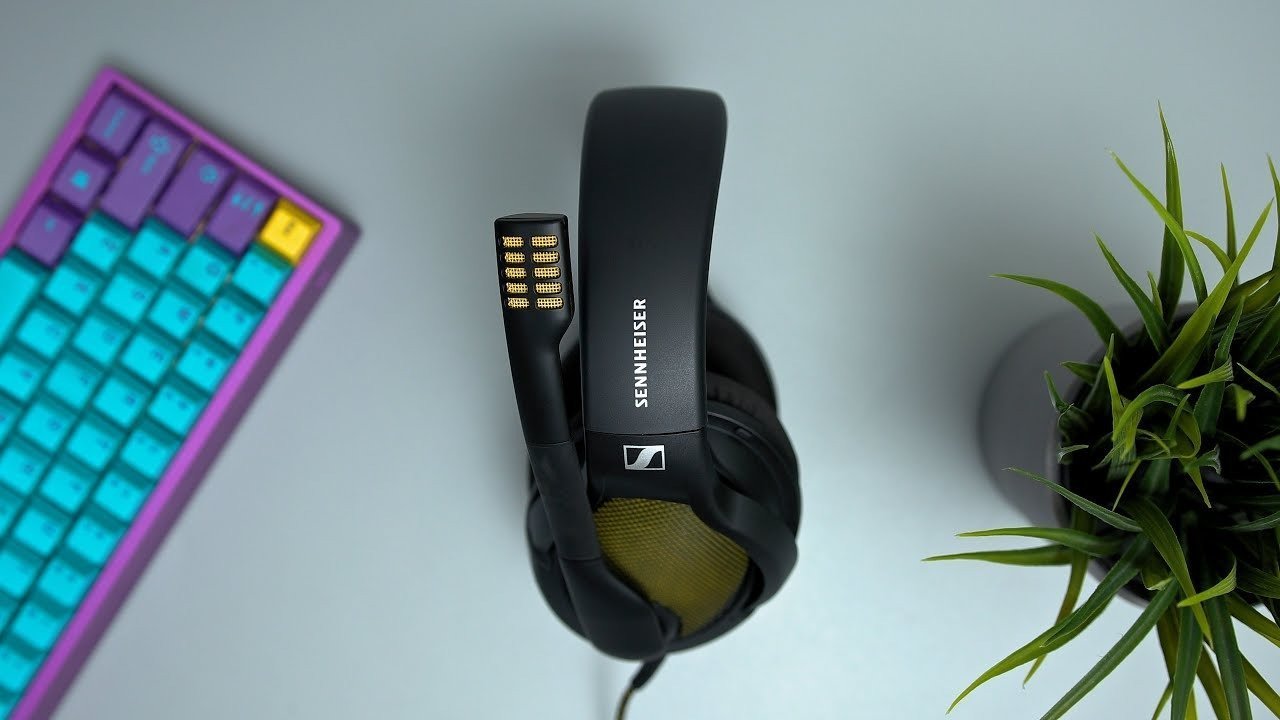
The PC38X and PC37X are wired open-back gaming headsets created through Drop’s Sennheiser/EPOS collaborations. PC38X was designed as the newer evolution of PC37X, with lower 28-ohm impedance, revised drivers and two cable options for PC and console-style combo jacks.
Current buying context: both are now legacy Drop-era gaming headsets rather than current Sennheiser consumer products. Drop’s 2026 help center says the business is part of the CORSAIR family, while its extended-warranty record still references PC37X and PC38X. Compare condition, included cables and seller return terms rather than relying on an old launch price.

PC38X vs. PC37X: Core Differences
| Feature | PC38X | PC37X |
|---|---|---|
| Design | Open-back, over-ear, wired | Open-back, over-ear, wired |
| Frequency response | 10 Hz–30 kHz | 15 Hz–28 kHz |
| Nominal impedance | 28 ohms | 50 ohms |
| Microphone | 50 Hz–16 kHz bidirectional noise-cancelling electret boom | 50 Hz–16 kHz noise-cancelling boom |
| Mute | Flip boom upward to mute | Flip boom upward to mute |
| Typical cable setup | 2.5 m split PC cable plus 1.5 m single-plug TRRS console cable | Originally centered on a long split PC cable; console use may require the correct combo adapter/cable |
Current independent documentation still confirms PC38X as a wired open-back headset with 28-ohm impedance, and RTINGS updated its PC38X test bench in June 2026. Drop’s own 2026 help center continues to list both PC37X and PC38X among products that had extended-warranty coverage, but old storefront availability should not be assumed.
PC38X Is Easier to Drive From Controllers and Portable Sources
The lower 28-ohm impedance does not automatically make PC38X “better,” but it was part of the redesign intended to work more comfortably from lower-power sources. PC37X’s 50-ohm load is still moderate, but output level depends on the source as well as sensitivity.
For a console controller, laptop or other modest headphone output, test the real maximum level rather than assuming impedance alone determines volume.
Both Are Open-Back
The open earcups allow sound to pass through the housing. That can create a more open presentation, but it also means little passive isolation and substantial outward leakage.
Neither is a good choice for a loud shared room, commuting, or gaming beside someone who needs quiet. They make more sense in a relatively quiet gaming space.
Microphone: Similar Workflow, Not “Broadcast Grade”
Both use boom microphones designed for gaming chat, with flip-to-mute operation. PC38X’s published microphone response is 50 Hz–16 kHz with a bidirectional noise-cancelling pickup pattern.
“Noise-cancelling” here describes the microphone design; it does not mean active electronic ANC for the earcups, and it does not guarantee elimination of keyboard or room noise. Mic distance, gain and room acoustics still matter.
Cables and Console Compatibility
PC38X was supplied with separate cable paths: a longer split TRS cable for PCs with separate headphone/mic jacks and a shorter TRRS cable for devices with a combo headset jack.
Console compatibility therefore depends on the controller/device accepting the required 3.5 mm headset connection. Do not assume every console, controller revision or USB adapter behaves identically.
PC38X vs. PC37X Sound
The old page made categorical claims such as “PC38X wins soundstage” and “PC37X is the competitive FPS choice” without a documented test method. Those statements have been removed.
PC38X uses a different driver implementation and published response range, but frequency-range numbers do not prove imaging, tonal balance or competitive advantage. Current measurements and your own games are a better basis for comparison.
Availability Matters More in 2026
PC37X is the older product and is commonly encountered second-hand or through residual inventory. PC38X remained in Drop promotions into 2025, but Drop’s current storefront has since changed direction under the CORSAIR family.
Before buying either one now, verify that the listing includes the required cable, working microphone, intact pads, functional volume wheel, and a return path.
What to Inspect on a Used PC38X or PC37X
- Check both left and right channels for intermittent audio.
- Move the detachable cable at both ends and listen for dropouts.
- Test the microphone and flip-to-mute switch.
- Rotate the volume control through its full range.
- Inspect pads and headband padding for wear.
- Confirm the seller includes the cable needed for your PC or console.
- Remember that open-back leakage is normal, not a defect.
Current Alternatives
If you want a new headset with an active warranty and easier availability, compare current wired gaming headsets rather than assuming a legacy PC38X/PC37X listing is automatically the best value. Start with platform compatibility, open vs. closed design, microphone, connection and replacement parts.
Looking for a Current Wired Gaming Headset?
Match the headset to the console or PC connection, microphone, open/closed preference and controls before comparing price.
Frequently Asked Questions
Is PC38X newer than PC37X?
Yes. PC38X was introduced as an upgraded evolution of the PC37X design, with revised drivers, lower 28-ohm impedance and broader included cable options.
Are PC38X and PC37X closed-back?
No. Both are open-back gaming headsets, so they provide little isolation and leak sound outward.
Does PC38X have USB?
No. The original PC38X is an analog wired headset using 3.5 mm cables. USB operation would require a separate compatible audio adapter or interface.
Are PC38X and PC37X still current Sennheiser products?
No. They are legacy Drop collaboration products. Current availability varies by residual stock and second-hand sellers, so verify condition and included accessories.

