
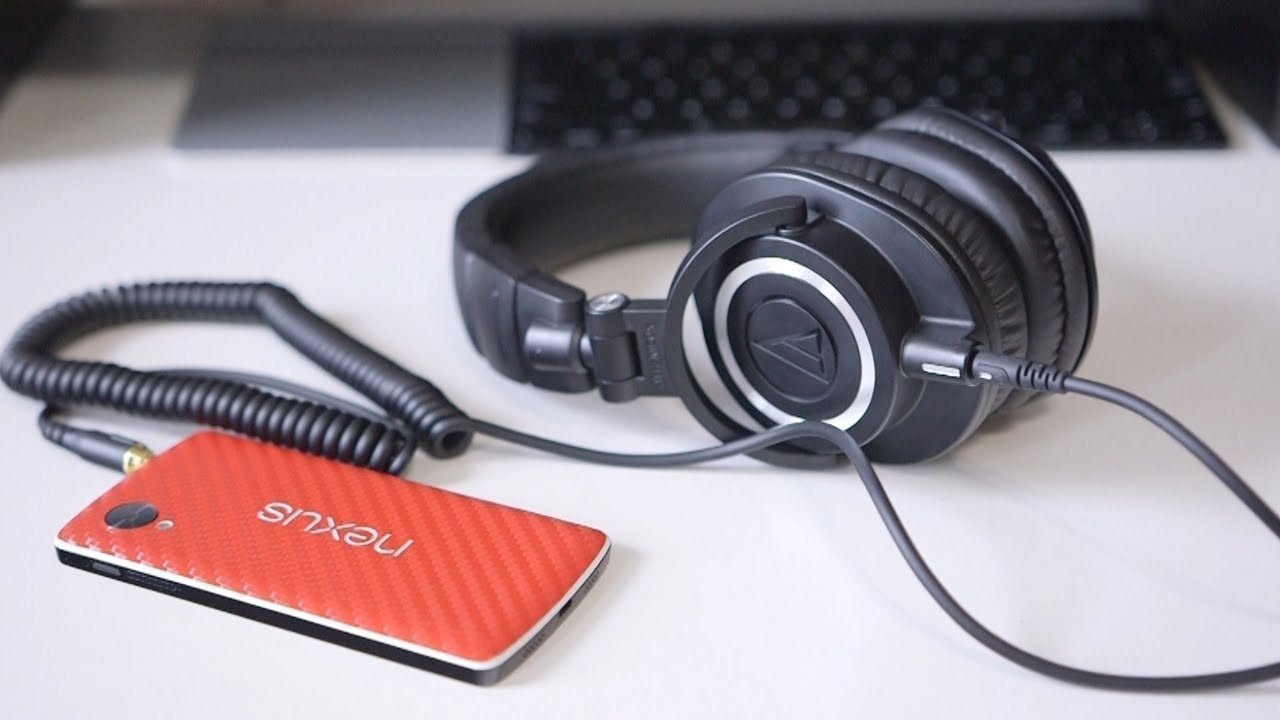
Comparing “Sennheiser headphones” with the Audio-Technica ATH-M50x is not a one-to-one matchup: Sennheiser is a brand with very different models, while the ATH-M50x is one specific closed-back studio headphone. The useful comparison starts by choosing the Sennheiser model that does the same job.
Quick answer: Compare the ATH-M50x with the Sennheiser HD 280 PRO if you want a closed-back monitoring headphone. Compare it with the open-back HD 560S only if your priority is quiet-room analytical listening rather than isolation.

First, Choose a Comparable Sennheiser Model
The ATH-M50x is a closed-back professional headphone. Sennheiser's HD 280 PRO is the closer category match because it is also a wired closed-back monitoring design. The HD 560S is open-back and belongs in a different comparison: it trades isolation for an open acoustic design intended for analytical listening.
If you are still deciding between production-focused and listening-focused designs, the studio vs. audiophile headphones guide explains why those labels overlap and which practical requirements matter more.
| Model | Verified design and connection facts | Use-case implication |
|---|---|---|
| Audio-Technica ATH-M50x | Closed-back; 45 mm drivers; 38-ohm impedance; 285 g without cable; detachable cables. | A practical closed-back option when isolation, folding portability, and replaceable cables matter. |
| Sennheiser HD 280 PRO | Closed-back dynamic; 64-ohm impedance; 285 g; wired 3.5 mm connection with a coiled cable. | The more direct Sennheiser comparison for tracking, monitoring, and other situations where isolation matters. |
| Sennheiser HD 560S | Open-back dynamic; 120-ohm impedance; 280 g; 3.5 mm connection with a 6.3 mm adapter. | Better treated as an open-back analytical-listening alternative for a quiet room, not as a like-for-like closed-back rival. |
ATH-M50x: Closed-Back, Portable, Cable-Flexible
Audio-Technica's current professional-headphone catalog lists the ATH-M50x with 45 mm drivers, a 15 Hz–28 kHz frequency response, 38-ohm impedance, and a weight of 285 g without cable. It includes detachable straight and coiled cables. Those are concrete reasons to consider it for a portable or shared studio workflow; they do not by themselves prove that it will sound “better” than another model.
See Audio-Technica's 2026 professional-headphone catalog for the current specification listing.
HD 280 PRO: The Closer Sennheiser Studio Comparison
Sennheiser positions the HD 280 PRO as a wired closed-back monitoring headphone. Its current specifications list 64-ohm nominal impedance and 285 g weight, while the product documentation emphasizes isolation, folding construction, and studio monitoring. This makes it a more meaningful ATH-M50x comparison than a random Sennheiser consumer model.
See the Sennheiser HD 280 PRO product page.
HD 560S: A Different Kind of Choice
The HD 560S is an open-back dynamic headphone. Sennheiser lists a 280 g weight, 3.5/6.3 mm wired connection, and open transducer design; its support guidance also lists 120-ohm impedance. That open design means it should not be treated as a direct substitute when you need the leakage control and isolation of a closed-back studio headphone.
See the HD 560S specifications and Sennheiser's source-power guidance.
How to Choose Between Them
- Need isolation for tracking or a shared room? Start with the ATH-M50x or HD 280 PRO rather than an open-back model.
- Need detachable cables? The ATH-M50x includes detachable cables; verify the exact replacement path before buying another model.
- Need open-back listening in a quiet room? The HD 560S is the relevant Sennheiser direction, but it solves a different problem from a closed-back monitor.
- Using a phone, laptop, or small interface? Check output level and connector requirements rather than assuming impedance alone determines compatibility.
- Choosing for mixing? Use reference tracks and cross-check on other playback systems. Brand reputation does not replace familiarity with the headphone's response.
Sennheiser vs. ATH-M50x FAQ
Is the ATH-M50x better than Sennheiser headphones?
There is no useful brand-wide answer. Compare the ATH-M50x with a specific Sennheiser model that serves the same job, then judge isolation, fit, connection, serviceability, and sound preference.
What Sennheiser model is closest to the ATH-M50x?
The HD 280 PRO is a closer category comparison because both are wired closed-back professional monitoring headphones. Their fit, cable design, impedance, and tuning still differ.
Is the HD 560S a direct ATH-M50x alternative?
Not really. The HD 560S is open-back, so it is better compared on analytical listening in a quiet room rather than isolation-sensitive tracking or shared-space use.
Do I need an amplifier for these headphones?
Source requirements depend on impedance, sensitivity, and the device's output. Sennheiser says the 120-ohm HD 560S can benefit from an amplifier but does not require one for every source.


1 comment
Thanks for a super article
Have purchased an entry level sen 505 on special at Amazon atm
In a word W O W
Have never purchased a more expensive headphone always having a good speaker, now in my later years I have to start thinking about others
I wish I would of used phones years ago really has given my music a fresh and exciting new life
Never going back to Bluetooth again at home