
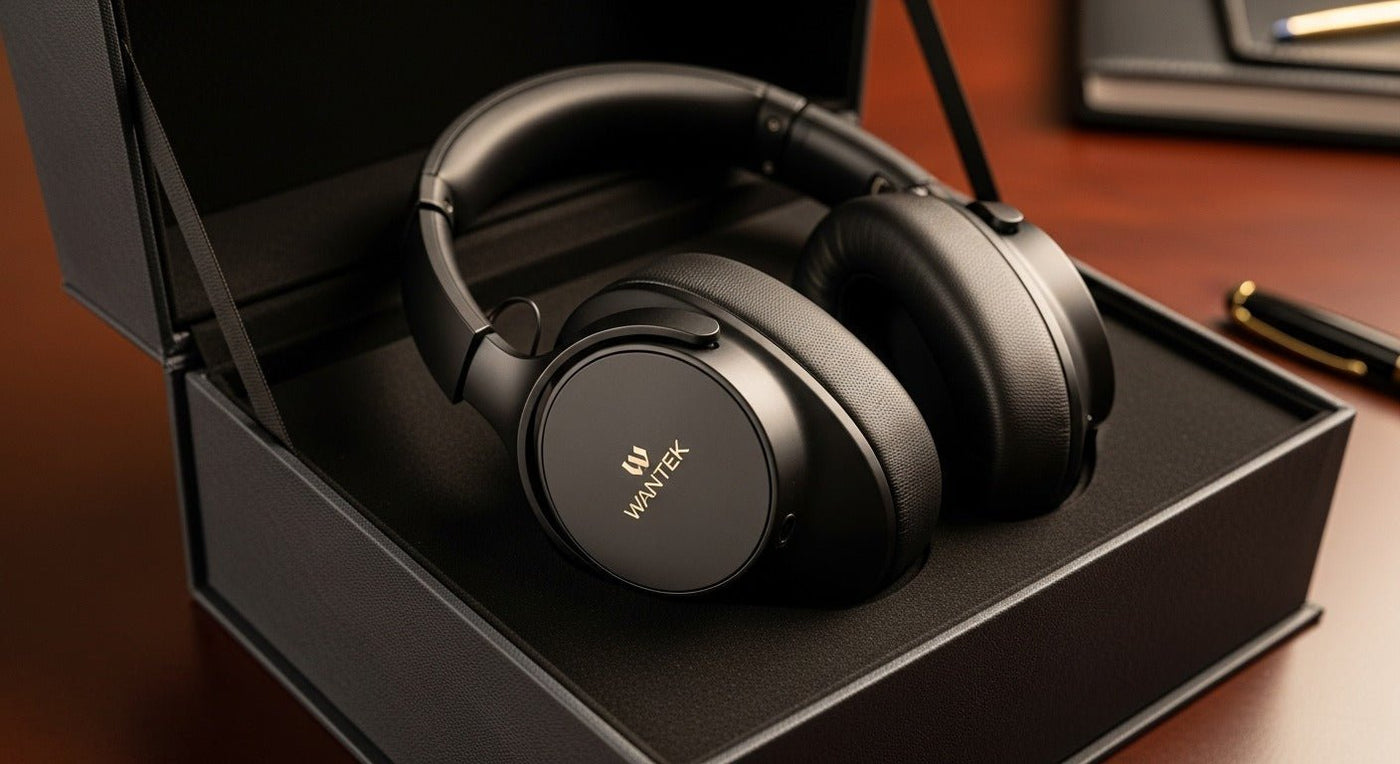
Promotional headphones can be useful branded merchandise when the recipient has a real reason to keep using them. The marketing value depends on product utility, branding quality, audience fit, and execution—not on the logo alone.
Plan the product before the artwork: define audience, use case, quantity, connector, battery/charging needs, branding area, packaging, delivery date, and support expectations.

When branded headphones make sense
- Employee onboarding or remote-work kits.
- Client or partner gifts tied to calls, travel, or training.
- Event giveaways where the audience is likely to use audio products.
- Education or training programs that need a functional device as well as branding.

Approve a physical sample before volume production
Artwork can look different on plastic, metal, fabric, or a curved charging case. A sample or pilot should confirm logo size, contrast, placement, packaging, and the underlying product.
Do not promise ROI the product cannot prove
Branded audio can support a campaign, but impressions, retention, loyalty, or conversion require actual campaign measurement. Treat those as outcomes to measure, not guaranteed product benefits.
Include operational details in the quote
Specify quantity, market, connector, branding method, packaging, delivery deadline, spare units, warranty, and any compliance documentation your organization requires.
For the supplier side of a volume order, compare SKU consistency, samples, replacements, and total cost in our bulk headphone supplier guide.
Discuss a larger branded or bulk order
Wantek’s bulk-order page accepts use case, quantity, connector, country, deadline, and sample requirements for custom quoting.
Treat Promotional Headphones as a Product-Sourcing Project
A branded giveaway still has to work as a usable audio product. Define the audience, connection type, packaging, quantity, delivery date, artwork requirements, and acceptable quality level before requesting quotes.
Match the format to the campaign
Wired 3.5 mm headphones can suit simple event or education use when the target devices still support the connector. USB headsets fit computer-based training or work programs. Bluetooth products add pairing and charging requirements, so they need clearer setup instructions and more careful compliance review.
Approve a physical sample before volume production
Artwork proofs show logo placement, but they do not verify fit, connector compatibility, audio, microphone behavior, packaging, or build quality. A production-representative sample gives the buyer a reference for approval and later quality checks.
RFQ Checklist
- Quantity and delivery destination
- Exact connection and microphone requirements
- Logo file, print position, and color expectations
- Packaging and labeling
- Sample approval process
- Inspection and defect criteria
- Warranty or replacement process

