
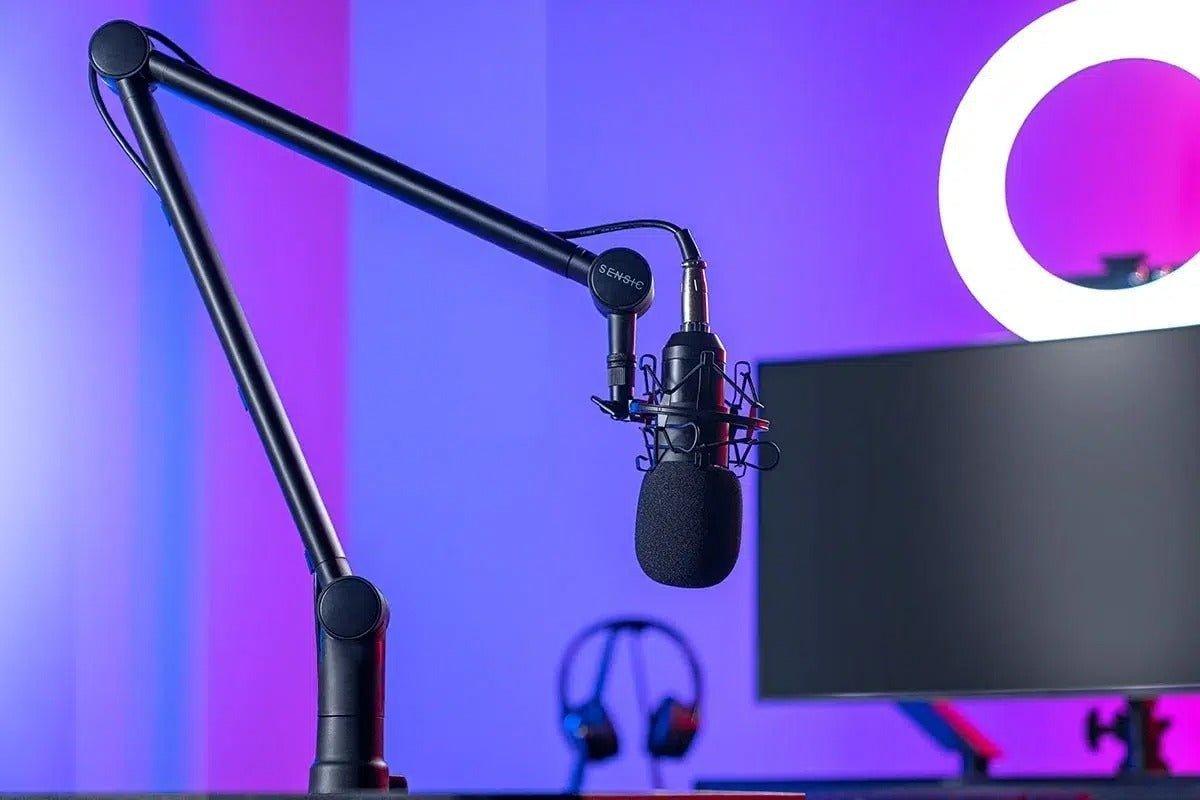
A microphone boom arm is mainly a positioning tool. It can bring the mic closer to your mouth, free desk space and move out of the way between calls or recordings—but only if its load rating and desk mount match your setup.
| Check | Why it matters | Common mistake |
|---|---|---|
| Load range | Arm must balance mic + shock mount | Checking mic weight alone |
| Thread/mount | Mic and arm need compatible adapters | Assuming all mounts use same thread |
| Reach | Determines usable mic position | Buying a short arm for a deep desk |
| Clamp | Transfers load to desk edge | Clamping fragile or tapered furniture |
| Cable routing | Prevents snags and connector strain | Pulling cable tight at full extension |
Closer Mic Placement Can Matter More Than Expensive Processing
Moving a directional microphone closer to the speaker's mouth can improve the voice-to-room-noise ratio, allowing lower gain and less aggressive noise reduction.
FAQ
Will a boom arm improve sound quality?
Indirectly. Better placement can improve voice level relative to room noise, but the arm itself does not change the microphone electronics.
Do I need a shock mount?
It can help with desk-borne vibration on sensitive microphones, but compatibility and added weight must fit the arm.
Original Article Media


