
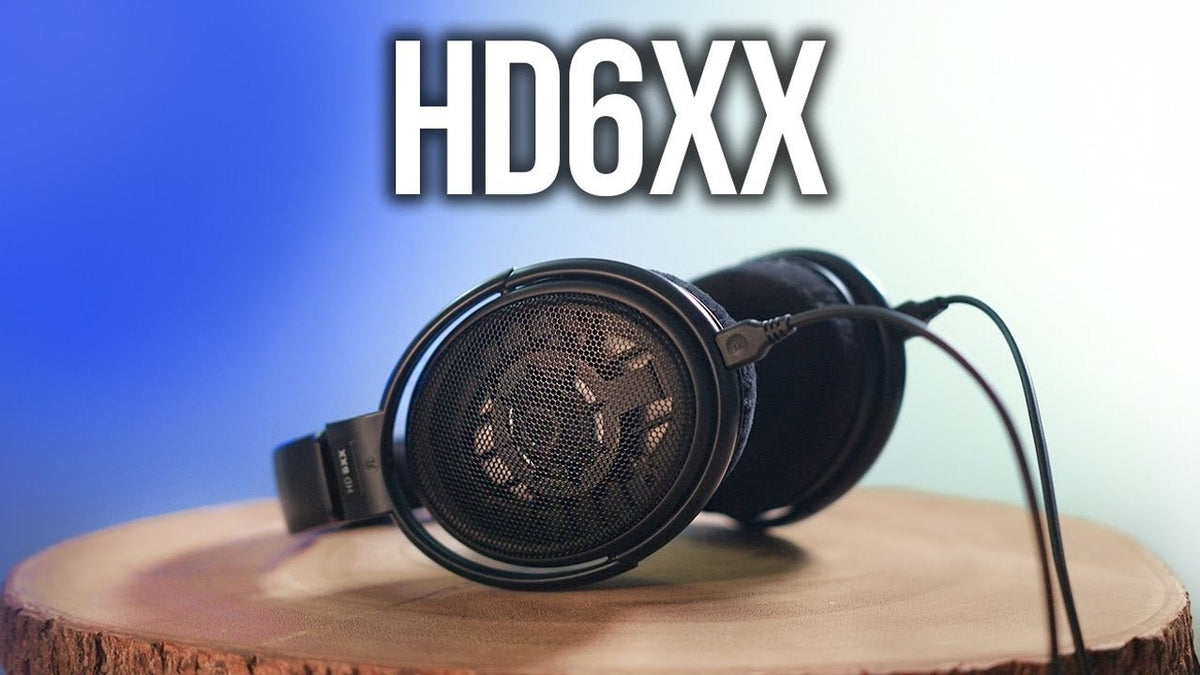
HD600, HD650, and HD6XX are often discussed together because they share an open-back, wired listening use case, but the decision should not be reduced to a universal sound ranking.
Quick answer: All three make the most sense in a quiet listening environment where leakage is acceptable. Compare current impedance/sensitivity, pad and clamp fit, cable/connector details, replacement parts, and purchase channel.

Open-Back Design Sets the Environment
These headphones are designed for listening where sound leakage and low isolation are acceptable. They are poor choices for commuting, shared quiet rooms, or recording next to an open microphone.
Amplifier Needs Depend on the Full Electrical Specification
Do not judge drive difficulty from impedance alone. Source voltage, sensitivity, desired level, and recording level all matter. Check the current manufacturer specification for the exact model.
Tuning Preference Is Not a Fixed Winner
HD600 and HD650 have long-running but distinct tunings, while HD6XX is sold through Drop. Compare them at matched level if possible rather than treating community shorthand as a measurement.
Pads and Clamp Change With Use
Ear pads compress and headbands can loosen over time, affecting comfort and potentially the acoustic seal around the ear. Replacement-part availability matters for long ownership.
For a related Wantek workflow, see the Sennheiser HD 599 guide.
FAQ
Are HD600, HD650, and HD6XX closed-back?
No. They are open-back wired headphones and provide limited isolation.
Do they require an amplifier?
The answer depends on the source and listening level. Check the exact model’s electrical specification and your source output.
Is HD650 automatically better than HD600?
No. They are different tunings and products; preference depends on listener and use case.

