
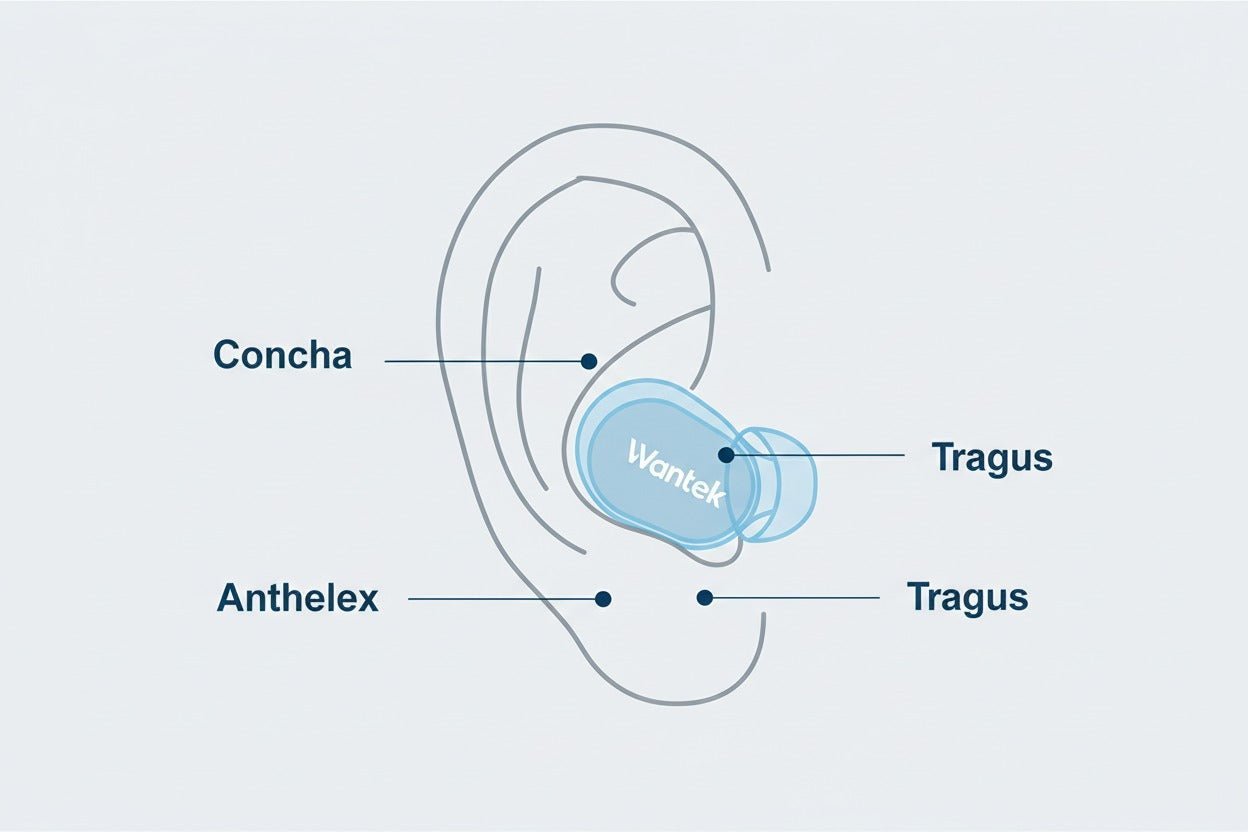
For small ears, comfort comes from the entire fit system: the earbud shell, nozzle, tip size, weight, and how the controls sit against the outer ear. A “small” ear tip cannot fix a housing that presses painfully on the concha.
Fit first: look for compact housings, extra-small or multiple ear-tip sizes, low weight, and a return policy that lets you test comfort. Sound and ANC only matter after the earbuds stay sealed without pressure.
Five fit checks for small ears
| Check | Why it matters | What to look for |
|---|---|---|
| Housing size | Large shells can press on the outer ear. | Compact, low-profile body. |
| Tip sizes | The seal happens at the canal entrance. | XS or broad tip selection when offered. |
| Weight | Less mass can reduce movement and fatigue. | Per-earbud weight from the manufacturer. |
| Stability | Exercise can loosen a marginal fit. | Wings, hooks, clips, or secure shell geometry. |

Ear-tip size is only part of the answer
A smaller silicone or foam tip can help a narrow canal, but the earbud body may still be too large. Pay attention to where the shell touches the tragus, antihelix, and concha during a long session.

Consider open-ear designs if canal pressure is the problem
Open-ear clip-on earbuds place the speaker outside the ear canal, so they avoid silicone-tip pressure. They trade away the seal and isolation of conventional in-ear earbuds.
Wantek’s open-ear earbuds guide explains that tradeoff in more detail.
Try a lightweight open-ear format
Wantek OBT030 weighs 8.5 g and uses a clip-on open-ear design with Bluetooth 5.4 and a built-in microphone.
Fit Small Ears by Geometry, Not Marketing Labels
“Small earbuds” can refer to a compact shell, short nozzle, small ear tips, or all three. The part that matters is where the earbud touches your ear. A tiny tip does not help if the outer shell still presses against the concha, and a small shell can still seal poorly if the nozzle angle does not suit your ear.
Start with the included tip range
Try the smallest supplied tip first, then compare seal, stability, and pressure rather than assuming tighter is better. A secure seal should not require painful force. If one ear is smaller than the other, using different tip sizes is normal.
Small-Ear Buying Checklist
- Compact outer shell
- Multiple small tip sizes
- Low pressure against the outer ear
- Stable fit while walking or exercising
- Return policy long enough to test comfort
Frequently asked questions
Do smaller ear tips guarantee a comfortable fit?
No. The tip affects the canal seal, while the earbud housing can still press on the outer ear. Both parts need to fit.
Are open-ear earbuds better for small ears?
They can help if in-ear tip pressure is the problem, but clip size and outer-ear anatomy still matter. They also provide less passive isolation.

