
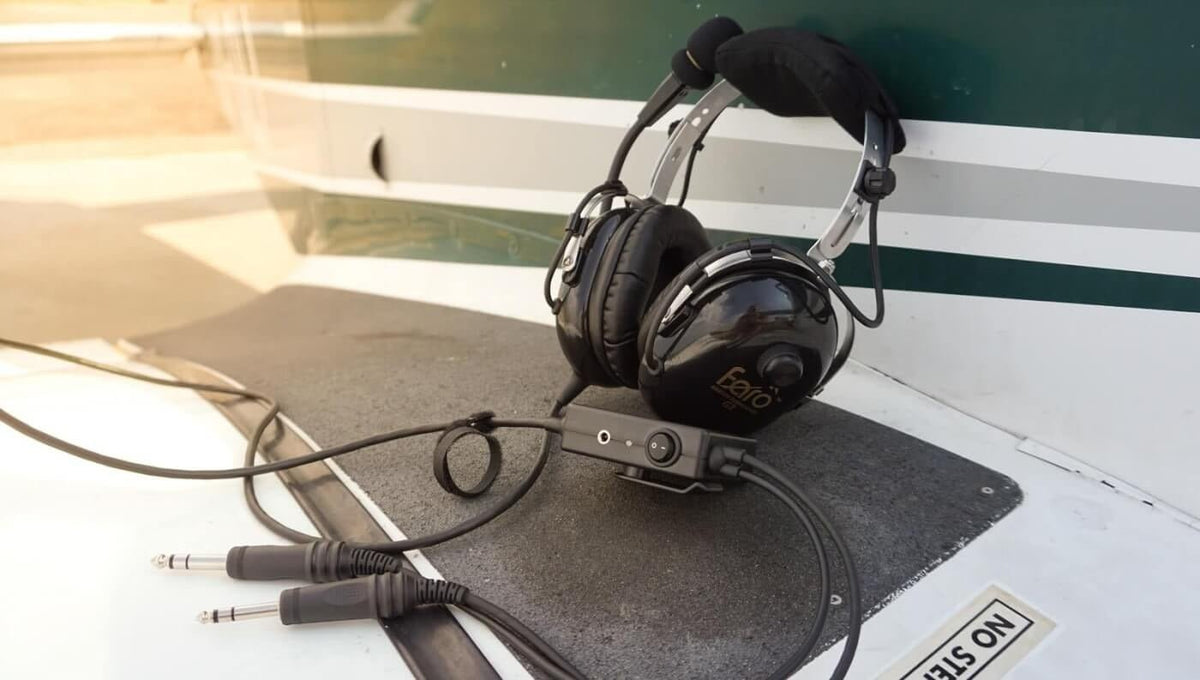
An ANR aviation headset can reduce selected cockpit noise electronically while keeping radio and intercom audio available, but “ANR” alone does not tell you whether a headset fits your aircraft, connector, power setup, certification needs, or hearing-protection requirements.
Start with the aircraft and mission: verify the plug, audio-panel compatibility, battery or panel power, microphone, fit, and approvals first. Then compare the ANR system and convenience features such as Bluetooth.

What an ANR Aviation Headset Actually Does
Active Noise Reduction uses microphones, electronics, and an opposing signal to reduce part of the surrounding noise reaching the listener. In aviation, that is especially relevant to lower-frequency cockpit noise. The FAA’s pilot hearing brochure describes ANR headsets as effective against low-frequency noise and notes that communication headsets can also help speech remain intelligible in noisy environments.
ANR does not create a silent cockpit, and it does not replace the physical seal of the earcups. Fit, ear seals, headwear, aircraft noise, and the headset’s passive attenuation still affect the result.
ANR, Passive Reduction, and Hearing Protection Are Not the Same Label
| Term | What it describes | What not to assume |
|---|---|---|
| ANR / active electronic noise reduction | Powered electronics reduce selected ambient noise, especially lower-frequency noise | It does not prove complete attenuation, a specific NRR, or compatibility with your aircraft |
| Passive noise reduction | Earcup, seal, material, and clamping design physically reduce sound | It is not automatically inferior; passive performance still matters when ANR is present |
| Hearing-protection device (HPD) | A device evaluated and identified for hearing-protection use under the applicable rating or program | A cockpit communication headset is not automatically an HPD simply because it has ANR |
The distinction matters because an FAA hearing-conservation order states that most cockpit communication headsets are for communication rather than qualified hearing protection and may not have a laboratory-tested Noise Reduction Rating (NRR). Check the exact headset’s documentation instead of treating “ANR” as a protection rating.
Current ANR Aviation Headset Examples
The models below are current manufacturer examples, not a universal ranking. They show how different aviation headsets combine ANR with power, connectors, Bluetooth, and approvals.
| Model | Current manufacturer facts | Verify for your aircraft |
|---|---|---|
| Bose A30 | Three selectable ANR modes; noise-cancelling boom mic; FAA TSO and EASA E/TSO-C139a certification; multiple connector configurations | Dual plug, 6-pin, 5-pin XLR, or U-174 configuration; battery versus aircraft power; Bluetooth version/options |
| Lightspeed Zulu 4 | ANR; Dual Bluetooth; noise-cancelling electret mic; GA dual-plug, 6-pin LEMO, and U-174 configurations | Exact plug, panel-power needs, mono/stereo setup, app/device needs, and battery plan |
| David Clark DC ONE-X | Hybrid electronic noise cancellation, Bluetooth, stereo/mono control, noise-cancelling electret mic, FAA TSO-C139a approval | Exact ONE-X variant, connector/power arrangement, audio-panel setup, and required approvals |
Five Checks Before You Buy an ANR Aviation Headset
- Connector: identify the aircraft connection first. Dual GA plugs, 6-pin LEMO, 5-pin XLR, and U-174 are not interchangeable without the correct configuration or adapter.
- Power: check whether ANR runs from AA batteries, a rechargeable system, aircraft power, or a combination. Also check what audio and communication remain available if active power is lost.
- Microphone and audio panel: verify the microphone type, mono/stereo settings, intercom behavior, and compatibility with the aircraft audio system.
- Fit and seal: glasses, hats, earcup geometry, clamping force, and seal condition can change both comfort and passive attenuation.
- Approvals and protection claims: TSO approval, NRR, and hearing-protection status are separate questions. Use the exact model documentation for the requirement that applies to your operation.
What Bluetooth Means on an Aviation Headset
Bluetooth is usually an auxiliary feature, not proof that the headset connects wirelessly to the aircraft radio or intercom. Current aviation models use Bluetooth for functions such as connecting phones, tablets, electronic flight bags, or auxiliary audio, while the primary aircraft communication path still depends on the headset’s aviation connector and configuration.
Before relying on any Bluetooth feature in flight, check the exact headset manual, aircraft setup, and operating rules for the use case.
Is ANR Worth the Upgrade?
ANR can be a meaningful upgrade when lower-frequency cockpit noise is a recurring problem and the headset fits your aircraft and operating requirements. It is not automatically the right choice for every pilot or aircraft. A well-fitting passive headset may still be appropriate when simplicity, cost, or a particular certified configuration matters more.
A useful comparison is therefore not “ANR always wins.” It is whether the specific headset gives you the connection, communication path, fit, passive attenuation, powered noise reduction, and documentation your aircraft and flying require.
Frequently Asked Questions
What is the difference between ANR and PNR in aviation headsets?
PNR reduces noise through the physical earcup and seal. ANR adds powered electronics that reduce selected ambient noise, especially lower-frequency cockpit noise. Many aviation headsets rely on both.
Does every pilot need an ANR headset?
No. The decision depends on aircraft noise, connector and power requirements, fit, communication needs, operating approvals, and budget. ANR is a feature to evaluate, not a universal requirement.
Does an ANR aviation headset count as hearing protection?
Not automatically. Check whether the exact headset has a laboratory-tested NRR or other documentation required for the hearing-protection program or operation you are using.
Can an aviation headset use Bluetooth for aircraft communications?
Do not assume so. On many aviation headsets, Bluetooth is for phones, tablets, or auxiliary audio. The aircraft radio/intercom path still depends on the aviation connector and headset configuration.

